
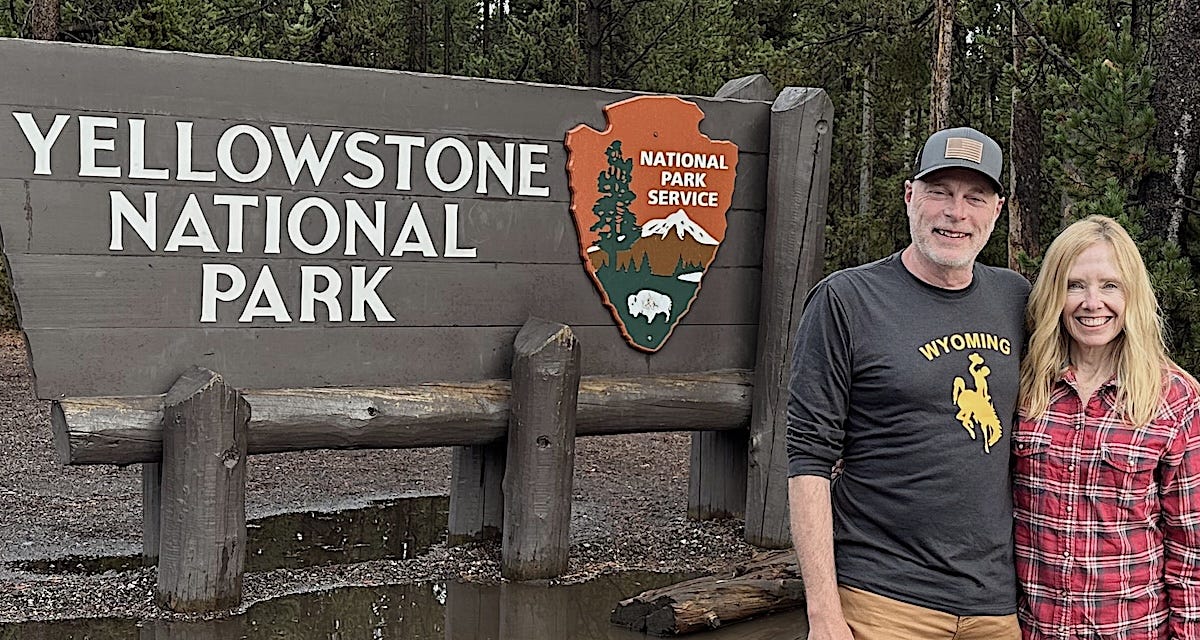
Most people enter Yellowstone based on whatever travel route makes the most sense for them. Driving in from the east? You’ll probably go through Cody and come in through the east or northeast entrances. Flying into Bozeman? The west and northwest entrances are your best bets. Visiting Grand Teton National Park first? You’ll drive up from the south and enter through the south entrance.
This guide isn’t really meant to change your travel plans. We wrote it to help you understand what each part of the park has to offer, especially the areas close to the entrances. We’d also encourage you to stay in more than one spot during your visit so you can experience just how diverse the park really is.
Honestly, we could spend an entire trip parked along the road in Lamar Valley, watching bison mosey by. But then we’d miss the thermal features out west or the canyon area to the east. Some visitors always stay in West Yellowstone, which has the most facilities and is close to the park’s thermal features. It also has a completely different feel than Cody, Wyoming, the gateway town to the east.
So, get out and explore all the park’s different areas and entrances. Maybe not all in one trip, but over time, as your travel plans allow, see it all.
What follows is a quick overview of each park entrance, so you can decide for yourself which one best fits your next visit. We hope it helps make your trip to Yellowstone even better.
The vibe: The busiest gateway to the park, and the most full-service. From West Yellowstone, the park’s most famous thermal features are a relatively short drive away. You’ll find restaurants, outfitters, grocery stores, and tour companies all within blocks of the gate.
The west entrance typically opens the third Friday in April and closes about the first Monday of November.
West Yellowstone offers the widest variety of lodging of any gateway community, with national hotel chains, roadside motels, modern cabin rentals, and family-oriented lodges. It has the largest overall concentration of lodging near any park entrance.
The last time we were in West Yellowstone, we stayed at the Best Western and walked a couple of blocks to Wild West Pizzeria and Saloon for dinner. It was a super convenient way to stay close to the park and enjoy a great pizza.
Old Faithful Inn: A National Historic Landmark (1903–04) and one of the largest - if not THE largest - log-structure buildings in the world. The soaring lobby features a massive stone fireplace and a hand-crafted copper, wood, and wrought-iron clock. Approximately 327 rooms range from historic shared-bath rooms in the “Old House” section to newer wings with private baths. All the lodging options in the Old Faithful area are about 30 miles from the West Entrance.
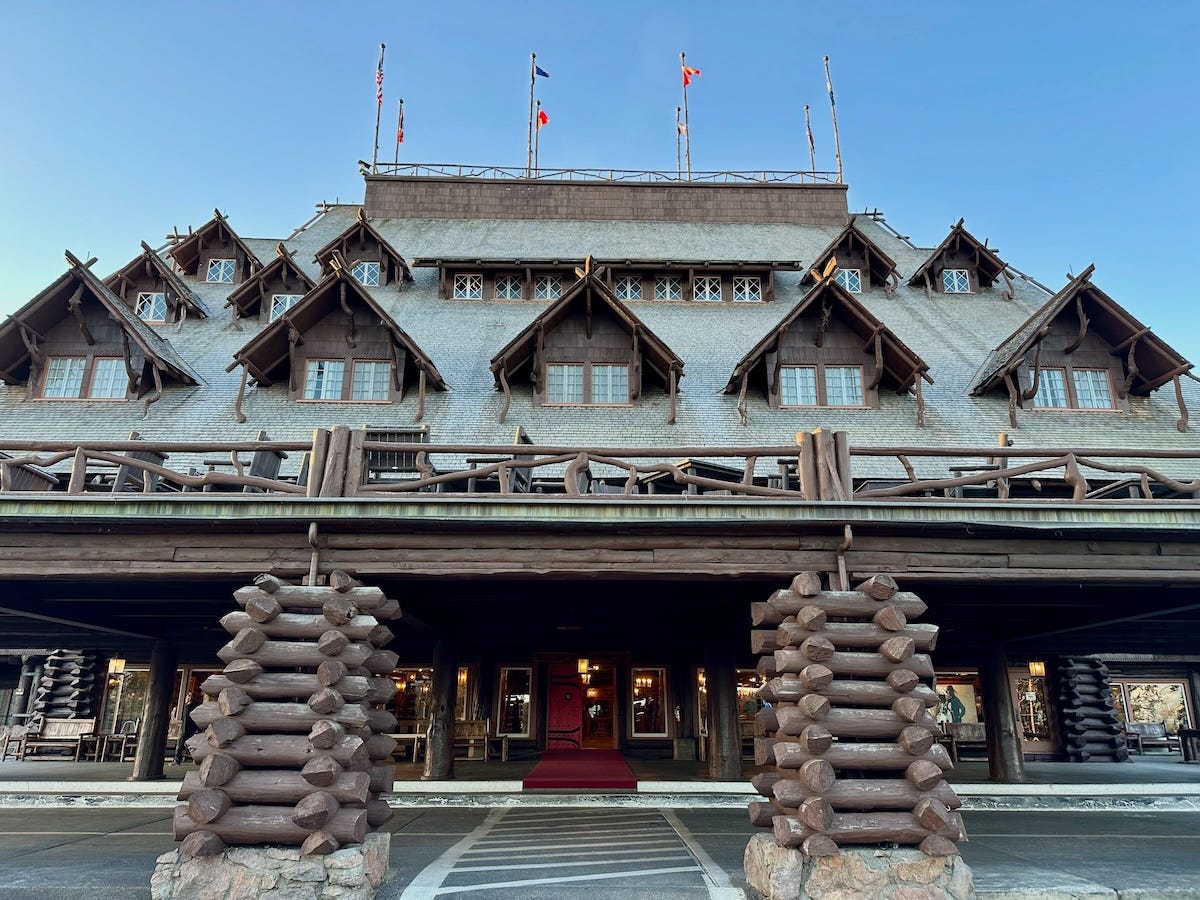
Old Faithful Snow Lodge & Cabins: One of the park’s newest full-service properties (opened 1999), built in heavy timber with a warm lodge feel. Roughly 130 accommodations including lodge rooms and detached western-style cabins. One of only two in-park properties open in winter.
Old Faithful Lodge Cabins: A historic log lodge setting with approximately 170 cabins, from simple shared-bath Roughrider cabins to Frontier cabins with private baths.
The vibe: Gardiner is an authentic, laid-back Montana with historic roots to the national park. Gardiner is quieter and smaller than West Yellowstone, with a good mix of services. It also has the distinction of being the only Yellowstone entrance open to regular vehicle traffic year-round.
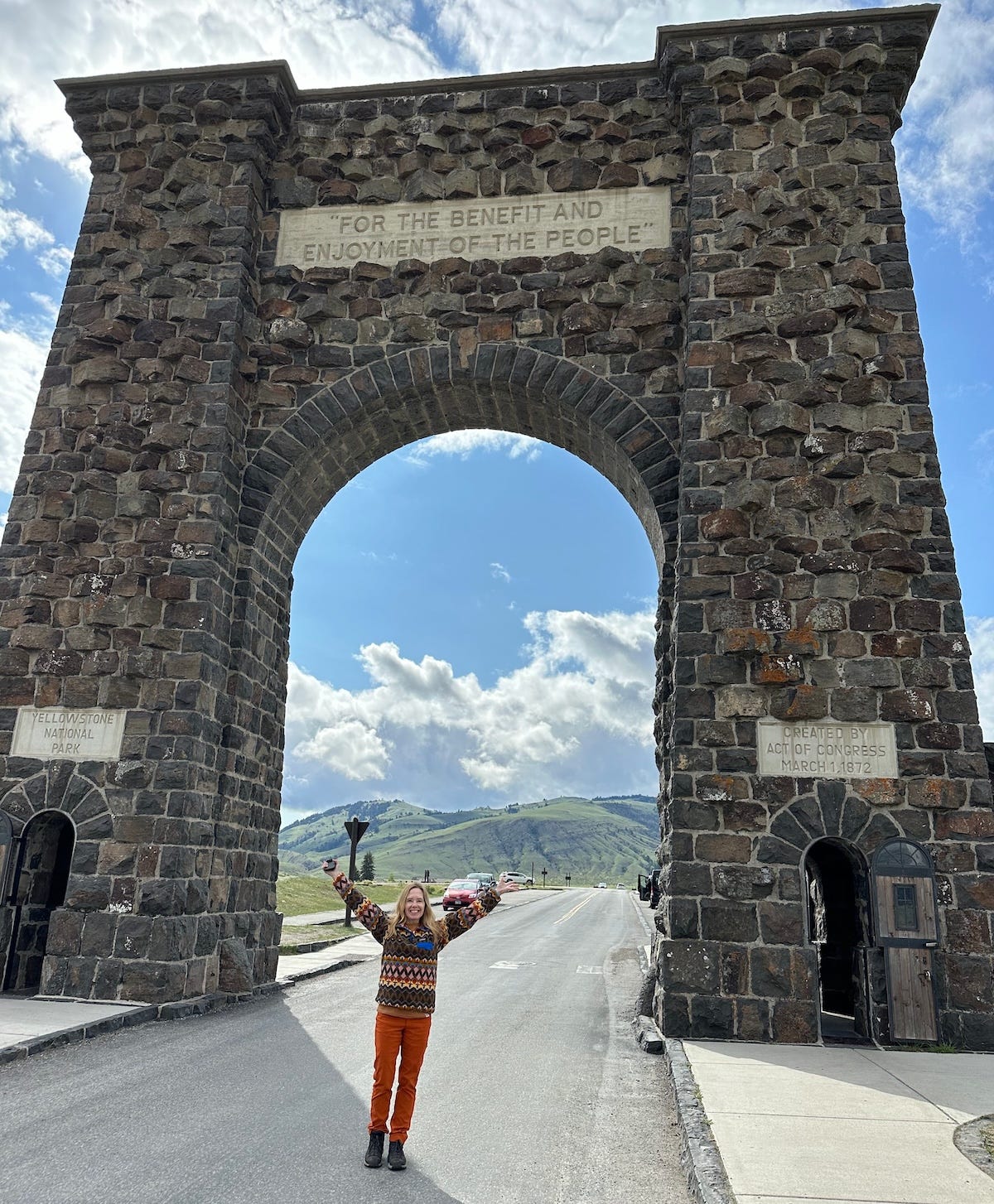
This may be our favorite entrance because of the Roosevelt Arch alone. In 1903, when most Yellowstone visitors arrived in Gardiner by train, park officials and promoters felt that something special was needed to improve the park’s entrance.
During the spring of 1903, a fifty-foot-high arch was built facing the train depot. And on April 24th of that year, the partially constructed arch was dedicated by President Theodore Roosevelt, who laid the cornerstone.
The north entrance is open year-round.
Hotels, riverside lodges, locally owned motels, cabins, and vacation rentals are all available. Many properties offer views of the Yellowstone River or surrounding mountains. You can also find rafting companies and wildlife tour operators in town.
Mammoth Hot Springs Hotel & Cabins: Located about five miles inside the North Entrance, near the famous terraced hot springs. Approximately 200 accommodations with classic national park character and mid-century design, renovated significantly in 2019. The property also includes nearby cabins, some with private baths. One of only two in-park properties open in winter.
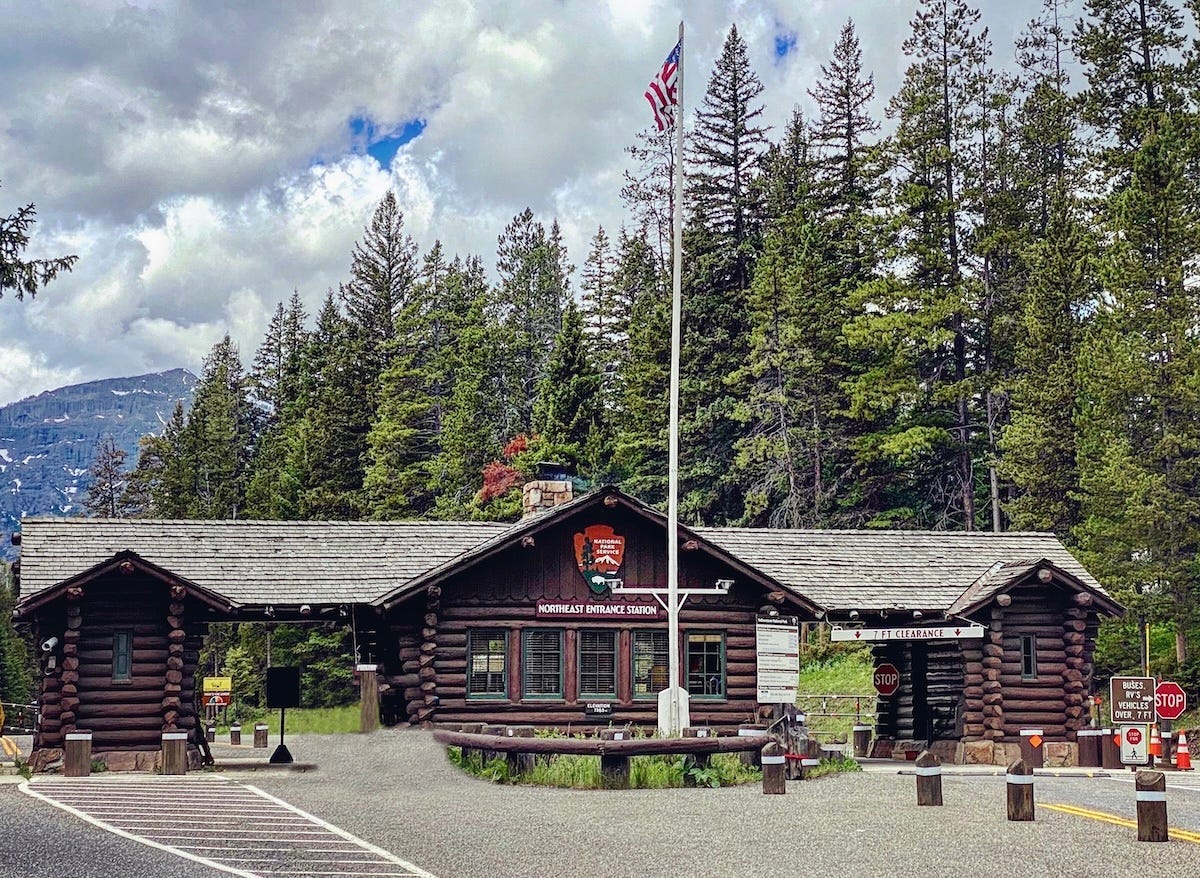
The vibe: Yellowstone’s quietest, least developed entrance. The nearby park entrance communities are small and deliberately rustic.
In summer, the entrance can be reached from the east via the Beartooth Highway, one of the most spectacular mountain drives in the country - possibly our favorite. This entrance also places you at the threshold of the Lamar Valley, the park’s premier wildlife-watching corridor.
The northeast entrance never closed, but the road east of Cooke City does. Generally, the road opens mid-May each year and closes about the first of November, depending on conditions.
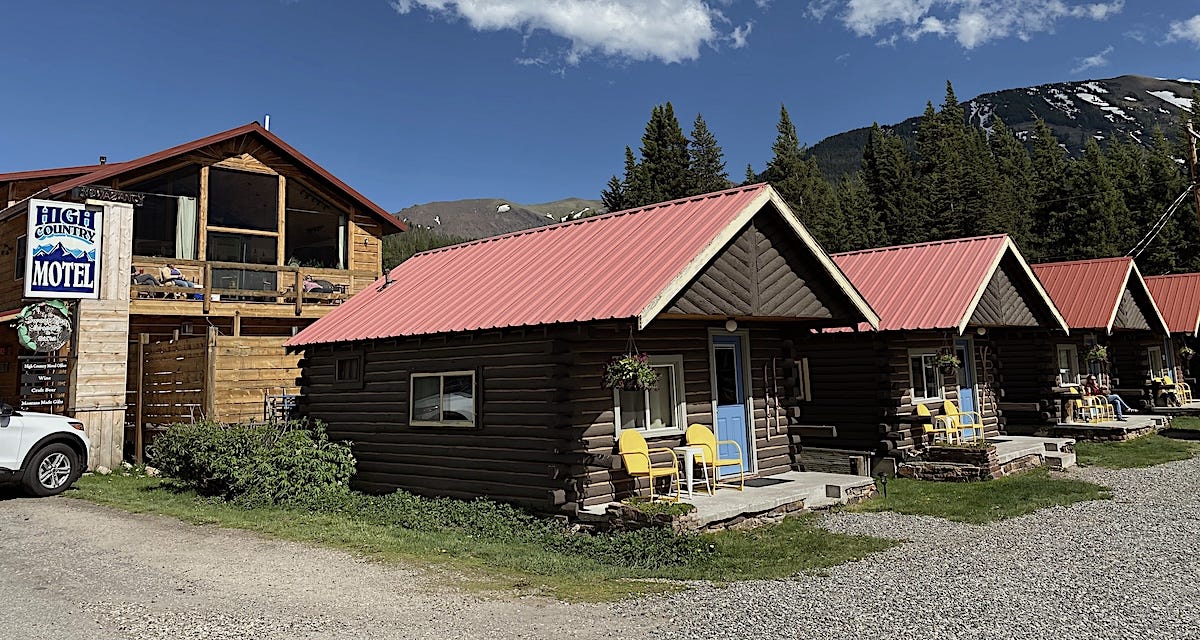
Silver Gate (one mile from the gate) and Cooke City (a few miles further east) offer simple motels and lodges, log cabins, and locally owned inns. No major chains or large resorts. Most businesses are seasonal, open late spring through early fall.
Roosevelt Lodge Cabins: Named for Theodore Roosevelt, set in the park’s rugged northern interior. A rustic main lodge with approximately 80 cabins, from basic shared-bath Roughrider cabins to Frontier cabins with private baths. The Old West atmosphere is a natural fit for this corner of the park. About 28 miles from the Northeast Entrance.
The vibe: This entrance is all about the drive leading to it. A stunning approach along a road that Teddy Roosevelt once called the most scenic 50 miles in America. Cody, 52 miles awat, is a full-service destination in its own right.
The east entrance is typically open May 1st through October 31st.
Near the gate: Guest ranches, wilderness lodges, and cabin properties line the North Fork of the Shoshone River corridor through Shoshone National Forest along the Buffalo Bill Cody Scenic Byway. These range from century-old all-inclusive dude ranches to smaller cabin retreats.
Cody (52 miles from the gate): Western-themed hotels, chain properties, and guest ranches. You’ll also find plenty of dining and entertainment options in town. Check out our Substack article about Cody here for more things to see and do.
Lake Yellowstone Hotel & Cabins: The oldest operating hotel in the park (opened 1891) and a National Historic Landmark. Looking at its bright yellow exterior and white Colonial Revival-style columns, you might forget you’re in a national park in the West, but you are. The hotel has 153 guest rooms, with additional accommodations in the Sandpiper Lodge annex and nearby cabins. About 28 miles from the East Entrance.
Lake Lodge Cabins: A central lodge on the shore of Yellowstone Lake with stone fireplaces and a long rocking-chair front porch. 186 cabins in a pine setting, ranging from simple Pioneer Cabins to more modern Western Cabins. About 29 miles from the East Entrance.
Canyon Lodge & Cabins: The largest lodging complex in the park with more than 500 rooms and cabins near the Grand Canyon of the Yellowstone. A major redevelopment added five new, sustainably built lodges and more than 400 new guest rooms. Because it is located at the park’s geographic center, Canyon is a practical option regardless of which entrance you use. It’s roughly 40 miles from the West, 38 from the North, 48 from the Northeast, 42 from the East, and 58 from the South.
Note: The East Entrance is far from the park’s western attractions. Old Faithful is about a two-hour drive from the gate. Visitors planning to cover the full park may want to consider splitting their stay across multiple locations.
The vibe: There is no gateway town at the south entrance. Most visitors entering here have just come from Grand Teton National Park via the John D. Rockefeller Memorial Parkway, where they no doubt saw stunning natural wonders. The perfect warm-up to the Yellowstone experience.
Similar to the east entrance, the south is generally open from about May 1st to October 31st.
Closest to the gate: Headwaters Lodge & Cabins at Flagg Ranch, just two miles south of the Yellowstone gate in the John D. Rockefeller Jr. Memorial Parkway. There you’ll find modern cabins positioned as a basecamp for both parks.
Within Grand Teton National Park: Jackson Lake Lodge (full-service, with sweeping Teton Range views), Colter Bay Village (family-oriented log cabins on Jackson Lake), and Signal Mountain Lodge (on the shore of Jackson Lake).
Jackson (regional hub): Luxury resorts, boutique hotels, chain properties, and vacation rentals, with full dining, shopping, and services.
Grant Village Lodge: Built in 1984 and named for President Ulysses S. Grant. Six two-story buildings with 50 rooms each (300 rooms total) near the West Thumb of Yellowstone Lake. More modern and functional than the park’s historic lodges, but well positioned for exploring the southern areas, including West Thumb Geyser Basin. The closest major in-park complex to the South Entrance, about 22 miles in.
Note: Old Faithful lodging is approximately 39 miles from the South Entrance.
Yellowstone is big and diverse enough that where you start genuinely shapes your experience. The West Entrance delivers the classics; the North keeps you close to wildlife and geology; the Northeast offers solitude and the Lamar Valley; the East rewards those who treat the drive as a destination; and the South pairs one great park with another.
No posts
Comments
Nothing yet. Say the first thing.
Sign in to join the conversation.