
“When a country replaces evidence with wellness vibes, it doesn’t just lose good guidance. It detaches itself from reality.” — Dr. Andrea Love
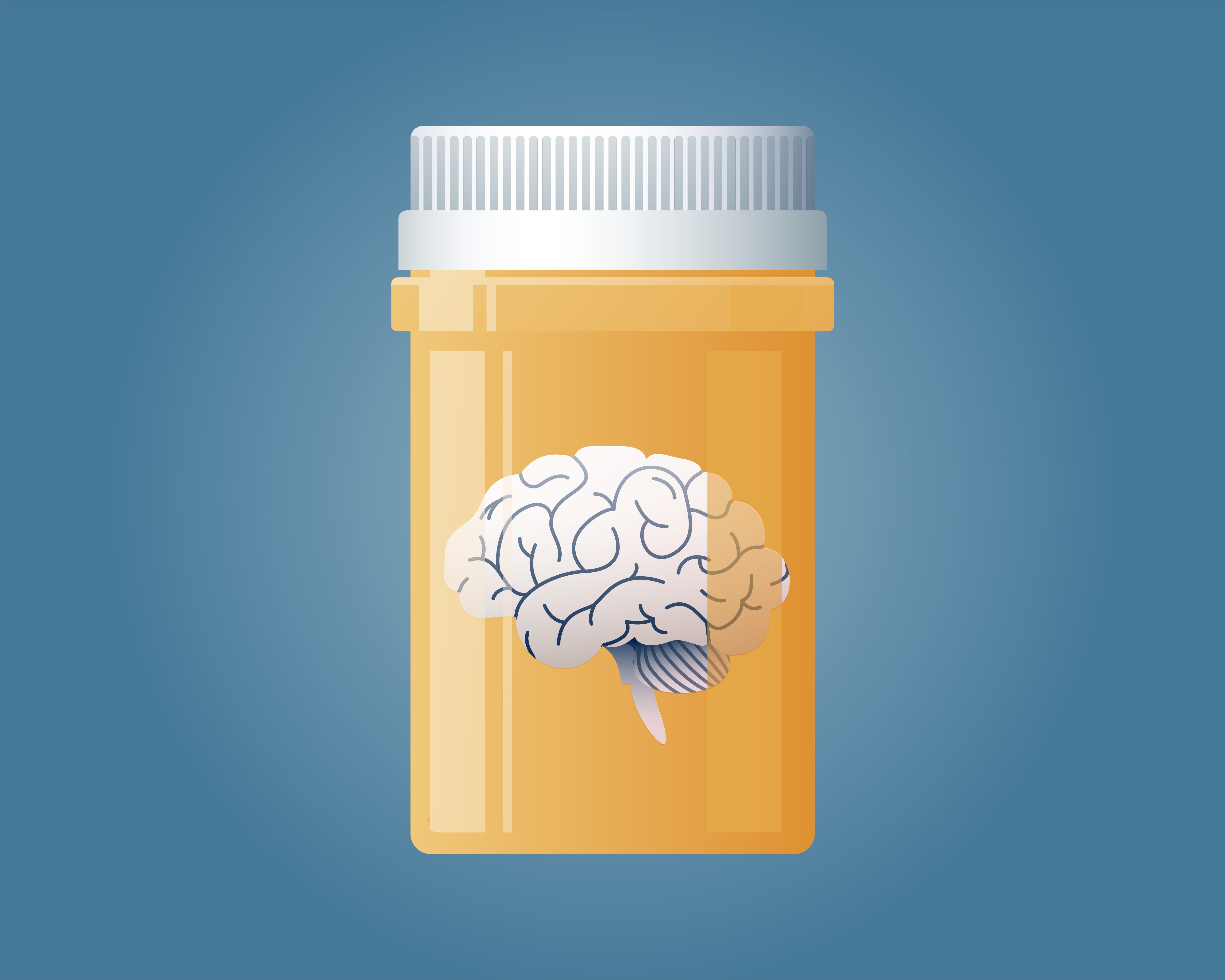
There is a special allure to “magic bullet” treatments. The supplement that promises to wipe away your cortisol. The fountain of youth promised by hormone pellet peddlers. Having a pill/a potion/a silly song-and-dance to solve your [insert ailment here], even if there is little to no science backing exactly why or how it pulls off such a magic trick.
Combine the allure with our current mind-melting timeline — where pseudoscience reigns supreme, actual science is hampered, and wackadoos in charge of America’s health initiatives continue to make backwards stances on what will “solve” health crises.
Prime time for the placebo effect!
If you’re already subscribed here, I probably don’t need to guide you through ways to see and ignore the bullshit hawked by the MAHA goofballs or the snake oil salesfolk. So, no, despite the teaser up top, I’m not dedicating this overly wordy essay to taking down the placebo effect. Quite the opposite. I think the placebo effect is real and quite cool. It is easy to exploit (see above and other excellent writing here) and dipping too far into magical thinking can absolutely backfire (see below), but understanding how placebo effect may work in the context of stress perception can open up new avenues for lightening the stress load. Essentially – how do we leverage the powers of placebo?
To start with definitions, I like the way the placebo effect is described here:
“The placebo effect is a fascinating phenomenon that occurs when a sham medical intervention causes improvement in a patient’s condition because of the factors associated with the patient’s perception of the intervention.” – Munnangi et al 2023
But I also like this mildly confusing definition from a 2010 Neuropsychopharmacology paper:
“The placebo effect is a melting pot of neuroscientific concepts and ideas, ranging from anxiety and reward mechanisms to Pavlovian conditioning and social learning, and from neurogenetics and neurophysiology to clinical practice and neuroethics.” – Benedetti, Carlino, and Pollo 2010
In clinical studies, the placebo effect is a “nuisance to control for” because it can make an ineffective treatment measurably “effective”; to rule out that effect, a control group will be given a placebo as a way of isolating the variables associated with drug administration from the outcomes related to the studied drug alone. A placebo contains no active medication, but having someone in a white lab coat pass you a pill to help what ails you might be a strangely effective “treatment”. Studies have also suggested that learning and expectations are at play, showing that the size of the placebo effect can be increased with verbal suggestions and conditioning1.
In medicine, a placebo is the equivalent of giving a sugar pill or saline instead of a real medication. Physicians may actually prescribe placebos for reasons described as “a gesture of care”, or a way to assure a patient “that things will get better.” and has been used in various ways, from treating chronic pain to erectile dysfunction.
I won’t get into the complicated (and still developing) neuroscience explaining the mechanisms underlying the placebo effect in the brain, but studies have suggested (unsurprisingly) links to the stress pathways. I have a working hypothesis that an aspect of these connections might be the way that placebo relates to expectations and predictability as well as how it affects our sense of control2. Again, unpredictability and lack of control are classic stress triggers in the brain, informing whether (and to what degree) an external challenge is worth physically responding to or if that challenge is simply not a stressor. Expectation further flavors the response as the brain integrates information about “is this getting better? or worse?”
So, yes, there is a physiological basis for how taking something with little to zero medicinal value can still “treat” the thing that ails you and it likely involves stress reduction to some degree3. As that 2010 paper phrased it: “if one expects a distressing symptom to subside shortly, anxiety tends to decrease.”
In my discussion with Dr. Cynthia Stuenkel about healthcare and medications during the menopause transition, the placebo effect came up in exactly this way:
“We do have things that we can do with hormone treatments. We have options. There is also the brand new sexy KNDy neuron-targeting Fesolinetant out there for hot flashes.
The other thing for people who are taking all this stuff and it’s working is to consider how powerful the placebo effect is. For hot flashes, it is super powerful. Tell a patient, ‘take this, you’ll feel better’ and they come back and go, ‘I do feel better.’ We see this in clinical trials, placebo could knock down hot flashes like 30% in some of these studies. That’s huge. So you can give people all kinds of concoctions, and, I guess it’s our human nature that if they believe it’s gonna work, it might work pretty well.” — Dr. Cynthia Stuenkel
Placebo can knock down hot flashes by 30%! That’s fascinating, right?
Peri/menopause care is really the wildest of placebo-laden wests. Even the best medical interventions often rely on symptom relief to gauge effectiveness4. Of course, relief may be actual physiological relief OR relief could be related to the stress relief that comes with feeling supported; adding that sense of control and positive predictability the brain is craving to feel at peace in the situation.
Placebo effect can work wonders. And that is not necessarily a bad thing.
(Unless, of course, it tips over to that exploitation side. It’s easy to capitalize on the placebo effect and mark up a snake oil supplement as “effective” when someone reports experiencing symptom relief. Even if that symptom relief was purely reflective of feeling relieved. Anecdotal evidence leveraged as “proof of effectiveness” is an easy tell that someone is pushing absolute crap.)
Since the placebo effect impacts health through a complex mind-body connection, are there other ways we can leverage this power (responsibly!!!)?
I keep coming back to this quote: “If one expects a distressing symptom to subside shortly, anxiety tends to decrease.” In a way, wielding the power of placebo is the opposite of medical gaslighting. It’s about acknowledging the situation, the difficulty, the pain you are experiencing. It’s about providing a plan, a strategy, a sympathetic ear instead of dismissal, a way to lighten how we feel about the situation, the difficulty, the pain, the unknown path ahead. Even if the ailment is not fixed, even if there is no clear path towards a cure, having a healthcare provider validate your experience is powerful medicine5.
Branching outside of the medical world, let’s consider other avenues for feeling acknowledged, seen, and/or like we have a path towards a point in time where a distressing symptom/situation will “subside shortly”.
I’ve been wondering how something akin to the placebo effect could be showing up in parenting content these days. How the go-to voices on parenting/health subjects may be tapping into a placebo-like effect. For example, how much of Emily Oster’s stuff creates a placebo-like effect? Or Dr. Becky’s? Etc. etc.
If someone’s writing (and/or general content) eases the stress of day-to-day life, makes parents feel better, more at ease, in a way that could affect stress-related health issues, maybe its worth consider their placebo-like effects. After all, words are a sham intervention. They contain no active ingredients6. No procedure to fix what is actually broken. None of these words will effectively change the exposure to the external stressors of parenting in the world today.7
A placebo-like effect could relate to the way that words or knowledge or insight or whatever you are gaining gives a semblance of control, some concept of predictability, some glimpse of this will all get better. Those feelings could be enough to cut off (or at least lessen) stressor perception and the way parental stress settles in our bodies8. I fully believe and support the positive side of the placebo (and placebo-like) effect.
Now is where I jump back in as Debby Downer (whomp whomp) because, like most things related to stress, there is a narrow tightrope to walk here though…
All of this can backfire.
The tighter we hold onto a sense of control, the harder the stress hits when that control is wrested away from us. Having predictive information is a helpful stress reduction tool, but we (or our children) may not be on the same trajectory as whoever is spinning the predictions. Learning about a parenting tactic/skill/strategy that sets a specific expectation can create a direct line towards stress-inducing expectation mismatch when the outcome does not pan out as promised.
Consider the two sides of a here’s-the-script model, a la early Dr. Becky9 and gentle parenting folks. A script is an excellent way to feel in control. Having a specific behavioral challenge acknowledged and described alongside a detailed way of handling that challenge creates predictability: “Do this one thing and everything will get better!” Even if we don’t follow the script to the tee, there is even some relief in knowing that we can do something. The other side of this is when the participant (a child… obviously known for their predictability 😂) does not respond to that script in the way promised. Now you’re right in the unpredictability and lack of control zone. Add in that expectation mismatch (things are definitely NOT getting better) and you have the whole stressor cocktail.10
This is why I am especially skeptical of surface-level-experts and the damage that they can cause. Even when they have good intentions (and not all do), if that “expert” is spinning advice based on very little sound research or over-extrapolated data, they may inadvertently tap into a placebo-like effect for some people. That’s wonderful for those individuals, the few who do feel better and maybe even feel weight lifted off their parental stress levels. The problem is how the advice gets passed along and affects other parents — one person finds placebo-drenched relief, boosts this “magical secret to fix blah blah blah” and the next recipient of the passed along bullshit suffers more because it does not actually work for them (or anyone else). Even in medicine, one person’s placebo effect is not someone else’s placebo effect.
As it relates to parenting stress and parenting advice, it’s another reminder that anecdotal evidence should never be considered “proof” of effectiveness. We are all different humans with different children in different circumstances. The only sure-thing in parenting is the sure-thing that your experience will rarely align with someone else’s.
I could go on with examples, but I’d rather hear and learn from you:
Where else do you see benefits (and risks!) of placebo-like effects when it comes to maternal stress load?
One more thing! Can I bug you for a tiny gesture of support? A simple tap on that ❤️, a share, a recommendation, or (if you’re feeling extra generous) a ridiculously low monetary upgrade of $6 for the ENTIRE YEAR (keeps me caffeinated 😉):
Only $6 for something free? What a deal!
do you study this or know someone who does? Send me the research or make the connection!
Placebo effect is not to be confused with remission. Sometimes health issues just run their course. Natural remission is another "holy shit, this works!" trick that plays into the spreading of misinformation.
This is something that worries me with RFK Jr’s stance on depression — the dangerous combination of placebo and remission:
“in clinical trials for major depression, one-quarter of the benefit is due to the specific action of the active medication, one-quarter is due to other factors such as spontaneous remission, and one-half is the real placebo effect, that is, the real psychobiological phenomenon.” — https://www.nature.com/articles/npp201081
None of this means we should not be treating major depression with effective medication.
Anyone who requires you to do an extensive hormone panel as a way of doing a deeper assessment is spinning a whole bunch 'o’ bullshit.
Another example of this in women’s health is from endometriosis diagnosis. This study showed that the most common emotion patients experienced following receiving a diagnosis of endometriosis was relief (86%), followed by feeling overwhelmed (54%) and anger (32%). The authors concluded that long delays to diagnosis and dismissal by medical practitioners frequently manifest as a reaction of relief by patients once diagnosed.
Just as words are not medicine but can have real positive effects, words are not poison but can have some real damaging effects. Consider the nocebo effect in this context too (see footnote #1) .
Unless some of this will inspire politicians to get their shit together and craft policy that truly supports parents?
A working hypothesis stacked onto a working hypothesis, of course, so hand yourself many many grains of salt.
And, as always, if you know of the research on this, send it my way!
Maybe she still does this. I was not a big follower of Dr. Becky but I did appreciate her book from a placebo-like effect perspective of feeling better after having kid behavior difficulties acknowledged.
This is the danger of magical thinking as described in my conversation with Alex Bollen.
Comments
Nothing yet. Say the first thing.
Sign in to join the conversation.