
As a journalist in the fashion tech space for the past five years, I have spoken to hundreds of different people working hard at the coalface of fashion’s digital transformation. These include founders, heads of innovation at major brands, marketing and e-commerce VPs - you name it.
And each time the subject of virtual try-on (VTO) comes up, there is always agreement: VTO is something online retailers lean on to lower returns and help more shoppers go from checking out a product page to actually buying.
Great in theory. But in the last 10 years (that’s how long the technology has been around, believe it or not!) it has not yet managed to do what it set out to do. Consumers, en masse, have not bought into the technology, largely because of a little thing called trust. Unless shoppers are willing to provide detailed information about their bodies, data many people simply don’t have readily available, it has been hard to trust that the virtual try-on result would be even remotely accurate.
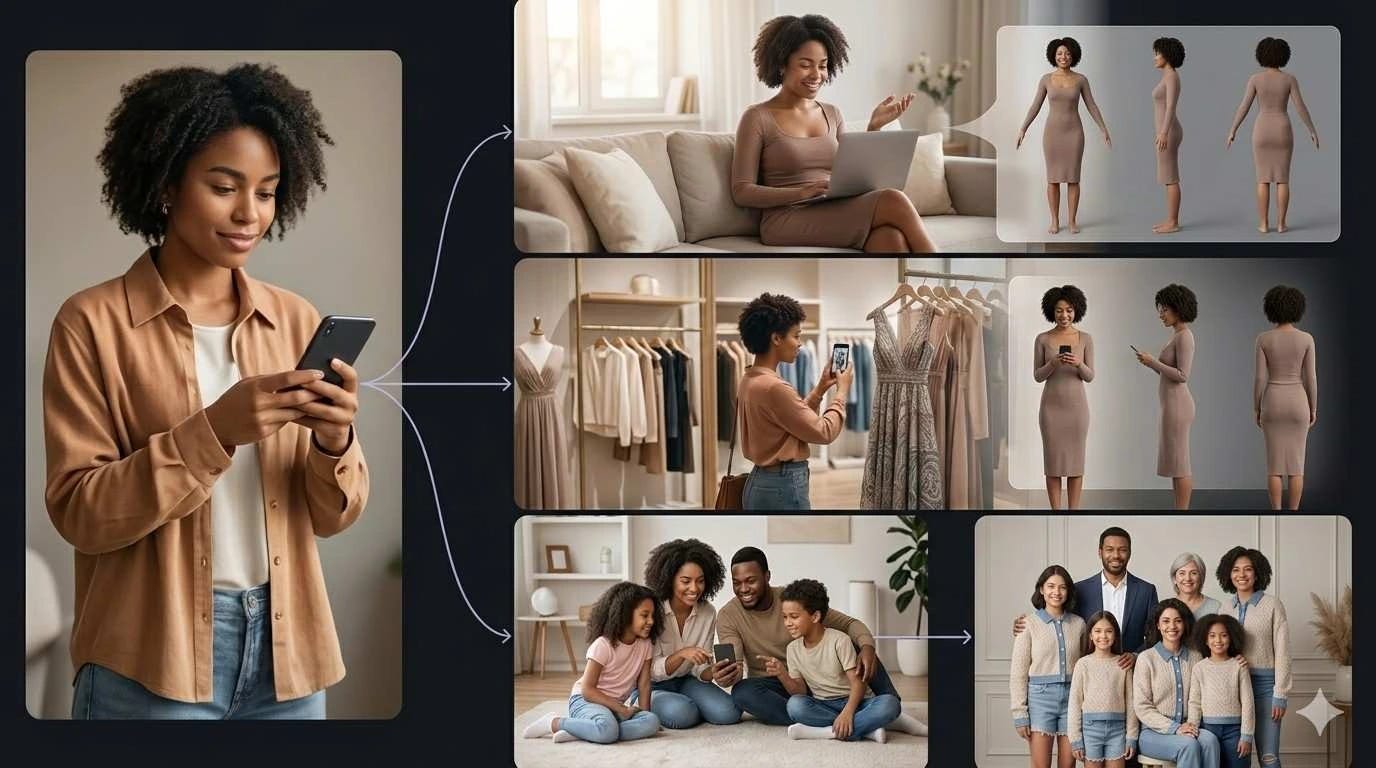
And therein lies another issue: speed. Shopping online for most is a game of impulse, convenience, emotion. Most are unwilling to stop mid-scroll to provide body measurements, fill out forms, and wait hours (in the past, sometimes even up to 24 with some VTO solutions) for a rendered try-on result. That’s not the way things are now though, of course, now results happen in a matter of minutes.
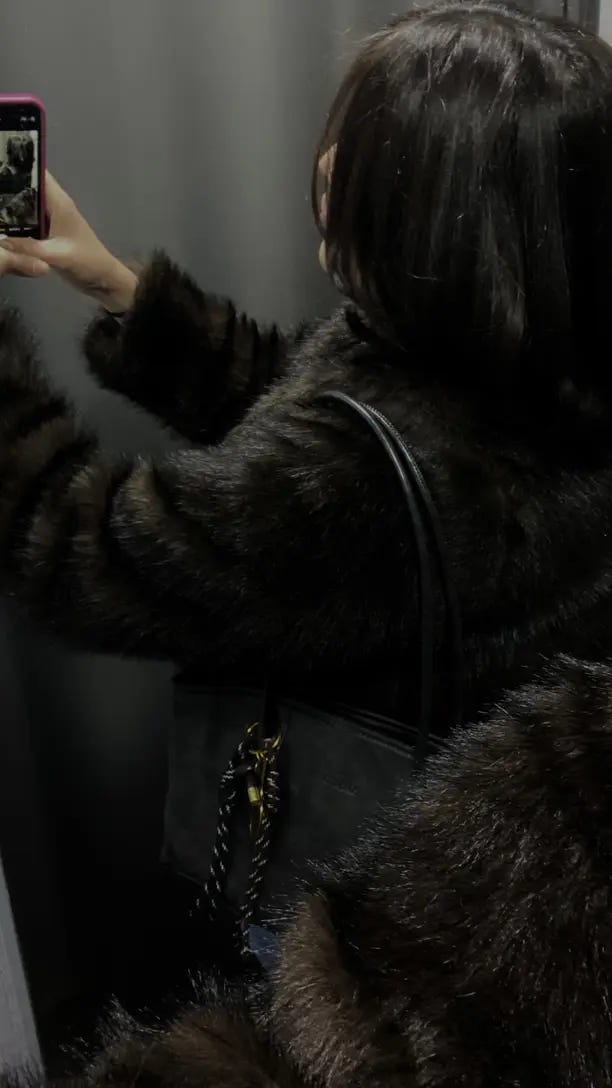
Not much changed, though. There wasn’t a massive uptake of VTO when rendering speed accelerated and it became possible to upload pictures and videos of the body. Shoppers felt exposed, had privacy concerns, or were usually browsing in a situation where they didn’t feel like anything high, or even medium, effort in the moment.
Unless you have been living completely off the grid since the pandemic, you’ll know AI is everywhere and has been affecting just about every industry, to varying degrees. And fashion, mostly on the downstream, commerce-facing side of business, has seen an explosion of AI applications and tools. Of course, VTO has been among them.
But has AI actually changed the game for VTO in fashion? Brands and retailers, as well as fashion tech companies, have revisited this question with fresh hope, examining whether the old trust and accuracy issues can finally be solved or, at least, measurably improved.
A fashion tech company that is focused on tackling these challenges head on is TryStyle. The team, which at its helm has Rich Blecher as Founder and President, uses a VTO system that combines computer vision-based body mapping, generative AI garment rendering, and real-time fit technology. Rich explains to me that what they are building is one of the most advanced try-on and fit solutions currently on the market.
While the technology has always been front and centre for TryStyle, Rich’s introduction to the problems customers experience with online shopping was through the eyes of his wife. At the time, she was often returning items that had appeared to be perfect through the screen but then were a disappointment on arrival. It was a pattern that kept repeating across orders.
Finding this both fascinating and frustrating, he looked deeper into why this was happening and stumbled on the world of fashion that is pretty far from glamour. The one that is plagued by outdated sizing, guesswork, and returns that are harmful for the environment, brand reputation and customer loyalty.
And so TryStyle was formed, even though Rich’s background wasn’t traditionally rooted in either fashion or technology; something that’s surprisingly common among many of the brightest minds working in fashion tech today.
Rich grew up in a blue-collar family, where work started early and money was often tight. Before there was any real sense of career direction, there were small jobs (mowing lawns, helping neighbours, doing whatever needed doing) the kind of work that was paid in cash and often went straight back into the household.
He later became the first in his family to attend college, eventually taking a path that led him to the U.S. Air Force. Commissioned in 1989 as a navigator in reconnaissance aircraft, he spent two decades in service. Along the way, he became involved in early applications of AI/ML and meta data before it was even a common term. In the context of advanced military applications, he was able to apply his experience when he later moved into the private sector.
That value is what TryStyle is embedding in its modus operandi as it works to take VTO from being perceived as a visual novelty by consumers into the realm of functional reliability, accuracy, speed into the actual retail workflow. Measurement accuracy is one of TryStyle’s cornerstones, with its system designed to be inclusive by default: trained across a wide range of body types, skin tones, and garment categories, reflecting the reality of modern fashion audiences.

TryStyle also has centered its architecture around certain principles that circumvent some of the friction points that have previously held VTO back. Privacy, for instance, is built in from the ground up, with biometric data processed ephemerally and not stored. Deployment is designed to be measured in days rather than months, meeting the need for speed in retail environments where experimentation cycles are short. And instead of relying on claims alone, the company points to live retail outcomes (conversion, return rates, and basket size) as the primary measure of success.
It’s promising, to be sure. As AI closes the technical gap and tools become easier to plug into existing retail environments, the conditions for real adoption are starting to fall into place. This is likely to gain further momentum if the language around VTO changes, taking on the nomenclature of AI-assisted shopping, personalised fit recommendations, digital avatars, styling assistants, and “see it on your body” interfaces built directly into e-commerce journeys.
This is still a nascent space with many more questions and considerations, so watch this space. But for the first time in years, virtual try-on no longer feels like a futuristic add-on and the industry may finally be approaching the moment VTO has been promising all along.
About our partner: TryStyle is an inclusive, AI-powered virtual try-on platform that transforms online shopping. We make fashion effortless and confident for every body. We help retailers boost conversions, reduce returns, and deliver a shopping experience that feels as real as in-store. Visit: https://trystyle.fashion/ for more information and request a demo today.

Comments
Nothing yet. Say the first thing.
Sign in to join the conversation.