
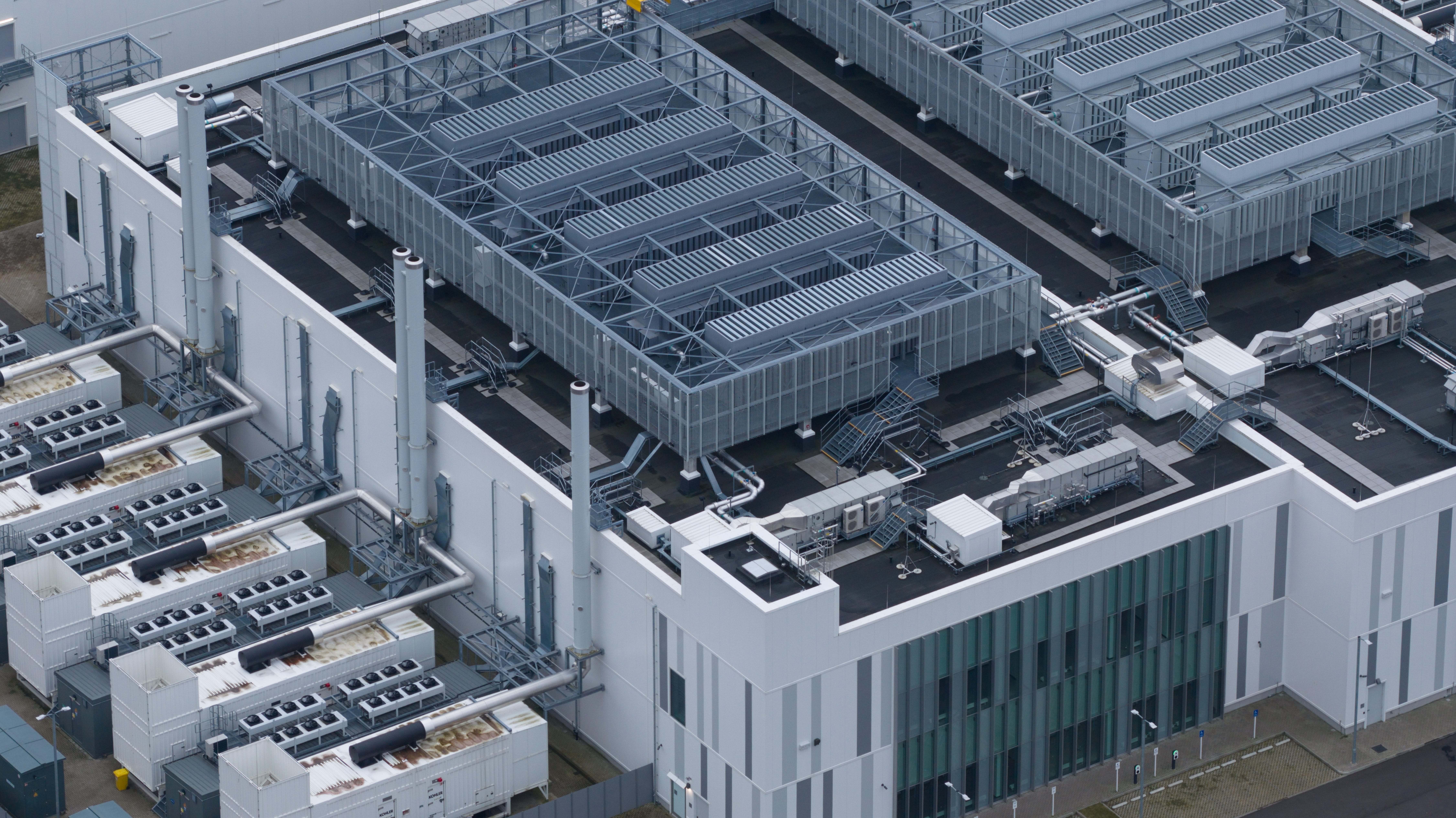
There is a question worth putting to every AI related investment pitch that lands on your desk at the moment: who actually gets paid if the electricity runs out first?
It is not a rhetorical flourish. Across the United States, the single biggest constraint on building new AI computing capacity is no longer the availability of advanced chips. It is the availability of power. Grid interconnection queues in the principal data centre markets now stretch several years. New gas turbines, the fastest practical way to add large scale generation at pace, are effectively sold out into the end of the decade. Utilities are being asked to commit to power supply agreements on a scale and timeline that bears little relation to how quickly the grid itself can be reinforced, permitted, and built. The industry has spent two years fixated on the semiconductor as the scarce resource of the age. The more interesting scarcity now sits one layer downstream, in the substation and the turbine hall.
This is not a new pattern in economic history, merely a new instance of an old one. Every great infrastructure build out eventually runs into a bottleneck that has nothing to do with the technology that started it. The railroads needed steel and land rights before they needed locomotives. The telecoms boom of the late 1990s needed fibre in the ground long before it needed routers. The AI build out, for all its novelty, is following the same logic. The chip is the locomotive. The power is the track. And track has historically been where the more durable fortunes were made, precisely because it could not be conjured quickly, however much capital was thrown at the problem.
This has created an unusual and, I would argue, still underappreciated situation in markets. The companies best positioned to benefit from the AI infrastructure race are not necessarily the ones with the fastest chips or the most elegant software. They are the ones that already control the power, and can therefore set the terms on which everyone else gains access to it.
Fermi America is building a large scale power and data centre campus at Project Matador in Carson County, Texas, combining new behind the meter power generation with data centre real estate on the same site. The company has already signed a fifteen year lease worth $6.5bn with TensorWave, a major AI compute provider, anchoring the economics of the project with a long term, contracted revenue stream before a single incremental megawatt has to be sold into the open market. That is a meaningful distinction. Much of the current AI infrastructure narrative rests on projected demand. This is contracted demand, priced and signed.
What makes the structure genuinely different from most of the listed vehicles investors reach for when they want AI infrastructure exposure is that Fermi sits on both sides of the value chain simultaneously. It generates the power. It also owns the real estate the compute sits on. Most listed businesses in this space specialise in one function or the other. An equipment supplier sells a turbine into a project and moves on to the next order. A data centre real estate investment trust leases out finished space but typically buys its power from a third party utility or generator, ceding a significant share of the economics in the process. Fermi captures the economics of both the electron and the building it powers, on a single balance sheet, at a single site. It is, in effect, a vertically integrated bet on the scarcest input in the entire AI value chain.
The choice of Texas is not incidental either. The state’s deregulated electricity market under ERCOT, its comparative abundance of land, and a state government that has been actively courting exactly this category of large scale energy and infrastructure investment together reduce much of the regulatory friction that slows comparable projects elsewhere in the country. Texas has, in effect, made itself the path of least resistance for anyone trying to build power and compute together at speed, and Fermi is one of the more advanced projects attempting to exploit that positioning.
The company is currently in the middle of an equity raise aimed specifically at REIT and real assets investors, following the TensorWave lease signing. That investor targeting matters. It signals a deliberate attempt to migrate the shareholder base from specialist energy investors, who understand generation economics, towards real assets allocators, who understand long duration, contracted income streams and know how to underwrite them. That is often the inflection point in a story such as this, the moment at which the market’s understanding of a business begins to catch up with its underlying economics, and the point at which a stock’s ownership base, and its valuation framework, can shift meaningfully.
None of this is without risk, and a column that only makes the affirmative case is not doing its job. Execution risk sits at the centre of the thesis. Building and energising a project of this scale on the proposed timeline is genuinely demanding, and any delay to construction, permitting, or the ramp of generation capacity would push out the point at which the lease economics show up convincingly in reported numbers. There is also a natural concentration risk in leaning on a single large anchor tenant, however robust that tenant’s own balance sheet currently appears. Investors should also weigh the company’s early stage relative to established utilities or diversified data centre REITs, with the governance and disclosure considerations that accompany any newer, smaller listed entity.
I would not frame this as a momentum trade riding an AI theme that has already run hard. I would frame it as a considered bet on a specific, and I think still underpriced, insight: that owning power generation and data centre real estate on the same site, under the same roof, is a structurally superior business model to either selling equipment into that build out or leasing space without controlling the power behind it. If the AI infrastructure cycle continues anywhere near its current trajectory, and power remains the binding constraint on how quickly that cycle can proceed, then history suggests it is the party controlling the track, rather than the party building the locomotive, that ends up capturing the disproportionate share of the value created.
Nick Lawson is Executive Chairman & Founder of Ocean Wall. This article reflects the author’s own analysis and is for general information purposes only. It does not constitute personalised investment advice. Readers should conduct their own research, including verifying current financial data, and consult a financial adviser before making any investment decision.
Comments
Nothing yet. Say the first thing.
Sign in to join the conversation.