
After spaghetti, summer moves from the long strand to the hollow shape. The pleasure changes. No more twirling, no more working your fork. Now pasta becomes architecture: tubes, ridges, smooth walls, cut ends, broken lengths, sauce inside and out.
This chapter is about daily pasta. Penne and ziti are not fragile shapes. If spaghetti is the origin story of Italian pasta, these are the shapes that made Italian pasta modern. And they are built for repetition: tomato, oil, meat, and the practical, maybe the late-night, box in the pantry.
Penne rigate and penne lisce begin with the same idea, the tube, but they do not behave the same way. One grips. One slides. Ziti and candele stretch the idea back toward Naples, Sunday, and ceremony, long tubes broken by hand before being tossed into the pot.
However, this isn’t just about summer pasta; when paired with the right sauces, these shapes give the preeminent summer vegetable, the tomato, a vehicle that drives with the top down.
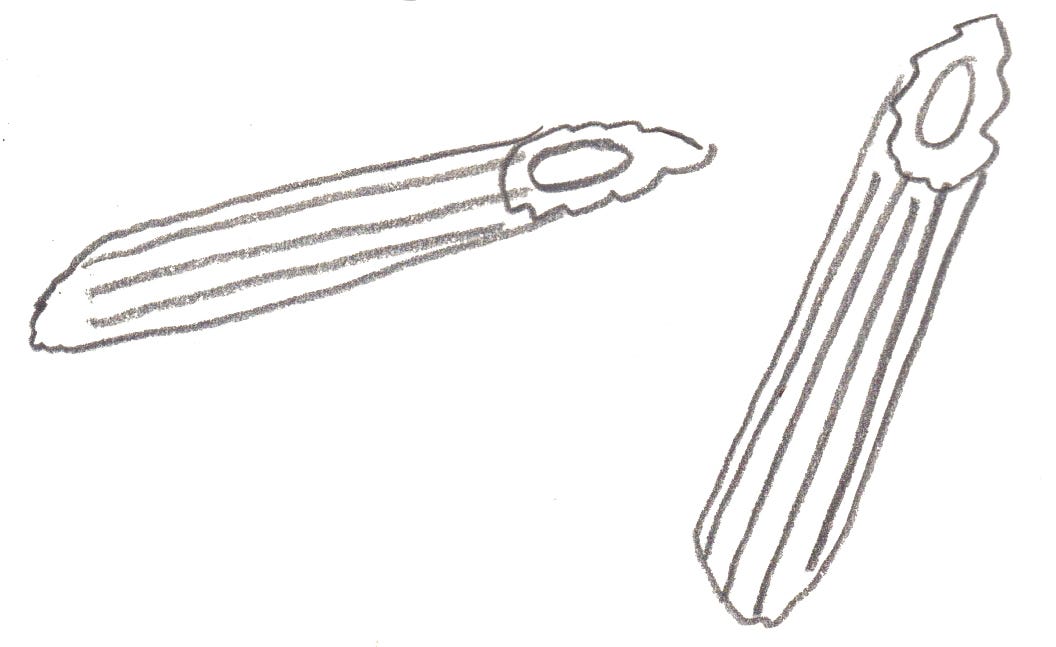
Penne Rigate
Penne rigate may be the most familiar short pasta in the world, which makes it easy to overlook. But this is pasta with a big job: hold sauce, catch texture, and make tomato feel complete. The ridges are not decoration. They are function. Its predecessor and sibling, penne lisce, we will get into in a minute.
History: Penne comes from the word penna, meaning “quill,” a reference to the angled cut that resembles the nib of a pen. The shape’s “patent” traces to Genoa in 1865, but the ridged version didn’t become popular until after World War II.
Shape: Short, hollow tubes with angled ends and ridged sides.
Texture: Sturdy, structured, and sauce-gripping. The ridges give the pasta more traction than its smooth sibling.
Filling: None.
Sauce: Tomato-based sauces, especially those built with vegetables, tomato, cheese, and oil, need a pasta with edges.
One Bite: A ridged tube catching the texture on the outside and carrying the sauce inside the hollow center. Firm, practical, deeply satisfying.
White Wine: Acid-driven whites with enough brightness to meet tomato and enough texture to handle oil and cheese.
Red Wine: Medium-bodied, savory reds with acidity and restraint.
Final Thought: Penne rigate became famous because it is useful. It will forgive imperfect time spent cooking, and on the plate, it holds its texture and makes ordinary tomato sauce feel like dinner.
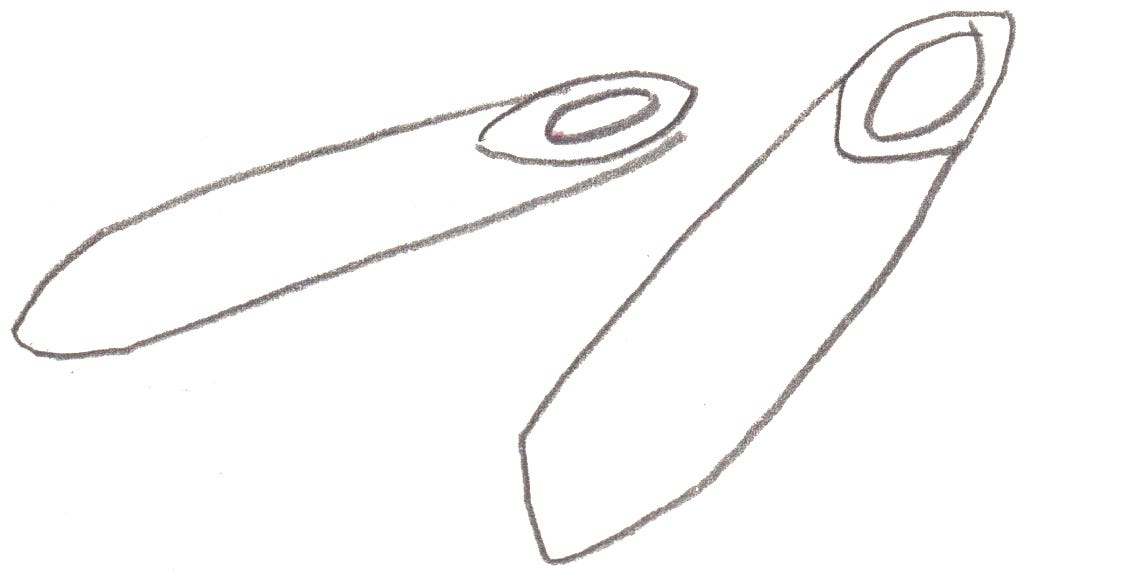
Penne Lisce
Penne lisce is all of the above, stripped of texture: smooth, angled, and hollow. If Penne rigate grips, Penne lisce glides. That makes it harder to love on the fork, but also more revealing.
History: Penne lisce is likely closer to the original 1865 patent. As above, its name originates from penna, meaning “quill.” Lisce means “smooth,” and the slanted ends were designed to draw up sauce like a pen nib draws ink. I mean, seriously? So cute.
Shape: Short, hollow tubes with angled ends and smooth sides.
Texture: Sleeker and less forgiving than Penne rigate. It does not hide behind ridges, so the pasta and sauce have to be right.
Filling: None.
Sauce: Arrabbiata. Tomato, garlic, chili, and oil. A sauce with enough heat and intensity to cling even when the pasta refuses to help.
One Bite: Smooth pasta, bright tomato, heat at the edges. Less grip, more slide.
White Wine: Acid-driven whites that keep the tomato and chili fresh.
Red Wine: Medium-bodied, savory reds with acidity, but nothing heavy or soft.
Final Thought: Penne lisce does not forgive you the way penne rigate does. If the sauce is thin, everyone knows it.
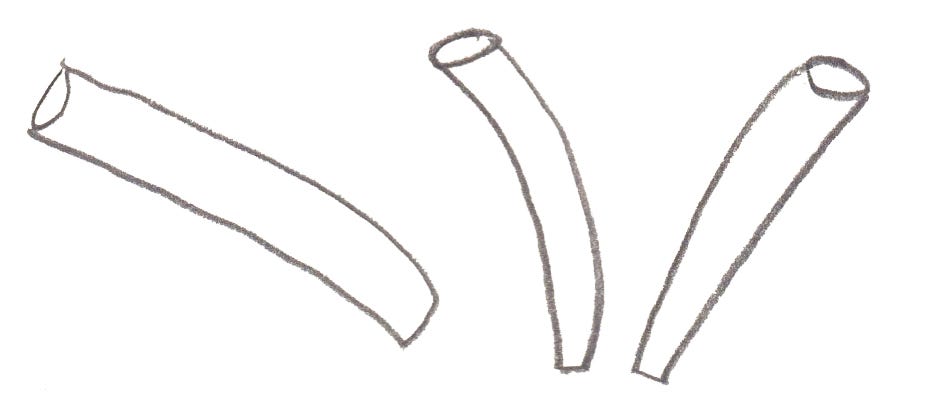
Ziti (& Candele)
Ziti belongs to Naples, to Sunday, to ceremony, to the sound of dry pasta being broken by hand before it meets the pot. It is less about convenience than occasion. Even when dried and boxed, it carries the feeling of a table being set for more people than expected. It reminds me of Brooklyn.
History: Ziti means “bride and/or groom” in Neapolitan dialect, tying the pasta to weddings and celebrations. Candele, meaning “candles,” are larger, longer tubes, also broken before cooking.
Shape: Long, smooth tubes of dried semolina pasta, traditionally broken by hand before cooking. Candele are a larger version of ziti.
Texture: Smooth, hollow, and substantial. Broken lengths make the bite irregular.
Filling: None.
Sauce: Neapolitan ragu, meat and tomato. A sauce that takes time on the stove.
One Bite: A tube filled with sauce, carrying meat and tomato together, crowded, and alive.
White Wine: Savory whites with enough body to stand beside a meat sauce.
Red Wine: Medium-bodied, savory reds with acidity and enough structure for a meat sauce.
Final Thought: Ziti is not just a pasta shape. It is the sound of Naples, and closer to home, the Italian-American household, breaking something to share, so everyone can eat.
By the end of summer, the tomato does not need delicacy. It needs capacity. Penne and ziti are pantry pastas, built to hold what the season gives: vegetables, garlic, chili, oil, meat, and a little too much sauce. They remind us that summer pasta is not only about lightness, but abundance, appetite, and the pleasure of feeding whoever is at the table.
Recipes: Throughout the Italian Dinner Party substack, we find pasta popping up in many chapters: with our recommendation of a meat sauce for our ziti, you can check out the Italian-American chapter for a red sauce and some meatballs; in our section on Pantry Pasta you will find a recipe for penne alla vodka. And in our first chapter on Pasta, we had to introduce the world to Sicily’s beloved Alla Norma. Buon appetito!
Pasta drawings by our dear friend, Amber Vittoria
Comments
Nothing yet. Say the first thing.
Sign in to join the conversation.