
A friend once told me, if you ever write about New York City, you’d better be a good writer. I am extending that advice and nervous energy here, as I think about the four iconic pastas of Rome. Just in the second chapter of this compendium, I’m already wondering if I can pull this off.
The goal of this compendium is about the pasta itself: the shape, the filling, the form. In Rome, the hierarchy flips. The sauces lead, and the pasta follows. Shape still matters, but it is chosen in service of how the sauce moves, clings, and carries. And in these four pastas, they are not a collection of dishes; they are a sequence of sources. Four pastas, built from the same foundation. Subtract or add a single element of the sauce, and everything changes.
Start with Cacio e Pepe: Pecorino Romano, black pepper, and pasta water. Nothing more. Technique over ingredients. Add guanciale, and you have Gricia. Fat enters the equation, and with it, depth. From there, the road splits. Add tomato and red pepper flakes to the guanciale, and you arrive at Amatriciana, acid and heat balancing richness. Add egg instead, and you have Carbonara, silky, structural, and indulgent.
Let’s dig into it.
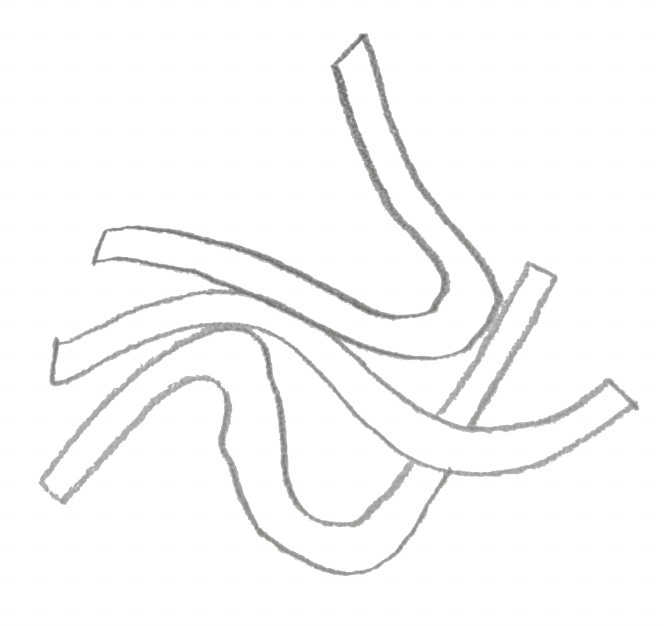
Cacio e Pepe (Tonnarelli)
Cacio e Pepe is Roman minimalism at its peak; three ingredients, but no margin for error. It is not simple; it is exact. Cheese, pepper, pasta, and technique. That’s it. Get one thing wrong, and it is a hot mess.
The Pasta: Tonnarelli is Rome’s square-cut answer to spaghetti, thicker, rougher, and built to hold onto sauce. The pasta’s lineage is closely tied to spaghetti alla chitarra from Abruzzo. In dishes like Cacio e Pepe, tonnarelli’s edges grip and emulsify the sauce in a way that round pasta cannot.
Dish History: Cacio e Pepe is linked back to pastoral traditions in the Roman countryside, where shepherds carried dried pasta and aged pecorino; black pepper came later, but the logic remained: work with ingredients that travel well.
Shape: Long pasta, typically tonnarelli or spaghetti itself.
Sauce: Pecorino Romano, black pepper, and pasta water. No butter. No cream.
Texture: Slippery, emulsified, tightly bound. No pooling, no clumps in this dish.
One Bite: Pasta al dente, glossy and peppered. Earthy spice, salt, and fat arrive at once.
White Wine: Mineral, sharp, and saline, something that cuts through fat and salt.
Red Wine: Light-bodied with high acidity and low tannin; nothing that competes with salt and pepper. Think refreshment, not structure.
Final Thought: The simplest Roman pasta is the hardest to make well.
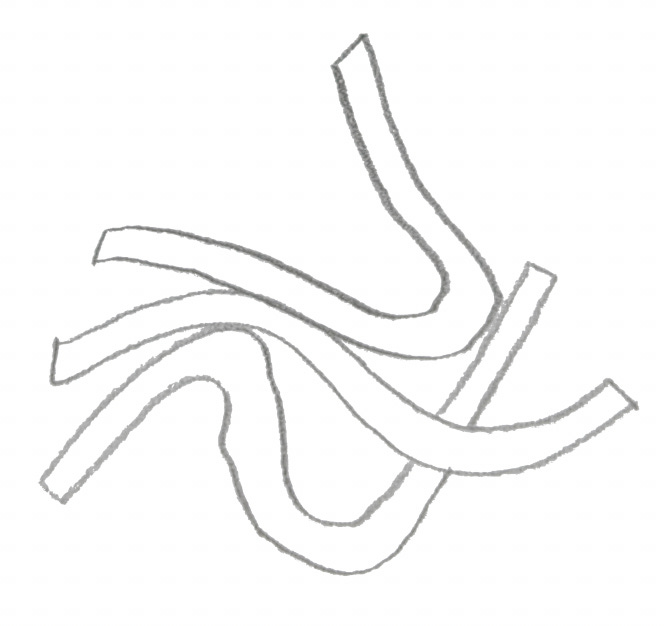
Gricia (Tonarelli and Spaghetti)
Considered the O.G. in the series, Gricia is the bridge between Cacio e Pepe, Amatriciana, and Carbonara. No tomato, no egg. Just guanciale, cheese, and pepper. This is the dish that makes the other three make sense.
The Pasta: Here, we would typically use tonnarelli, but for the sake of the exercise, and the reality of a box of spaghetti in most kitchen pantries, let’s talk spaghetti. In everyday language, many long pastas are simply called “spaghetti,” but the distinction matters: spaghetti, tonnarelli, and bucatini each carry sauce differently. Spaghetti coats, tonnarelli grips and emulsifies, bucatini channels and carries it through.
Derived from spago, meaning “string” or “twine,” spaghetti is the most widely recognized and most versatile of the long pastas, especially on Italian-American tables.
Dish History: Gricia is often considered the ancestor of both Amatriciana and Carbonara, sometimes called “the white Amatriciana.” Its origin is debated, either geographic or tied to the gricio, a traditional Roman grocer.
Shape: Long pasta, typically tonnarelli or spaghetti itself.
Sauce: Guanciale, Pecorino Romano, and black pepper.
Texture: Glossy, lightly coated, with bite-sized snacks of rendered fat.
One Bite: Salt, fat, and pepper in balance, depth without weight.
White Wine: Crisp, structured whites that clean the palate.
Red Wine: Fresh, lifted reds that can handle fat without adding weight, acid over tannin, always.
Final Thought: If you understand Gricia, you understand why guanciale matters and Pecorino is sharp.
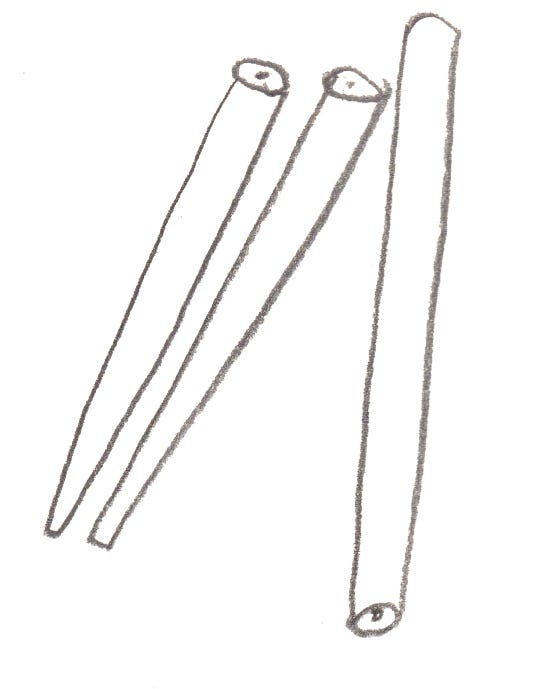
Amatriciana (Bucatini)
Amatriciana brings tomato into the Roman pasta canon, but just enough. It’s not about sauce, it’s about balance: fat, acid, salt, and heat working in unison.
Pasta Shape: Bucatini looks like spaghetti but is defined by its hollow center (buco meaning “hole”). That hollow core pulls sauce through the string, delivering flavor from the in and out. It is the natural partner for Amatriciana, where tomato and fat can move through the pasta and around it.
Dish History: Amatriciana originates from Amatrice, a mountain town in Lazio (once part of Abruzzo), but it is Rome that made it famous.
Shape: Bucatini.
Sauce: Tomato, guanciale, Pecorino Romano, and peperoncino. No onion in the Roman version.
Texture: Firm pasta, lightly coated, slightly oily sauce.
One Bite: Tangy tomato, rendered fat, and a hit of spice carried by chewy pasta.
White Wine: Fresh, acid-driven whites that echo the tomato without competing.
Red Wine: Medium-bodied reds with bright acidity to match the tomato and enough structure to carry the guanciale.
Final Thought: Amatriciana is about restraint, too much tomato and you lose the balance.
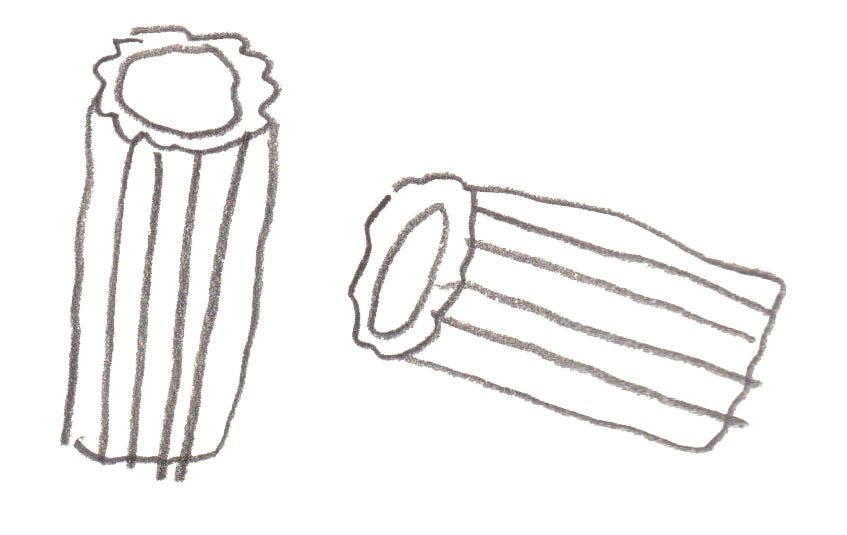
Carbonara (Rigatoni)
Carbonara is richness with rules. Eggs, guanciale, cheese, and pepper. No substitutions, no shortcuts. It is indulgent, but structured, held together by technique - practice makes delicious.
Pasta Shape: Rigatoni are short, ridged tubes, rigato meaning “lined” or “ridged.” Their structure is designed to capture fat and sauce, both inside and out, making them ideal for richer Roman dishes like Carbonara (and even Gricia). Each piece becomes a vessel.
Dish History: Like Gricia, Carbonara’s origin is debated. Some place it in post-World War II Rome, influenced by American soldiers (eggs and bacon), while others connect it to charcoal workers (carbonari) in the Apennines, just east of Rome. Either way, it is the most modern of the four. And as chef Missy Robbins puts it, carbonara “doesn’t have fans, it has disciples.”
Shape: Rigatoni.
Sauce: Egg yolk, guanciale, Pecorino Romano, and black pepper. No cream. No garlic.
Texture: Creamy without cream. Silky, dense, coating every tube of pasta.
One Bite: Pasta coated in warm egg and fat, punctuated by crisp guanciale.
White Wine: Fuller whites with structure and lift to balance richness.
Red Wine: Light to medium-bodied reds with restraint, too much tannin or alcohol will overwhelm the egg and fat.
Final Thought: Like our beloved Cacio e Pepe, Carbonara doesn’t forgive mistakes; it exposes them (insert scrambled egg joke here).
~
In our first chapter, the filled pastas form defined the dish: the folds, the fillings, the structure. In Rome, that hierarchy reverses: the sauce leads, and the pasta is chosen in service of how it moves, clings, and carries the sauce.
~
Pasta drawings by our dear friend, Amber Vittoria.
Comments
Nothing yet. Say the first thing.
Sign in to join the conversation.