
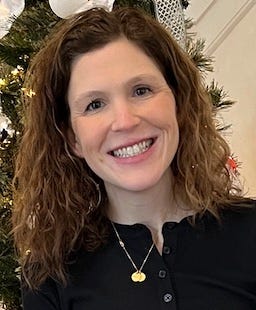
Today, to celebrate Aarzu All Around’s 1-week birthday I’m sharing another interview. This time it’s with my awesome editor for AAA, Krista Vitola (Executive Editor at S&S Books for Young Readers).
If you missed previous interviews I conducted, check them out now. This post is an interview with my literary agent. And here I chat with my awesome Feiwel & Friends (Macmillan Children’s) Editor, Emily Settle.
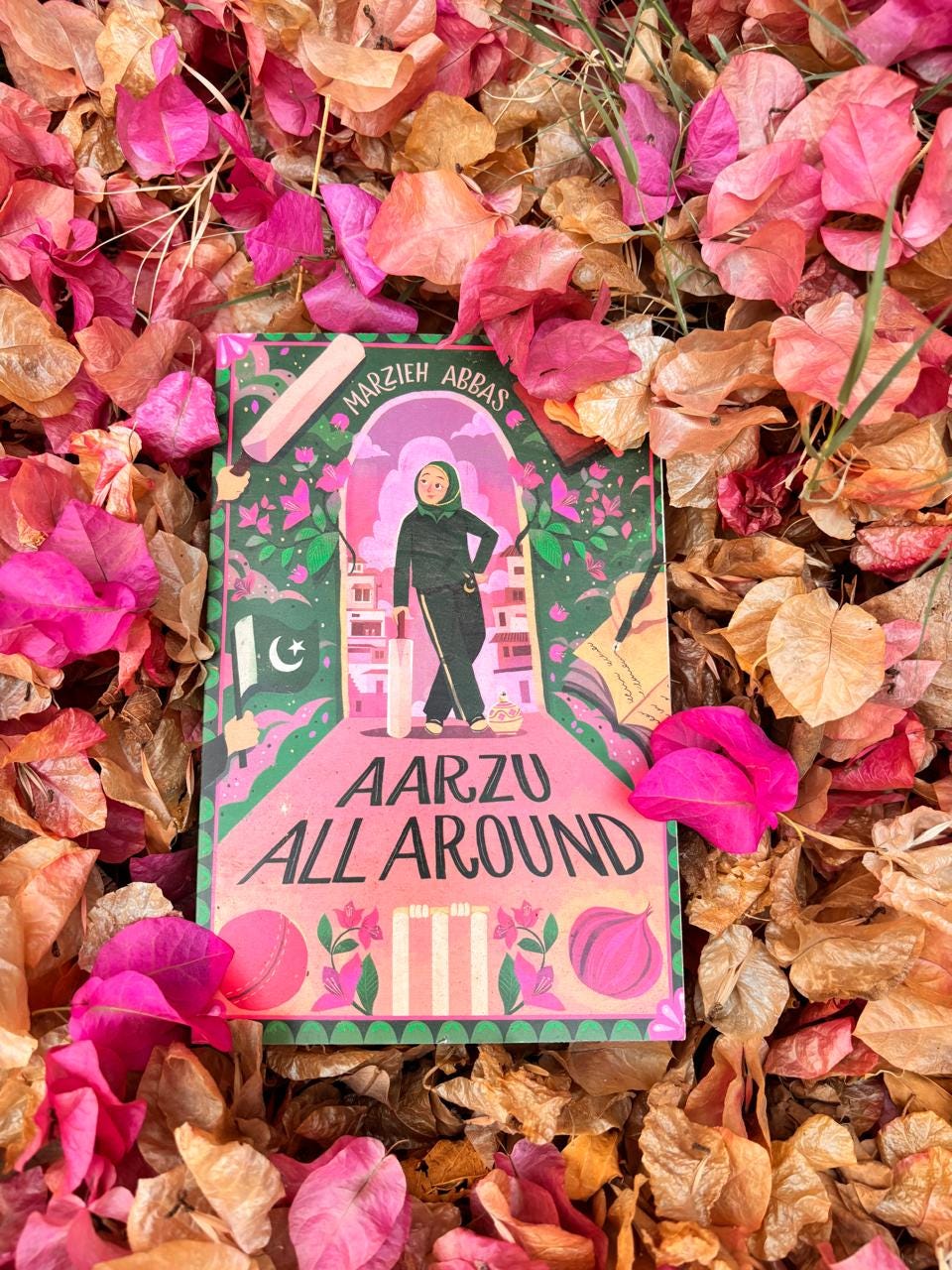
I began writing Aarzu in 2021. We were still very much in the midst of the pandemic and I won a scholarship to a class taught by Cordelia Jensen through The Highlights Foundation. I’ll talk more about my writing process in another post, but for now I want to share how Aarzu found a home.
Initially, the book was titled: Aarzu Raza, Extra No More! other than its obvious meaning, ‘extra’ refers to extra players on a cricket team— the ones who exist, but mostly sit it out on the benches. I also have a poem in the book explaining all the different contexts in which Aarzu understands the word ‘extra’.
Order your copy of Aarzu All Around
So I spent about six months writing the book, during which I was also getting feedback and had begun my revision process. I signed up for a professional critique with my teacher after the class ended and had sent the manuscript to my agent around October of 2021. We spent a month on revisions and sent the book out when we were both happy with it.
Over the next couple of years all we kept hearing was ‘cricket is not a big thing in the US’… and so, despite many editors loving the voice and themes in the mansucript, including the lovely Lisa Mangum, Editor at Shadow Mountain (read more about that story here and Lisa’s review here), they couldn’t eventually acquire the book
After querying 60, yes, 60 editors, my agent eventually said we need to move on to something else. Understandable. But my heart coudln’t let go of Aarzu. Her story held too much of me and my story. I had thoughts of self-publishing (I have immense respect for authors who go down that route, but I couldn’t imagine how I would get around to doing all the work to ensure a successful self-published book). Eventually, my agency’s scouts on different continents, began sharing the pitch with editors outside of the US— places where cricket is actually understood, played, and enjoyed.
Replies were slow, and a few rejections (with thoughtful notes) trickled in. But there was no way to followup with editors or nudge them. Then all of a sudden, ten months after we had stopped submitting to US publishing houses, I received an email from my agent witht he subject line: SIT DOWN!!!
It was a straight-up offer from Krista Vitola, Executive Editor at S&S Books for Young Readers. This was even more unusual, because usually editors send ina note saying they will be sharing the book with their peers/fellow editors or taking the manuscript to an acquisitions meeting. Also, Krista was the last editor on our list of submissions to US publsihing houses!
I went through through three rounds of edits for Aarzu All Around and it was an absolute pleasure learning from Krista. I’ll do a detailed post about the most challenging bits of the editing and formatting process in another post. But for now, I just want to say it took about 10 months to get it done!
Before the interview, I want to share my first memory of Krista! I mean how can one not thank their lucky stars to get to work with such a wonderful editor?
I will just say: she signed off ehr first correspondence wiht the words ‘Your fan,’
Enough said!
My questions are in bold below. Krista’s answers are italicized.
Since when have you been in this business/role? Is this what you always wanted to do?
I started in publishing in 2008 as an editorial assistant at Delacorte Press, a division of Random House Children's Books. I've always wanted to be a writer and thought I'd write for a magazine once I graduated from college. But after an internship at a film magazine, I quickly realized magazines were not for me, nor did I enjoy writing on a deadline. I then started writing book reviews for an online book-focused website and attended various presentations with my then boss, who was usually the guest speaker. She opened up the world of children's book publishing to me and I quickly fell in love with the book making process, specifically the editorial process: working with talented authors to reshape narratives, characters, plot threads etc. before they made it to the shelves. I was lucky enough to be offered a job in children's books right out of college and it's been a joy of a ride ever since.
What would a typical workday look like for you?
Lots of meetings!--staff, updates, IP, covers, sales and marketing, list launch and sales conference--And when I'm not in meetings, I'm on calls with authors or zooming with agents to catch up on projects and hear what's coming in the pipeline on submission. If I'm working on a crash edit, I'll block off a few hours to work on that but I mostly read submissions and edit my books at night once I put my kids to bed.
What's your acquisition process like? Can you share some timelines starting off from the time you receive a query? And what exactly happens in the acquisitions meeting?
Every acquisition has its own unique timeline. Editors try and read as quickly as we can but time feels like its slips through our fingers. We always look forward to reading submission--its how we find wonderful new books for our list! But some times it takes us a few days to a few months to acquire something. Many times an editor will bring the manuscript into an editorial staff meeting and discuss it's potential to be added to our list and the overall S&S children's list. Other times, if we'd like the opinion of the wider group, such as publicity, school and library marketing, sales, etc., we will bring it to a larger acquisitions meeting to discuss.
Wow, that insight is invaluable! We often don’t see how much editors are juggling!
Are there any elements in a manuscript that must be 100% perfect before acquiring it?
Personally, I don't believe any manuscript can ever be perfect. Editors and authors could work on a manuscript forever. But we get it to as close to perfect and as strong as it can be, something we are all proud of.
That makes a lot of sense! Before making an offer, do you check out the creator on social media? If yes, does that factor into your offer in anyway?
I do! I like to see what an author is posting about, who they are connected with, what they commenting on, etc. But I also want to learn more about the author I may potentially be working with. I believe an author/editor/agent relationship is like a marriage. When you connect with someone's work there's an immediate and close connection you have to a part of that person and I want to be sure I'm learning more about that to make the editorial process/relationship the best it can be.
What is the most exciting part about your role?
I wanted to be an editor because of my deep love of reading and I think this is still the same. Finding a manuscript that I instantly fall in love with and have the ability to work on and share with the world is very special and unbelievably rewarding.
Can you help us authors understand the term "world rights?"
If the publisher has acquired world rights, they hold the rights to sell your work to foreign publishers/licensors. The agent can negotiate for consultation or approval on these sub rights deals during the original negotiation of your manuscript. If we feel the manuscript has global appeal, we have a dedicated team of sub rights colleagues who have wonderful relationships with publishers, licensing partners and are eager to sell our titles to them.
How do publishers decide how much of their marketing and publicity resources are allotted to each title?
I can speak to other publishing houses, but at S&S every book has different needs and a different budget. Books that may have a smaller advance do not automatically get less resources. Each title is presented, discussed and worked on by all of our staff!
I keep hearing the market for picture book biographies, food-themed books, intergenerational bonding books, and graphic novels is saturated. Yet we keep seeing announcements about books in these genres. Is it true that we should be avoiding these topics and are there any other topics, in your view, which are oversaturated in the market?
I would never tell an author to avoid a certain topic but I would say that if they do find an area in the children's space that has a great deal of books written about it, that their manuscript will need to come at it from a different angle or format or perspective. I'd ask them why they feel passionate about writing on such a topic; what makes their book different?
What's the most awkward (if you're okay with sharing) or funny encounter following someone finding out about your role in publishing?
I just laughed out loud. All I will say is that there are A LOT of people who have written a "children's book".
What story element makes you immediately fall in love with a manuscript?
Voice! I'm happy to fix all the other elements of a story, but if the voice doesn't win me over it is not for me.
Do pre-orders matter? What are considered good pre-sales?
Pre-orders are helpful to gauge interest in a title, but as an author I wouldn't worry about the number. I would tell an author to make connections with their local bookseller, to know the markets/readers for their book and look to reach those readers--either by building their social media platform or reaching out to individuals in charge of organizations who may be looking for their books. In the children's space, school visits are incredibly helpful to reach your target audience, but school visits happen once your book goes on sale.
Once a book is published, do you collaborate with the author to decide which events and engagements to book for the author?
We are always happy to have conversations with our authors on signings, book store events, local festivals, school visits, etc.
If an author you have worked with sends you another manuscript, do you look at previous sales figures for their published books?
Sales are a factor but if this book is quite different from their previous book, which may have had softer sales, than we look more at comparative titles in the market and where this next book will fit amongst them more so than the previous book's sales track.
What elements in an acquired manuscript do you find more commonly need tweaking during the editorial process?
Plot holes or plot threads that go missing, secondary character development, elements that may be too predictable or too far fetched to be believable.
What characterizes a book as a "success"?
You published a book! That is something to be proud of! If you want to get very literal and talk about monetary success than I would say is it when a book earns out its advance.
What do you do when a book you edited and published doesn't sell well?
As I said, the author/editor/agent relationship is like a marriage. There is a long tail in publishing. New formats, new readers to find. We're in it together.
Any words of advice for aspiring, unpublished, un-agented authors and illustrators?
Keep writing! I know you probably hear this often but it's true! Keep writing, keep joining critique groups and going to writing conferences and meeting new people.
Any resources you would recommend to someone looking to improve their craft?
The Manuscript Academy is a great resource as are your local SCBWI chapter.
What's your favorite 'desk snack' (if you have one)?
Peanut M&Ms. I can't have them in the house when I'm working on a tricky edit!’
What are your work station essentials?
I am a minimalist: water, coffee, laptop.
I hope you enjoyed this insightful interview. I’d love to know your thoughts and what you’d like to learn more about!
No posts
Comments
Nothing yet. Say the first thing.
Sign in to join the conversation.