
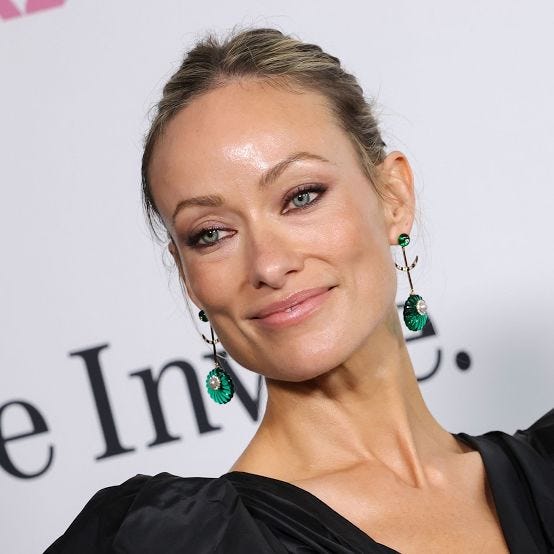
She’s got a glowing review in The New York Times: critic’s pick by Alissa Wilkinson, who opens her review this way, “In this witty comedy, Seth Rogen and Olivia Wilde star as a millennial couple whose tense marriage gets a wild jolt from their neighbors.” Not all the critics are as so fond of it: See Justin Chang’s review in The New Yorker if you subscribe or the Roger Ebert site review by Matt Zoller Seitz.
I’ve not seen it yet because my love just had open-heart surgery as I explain in my rethink of P.S. I love You with my story: I didn’t get it! — and I was wrong!
I’ll likely have to wait for The Invite to stream—but, for sure, I’ll see it!
Because I think Wilde and Dan Fogelman, not a part of The Invite, are a find, I want to talk about this:
Here’s the trailer for that one:
I had the chance to see a pre-opening of Life Itself that came to theaters in September 2018, and I loved it. The critics didn’t. Here were the stats: 21% Rotten Tomatoes, 28% Metacritic, 1.54 Roger Ebert. Critics even said that Dan Fogelman, who wrote and directed Life Itself, doesn’t understand how a movie works, the inference being that he doesn’t understand narrative—when that is exactly what this film is ultimately about.
Yeah, that’s Dan Fogelman, well-known for Crazy, Stupid, Love, a flick that rings way true and wildly entertains and for the television series This Is Us ! —and more.
The critics called this film manipulative, perhaps even mannered or affected in the telling. They missed Fogelman’s central thesis: That art, a story told, a movie watched, a narrative that tries to make sense of the unspeakable can help us face the curve balls that life throws.
The opening of Life Itself relies on a voice-over throughout its chapters—with seemingly, at first, two narrators: Samuel L. Jackson in the screenplay Will (Oscar Isaac) is writing at the start when he gives up on it and then a woman, whose identity we don’t know, the actual narrator whom we can sort of tell that she’s writing the narrative. The film, like a novel, works in chapters, titled as such: four of them and an epilogue. In the first chapter, the voice-over tells us, “No one knows where their story is going or who the heroes in it are going to be.” That one key sentence describes life but not narration that seeks meaning in the face of meaninglessness.
In that opening chapter, after Will’s failed screenplay in which we hear Samuel L. Jackson speak, the film begins for real. Olivia Wilde, who plays Abby to Oscar Isaac’s Will, her husband, states the premise in her proposal for her college thesis: She argues, quite smartly, I add, that the author of fiction is always an “unreliable narrator,” in some sense, because the distance between what we write as authors and what is told always involves an artful lie.
Yes, digressions in the chapters occur—as in any non-linear tale. So who are we to believe? “Unreliability,” in some sense in this film takes some extraordinary turns—and risks.

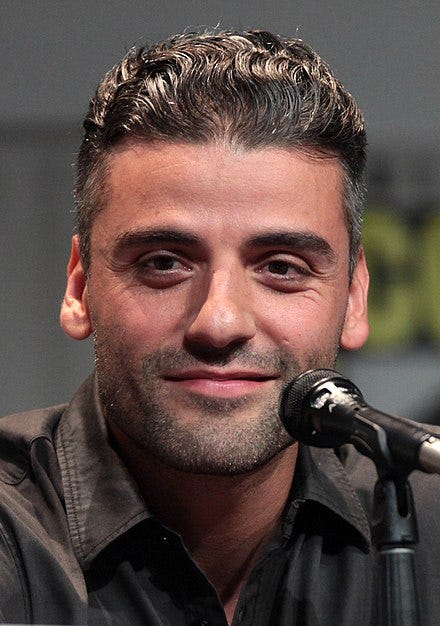
I argue that Fogelman is not asserting that fiction lacks emotional truth or that memoir is better, for that matter. What Fogelman says is that narration requires a leap, what used to be described by your English teacher as “the suspension of disbelief.”
As a commentary on narration, Fogelman is right—and so is Abby, played by Olivia Wilde. Abby and the movie go on to assert, to extraordinarily sharp criticism by movie critics that Fogelman states the obvious, that the “ultimate” unreliable narrator is life itself. From there on, the critics take the film apart as trite, sentimental and manipulative. “Get your hankies out for this Hallmark card” might be another way to state the overall criticism this film got before its opening.
What the critics do not get is Fogelman’s subject: The importance of narrative in our lives to make sense of the unspeakable. Our narrator gives us a non-linear tale. Can the critics follow? That’s the question I lay out here. The movie that is based on “chapters,” as Fogleman makes clear, asks this question, “Who are the heroes?”
Abby’s professor of literature fails her thesis because, as her professor asserts, she appears to think she has wandered into a creative writing class. What the critics miss is this: That’s Fogelman’s point.
What the critics could attack but don’t is that the film operates on what we writers term “the fortunate coincidence” to drive part of the narrative. That may be a fair criticism, but it’s also Fogelman’s point.
The chapters, without revealing the story fully, focus on an accidental death, (one in the present action of the story and two in Abby’s troubled past), a suicide that results from the accidental death, a child-witness to the accidental death who later appears in the story as a grown man, and a death from illness, all in separate chapters that ultimately and “fortunately” become linked in the epilogue.
I’ll come back to that closing for it’s key to the way the narration operates in chapters with an authorial, first-person, omniscient narrator.1
Abby, Will’s adored wife, loves Bob Dylan and his Time Out of Mind album recorded when he was 56 in 1998 when many thought he might be washed up. Abby tells us how much he was criticized for including in the series of despairing rockers, a melodic love song ballad “Make You Feel My Love” and insists, while in bed with Will, that he listen to it, that he pay attention. As an aside, this song may be Dylan’s most-covered ballad.
On point here, in the movie, the voice-over tells us that even Garth Brooks recorded it. And another “on point” here in this review, the song was called by critics at the time “a clunker,” and that fact is the key to the narration Fogelman bravely asserts in this flick. Here’s one of the lyrics we hear in the film: “When the whole world is on your case/ I could offer you a warm embrace ….” Dylan’s decision to include this gorgeous ballad was not a mistake, as some called it, but his point.
Life will bring us to our knees says the narrator who is finally revealed as a writer at a reading in a bookstore for her book entitled Life Itself. “This is my story,” she says.
She’s the storyteller. She’s arguably the “unreliable?” narrator of this tale full of fortunate coincidences that drive the film to its well-earned close.
Admittedly, as many of you know, I was brought to my knees by the death of my 46-year-old son on November 4, 2017. See “Lifeboat”—forgive the repeat-link here if you‘ve already read it. My point: I’d been artistically paralyzed when my son died: Couldn’t write, didn’t post a column on the site where I was a regular contributor on the arts for the year that closed on the memorial of his death in 2018.
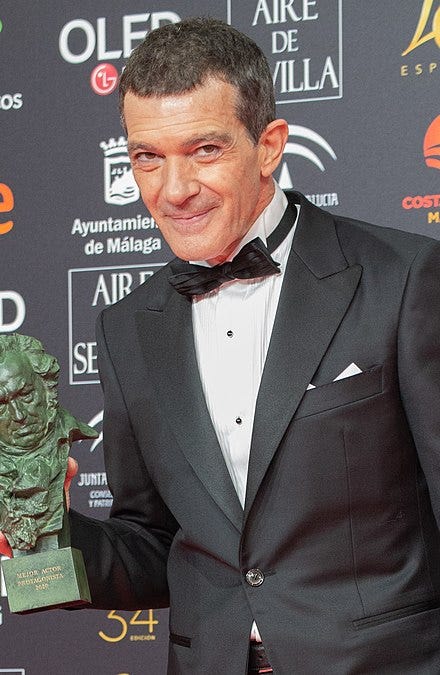
But, as Fogelman and his stand-in author/narrator in the bookstore suggests, I got off my knees and wrote a review of the moving film with brilliant and controlled performances by Annette Bening as a shrink, who is Will’s therapist, and who smokes in Will’s failed screenplay; by Mandy Patinkin as a beleaguered grandfather; by Olivia Wilde as the joyful Dylan lover and literature commentator; by Oscar Isaac as an outrageous, oversensitive and endearing lover; by Sergio Peris-Mancheta as a controlled, warm and loving and nearly martyred spouse and by Antonio Banderas as an unlikely hero with one of the longest soliloquies in the film, beautifully done.
Yes, life is unreliable. Yes, life sometimes is unbelievable. Yes, life will bring us to our knees.
And, yes, this much-criticized film will get you in the heart, but not through the manipulation it’s been criticized for, but through its narrative insight that shows us how, despite all that brings us down, a story can get us to see that we must get up off our knees.
Here’s the Dylan’s ballad:
The film is streaming on Amazon Prime. See it! Let me know what you think.
Admittedly, I don’t know yet what Olivia Wilde does as director of The Invite, but my guess is that she learned something about narrative from this early flick in which she is one of the key players.
Yes, I admit that you may feel a bit lost at times in this non-liner tale—that ultimately explodes in meaning, as all the chapters collide at the close.
I originally wrote a version of this essay in 2018 when I saw it. I rewrote it to salute its risks. My hope? That Dan Fogelman will keep writing, directing—and taking risks!

“Life Itself is the most unreliable narrator. … If life brings us to our knees, stand back up. …. If we go far enough, there is love.”
Love,
A craft point here: All unreliable narratives use a first-person narrator; this too Fogelman understands well, but our narrator is anything but unreliable.
Comments
Nothing yet. Say the first thing.
Sign in to join the conversation.