
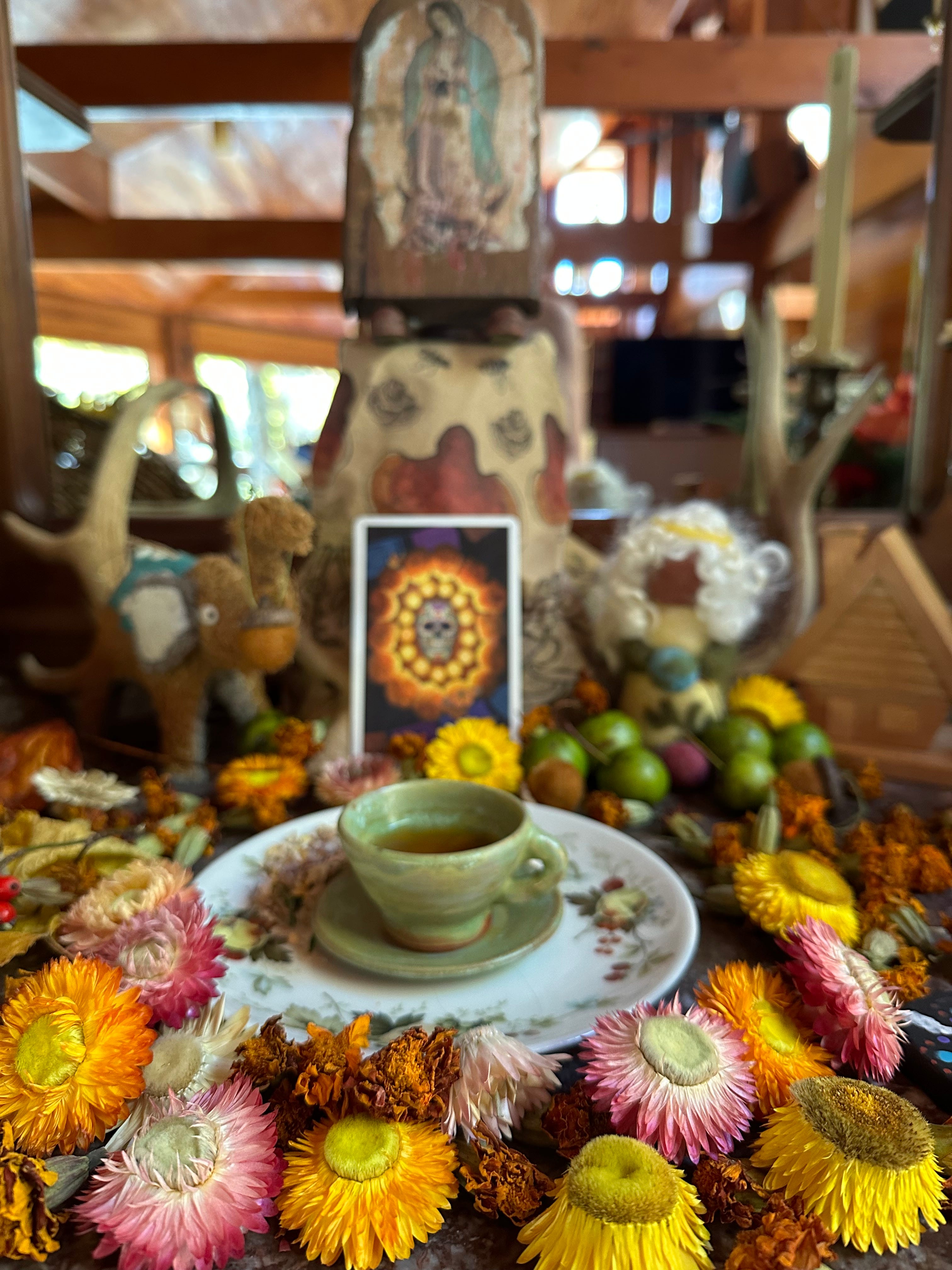
Marigolds grow abundantly in our gardens which means each year I have the blessed opportunity to attune to them a little deeper. That’s one of the magical things that happens when you either grow plants or observe them in their natural habitat- your relationship with them strengthens. The Marigold I knew 10 years ago isn’t the Marigold I know now. Each season it reveals more of itself to me, and I become an even bigger fan.
Lately, I’ve been stringing Marigolds with the children at the little school on our land, preparing for building their ancestors’ altar; been stringing them with participants of my Earth Devotion Gathering; collecting their seeds; gathering them up to decorate our nature table; sprinkling them in my hair; leaving them as offerings for the land spirits; drinking them as tea and thoroughly enjoying them as one of the last flowers to bloom in the gardens.
A letter to Marigold was the 4th love letter to plant allies that I ever wrote, and I posted it 2 years ago. I’ve edited it a bit and wanted to reshare it again with you today, on All Souls Day. A friend just told me that Marigolds are getting harder to grow in Mexico and India because of climate change. Just because we have an abundance of them now doesn’t mean we will tomorrow. So let us not take anything for granted by celebrating what we have.
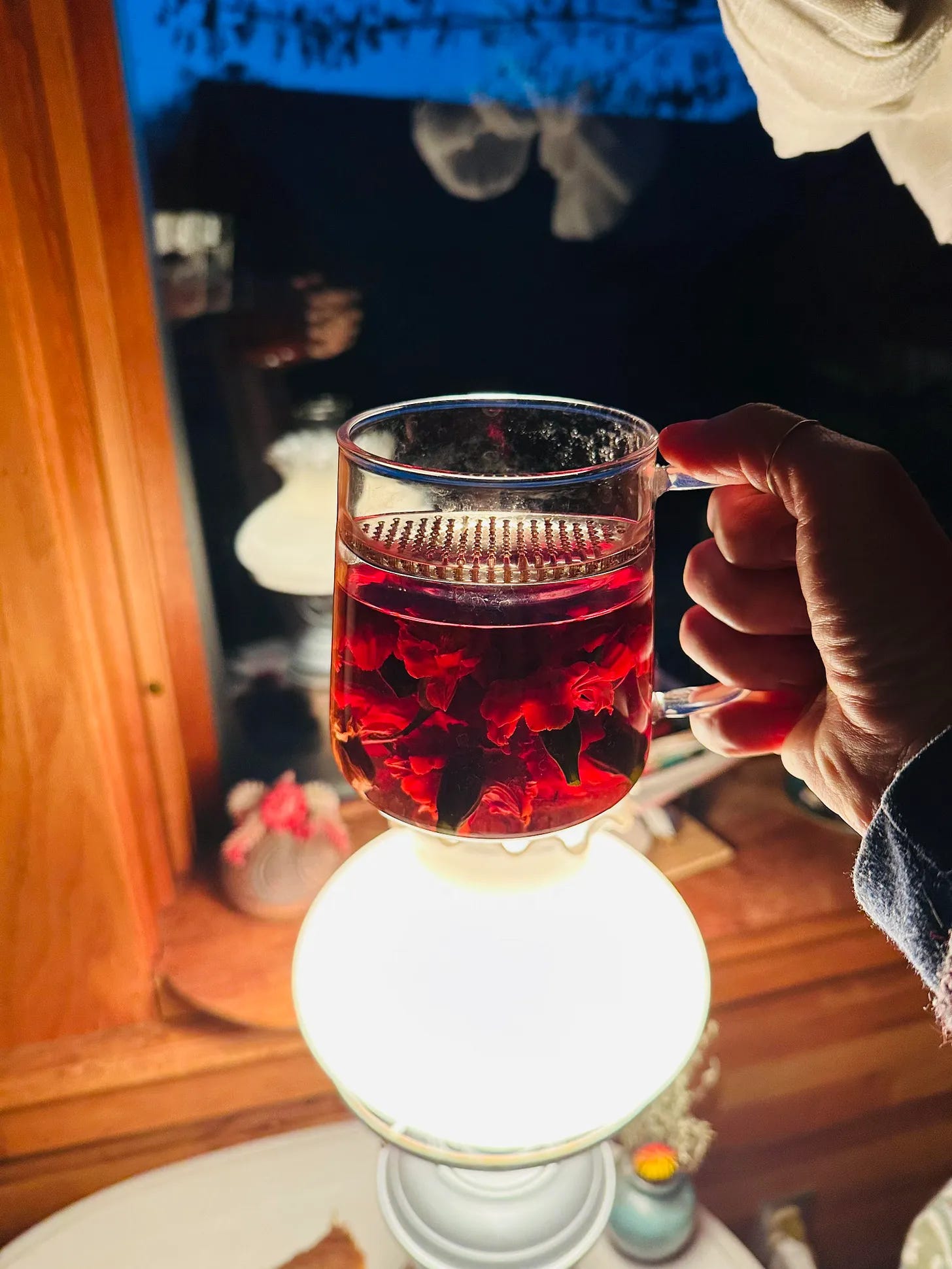
If marigolds are in your garden and they are still blooming, make yourself a cup of tea with her flowers and enjoy this note of praise while sending out the blessing of Marigold to all those who have gone before us—all souls who made it possible for us to be here right this very moment. Life is so very, very fleeting- enjoy it while you can.
Dear Marigold,
You were one of the first flowers I ever met, growing cheerfully in neat little rows next to dwarf Periwinkles, red Geraniums, velvety Begonias, speckled Coleus and brightly colored Moss Roses. As a child, I can remember the first time I got a whiff of your pungent scent, pee-yew! I dropped your flower immediately! In time, though, I sure did come to love the uniquely musky scent that you exude.
I watched a movie once, called Monsoon Wedding, where the groom stuffs himself with your flowers. So I thought I would try the same, as you may know that I love eating plants. I tried your big blooming Tagetes erecta species, but you were just too much for my taste. I don’t know how he ate so many of you! I can nibble on your petals, sprinkled in a salad, but eating your whole flower is Intense, and I hope you don’t mind me saying so.
I want to thank you for being a bridge plant- one that is found in both the manicured, southern living- type garden as well as in the messy, wild permaculture one. It was in one of those wild and weedy gardens when I learned about your ability to deter nematodes, and that you are a companion plant for certain vegetables like tomatoes and cucumbers. I had so much fun plopping you in between your veggies friends and seeing y’all thrive leaning against each other!
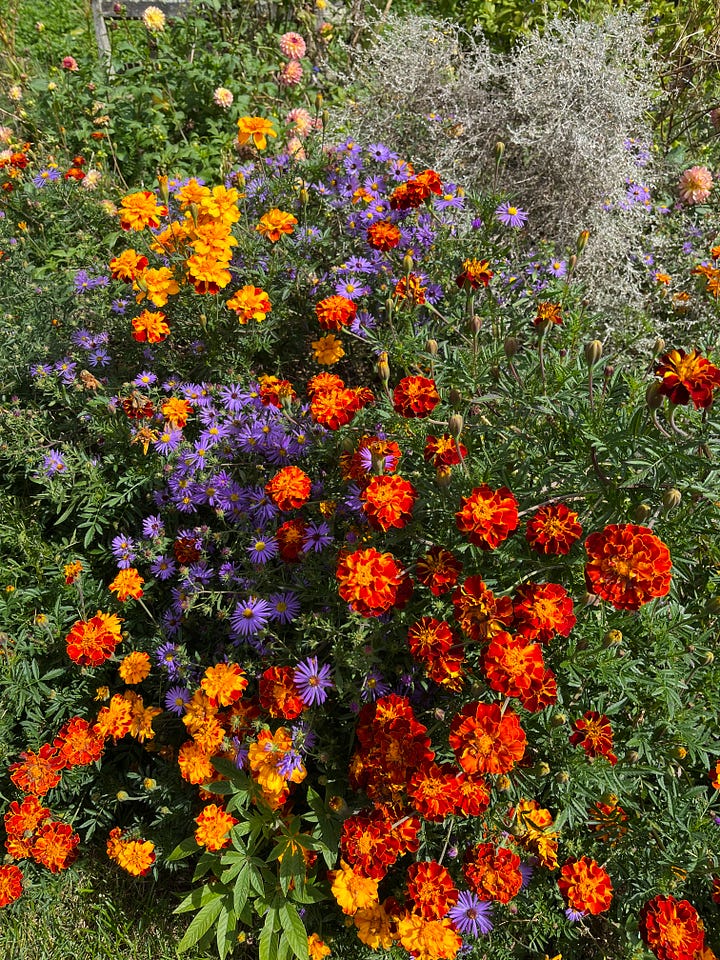
I find your seeds easy to propagate, and if I don’t mulch too heavily, you will even self-sow here in Zone 6. Thank you! I have seen you in Central America sprouting new plants from an old root, what talent! Once you have sprouted here in our temperate climate, I am in a competition with the slugs to keep you alive. They love you so very much and will eat you up before you can ever grow out your life. So I come to visit you regularly and pick off the slug babies and toss them into the woods.
You have a beloved twin out there—a totally different plant yet you have both received the same common name of Marigold, once written Mary’s Gold. That’s Calendula, and I like to plant y’all next to one another in my garden so you can communicate about such things. But it is confusing for people, which is why I often refer to you by your botanical name, Tagetes.
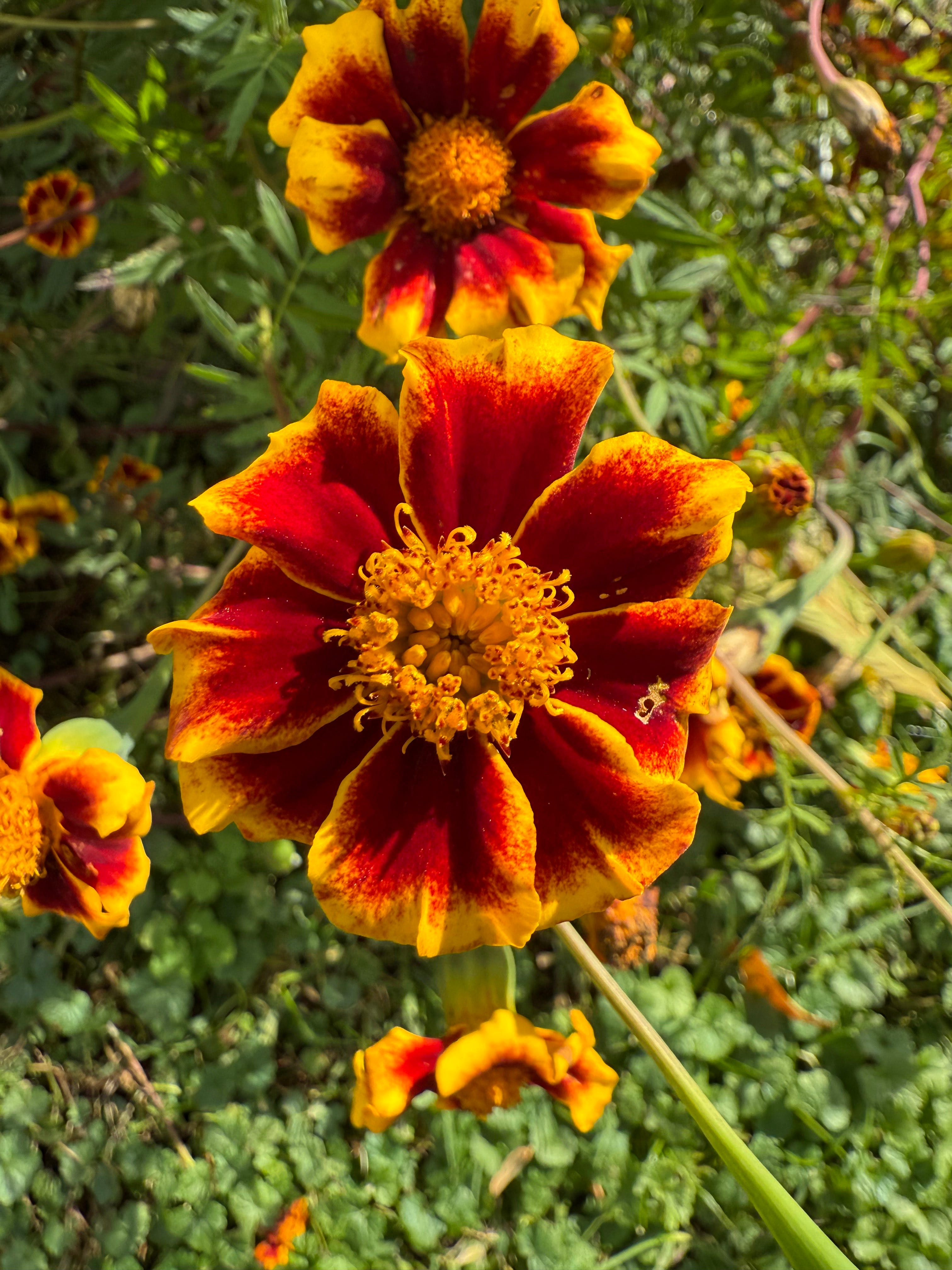
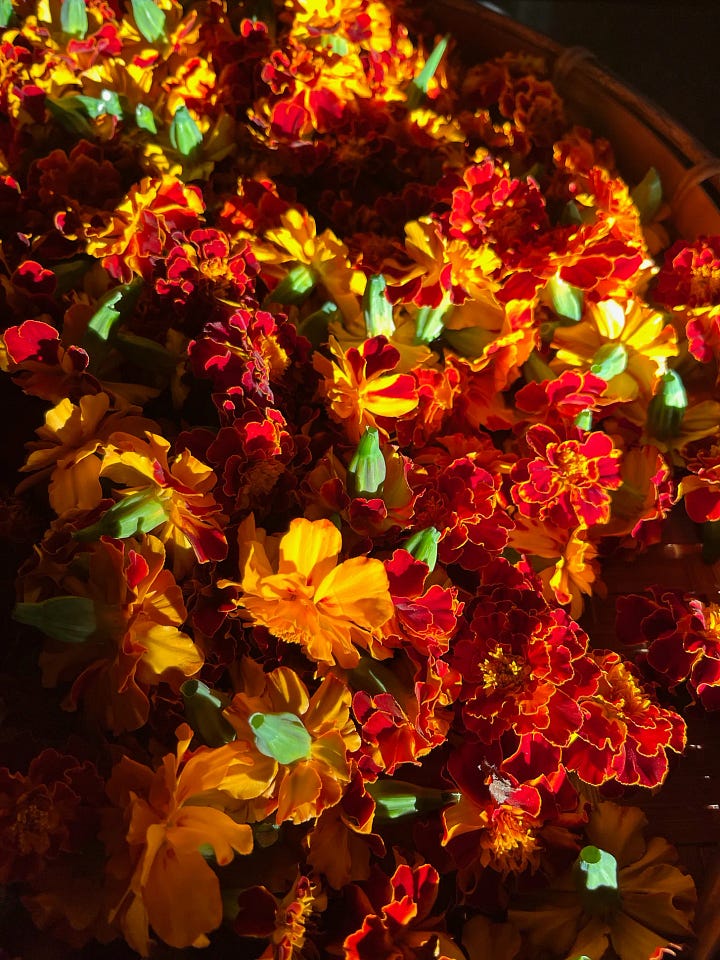
Your deep green, lacy leaves, and perky, unopened buds give me happy feelings. I like to pluck your petals and make a fairy fan with them. It is your species patula that I am most familiar with, although I have dyed cloth from your lucida. These two species smell and taste uniquely different. You amaze me with the variety within your genus.
The majority of the plants I know and love come from Europe and Asia, but you come from the Americas, and I honor you as an indigenous plantcestor of this land. This time of year, around the Day of the Dead and All Souls Day, really calls forth your gifts. I pick you throughout the season and preserve you in case your flowers have all died from a freeze when this moment finally rolls around. I have heard tell that the reason people place you along the path to and upon the ancestors’ altars is because your fragrance lures the dead back across the veil to visit the living.
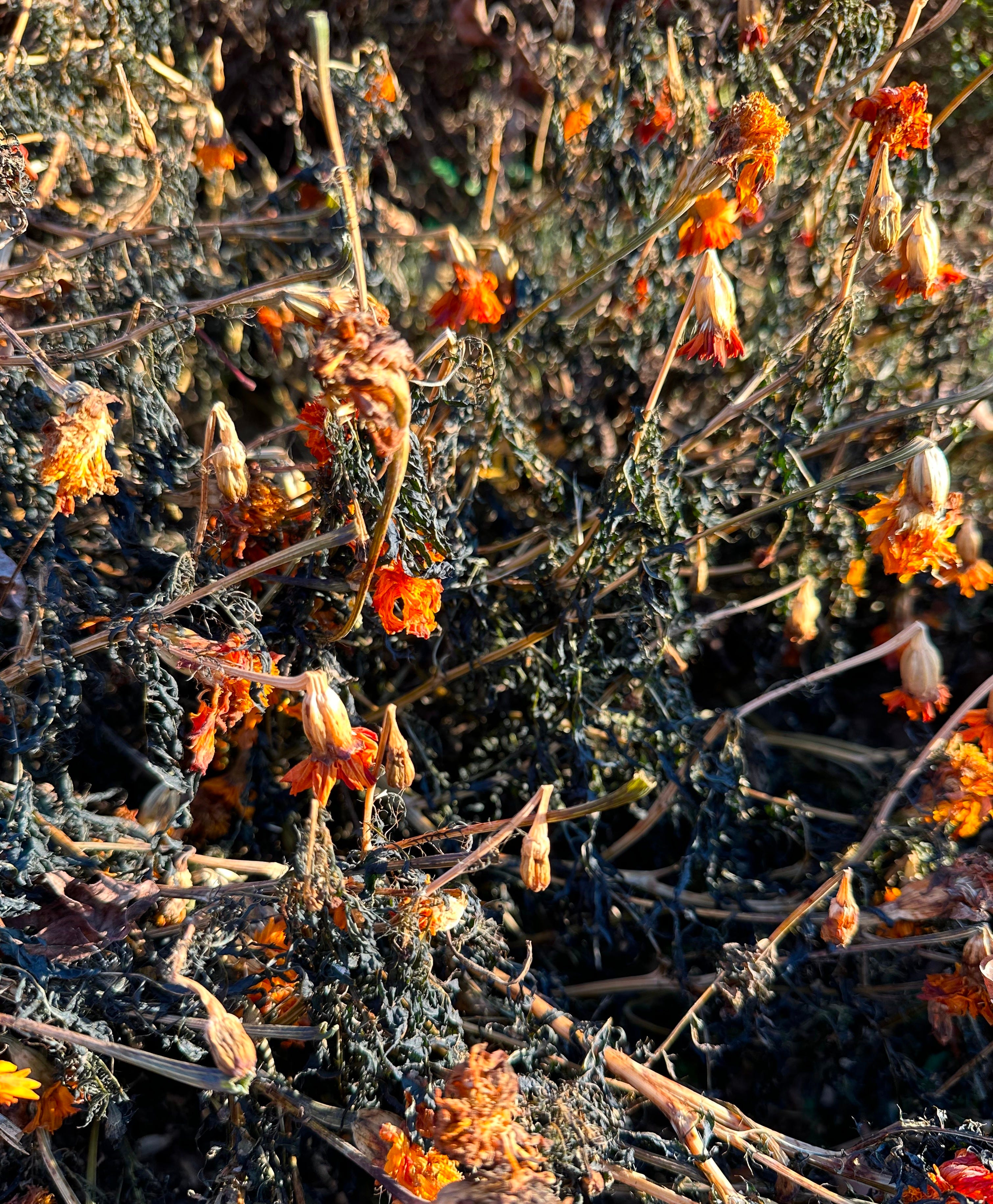
All of your many colors- yellow, orange, gold, maroon, cream, and pinwheeled- are placed side by side to make exquisite patterns and garlands and markings for these hallowed altars. Dried, you turn back and orange—Halloween colors— shades that speak to the fire of death and transformation.
There’s a story that the reason Marigolds, aka Mary’s Gold are placed regularly at the feet of Mother Mary is because your flowers were once used as currency. I dream of living in that kind of world, where flowers are the exchange for goods and services. You are the gold that doesn’t have to be mined. You are the gold that doesn’t harm the environment when taken. True wealth. I wouldn’t have a garden without you in it.
Love,
Mary Plantwalker
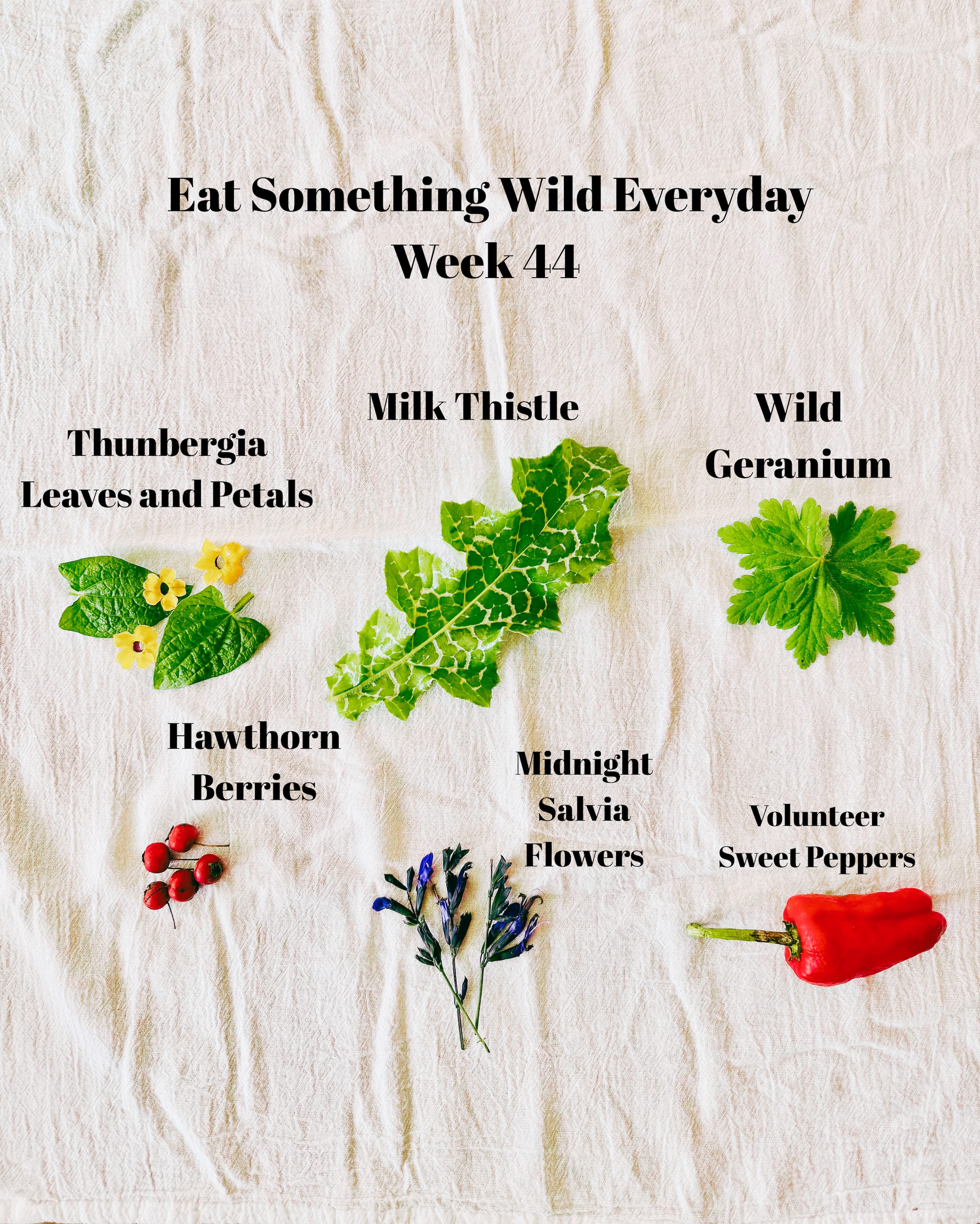
We’re at Week 44 out of 52, whew! Unbelievable how quickly time does its thing. How is it going, fellow wild nibblers? I am 308 days into eating something wild everyday and that feels amazing!
*notes from this week’s graphic: You can take Milk Thistle volunteers and remove their sides/spines and eat the center/midrib of the leaf, which is very tender and tasty. We had a pepper plant sprout up from last year’s compost and it actually bore fruits! Very unusual to have volunteer sweet peppers here, but climates are changing rapidly. We still have not had a freeze!!
I wonder what I will dig up for next week’s graphic? Anything fun and unusual you are nibbling that you’d like to share about? Give me some ideas, please!
Comments
Nothing yet. Say the first thing.
Sign in to join the conversation.