
It’s a scene many of us will recognise. A teacher spends much of the weekend marking, every book contains a careful comment. And on Monday, most pupils look at the grade and move on.
The comments are barely read, there’s is little time to improve the work, and the teacher is exhausted, but the system has been served.
This is not a failure of commitment, it’s what happens when we confuse the performance of assessment with the substance of learning.
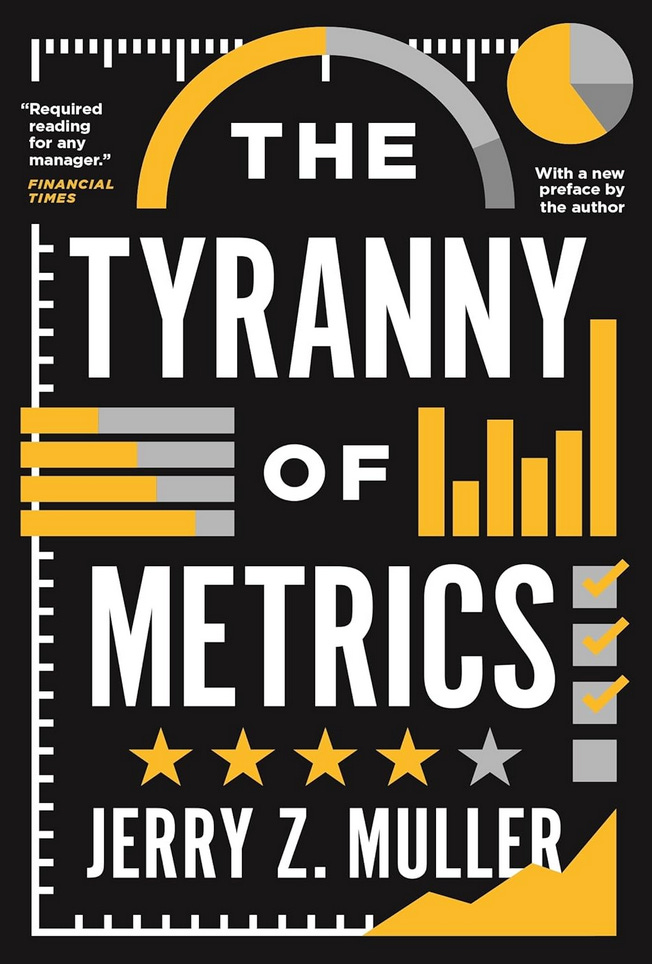
In The Tyranny of Metrics, Jerry Muller describes “metric fixation”: the belief that complex professional work can be reduced to numerical indicators, that those indicators provide objective evidence of quality, and that attaching consequences to them will improve performance.
Schools are particularly vulnerable to this.
We want to know how pupils are doing, we want to identify where support is needed, and we want to assure parents, governors and leaders that pupils are making progress.
All of this is reasonable. However, the problem begins when the measure stops serving the work and starts becoming the work. At KS3, this often takes the form of grades, percentages, flight paths, RAG ratings and frequent data drops. The numbers give an impression of precision. A pupil has moved from a 4 to a 5. A class is above target. A department is showing expected progress.
However, precision is not the same as accuracy.
Internally generated KS3 data does not have the reliability of national assessments taken by large numbers of pupils, marked against common criteria and moderated at scale.
A change in a number might represent better understanding. It might also reflect a harder task, a different marker, a change in curriculum content or ordinary variation in performance.
Yet once the number appears on a spreadsheet, it begins to acquire authority.
This is one of Muller’s central warnings. Numbers appear neutral, but decisions have already been made about what to measure, how to measure it and what to leave out. It often means that the things that are easiest to count gradually displace what matters most.
A powerful example comes from the story of two pupils learning music.
One pupil worked through a lengthy list of outcomes: identifying the colour of a guitar, counting its strings and plucking them. The boxes were ticked. Progress was recorded.
But the pupil never learned to play the guitar.
Another began with the genuine purpose of performing for an audience. The journey was less tidy and less easily captured, but over time the pupil learned chords, developed confidence and eventually performed an original composition.
The checklist recorded more, but the performance revealed more.
Muller describes what happens when a measure becomes a target. People begin to optimise the indicator rather than the underlying purpose. In assessment, this can mean collecting information because the system requires it, rather than because it will change what happens next.
The test is administered, the grade is entered and the data meeting takes place.But what does the pupil now understand more securely? What will the teacher teach differently? What will change in the curriculum?
Matthew Evans calls this the “stock taker mindset”: counting things without asking what happens to learning as a result. This matters because all assessment is formative. Every grade, ranking, comment and test shapes something. It influences how pupils see themselves, how teachers see pupils and how classrooms respond to success and difficulty.
At KS3, when pupils are forming their identities as learners, these signals carry particular weight. However, this doesn’t mean abandoning assessment or refusing to use numbers. Muller’s argument is not that measurement is useless. It is that measures should inform professional judgement rather than replace it.
The challenge is not to generate ever more data. It is to become more intelligent readers of the evidence already in front of us. That means looking together at pupils’ work. It means discussing what pupils have understood, where misconceptions remain and whether the curriculum is producing the intellectual work we intended.
And it means asking a simple question of every assessment practice:
What happens next because we have done this?
If the answer is nothing, we should be honest about that. Sometimes the strongest evidence is a pupil’s improved work. Sometimes the most valuable assessment happens in a conversation. Sometimes the most professional thing a leader can do is collect less data and look more carefully at learning.
The good news is that we are already doing some great work on assessment.
The bad news is that it doesn’t always sit neatly on a spreadsheet!
Until next time
Mary
No posts
Comments
Nothing yet. Say the first thing.
Sign in to join the conversation.