
I found my father, in a drawer.
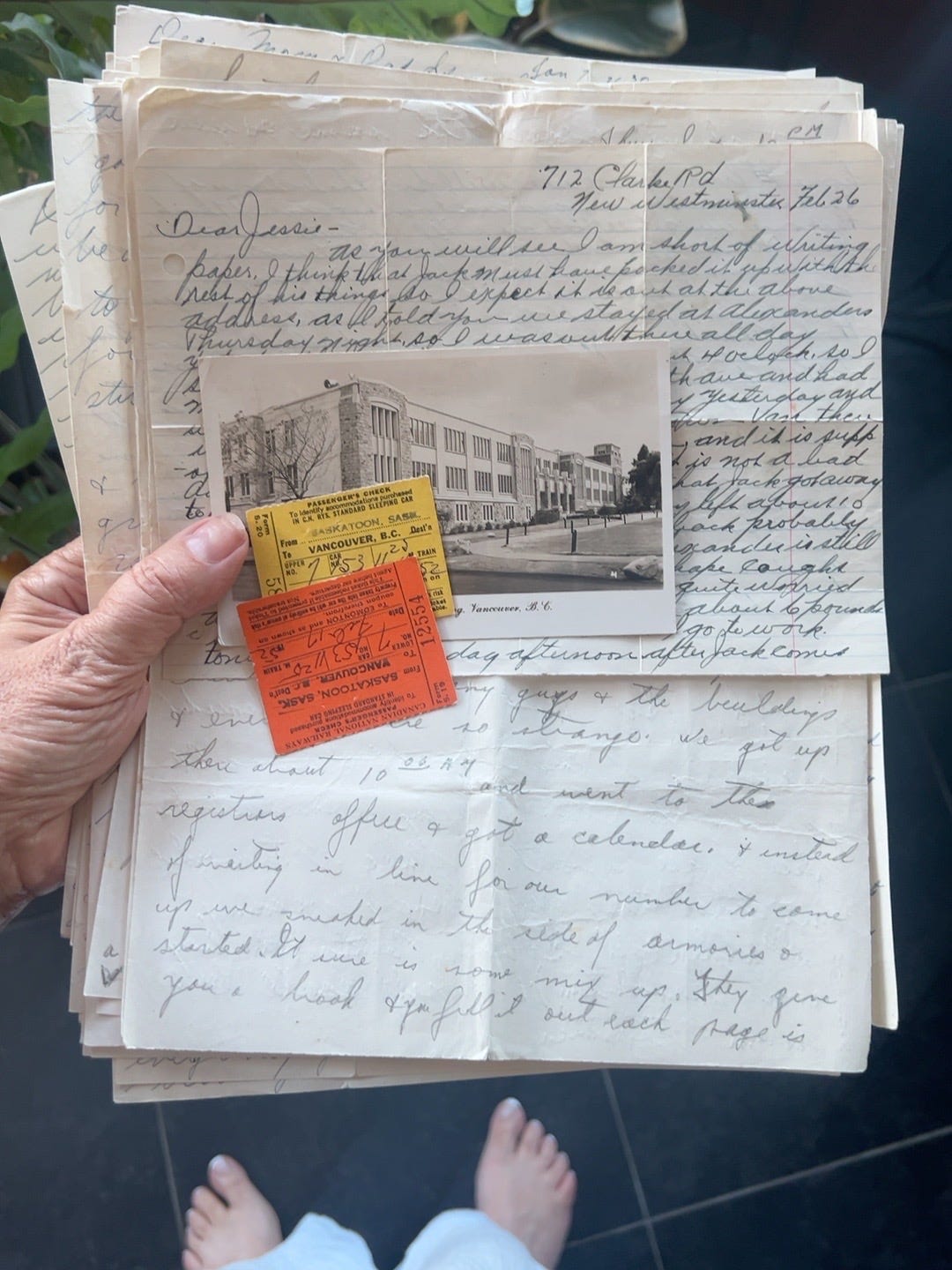
He was there in a stack of folded and refolded letters he had saved for 73 years, letters he wrote to his mother and father when he was twenty, after leaving Saskatoon for Vancouver, a 48-hour, 1,000-mile train ride, to go to university. He somehow kept them for the rest of his life.
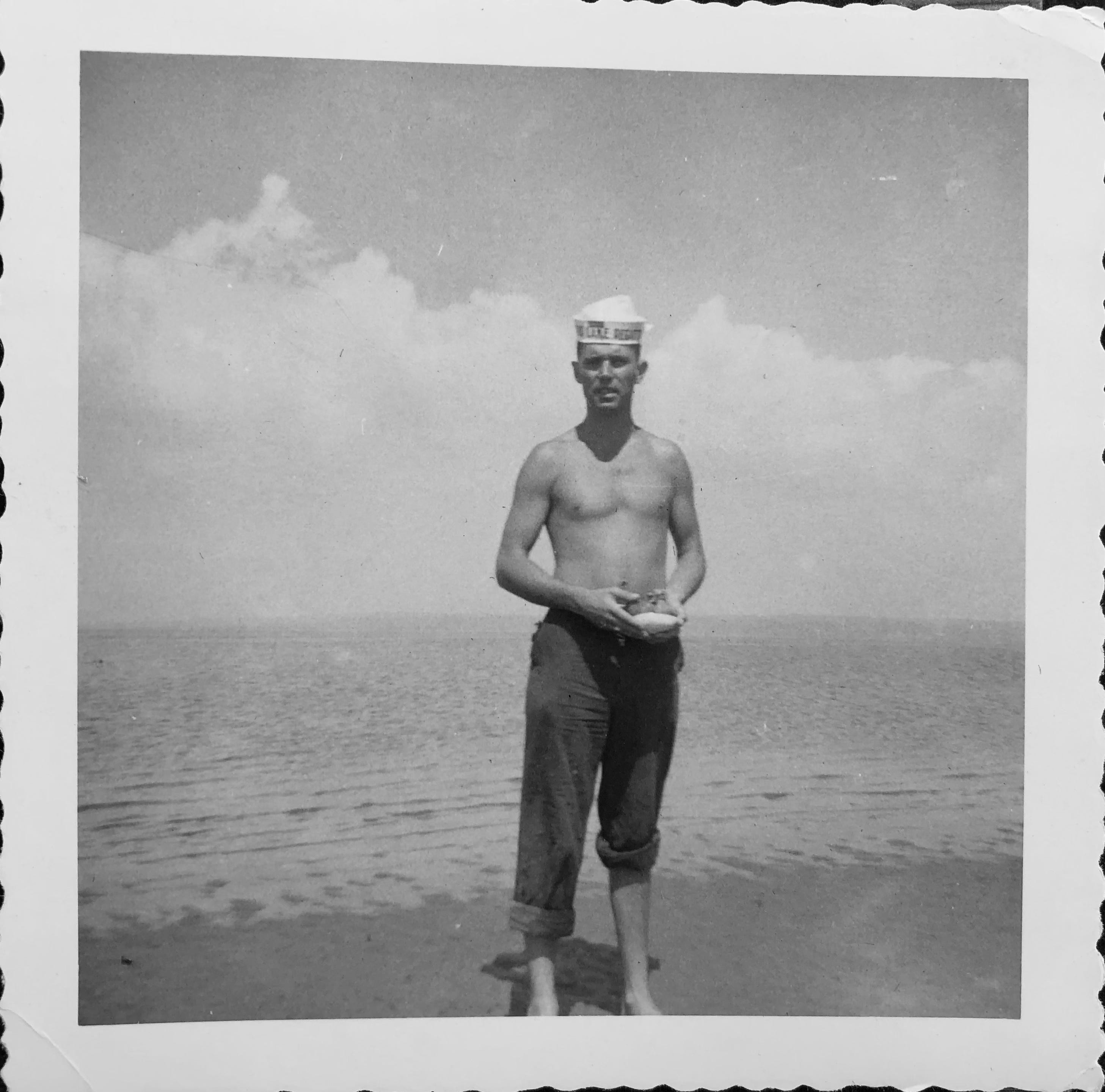
My father died at ninety-three. And here, all those years later, was the boy he had been. Homesick. Careful with money. In love. Trying so hard to make his parents proud.
I sat down and read every one.
In the early 1950s, leaving Saskatchewan for Vancouver was not a small thing. No cell phones, no FaceTime, no quick text to say I made it or I miss you or can you send a little money. There was paper. A pen. The mail.
Every few days, my father wrote home about university, the weather, what he was eating, a few antics with his classmates. And over and over, how much money he had left. Seventy-five cents to get through the month. A few dollars until the next envelope.
His parents sent him cash through the mail. I keep thinking about that. His mother was a receptionist in a medical office. His father was a conductor for the Canadian National Railway. They weren’t wealthy. There was no reserve, no savings, no other help. Whatever they sent him, they went without to send it. And reading his letters, I could tell he knew it. I could feel the gratitude running through the pages.
He was careful with what he had. No car, not much going out. His room and board was around fourteen dollars a month. In one letter he mentions a summer job that might bring in $100 a month, which sounds unimaginable now, until you remember he had seventy-five cents left.
Beneath the money and the meals was something else: a boy who was homesick. Twenty years old, hundreds of miles from home, waiting for the mail, waiting for something that had touched the hands of someone he loved. Some of the letters are written on the train itself, the writing goes shaky where he mentions the rattling of the car. I found one of his old train stubs tucked among them: Vancouver to Edmonton, change trains, Edmonton to Saskatoon. A little piece of paper that once carried him home. I thought of him at the window, eating sandwiches his mother had packed because he couldn’t afford food on the train, watching mountains and prairie go by, getting farther from his family with every mile.
Then I found the letter he wrote to his father.
In one of his classes, he’d been learning about the Canadian National Railway and its part in connecting the country, and something happened to him. He saw his father differently. Not just a man who went to work on the railway, but part of it. Part of the history. Part of the great line running across the country. So he sat down and wrote:
“In history we just finished a lecture on the Canadian Railway system. It sure was interesting to think that my dad is part of the system which between the C.P.R and C.N.R makes up the greater railway system in the world.”
I had to put the letter down for a minute. I imagined my grandfather coming home exhausted, opening an envelope from Vancouver, and reading that his son, the boy he and his wife were stretching every dollar to educate, had been sitting in a classroom, thinking about him. I am proud of you.
There was love in the letters too. Her name was Leslie, his girlfriend back in Saskatoon, nothing dramatic, just her name threaded through the ordinary details of his life. But I already knew how it ended, because he’d told me himself. While he was away, a letter arrived from her. Dear John. She’d met someone else. Decades later, alone with me, he still talked about how badly it hurt, about wanting to get on the train and go home. But there was nothing to do. She had made her choice.
So he went back to school. Not long after, he came down with appendicitis. My father always connected the two, not medically, but in his heart. Maybe that’s the only way a twenty-year-old knows how to explain grief that big.
He recovered. He kept going. He finished his education, became a teacher, got his first job. Farther down the road, he met my mother. And then, years later, there was me.
Sitting with these letters spread around me, I understood something I never had before: that young man wasn’t only building his own life. Without knowing it, he was building mine. Every dollar he stretched, every time he got back on the train to Vancouver, every time something made him want to quit and he didn’t, he was moving toward a life that would one day include me.
He couldn’t have known that someday he’d have a daughter who would sit surrounded by his old letters and cry for the boy he’d been. That she’d read his handwriting 73 years later and wish she could reach back and tell him: you make it. Your parents are proud of you. You become a teacher, an administrator. You influence thousands of students. You build a life, a community. You have children, grandchildren, great-grandchildren. You grow old. You are loved. And all of this matters.
Maybe that’s why he kept the letters for 73 years. Because they reminded him what it took to get here. Or maybe somewhere inside the ninety-three-year-old man was still that twenty-year-old boy with seventy-five cents in his pocket, missing Saskatchewan and waiting for the mail.
None of it was meant to become an archive. It was just his life. It was a letter home because he missed his mother, a note to his father because he was proud of him, a train ticket because he was going home, a girl’s name because he loved her. And yet here it all is, spread across my table, 73 years later.
His hand was here before it became the hand that held mine. Before it signed birthday cards and Christmas cards. Before it was my father’s hand, it was simply the hand of a young man, far from home, writing to the people he loved.
We think we know our parents, but we don’t.
We know them from the moment our own lives begin. Everything before us becomes a kind of mythology. Life before us is a collection of a few photographs, a few stories repeated at the table, names of people we never met. And then, if we’re lucky, something survives. A train ticket. A stack of letters. And suddenly your father is not only your father. He is a young man. Someone’s son. Homesick, in love, afraid, proud of his dad, worried about money, waiting for an envelope from home.
Before he ever carried me, someone carried him. Someone helped him, dollar by dollar, letter by letter, train ride by train ride, until the homesick boy became the man who eventually became my father.
I wish I could tell his mother and father that the money they tucked into those envelopes mattered. That their son did something beautiful with the life they helped give him. That 73 years later, his daughter would find their letters, hold the same pages he once held, and finally understand just how much love it took to get her here.
She would read them and feel him again and write a story about it.
Thank you for reading.
with Love,
Mary Ann Burrows
For more writing by Mary Ann visit WEBSITE
Comments
Nothing yet. Say the first thing.
Sign in to join the conversation.