
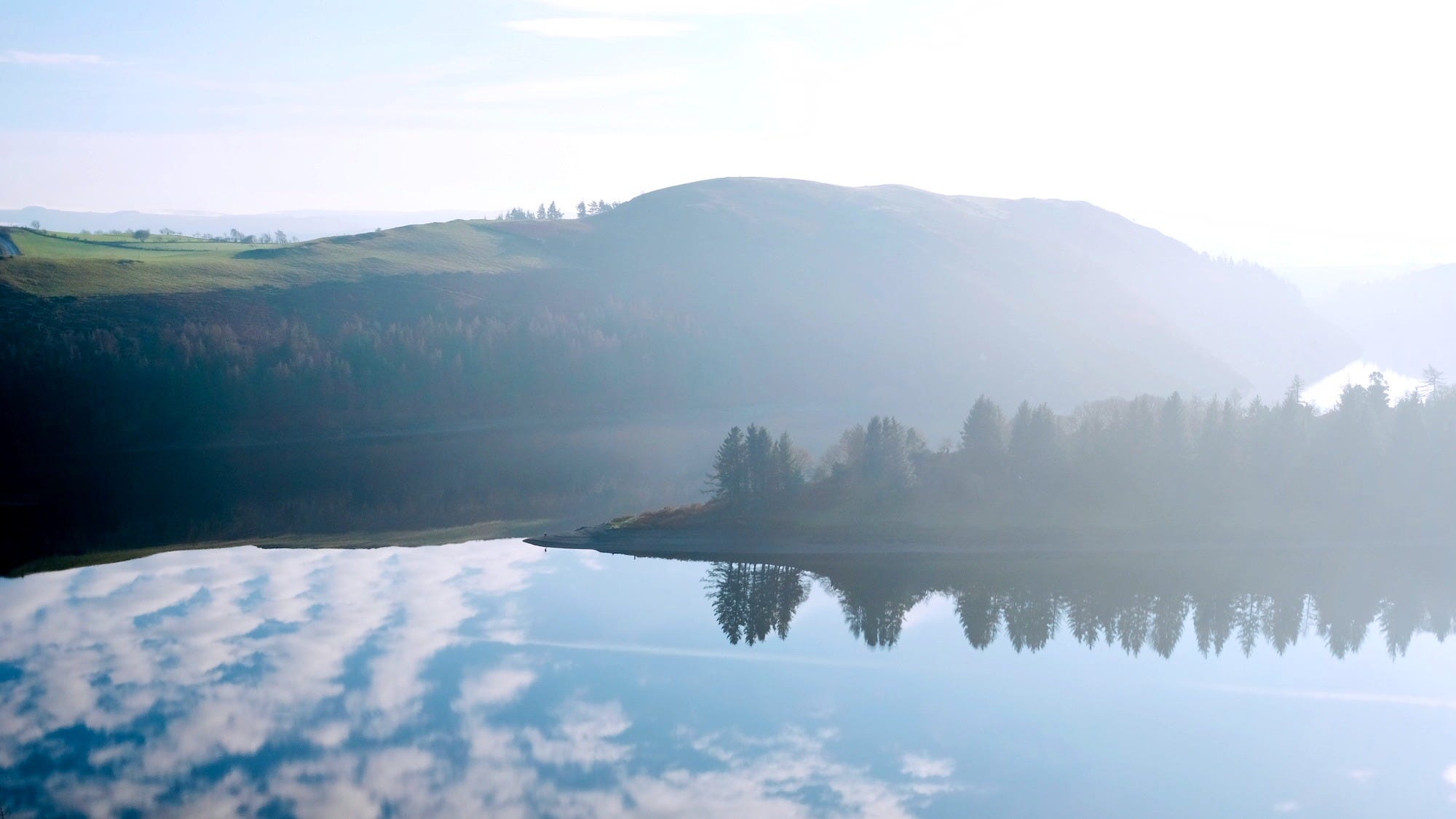
Come back to silence.
The stillness of the heart. Return to non-grasping openness, to unconstructed primordial simplicity. This you practice on the cushion, in the chair, in the meditation hall. It prepares and ripens you for all the times and ways when you’re not.
It’s not called practice for nothing. It’s learning to simply be - learning to rest as awareness, beyond grasping and seeking, beyond striving and wanting.
This we bring into our daily lives as practice begins to pervade all parts of our being. In the Bhagavad Gita it says: “even a little of this Dharma removes great fear.” So we take recourse to this level of life, this way of being. If even for a moment, a glimpse of this dharma, this way - is the very seed of its fulfillment.
So we sit and wait.
For what?
We just wait.
We rest as awareness, and in this simple resting we come to see that this is it. This is already the fulfillment of that which we seek.
Having identified it, having given ourselves the practical space to enter into this way - to stop striving, even briefly - we begin to move more in this way: that as we move among the objects of the senses, we aren’t seduced by their callings. We’re not caught up in our neediness. We can just move in the field of the senses - the world - without getting caught up, without getting attached, without the senses getting inflamed by it all, without losing our true nature.
Without that inflaming quality of grasping, striving, craving, thirsting, seeking - without that clouding our true vision, where we forget ourselves, where we seem to forget ourselves.
So we get comfortable here. We settle in. We allow ourselves to rest in this simplicity. And we can tell that we’re doing it right because it’s enjoyable.
We’re not wrestling with our inner thoughts, feelings, sensations. We’re not constructing anything. We’re not aiming for anything. And should those tendencies arise, we gently notice and gently soften. We let them go.
The Doing of Non-Doing
If we get caught up, if we find ourselves engaged, hooked into a stream of thinking, when we notice that, we just allow it to go, and we continue to rest.
To unhook is to ungrasp - to release. And we exercise that anti-muscle: not of clenching, but the opposite, where release is allowed to occur. We don’t try to release even. We don’t pry our hands, so to speak, from the object of our grasping. We just notice and allow softening and releasing to occur.
We don’t add. We don’t effort. We allow.
And if that means we allow some contraction to be there while it’s finding its own release, then that’s okay.
Phenomena self-liberate.
So we notice phenomena arising, and if we notice - if we remain present, gently witnessing, observing - we notice that whatever phenomena has arisen will naturally self-liberate. Any contraction that arises, left to its own devices, will release quite naturally.
This is what we notice, and this is what we do: the doing of non-doing.
This is the marriage of observation and understanding: understanding that in this open awareness, this field of being, phenomena arises within it - to us, in us - and then naturally will persist for a very short while and then go the same way it came.
Understanding that, knowing that, we’re not confused. And that’s exactly how it does come, remain, then go.
Nothing needs to be done. No interventions are required. No actions need to be taken to bring about, maintain or get rid of any phenomenal arising.
We remain entirely unconstructed, unconstructing, uninvolved, and yet intimately present.
And so we sit. We remain.
This is our practice.
We set a time, a place. We set a bell for this. This teaches us, reminds us, to notice what is already true - to relax and to release, and to remain open ultimately, not as an action or performance or instruction.
We are just aware of our own awareness, aware of the nature of the display, spontaneously changing, the intimacy of all of that, all of this.
And so in daily life then, having familiarised ourselves with the way of it, the dharma, the way it is - having taken the time to engage in this kind of practice, which is really beyond practice as such - this becomes our way of being.
It’s a remembered way of being because it’s so intimate and so natural.
We unlearn the conditioned ways. We unlearn the seizing and the grasping and the striving. We unlearn the heedless forgetting. We remember our presence-awareness, always: always present, always unhooked, always open, always free.
And the whole system can relax there. The whole of our experiencing becomes effortless - is found to be effortless.
Even when grasping, tightening, contracting happens, we are free of it, in fact: present to it, aware of it, intimate with it, but free of it.
Freedom From
What freedom really means - when we speak about becoming free or becoming freedom - the idea that it’s freedom to do something, freedom to be something, it’s conceived of as a personal power, a heightened sense of personal agency, freedom to: “I’m free to do this, I’m free to do that.”
But really it’s freedom from - freedom from afflictive tendencies, freedom from illusion, delusion, freedom from suffering, freedom from needing, wanting, grasping, thirsting.
This is why at a certain point all techniques, all active approaches to get somewhere, necessarily fall away. The path transcends itself. The vehicle by which one reaches the destination, once reached, is discarded.
This is the case with awakening, enlightenment, self-realization: the abidance of true nature. Once that is established, any vehicle employed to get there becomes redundant.
This happens in the abiding nature, but also in the practice stage of the path. Whatever instructions or techniques might be employed - a mantra, say, or an instruction to follow the breath - once the unstructured open awareness is present, all memory and use for what brought you here is forgotten, no longer needed.
And there is a practice stage, it’s true. There appears to be one: a provisional stage where it’s felt that one is outside, or away from, or at a distance from the condition of freedom that one seeks.
Seeking arises simply because one feels that what one wants is not present.
So the path, in that sense, is somewhat ironic, and has become cliché: you are what you seek.
It’s a little Gordian knot of self-contradiction.
So who is the one that’s seeking?
Who am I?
Self-inquiry asks and invites us to ask ourselves: who am I?
Another variant is: whence this thought, I?
Where does it come from?
And the inquiry is experiential, not analytical, not intellectual - experiential.
In our experience, where does that I-thought arise from? Where does any thought arise from right now?
And we are invited to look, to turn inward, to discover in our own experience the very source of our own thought - not just our thoughts, but our feelings and sensations too.
What is it here in me that knows this? What is the nature of the knower?
Who am I? What am I?
The Question of the Seeker
There’s a question. It’s a question of a seeker:
“What must I do?”
“What must I do to free myself?”
“What must I do to be free?”
“What must I do?!”
It’s funny. It often comes even before the more essential question: what is true? Or, who am I?
It’s funny that the seeker will often jump in and immediately want to act. The assumption is that what is required is doing at all.
Seek first to understand.
What must you do?
Sit quietly. Listen. Maybe for the first time.
Drop it all. Empty yourself. As they say in Zen, empty your cup. Don’t come with a full cup. Assume nothing.
And actually, in many ways, that is the fulfillment of the path already: to enter into receptivity, to put everything down - all of your preconceptions, everything you think you know, everything you think you understand.
And the mind goes - “and then what?”
Remain empty. Rest in that. Rest as that. Don’t pick anything up. You don’t need to.
If you really need something to do, then notice.
Gently notice, without interference, without involvement. Simply notice. Be present to what is coming, going.
Don’t imagine anything. Don’t construct anything. Don’t interfere. Just relax into your natural receptivity, openness.
It’s not passivity. Receptivity isn’t passivity.
And this knowingness, this awareness of, isn’t distant, isn’t separate even - not really. It’s intimate. It’s just uninvolved in the sense that it doesn’t interfere or direct what is occurring. It doesn’t need to.
And if it feels that it is, then that’s a delusional view anyway.
But the flow of phenomena - rising and falling, moving, stirring within our very being, within our awareness-being - is intimate, beyond intimate. It’s the very fabric of our being.
It tickles its way through us: modulations, stirrings, fluctuations of our own nature. It’s blissful - like wriggling your toes in a hot bath. And yet there’s no one to be involved in it.
There’s no one to direct it, no one to construct, no one to even resist, ultimately.
We are that awareness itself: primordial, divine.
And all the changing forms change, and yet we, as that, do not.
We are awake, alive, alert, present as that boundlessness, that formlessness.
What This Is Not About
What about the world? What about the politics? What about the wars and the rumours of wars? Disease, old age, death?
Yes. That happens.
There are no reassurances to offer in regard to phenomena except that they are impermanent.
You see, this is not about that.
The awakened mind is not about fixing the problems of the world writ large. This is not about ending disease, removing pain, solving political problems. Although it can be said that not knowing and living this exacerbates all the aforementioned issues and restoring, recovering, re-discovering the very ground of our being, the easeful, blissful source of all, that discovery tends to lessen the construction of human problems that lead to suffering.
But this is about discovering what lies beyond the conditioned field.
What is eternally true?
What is liberation?
What causes suffering?
What constitutes suffering?
What is truth?
.
So first we sit.
First we keep quiet.
First we rest as awareness, as pure simplicity.
From there, action can come.
Comments
Nothing yet. Say the first thing.
Sign in to join the conversation.