
Recently a group of astronomers in Geneva announced the discovery of a promising Goldilocks planet. What’s a Goldilocks planet, you ask? Well, it’s one that’s not too big, not too small, not too hot, not too cold. One that’s just right. It’s a planet in the so-called habitable zone, orbiting at the right distance from its sun, with earthlike temperatures, liquid water, a rocky surface, and a decent atmosphere.
This particular Goldilocks planet (with the endearing name of HD 85512b) is 3.6 times as massive as the earth and circles its sun at about one-fourth of the distance that our own planet does. It takes only 58 days to complete one orbit (so you could celebrate your birthday six times as often). Its sun is orange and only one-eighth as bright as ours. But the good news is this: It’s only 36 light-years from Earth, located in the constellation Vela. That means if we could figure out how to travel at the speed of light, then find our way to Vela, we could reach the surface in less than four decades (“Dad, are we there yet?”).
When I was eight years old I led a neighborhood effort to build and launch our first rocket ship to Mars. It ran into technical difficulties almost immediately. We finished the hull on the first day, but we were lacking a means of propulsion, a guidance system, and a way to make the ship spaceproof. At this point it was just wood with an open-air cockpit. We put the project on hold until we could crack the few remaining problems.
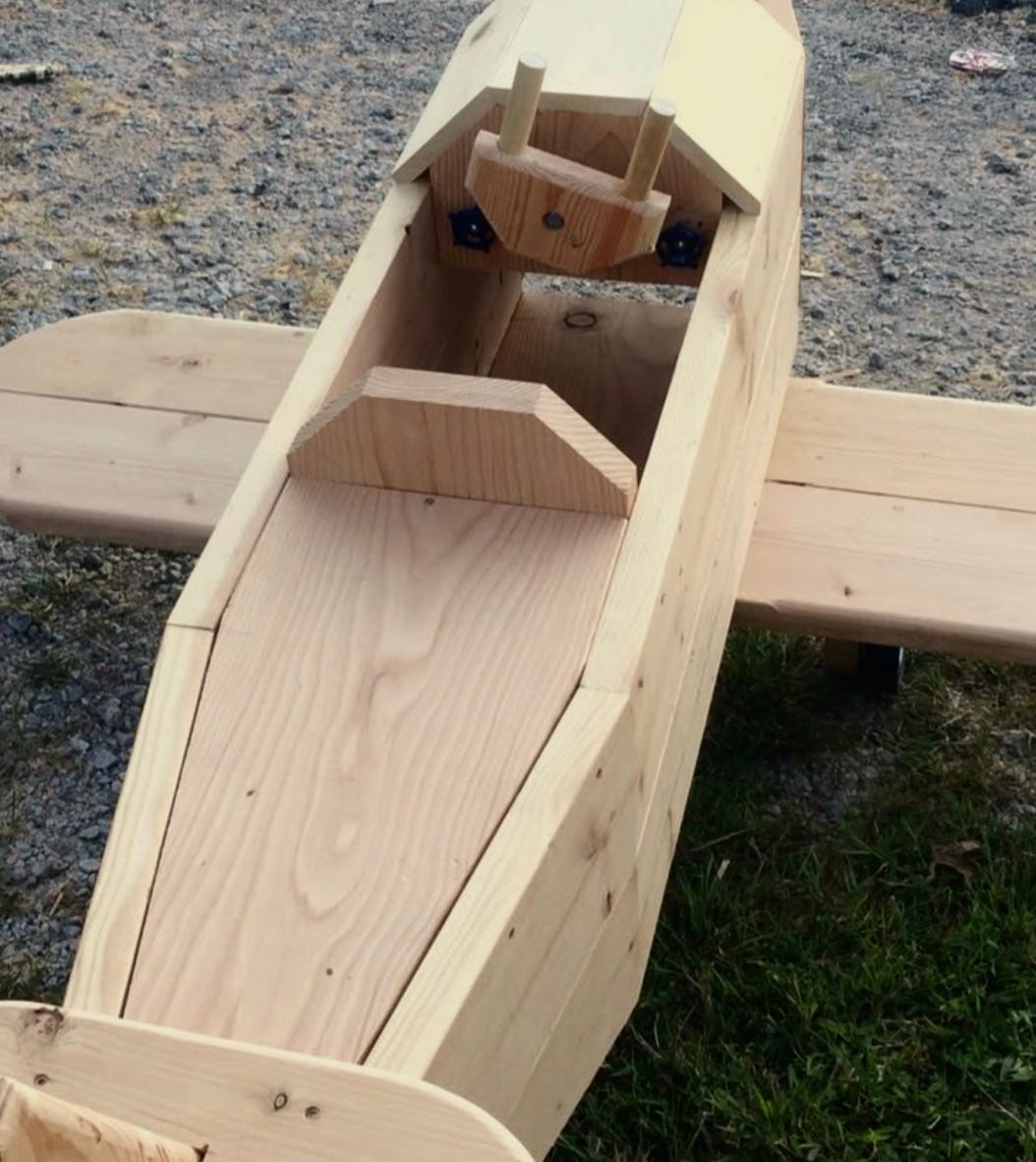
Is this the same kind of project? Why would we need a list of Goldilocks planets anyway? Is it because the world’s scientists are, at heart, only eight years old? Or is it because enough people believe we’ll need to move?
Around two million years ago, at the time of Homo erectus, the planet Earth played host to billions of animals, but only a few thousand of them were humans. The human population stayed fairly stable—until approximately fifty thousand years ago when Cro-Magnon man launched the first cultural revolution, a steady acceleration in the use of tools, fire, bipedal walking, and, most important, spoken language. The population began to surge, and, armed with these new skills, humans began to venture up from Africa to Europe and around to Australia. It was the Cro-Magnons who left us the cave paintings.
The second surge began about ten thousand years ago. First we figured out how to produce food using a predictable system of agriculture, then we invented writing so we could pass our knowledge down and across to others. This was a tipping point at which “our ability to modify the biosphere exceeded the planet’s ability to modify us,” says Kevin Kelly. In other words, our technology was evolving faster than our DNA. By the year 1 AD, the population had grown to 300 million.
The third surge coincided with the Industrial Revolution about 200 years ago. The mass production of books, starting just after the Renaissance, had begun to democratize science and technology. By the year 1800 we had grown to one billion human beings. Only 127 years later, two billion. We hit three billion in the next 33 years, and four billion in only 15 more. Today we’re at a teeming seven billion.
This exponential population growth lies at the heart of our fears about the future. How many humans can the earth support? Are we good for the planet, or just a virus that will eventually run its course and leave the damaged biosphere to recover on its own? This sort of runaway population growth is known as a Malthusian crisis. Thomas Malthus was the economist who, in 1798, wrote “An Essay on the Principle of Population.” In it he warned, “The power of population is so superior to the power of the earth to produce subsistence for man, that premature death must in some shape or other visit the human race.” He imagined a cascading failure in which widespread famine led to the spread of disease and the decimation of the human race.
Today’s Malthusians have generalized the problem of feeding an outsized population to include all natural limits, such as using up our fossil fuels, exhausting our forests, compromising our air, contaminating our water, shrinking our biodiversity, and stripping out our minerals. In their view we’re like children who, given a priceless collection of gold coins, spend them all in gumball machines. It took the earth 4.5 billion years to accumulate the resources we now enjoy, yet we’re tearing through them like there’s no tomorrow. “We do not inherit the earth from our ancestors,” says the proverb. “We borrow it from our children.” Unfortunately, most of today’s talk about natural resources revolves around whether we can extract them. One wonders if the earth will collapse when it’s finally hollowed out. Clearly, if we go on as we are, we won’t be able to sustain our evolutionary progress.
“But we won’t go on as we are,” says Matt Ridley, author of The Rational Optimist. “That’s what we never do.” He says we’ll try to invent new technologies and new systems and new philosophies to take us to the next level. Just because we don’t know how doesn’t mean we won’t know how. We’ll muddle through.
Let’s start by compiling our to-do list. What are the grand challenges facing us in the 21st century? Which problems, if addressed, could unleash a new wave of health and prosperity?
For one, we could slow the extinction of animal and plant life. Losing a species is not only sad, it weakens the overall resilience of our ecosystem. Biodiversity is a key factor in sustaining a healthy planet.
We could make cities more livable. Researchers predict that 75 percent of the world’s population will live in them by 2050. Cities offer huge advantages, including the sharing of resources, knowledge, and talent. But does that mean we have to give up trees, quiet streets, and clean air?
Let’s get a handle on our food problem. Half of the world is growing obese while the other half is going hungry. We don’t seem to know how to feed ourselves. Figuring out the food situation is not only worthy work, but urgent work.
Global warming is nearing condition red. Despite the naysayers, we have cause for alarm. Rising oceans and the loss of animal populations are bad enough—we shouldn’t compound the problem with denial. We need to act.
Energy. The fuel that drove us here won’t get us where we’re going. Everyone knows that, but it’s still a challenging problem. Wouldn’t it be sad if we poisoned our own atmosphere with fossil fuels, then discovered we didn’t have enough to get us to a Goldilocks planet?
On the subject of pollution, we need to clean up the oceans. The thing that makes our own planet the best possible Goldilocks planet is our water. It’s the envy of the universe.
We also need to reduce the waste stream. If we’re really smart and determined, we should be able to design our products so they can be recycled instead of downcycled or thrown away. Of course, nothing can actually be thrown away. There is no “away” in a closed system.
Let’s democratize medicine. This is more than a humanitarian cause. As long as medicine doesn’t reach every corner of the planet, the human race is in danger of fast-moving viruses and other contagions. As we become more connected, we become more exposed.
Then there’s war. While war is generally on the wane, we need to outgrow it entirely. War is the very essence of entropy. Under the strain of seven billion people, we can no longer afford the wholesale waste that comes from large-scale, mechanized violence. It’s a drain on resources and a drain on the human spirit.
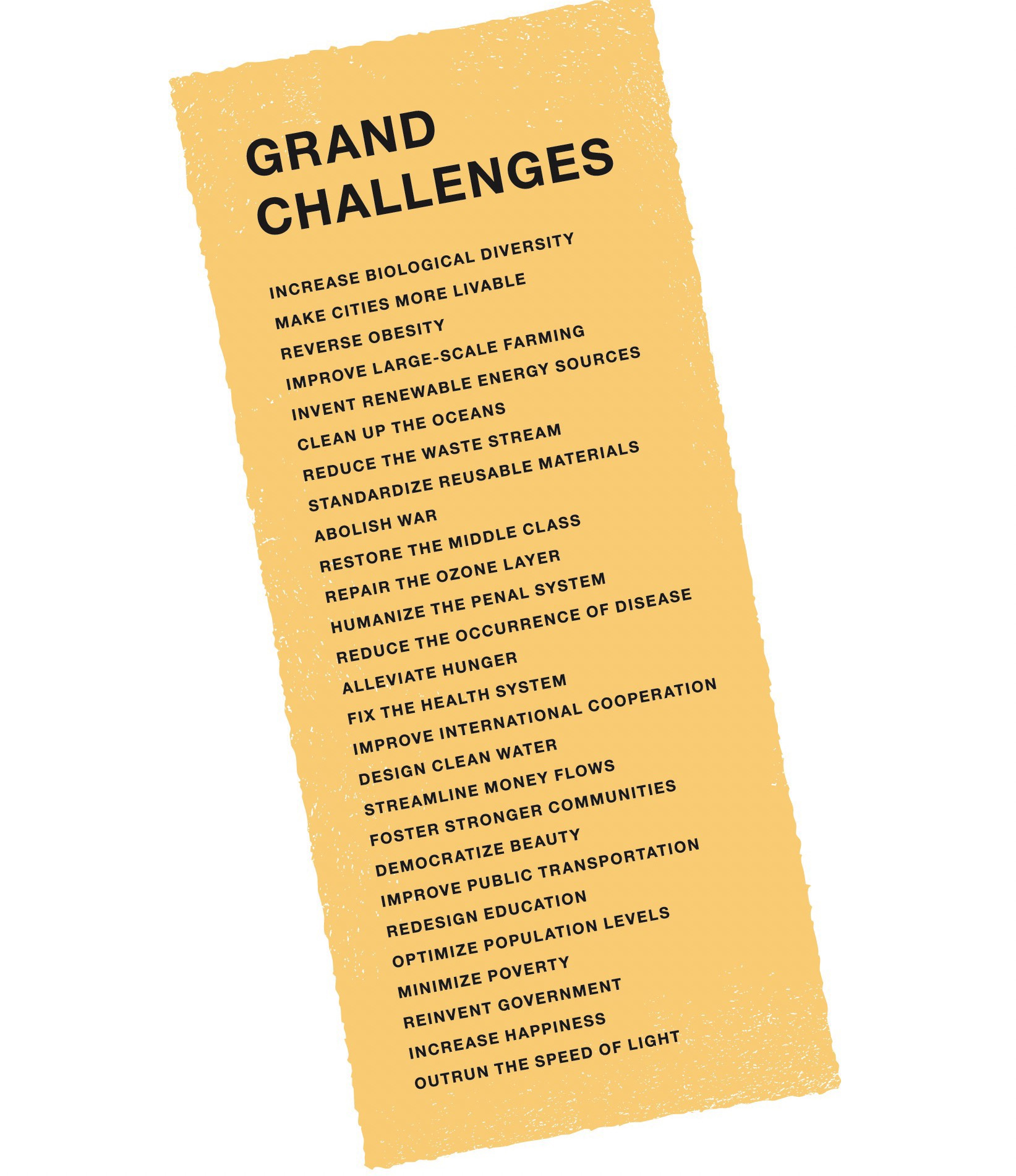
These are a few of the urgent items. Once we cross them off the list, we can tackle the really advanced ones, such as how to get around the speed of light. Then traveling to those Goldilocks planets will be more than a fairy tale.
Obviously, huge challenges like these are beyond the reach of a single person, no matter how many metaskills he or she masters. So-called wicked problems can only be addressed through collaboration. Yet the people who will make the most difference in tomorrow’s groups are those who can foster a shared vision, then pursue it with a passion, using a combination of feeling and seeing, dreaming and making. If this sounds like you, there’s one more metaskill you’ll want—learning, the opposable thumb of the five talents.
Comments
Nothing yet. Say the first thing.
Sign in to join the conversation.