
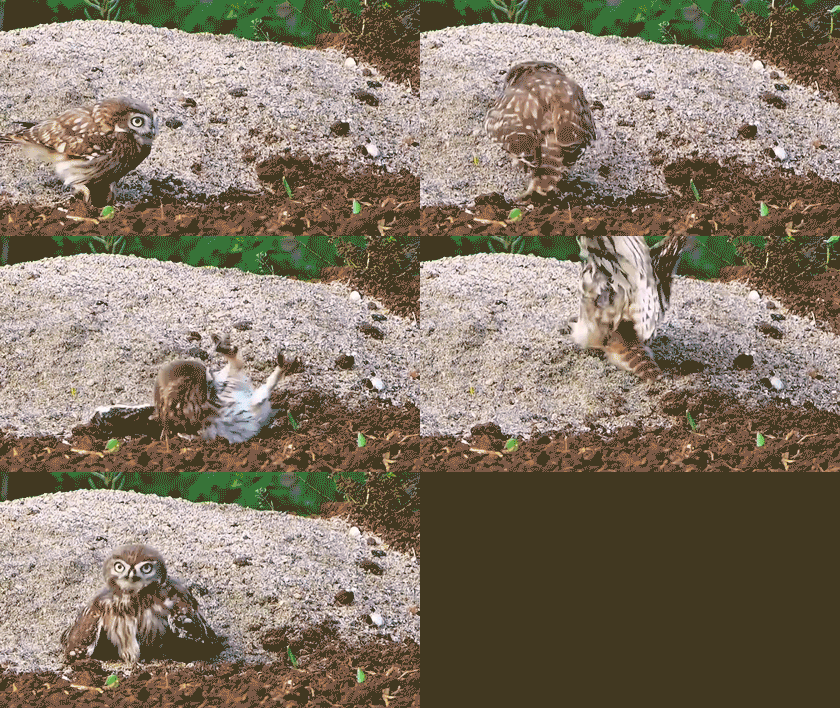
Today we are enjoying a little owl (Athene noctua) get a little silly while having a sand bath. But really, the one who seems to be enjoying this scene the most is the little owl!
It does perhaps seem a little counter-intuitive that birds would use sand or dirt to get clean. Understanding their total maintenance regimen helps clear up the confusion. Most birds have an oil-producing gland located at the base of their tails called a “uropygial gland” (or alternately, a “preen gland” or “oil gland”). When a bird that has this gland preens, it distributes this oily secretion throughout its plumage, using its beak to distribute the substance on its feathers, and on the skin of its feet and legs. The oil helps keep the bird’s feathers flexible and water-resistant, and to keep its skin and beak in good condition. Additionally, there is strong evidence to suggest that uropygial gland oil may act as a chemical protection against feather bacteria.
But after a while, this oil can get thick and gunky (highly scientific term), so the bird has to remove old oil and refresh it. This is where sand and dirt help in the process, absorbing the old oil in preparation for a new application. As a bonus, lice or other parasites that might be sitting on those feathers will be forced off through friction into the gritty cleaning matter.
Some species of birds will have a strongly developed uropygial gland. Waterbirds like ducks, for example, will have a large gland relative to their body mass. There is a correlation between a bird’s contact with water and the size of their uropygial glands. The oil helps their feathers resist becoming waterlogged, providing thermal protection buoyancy control.
Owls, on the other hand, have light, airy feathers made for silent flying. While most species of owl do have uropygial glands, the oil functions as a conditioning agent more so than as a waterproofing layer. Owls become waterlogged much more easily than waterfowl, a result of the differences of the composition of their uropygial gland oil. Making sure that feathers are clean and fluffy is important to owls who have the need to fly quietly, and regular sand baths help keep those feathers in tip-top shape. An owl may opt for a water bath instead, splashing about in a shallow pool, or even occasionally taking a plunge bath, vigorously shaking off and being sure to air dry and preen afterwards.
The source for today’s gif is here.
Birdorable: “The Secret Behind Waterproof Feathers & More: The Preen Gland,” 2/11/25
Linnean Society Biological Journal: “Sources of variation in uropygial gland size in European birds” by Orsolya Vincze et al, 8/2013
Comments
Nothing yet. Say the first thing.
Sign in to join the conversation.