
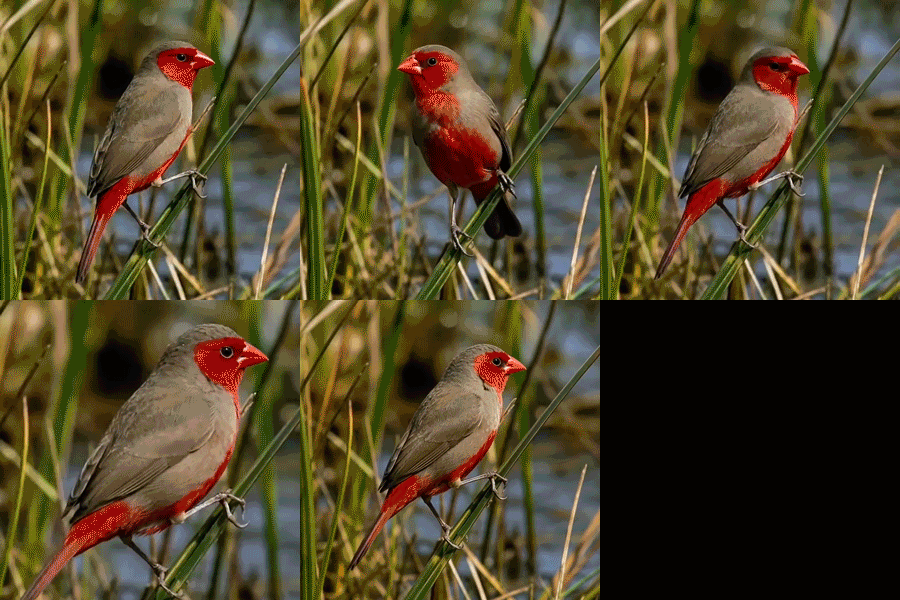
Our friend with the bright red belly and face plumage is a crimson finch (Neochmia phaeton), a passerine bird found in Northeastern Australia and parts of southern new Guinea. There are two subspecies of crimson finch, but both feature that vivid plumage and that red seed-cracking beak. The species displays sexual dimorphism, with females being a bit paler in color, although both have crimson feathers; it’s a bird that takes its redness seriously. Males have slightly longer tails and bills than females. Juveniles will have molted plumage and be less vivid than mature birds.
The crimson finch is about 13 centimeters (5 inches) in length and weighs about 13 grams (.45 ounces). It can be found in habitats with tall, thick grass cover. It prefers areas near wetlands and is particularly partial to areas that have an abundance of Pandanus trees (screw pines and other palm-like flowering tropical trees). Grass seeds make up the majority of its diet, and it also eats insects.
As well as being an important source of food, grasses are also useful material in crimson finch nest building. Along with stalks of grass, the birds will use shredded pandus leaves and bark to make a loosely woven, domed-shaped nest in the upper branches or crowns of trees, and they will line it with feathers and plant down to keep it soft. Nests will typically be built in colonies, “neighborhoods” containing several mating pairs living in the same area. Pairs stay monogamous through the mating season and help with both incubation and feeding of their clutch of, on average, four to six eggs. The chicks fledge about three weeks after hatching and will continue to stay in the parental nest for another few weeks. Both parents continue to feed and support their chicks until the young permanently leave the nest and fly off to independence.
Crimson finches have a reputation of being aggressive little guys, going after other crimson finches as well as other birds in different species, particularly the red ones. It seems that reality might be a bit more nuanced, though. After all, their communal nesting habit does seem to show that they will tolerate other crimson finches in their immediate vicinity without issue. Researchers have found that the aggression reflexes of the crimson finch is situational, based on threat assessment of the individual circumstance. They will certainly attack any interloper that comes too close to their nest, including members of their own species, and both males and females are equally aggressive when nests are in peril. Additionally, plumage color does seem to be an indicator of social hierarchy, with redder males generally playing the role of “boss” within a specific colony. The dominant males tend to be larger and older, and it’s possible that the visual cues of “redness” might actually help moderate aggression in mating and overall group social interactions. These visual indicators could actually serve to help reduce physical injury by dissuading a perspective challenger to tangle with a the reddest rival.
The source for today’s gif is here.
Comments
Nothing yet. Say the first thing.
Sign in to join the conversation.