
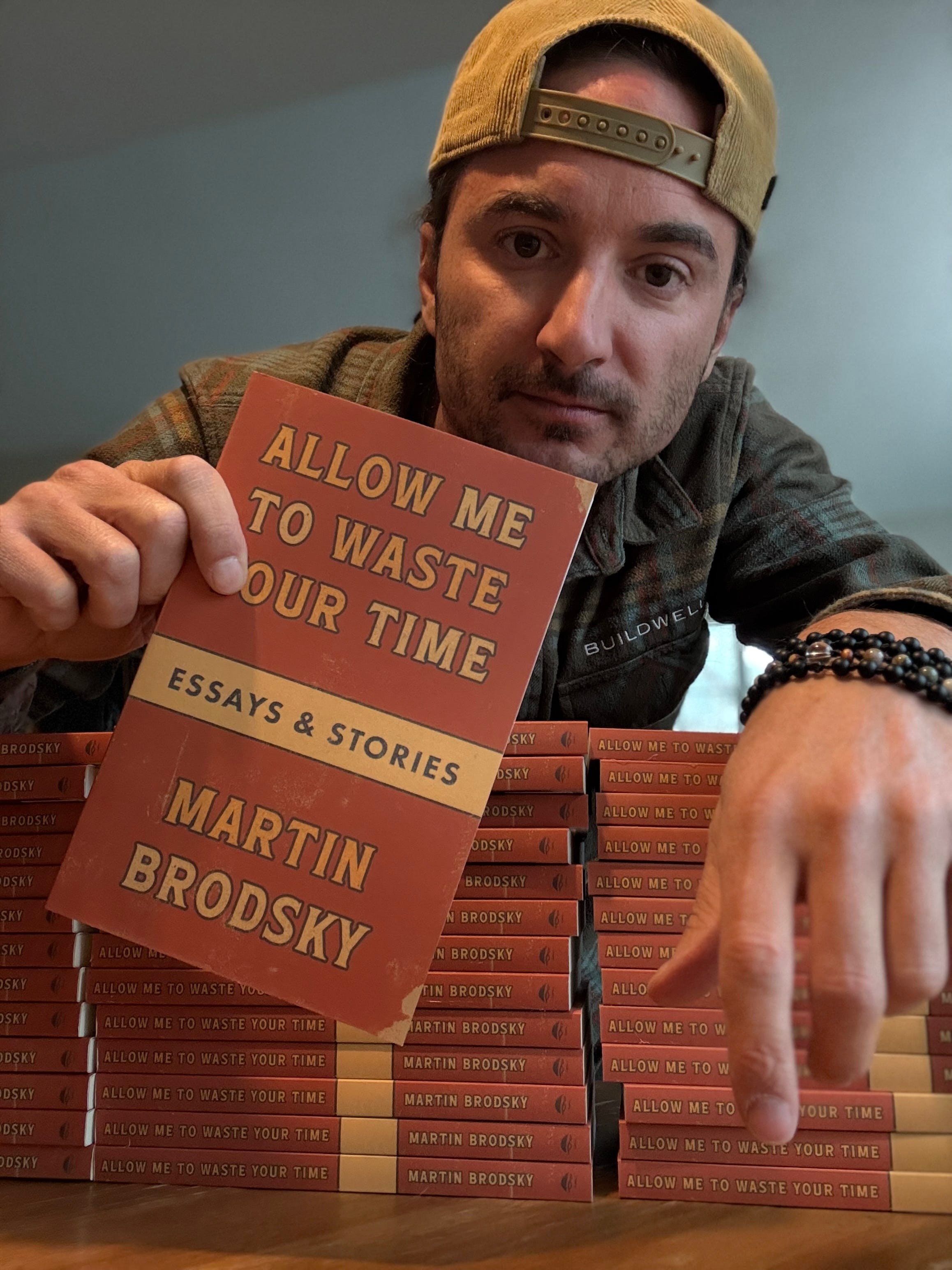
After calling myself a writer for the last decade, I’ve increasingly wanted to put a book of my own up on the shelf.
While pondering this desire, I wrote essays on Substack, enjoying the immediacy of connecting with readers in real time. Sixty essays in, I realized the book I had imagined existed right in front of me . . . I just needed to turn it into one.
In my experience as a writer, traditional publishing has always been pitched as “the way.” However, I’ve always been curious about self-publishing. Perhaps the DIY attitude attracted me.
As the poet Charles Bukowski once wrote: “I was waiting for something extraordinary to happen but as the years wasted on nothing ever did unless I caused it.” I figured it was time to cause something.
So, with plenty of material to work with from what I’d already posted on Substack, I set out to turn it into a book. Now to figure out what I was doing. I’ll break this down into three parts:
Manuscript
Book Design
Publishing Platform.
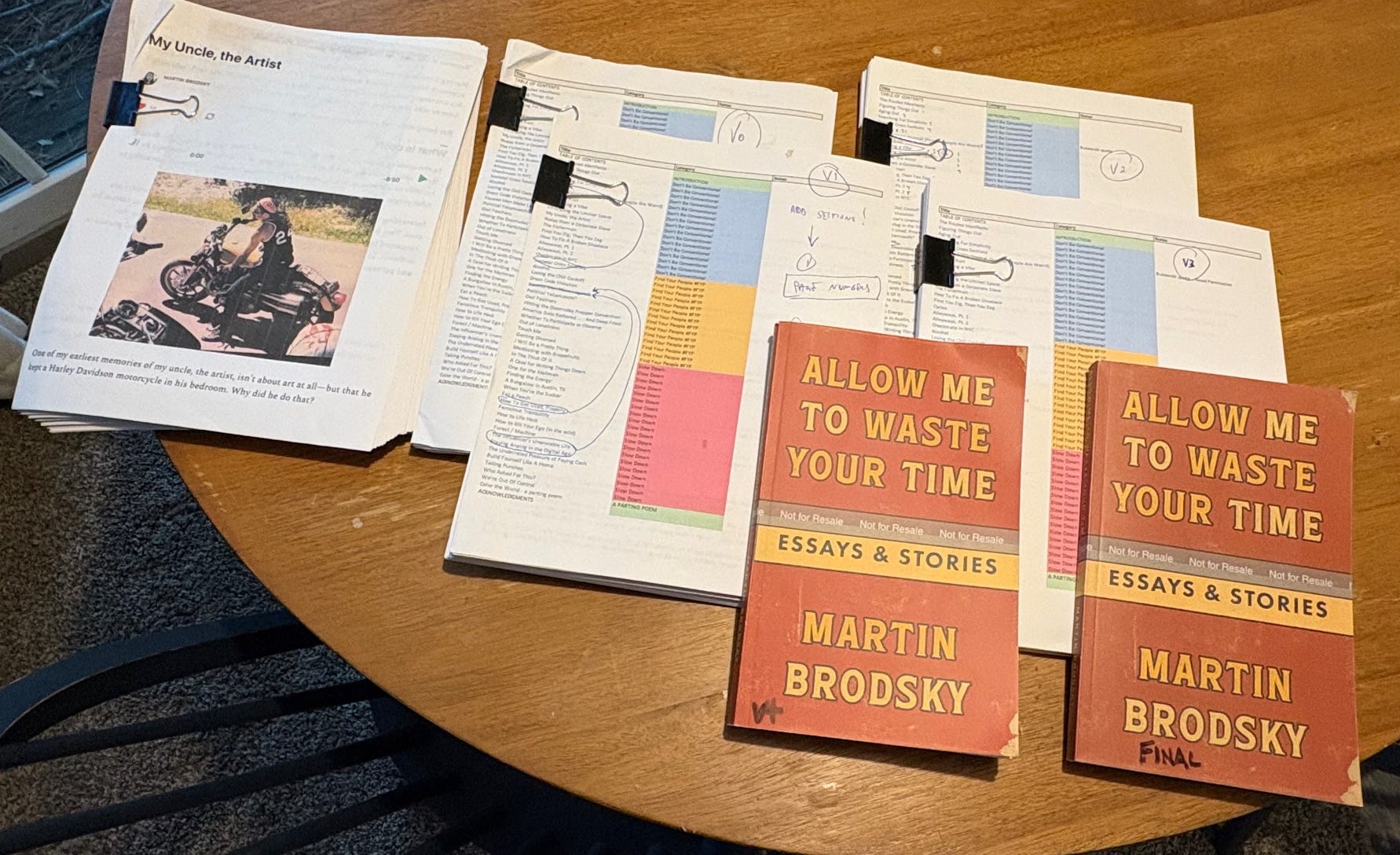
First things first, getting the manuscript in order. I printed off every essay direct from Substack itself, with the pictures and comments and everything else, and assigned each a grade, culling the ones that didn’t cut it.
Then I created an Excel spreadsheet with all the titles to figure out the best order, which turned out to be a challenge: for one, the overarching thematic organization of the collection took some time to understand. I ultimately broke them into three categories, based upon an essay which became the introduction, then reread the essays and tentatively put them in place, taking a close look at the beginning and end of each piece to make sure the transitions flowed from essay to essay.
Then I read everything again as a single manuscript, line-editing along the way, adjusting the order, and revising the original online formatting to make sense in print. Then I did it again. And again. Overall, I read the whole book about six times, and it probably would have been more had I not already proofread the essays multiple times before originally posting them on Substack.
I decided to engage a copyright attorney during this process, as well. I quote a lot of different people in my essays and wanted to make sure I was not violating any copyrights by including them. I came to understand the concept of Fair Use, a nuanced legal term if there ever was one, and sought permission for a couple of quotes that fell beyond that provision. (I’ll break down the costs at the end of the essay.)
I am a writer, not a book designer. I knew to pull this thing off to the standard I imagined, I’d want to work with someone who sees design as their craft. I spent around 600 hours crafting these essays and figured they deserved to be complemented by a carefully considered design.
I’d been following the book designer Nathaniel Roy on Substack for over a year and have always found a lot to love in his work. So I sent him an email and in response Nathaniel asked me a bunch of questions about the aesthetic I was going for, the inspiration for it, and some of the deeper motivations behind publishing a book.
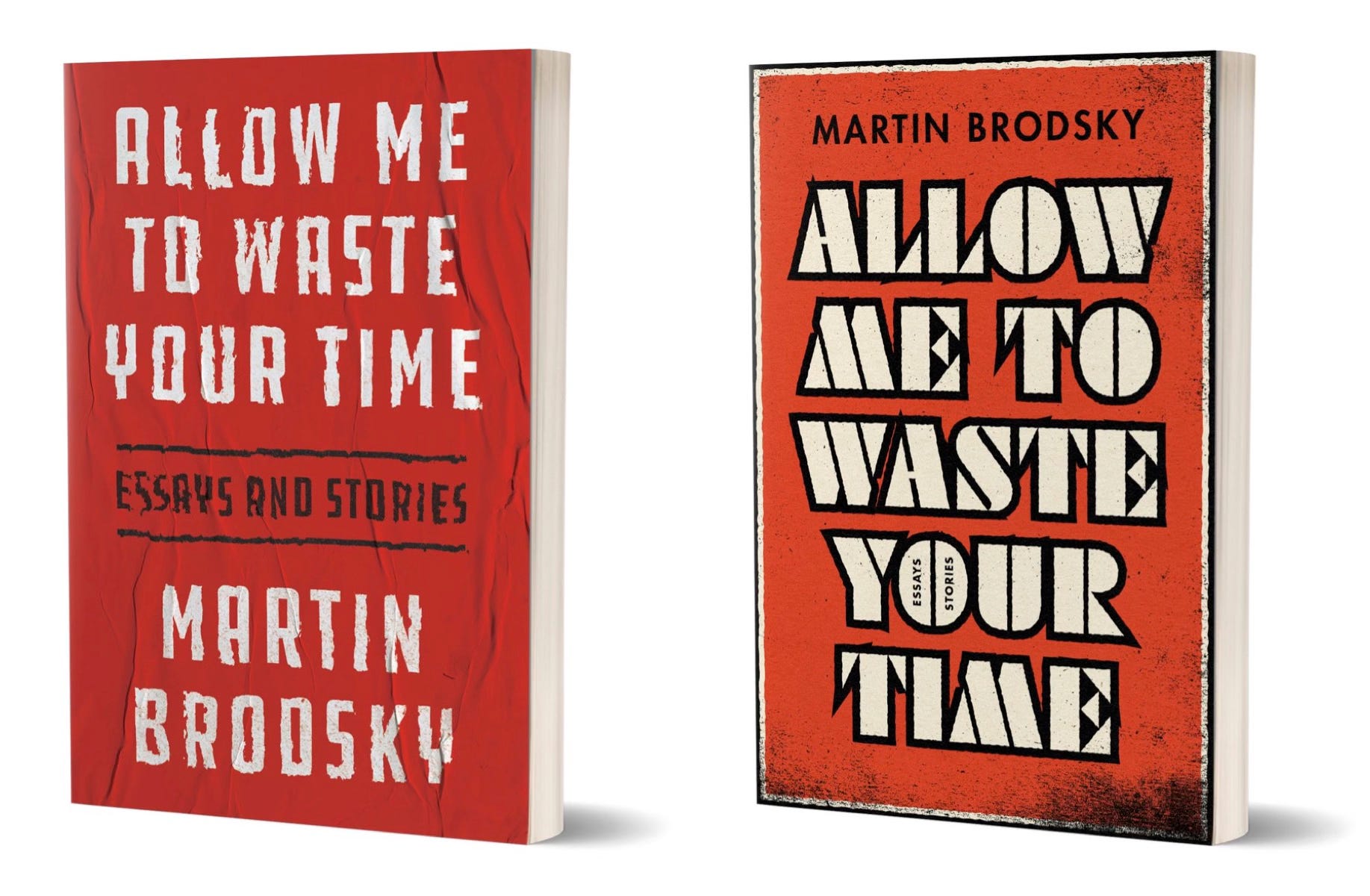
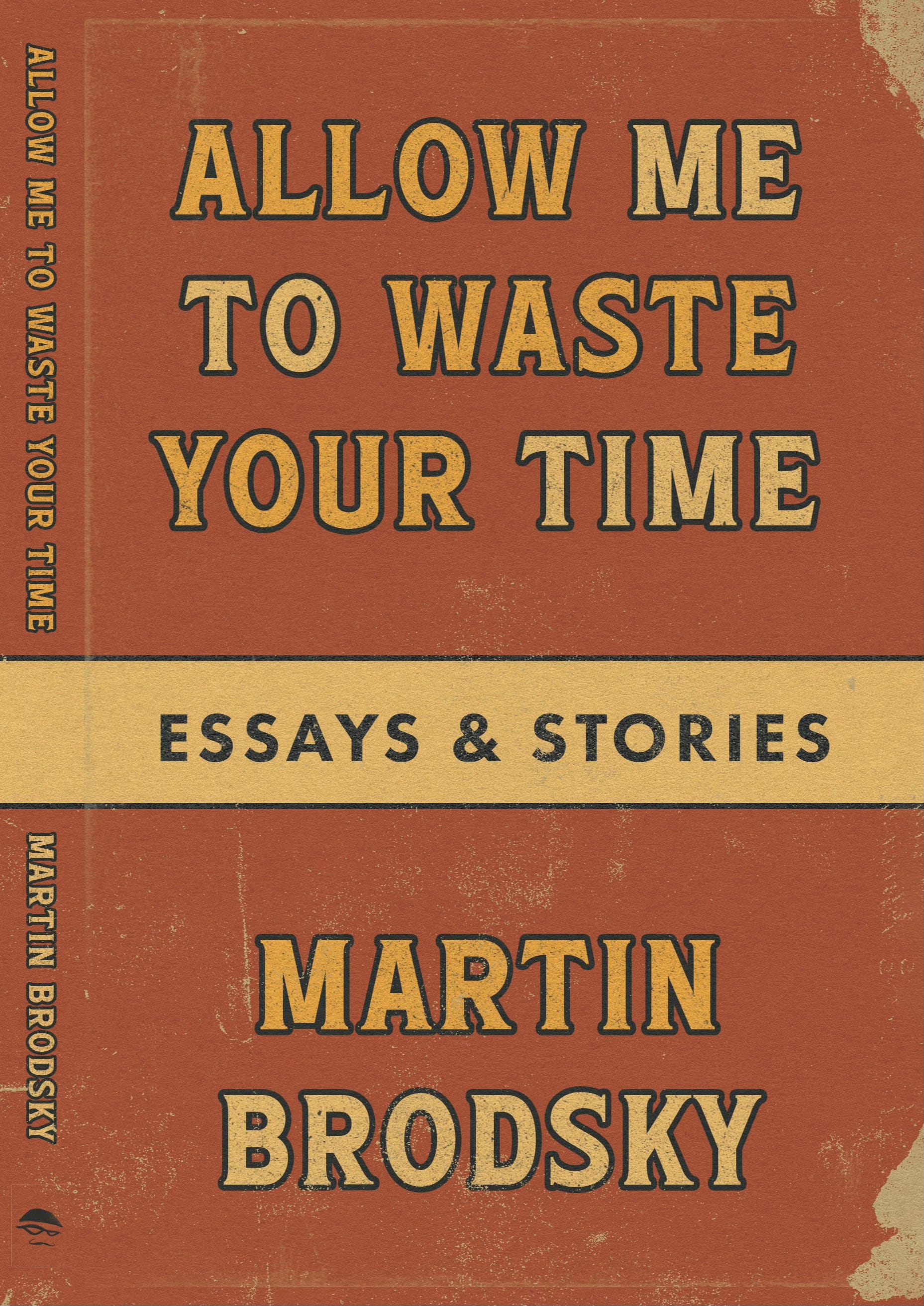
One of the beautiful aspects of self-publishing is that you have full creative control of the artistic vision, no compromises. I had originally wanted a propaganda-like color scheme (red, black, white) but it looked a little harsh, so Nathaniel warmed it up and changed the font. I’ve always loved the album art for the Grateful Dead’s Skeletons from the Closet and we riffed on that for the title.
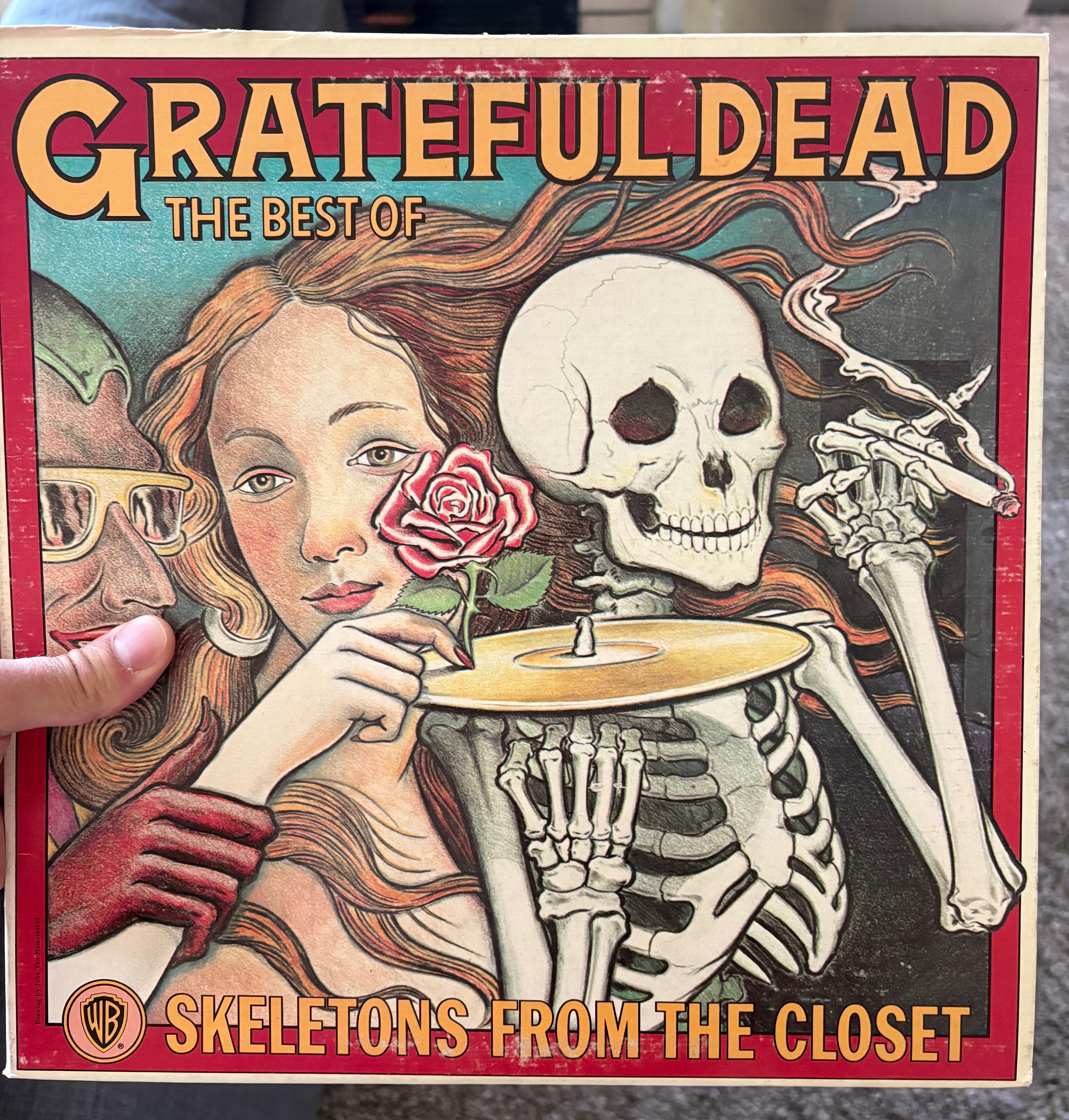
Nathaniel nailed it. There is something very exciting about seeing the front cover of your book. You can almost imagine it on the shelf. Very motivating for getting the rest of it to the finish line.
As far as the back cover, I knew I wanted to go old-school, using my author portrait for the whole thing. I’m lucky to have some really talented friends and a good buddy who is a professional photographer took some shots for me in his garage studio.
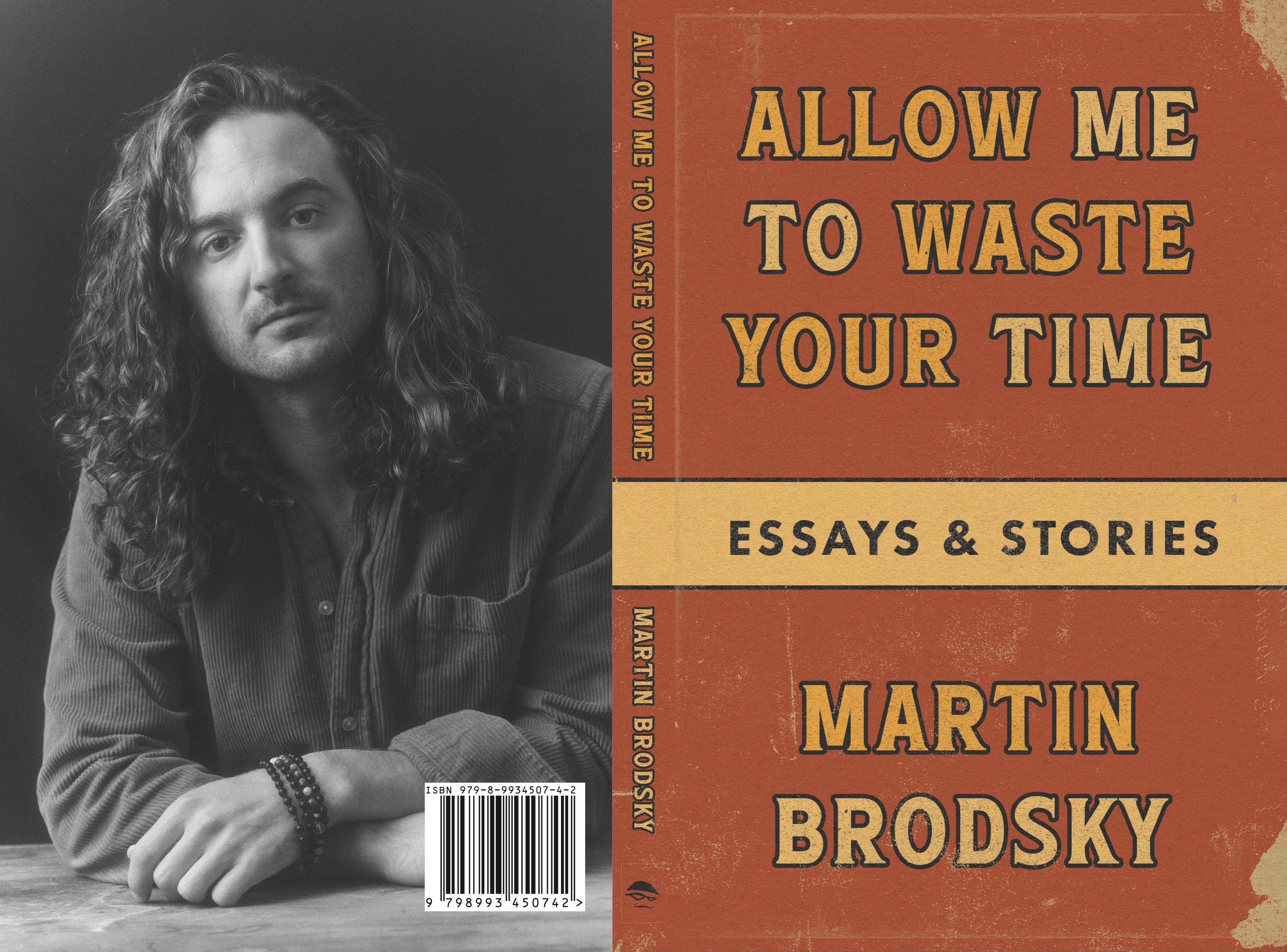
On another note: I get annoyed when a book has blurbs and other superfluous text all over it. The only time a blurb convinced me to buy a book, I read one chapter and quit, so I don’t trust them at all. I figured a clean front and back cover is relatively timeless (I hope)—I mean, you don’t see all that marketing bullshit on Penguin Classics, right?
Now, the final piece, formatting the interior. I wasn’t interested in messing around with this myself—again, not a book designer—but Nathaniel offered this service, as well, so I sent him the finalized manuscript and he got to work.
One consideration was whether to leave line breaks between paragraphs with no indentations, as it had been formatted online, or go with indented paragraphs and no line breaks like most print books. In a kind of homage to the essays’ digital origin, I decided on the line breaks with no indentations.
That said, I find it interesting that what seemed like a good length for online reading (< 2,000 words) is really short in print (3-4 pages). However, one of my goals as a writer is to get people who don’t consider themselves “readers” to become interested in books, so I see these shorter print essays as more accessible to anyone who might otherwise be intimidated by twenty-five-page chapters.
As far as the “press” goes—Petty Thief Press—I’ve owned the URL for years, thinking it was a cool name. That same photographer friend of mine sketched up a quick logo and I used it mainly to add some aesthetic to the title page and spine—although I do believe it adds some trad pub legitimacy to the whole thing (I guess I couldn’t escape that desire entirely).
I feel the need to address the use of AI, of which I did, strictly as a tool. ChatGPT helped me confirm the sources of my many quotes, categorize my book and come up with keywords for Amazon, and template the copy for the sales landing page—and that’s it. If you want to use it to design your cover, my feeling is that you’d be better served paying an actual person and engaging in some real creative collaboration. Let it be known, if you use AI to write your actual words, we can’t be friends.
With the cover and the interior formatted into PDFs, I was ready to get the physical proof.
Which platform to use to self-publish your book is a rabbit hole of its own. Ultimately, I published through bothAmazon KDP and IngramSpark. My friend Brendan Leonard has a good breakdown of the differences between the two HERE. I won’t get into the details because this is a deep conversation in its own right, but there are plenty of good resources out there. When it comes to understanding the nuances of self-publishing, Dale L. Roberts is a great place to start.
I uploaded everything onto Amazon KDP and in a few days got an author proof sent to my house. Getting that package was the first time I’d ever held my work on anything other than printer paper. What a feeling!
I read through the whole book again, identifying any formatting issues and a couple of missed typos. Nathaniel made the modifications, I reuploaded, got another proof and then, finally . . . officially hit publish. My book was in the world.
Of course, I could talk about the announcements I made prior to publication, the marketing plans I’ve been enacting, and all that. But I’m certainly no expert and it pretty much comes down to four words: SELL THE DAMN THING!
So far that’s meant mustering up the courage to be shameless in my promotions, calling bookstores to stock it (easier than you might think if the book’s on Ingram with a wholesale discount), and figuring out how to generally get people reading more books.
I also decided to send a signed copy to all my paid subscribers here on Substack, new and existing. And it’s been so nice to connect on a personal level to people who have made a tangible difference in my writing career.
Book design (cover + interior): $1,800
Copyright Attorney: $630
Copyright permissions: $150
ISBN numbers (pack of 10): $295
Author copies (Qty: 40): $182
Shipping signed books: $174
Royalties (first two months): $577
I’ve still got a ways to go before breaking even, but as we writers know, it’s not about the money.
Feel free to leave any questions in the comments. I’ll do my best to answer.
And if you want to check out my book, you can do that RIGHT HERE. It’s a collection of essays about staying human in the algorithmic age.
Thanks for reading.
Martin
Comments
Nothing yet. Say the first thing.
Sign in to join the conversation.