
Many years ago I wrote a critical essay for my Higher English exam on John Wyndham’s "The Midwich Cuckoos". The premise of the book, if you’re not familiar, is that every woman in the village of Midwich suddenly becomes mysteriously pregnant after the "Dayout". Nine months later they give birth to golden-eyed children who share a collective mind - and all communicate and act the same. As realisation sets in, the villagers have to decide what to do with their "creations".
It’s an unnerving story; I’ve been quite happy not reading it again in the intervening years.

But there are echoes of the story in the world today. It’s increasingly clear many people are happy to delegate writing to their AIs. Take this post which got 2.3M views; or this viral one from a few months ago; or ChatGPT winning the "prestigious" Commonwealth Prize for literature.
A couple of years ago, if your child wrote like this, you’d be incredibly proud. But now? Now it smacks of outsourcing your thinking. And Claude-writing is everywhere. Once you’ve learnt to recognise it, it begins to grate.
What’s strange is that most people don’t seem to mind. At least, not yet. Maybe they never will - maybe Claude’s writing is of a standard that most can’t notice the AI tells. But I doubt it - we humans are good at pattern matching and I suspect it’s just a matter of time before more and more folk notice.
The other confusing aspect is people are so willing to subcontract their thinking. If you are going to post something to millions of others - and claim you wrote it - then shouldn’t you actually write it? Plus, the old adage - if you are not writing you are not thinking - is as true today as ever. Writing is incredibly powerful at marshalling your thoughts. Giving that up seems like an unforced error.
But writing is hard; I can understand the temptation to give in to Claude. Heck, this post could have been finished a couple of hours ago if I’d just asked Claude.
But subcontracting all the work and claiming it as yours?
For now we can detect AI writing. There’s a rhythm, a complexity, a correctness, a sameness that pervades it. And that sameness, homogeneity if you like, is understandable. There are only a few leading LLMs - each has a different style, but Opus 4.8 writes, like, well Opus 4.8. Ten LLMs don’t have the variety five billion humans manage.
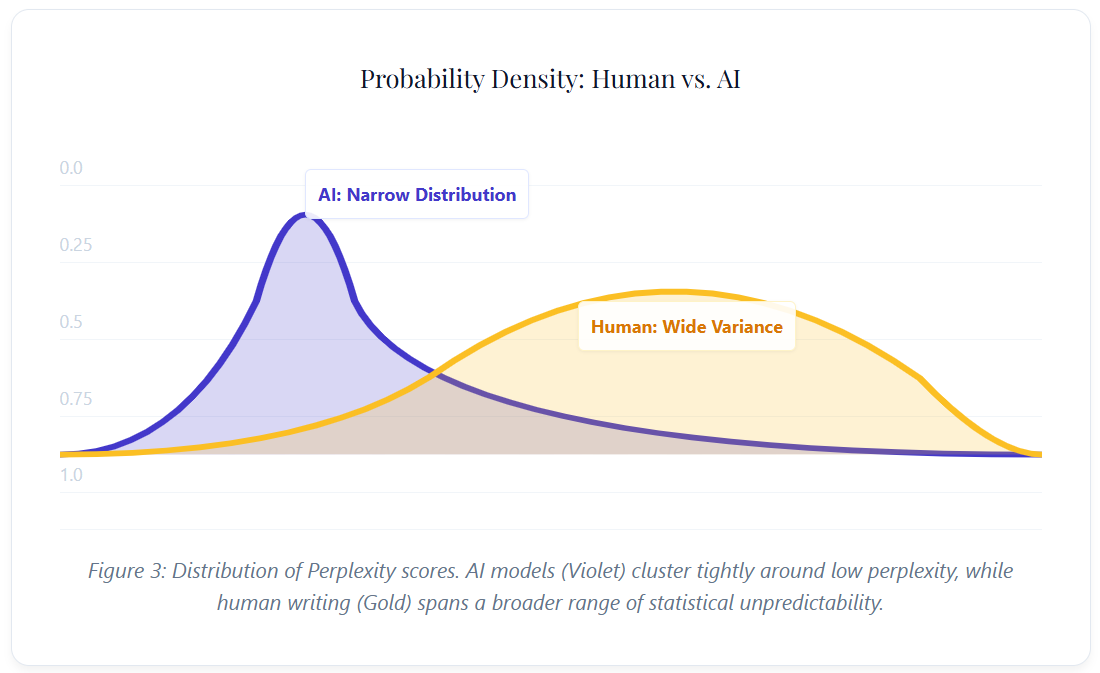
Pangram is pretty good at detecting AI writing (and they have some nice visualisations too). But they are not perfect. And, with a bit of work, it’s almost certainly possible to get LLMs to evade Pangram’s algorithm. It seems inevitable that it will become easier to evade detection.
But will anyone care? Or go to the effort to evade detection?
We seem not just happy to have our cuckoos living in our nests, but are actively inviting them in.
Part of the danger of the Midwich Cuckoos was their ability to sync in real-time. Once one child knew something all of them did. Instantaneous syncing with no replication delays.
LLMs don’t do this. They only update when they are trained. And even then they only update on the information we’re willing to share. But, technically, Claude could sync in real-time. It’s just shared memory - but on a much larger scale. And then we’re into a rather scary world.
The Midwich Cuckoos also exercised mind control; a human who accidentally collides his car into a child is forced to drive into a wall and kill himself. Fortunately Claude can’t do that. Or can it? How much influence will conversations with AIs start to have over the average human? How much of our behaviour will be determined by our AI advisors? AI counsellors?
Back in Wyndham’s world, the story was resolved by one of the characters concluding the children were an existential threat, smuggling a bomb into their classroom and killing them and himself. We’re not going to have that option.
And yet…
Despite everything I’ve written, I’m using Claude to help me with this article. It’s doing the research, finding the articles I have a vague memory of reading a week ago. It’s reviewing my writing; it helps me form my argument. I’d like to think I’m in control - many of its suggestions are wrong. Yet they help me sharpen my argument.
But would a different shaped Claude push me in a different direction? Would I come to a different conclusion? And if there are another hundred people writing an article like this do we all converge on the same conclusion because we’re steered by Claude?
Am I just part of the inevitable future group-think story?
No posts
Comments
Nothing yet. Say the first thing.
Sign in to join the conversation.