
In my unemployed days, I find myself oscillating between two types of ambition. One is to write a book of everything, the sort of book that makes all other books redundant, “except for the Bible and the telephone book”, as Gerard Reve used to quip, back when before telephone books became redundant. The book would be about the twin themes of impasses and passages – falling asleep, waking up, getting lost, getting to know a stranger – and the uncanny places (the bed) in which they happen or don’t happen. In a broader sense, it would be about midlife crises, Dante’s “In the middle of the path of our life” — and my own, of course.
Over the years I’ve made hundreds of outlines, some more or less “filled in”, but nothing that I would dare to show to another person, nothing that I would even want to re-read myself. The gap between my grand ambition and my paltry productivity became too large to sustain; something had to break, as it did this week when, with a sense of liberation, I remembered again (my other ambition) that I was supposed (I had promised myself) to write something small each day, and put it on substack right away. Just one paragraph would be enough, even a paragraph of one sentence. Hoping to set the bar so low that I could not fail, I was perfectly conscious of trying to fool myself into realising my project in another way. The project is dead. Long live the project!
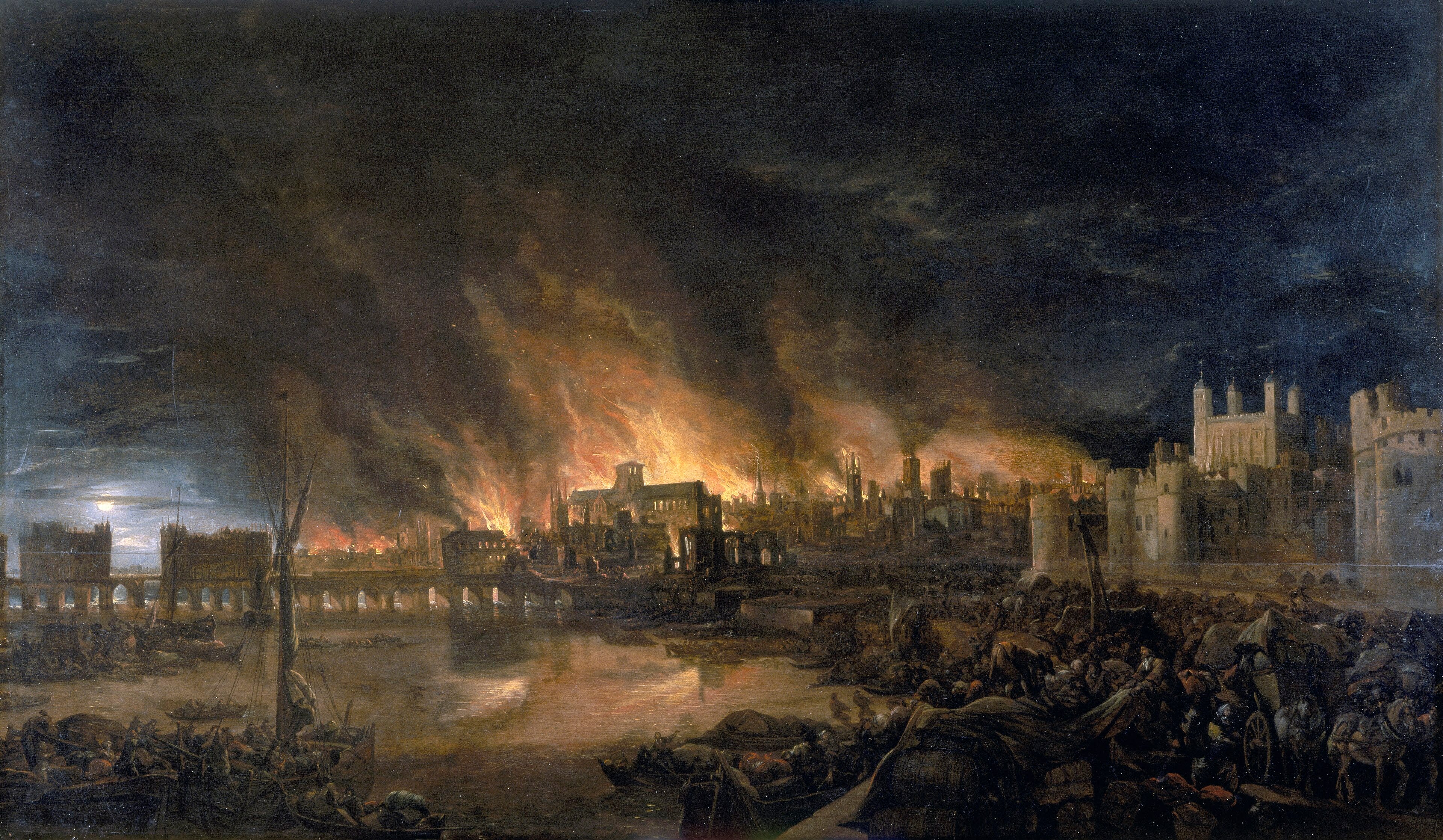
As I write this, I’m hearing an echo of the opening lines of Jacques Roubaud’s The Great Fire of London:
By writing down on paper today the first of these lines of prose (the first of many, I imagine) I am perfectly conscious of the fact that I am administering a final, fatal blow to what I conceived at the beginning of my thirtieth year as an alternative to a self-willed disappearance, and which served for over two decades as the motivating project of my existence.
Roubaud’s book is a destruction of his project, and through destruction, a resurrection of it. But why this need of a project which is all-important only to ourselves? To justify ourselves, to pay off the debt of life.
A project is a problem. The word “project” comes from Latin proicere, which means throwing forth; “problem” from Greek proballein, which means throwing forth. A project is a plan for the future, which can never be realised except by destroying it. Dreaming of a project I am living ahead of myself, preparing for life, of which I have only a vague conception and which is never actually conceived. But to write moments – this is what I call my short prose pieces – is to live in the present, an aim praised by many philosophical schools and by an academic philosopher who used to write under my name, but absolutely impossible as a way of life. I can only live in the present for a moment; and so I can only write moments by giving up the project, a momentary liberation from endless preparations. If the project is the problem, moments are the solution, but a solution is only possible as a solution to a problem.
And so a third method occurred to me. To write these little moments each day, post them as notes, and then, once a week, collate them and introduce them in prose that is allowed to stand outside the literary sphere — but again only as a subterfuge, a means of tricking myself into writing; I’m aware that publishing the introductions along with the moments makes them at least an attempt at literature. In a moment everything must be shown, but in the introduction I’m allowed to comment and make things explicit. The moments tend to concision; the introductions indulge in long-windedness. I imagine these introductions like the prose in between the haiku’s in Basho’s haibun essays. Ideally, like Basho, I’d have a physical journey to give unity to the fragments; but for some time now I’ve been stationary in Oxford, lost between tourists and academics.
Since this is the first week, a new dawn, I’ll go a bit further back than one week. On 28 December 2025, I wrote:
Millstones
The old images: desert, river, stars, gate, mirror, labyrinth, heart. These are still the metaphors that shape our thought. On the other hand, the metaphor of millstones has been largely forgotten, and yet it is immediately recognisable, as in a poem I once read and cannot find anymore, about the writer who does not write, so that the grinding of his jaws - like the grinding of two millstones that have nothing to grind but themselves - disturbs the neighbourhood.
I was lying: I remember the poem perfectly well. It is “The Block” by the Armenian poet Gevorg Emin, as translated by Diana der Hovanessian:
The Block
For two months
I have not written
a word.My voice, a low
grumble, disturbs
our quarterlike the rumble
of the millstone
which having nothing to grindgrinds itself.
This poem delighted me upon first reading it many years ago. My moment was more immediately occasioned by a remark of Kafka (octavo notebooks, 22 February 2018), not about millstones, but invoking labyrinths and deserts:
Dein Wille ist frei, heißt: er war frei, als er die Wüste wollte, er ist frei, da er den Weg zu ihrer Durchquerung wählen kann, er ist frei, da er die Gangart wählen kann, er ist aber auch unfrei, da du durch die Wüste gehen musst, unfrei, da jeder Weg labyrinthisch jedes Fußbreit Wüste berührt.
I’ll attempt to translate:
That your will is free means: it was free when it wanted the desert, it is free because it can choose the path to cross it, it is free because it can choose the pace, but it is also unfree because you must walk through the desert, unfree because every path is labyrinthine, touching every feet of the desert.
He sounds so Borgesian in this fragment! It made me wonder why we (or Kafka and Borges) talk of labyrinths and deserts when such things are rarely encountered in modern, western life. I’ve been to the desert to gaze at the moon; once I tried to get lost in the alleys of Genoa; both times I was conscious of trying to resurrect an archaic symbol. I have seen millstones only a few times in my life, but thanks to Gevorg Emin, I will always think of my jaws as two millstones grinding themselves.
The next moment is also concerned with Kafka:
Metamorphosis
Was he an animal, if music moved him so? Some readers answer yes, others no. But the question is not answered in the story. Gregor Samsa is a metaphor, a metaphorical being, and so he must be both sides of the metaphor. An insect is not a metaphor. He is a human being who is a monstrous vermin. Having woken up as a monstrous vermin, Gregor proceeds as if he were merely ill. But also: being merely ill, he proceeds as if he became a monstrous vermin.
I came to this question through an article by Fernando Bermejo-Rubio, “Does Gregor Samsa Crawl over the Ceiling and Walls?” I had noticed myself that Gregor Samsa breathes his last breath through his nostrils. Do insects have nostrils? No, they breathe by means of tiny openings called spiracles or stigmata, through which air enters their inner airways called tracheae, which, without the intervention of lungs, deliver oxygen to tissue. Gregor, on the other hand, is a lung patient who breathes heavily throughout the story. In fact, this is only one of many signs that Gregor is human. Bermejo-Rubio lists:
His body is made from flesh and blood and has a neck and nostrils. He moves his head in different ways, can close his eyes, can look at other people out of the corner of his eyes—eyes that are described on a certain occasion as “bulging”. Gregor has a human face (“ein Gesicht”). He smiles and sheds tears—two actions traditionally considered as properly and characteristically human; he coughts and pants, etc.
The scholar goes on to insist that Gregor is wholly human. But doesn’t he wake from restless dreams to find himself in his bed changed into a monstrous vermin? Yes, but that is merely to say that he is ill and has internalised the condemnation of a victimary circle. Although I was impressed with the article’s scientific erudition, I felt it evinced a blindness to the workings of metaphor, and I wanted to resist its narrowing of possible readings. Gregor is a metaphorical being: he is both human and monstrous vermin. He is a monstrous vermin in the way that only a human being can be.
Still in bed, Gregor thought of his arduous job as a travelling salesman – Oh God what a stressful profession I’ve chosen! –, and the debt that his father owed to his boss. He had been working to pay off his father’s debt, which therefore was his debt to his father. In a few years, he thought, he will have earned enough money, then the great cut will be made — but now he must hurry, for his train departs at 5. Having just been reborn, he was still waiting for a true rebirth, to be delivered by means of caesarean section (Dann wird der große Schnitt gemacht). The persistent illusion that life will begin when the current project is completed.
Why the why?
Kafka writes that it only looks as if people work merely in order to sustain themselves. With each visible loaf of bread there is an invisible loaf of bread, with each visible shirt there is an invisible shirt. But don’t people justify life only in hindsight? No, this would be to underestimate them. People build their lives on a justification. This is also the reason (I want to add) why a person who for all outward appearances seems a functioning member of society can be in a deep crisis, one that is never alleviated by asking: but why must life be justified? Why the why?
On the middle of the path of our life, we feel acutely the need to justify it.
In the middle of the path of our life
Dante had been exiled from his hometown, his political career was over, all he could leave to posterity were a few academic treatises, unreadable poems, and the extremely boring Vita Nuova. I imagine that this lack formed the basis for his midlife crisis. His life could only be justified by the Great Book that would contain all other books. Although he spoke of sins that he had almost succumbed to, had it not been for the divine intervention of Beatrice, his real motivation must have been the will to fame, or the feeling of having an extraordinary world in his head that he had not yet managed to put down on paper.
Here, too, there are echoes of Kafka. Dante and Kafka are twin authors: they both torture their characters as a means to self-punishment and their own personal purgatory. The echo is of a diary entry of 21 June 1913:
The tremendous world I have in my head. But how to free myself and free it without being torn to pieces. And a thousand times better to be torn to pieces than to retain or bury it in me. That’s why I’m here, after all, that’s completely clear to me.
The translation is by Ross Benjamin; his “tremendous” translates ungeheure, as in the ungeheuren Ungeziefer that Gregor Samsa became. The world in Kafka’s head is tremendous but also monstrous.
I did not yet get to the moments I wrote this week. But there is a certain thematic unity to the ones I did discuss, so almost satisfied I leave you, and vainly hope to hear from you, my fellow reader-writer. May your millstones grind even if they have nothing to grind but themselves.
No posts
Comments
Nothing yet. Say the first thing.
Sign in to join the conversation.