
Thanks PEN/Faulkner, for including DUET FOR ONE on your summer reading list of DMV writers.

I tend to read three books at a time, a habit from my commuting days. I used to have a book for the subway, a book for the exercise equipment, and a book by the side of my bed. More often than you might expect, the three books would end up talking to each other.
Here are three I just finished.
Laura Spinney’s PROTO shows how a single language that developed around the end of the ice age—Proto-Indo-European—is the root of languages spoken today from Central Asia, to Europe, to the non-indigenous languages spoken in the Americas and the Pacific, as well as many “dead” languages.
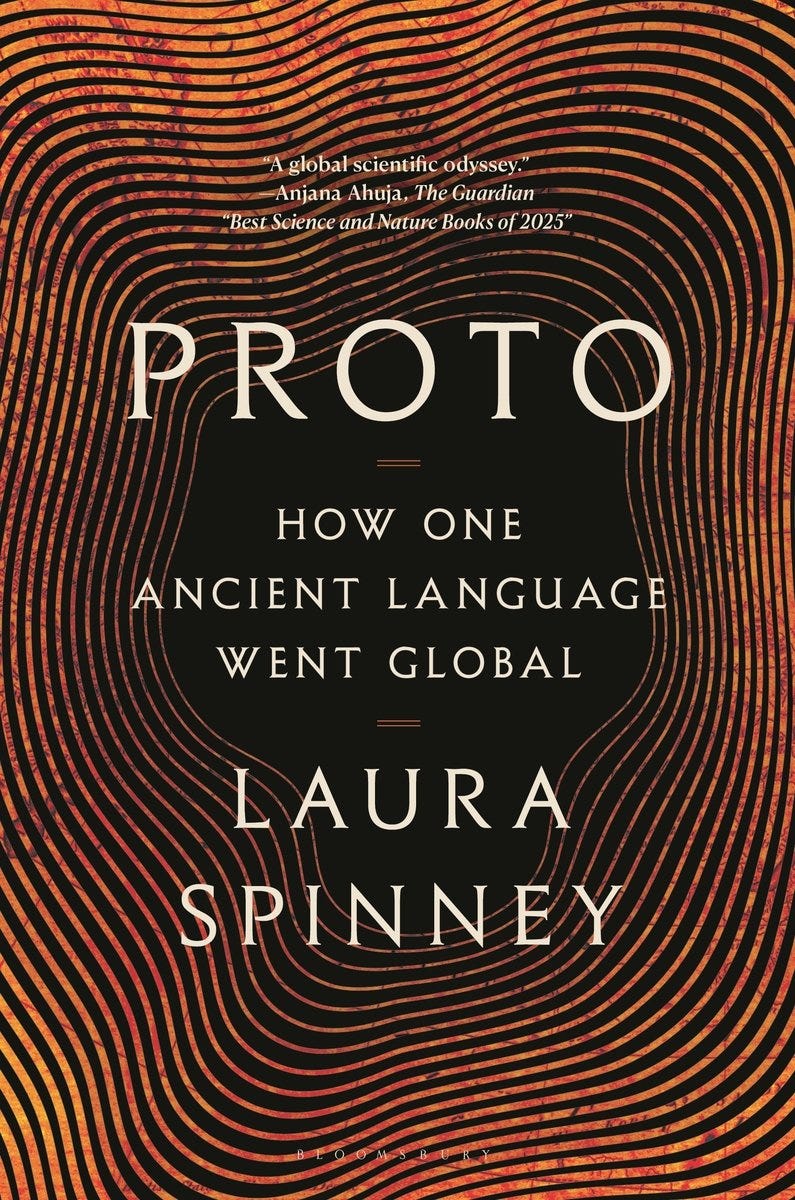
Linguists have long been stumped by why seemingly unrelated languages share words. For example—
Daughter. Duhitár-. Dustr. Dukte. Listen to these English, Sanskrit, Armenian and Lithuanian words, all meaning the same thing, and you hear echoes of one of history's most unlikely journeys.
Recent techniques analyzing human fossil DNA provide information on diets and therefore geography. Perhaps it would surprise our current leaders, but migration is characteristic of all human societies, especially in times of hardship and starvation caused by climate and economic factors. Human migration is one reason that languages spread and evolve.
PROTO weaves together a massive amount of information to tell the origin story and spread of Proto-Indo-European. It includes such tidbits as discussion of “the olive oil/butter divide” between northern and southern European cuisines. Ancient DNA shows more lactose intolerance in southern than in northern Europe, hence the difference.
Samantha Ellis’s ALWAYS CARRY SALT: A Memoir of Preserving Language and Culture, is a deep dive into her family’s fading language, which she calls Judeo-Iraqi Arabic. Jewish people first migrated to present day Iraq around 597 BCE and were there until the 20th-21st centuries.
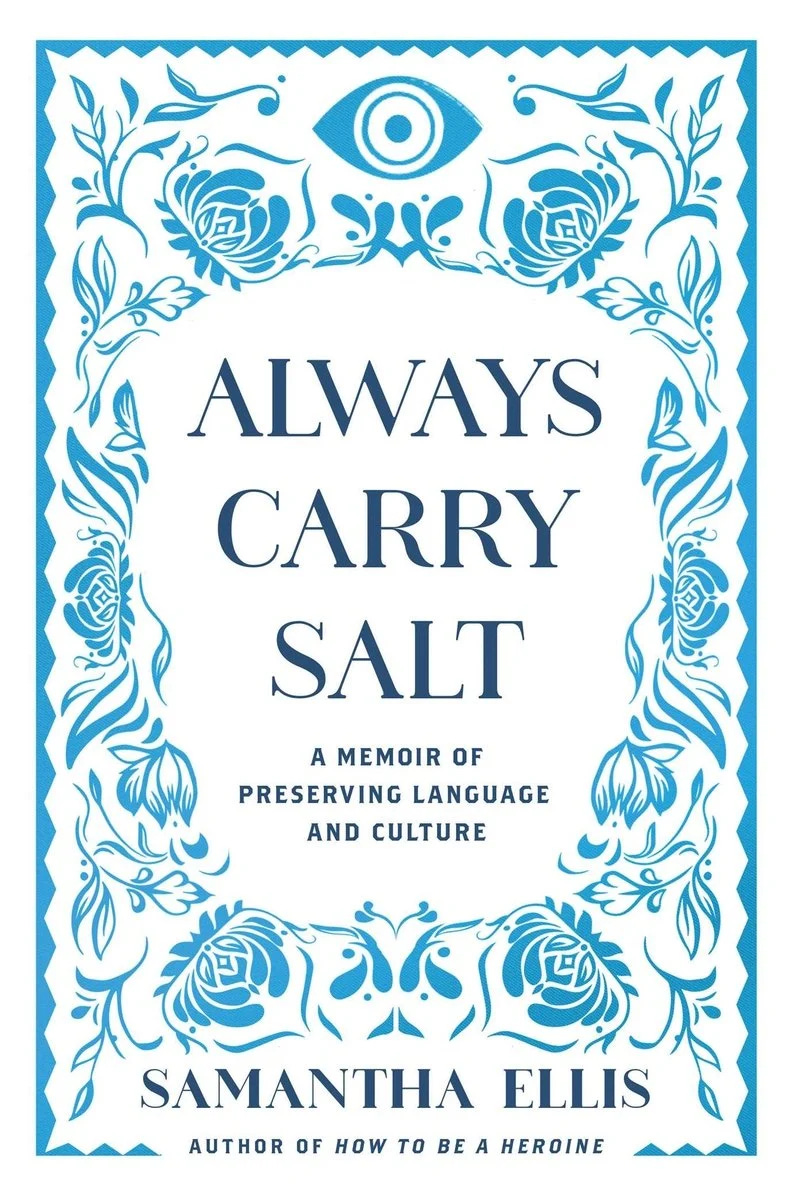
Ellis grew up in London, the daughter of Jewish Iraqi immigrants. She’s spent a lifetime trying to understand and interpret her ancestral language. Like Yiddish (another pastiche of languages spoken by Jewish people), Judeo-Iraqi Arabic is “wry,” “noisy,” “hot,” and “vivid” in ways that cannot be translated, especially within the staid milieu of English society.
If anyone predicts bad things might happen, you say skitti oo-khalia, or shut up and leave it, because everyone knows words are powerful and talking about bad things can will them into being.
Cuisine is intimately bound up with culture, and the book is filled with spicy, mouthwatering descriptions. The recipe for Sambusek bel tawa, a sort of Purim samosa, upstaged any version of Ashkenazi hamantaschen I’ve ever eaten.
Susan Brind Morrow’s THE NAMES OF THINGS, [link is to a used book site, I got the book from my library] defies categorization. Morrow is an essayist and an Egyptologist, and a wanderer/ explorer. Her writing is spare and breathtaking. The book is part memoir, part etymology, part travelogue, part visits to remote parts of Sudan and Egypt, and part recitation of personal loss.
Morrow is an archaeologist of both words and things.
To read Greek is to know how to look at a word on a page, to examine a word long before you know what it means. You are looking at the bones of language. There are words … that have a tactile quality, like phrix, the stiffening of water in the wind, or the skin in fear.
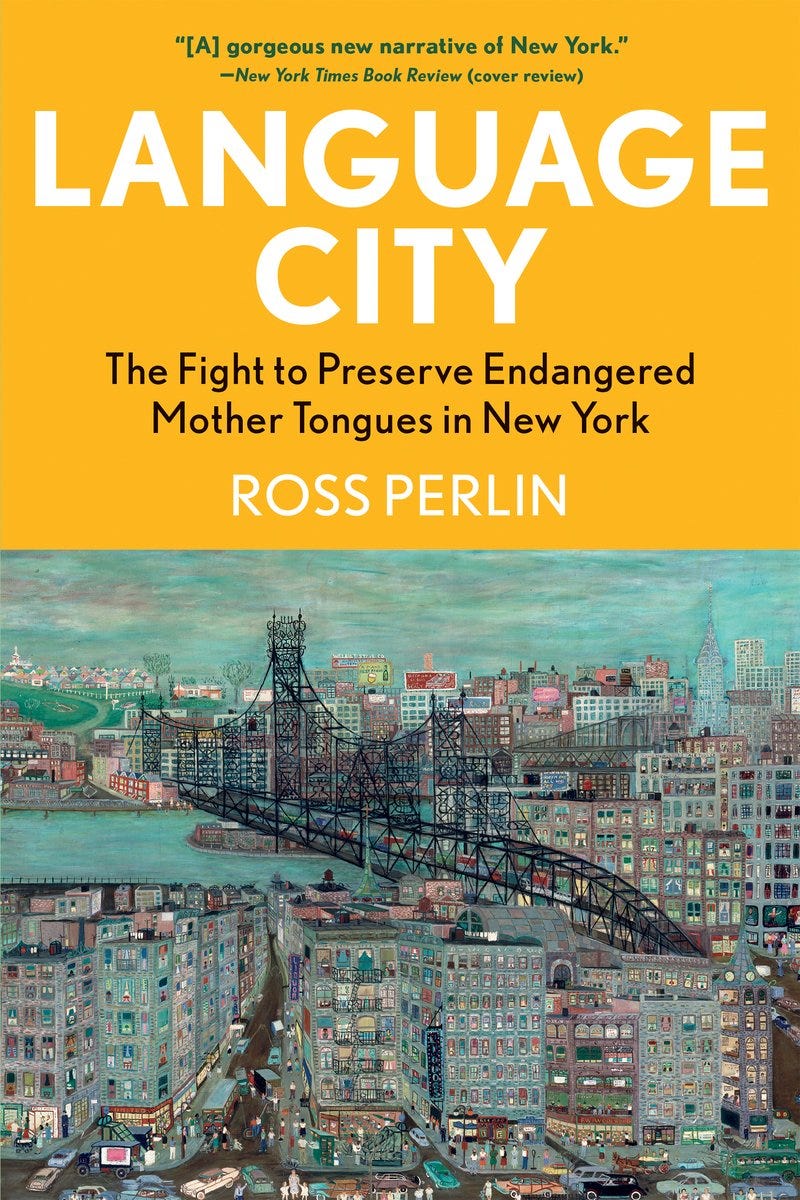
I’ll add a fourth book to these recent reads—Ross Perlin’s LANGUAGE CITY which I wrote about here. It’s a fascinating look at saving the world’s rare languages by going block by block in immigrant neighborhoods in New York City, where a surprising number of these speakers of rare languages end up.
It’s a joy to share books on our diverse languages. Our ability to express ourselves in words makes us human.
Love,
Martha
P.S. ICYMI, here’s my most recent newsletter/Substack, “How did we get here?”
Comments
Nothing yet. Say the first thing.
Sign in to join the conversation.