
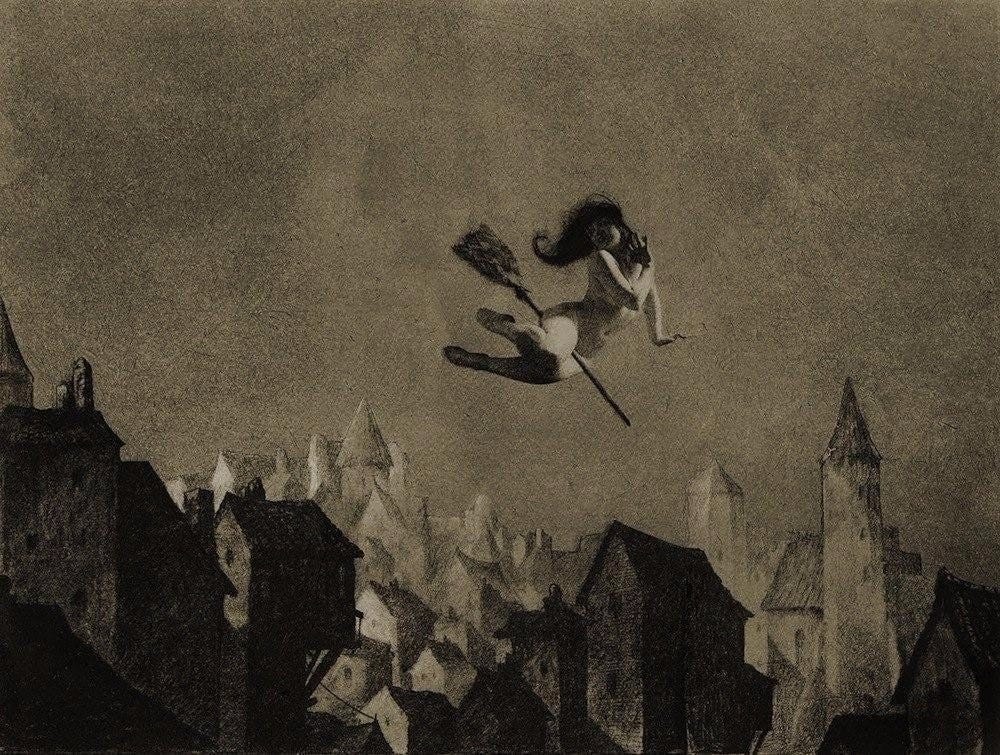
Once the potion was ready, in the dead of night, the witch withdrew into solitude. She stripped herself of every garment and, reciting prayers in reverse, began to anoint her entire body with the ointment, from head to toe. As soon as the salve touched her skin, the magic took hold. The witch’s body became as light as a feather and as cold as ice. She then took a staff or an old broom of broomcorn, anointed its wooden handle with the ointment as well, and mounted it astride. Suddenly, the window flew open of its own accord. With a piercing laugh, the witch and her broom leapt into the void, soaring high through the night sky, protected by enchantments, passing beyond the clouds and becoming invisible to the eyes of the human beings who slept, unaware, in a deep slumber.
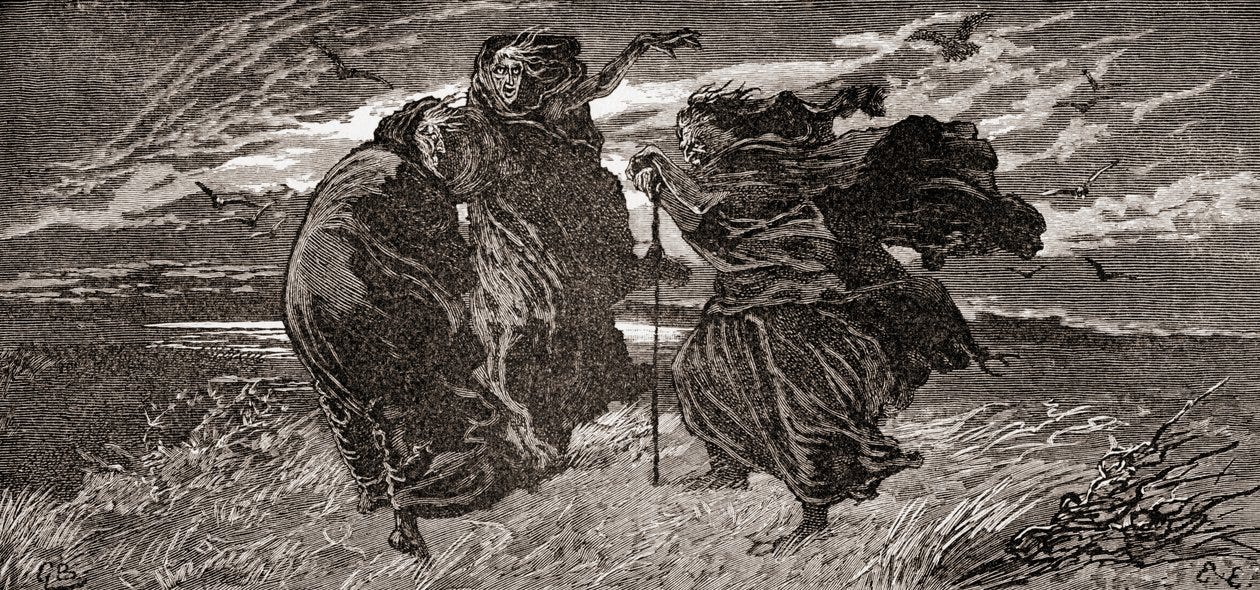
Between the fifteenth and sixteenth centuries, authors and inquisitors of greater or lesser renown regarded this description as a literal account. The inquisitors, in particular, believed that stripping naked and anointing one’s body with this ointment constituted an act of conscious submission to the Devil. According to judicial records, the salve contained human fat, a genuine crime considered deserving of condemnation. Those who made use of it were regarded as blasphemous individuals, yet necessary to overturn the divine order and make possible the so-called diabolical contact. For the majority of inquisitors, at least until the late Renaissance, the flight took place physically. The witch truly departed through the window, truly rose into the air, carried by the demons that animated the broom handle coated with the magical ointment. Human beings could not see her only because she was protected by illusions and enchantments.
Related Articles
The recipe for this ointment first appears in the writings of Johannes Hartlieb. In 1456, he wrote the Buch aller verbotenen Kunst, Ungelaubens und der Zaubrey - Book of All Forbidden Arts, Superstition, and Witchcraft. In this work, he condemned magic and occult practices, describing witches as women subjugated by the Devil. Hartlieb’s text contains the earliest known written testimony describing the composition of the famous ointments used by witches. According to the physician, these recipes, always based on hallucinogenic herbs, were intended to induce states of trance.
Johannes Hartlieb expressed a position of profound hostility both towards witches and, more broadly, towards the control of the female body. Although he was a physician and a secular intellectual, his outlook anticipated the repressive climate that would eventually lead to the great European witch trials. Over time, he adopted a theologically complex yet politically ruthless position. He did not believe that witches could truly fly or, of course, change shape; rather, he maintained that their flights were mental hallucinations induced by herbal ointments. Nevertheless, even if the illusion was purely mental, he still regarded the offence as extremely serious. For Hartlieb, the mere fact that these individuals wished to meet the Devil and enter into a pact with him was enough to render them guilty of treason.
This was a mixture based on animal fat and Solanaceae, which was spread on the skin so that the alkaloids could be absorbed slowly and steadily by the practitioner’s body. Historical accounts describe these ointments as being applied to different areas of the body, including intimate areas, with the apparent intention of facilitating absorption. Within this interpretation, the legend according to which witches flew to the Sabbath while riding a broom may derive precisely from potentially intoxicating effects.
From what I have read and researched over time, there is no single recipe for this ointment. The so-called Lamiarum Unguenta derives from the combination of the terms: Unguentum, the classical Latin term for a greasy or oily substance to be spread on the body, and Lamia, which in Greco-Roman mythology referred to monstrous creatures or child-stealing witches. During the Middle Ages and the Renaissance, theologians and inquisitors began to use “lamia” as an erudite synonym for witch. The expression lamiarum unguentum was codified in scientific texts mainly by two sixteenth-century scientists and philosophers: Girolamo Cardano, who described its formula in detail in De subtilitate (1550), and Giovanni Battista Della Porta, who disseminated its literary and scientific use in 1558 within Magia naturalis. The two authors employed a Latin designation in order to confer an academic and rational veneer upon what had previously been called “magic creams” or “devil’s potions” in popular belief and local dialects.
The recipes documented by the scientists and natural philosophers of the time are numerically limited, yet they nonetheless constitute a varied corpus that goes far beyond the single stereotypical formula. The preparations considered more authentic, and not altered by inquisitorial propaganda, often contain additional ingredients for precise symbolic and energetic reasons. Among these elements stand out various types of animal fat, carefully chosen for their specific ritual significance, such as those linked to chthonic forces, soot from the hearth, and various plants of power.
Giovanni Battista Della Porta, in his 1558 treatise Magiae Naturalis sive de Miraculis Rerum Naturalium, describes what had been directly reported to him by sources from rural herbalism regarding the preparation of this ointment. The process involved the use of purified animal fat as a carrier base, slowly cooked over a low flame to eliminate any remaining water and impurities. To this hot base were then incorporated powdered fresh herbs and soot. Historical accounts describe the final mixture as being applied to the body following a series of preparatory procedures that were believed to facilitate its absorption. According to this documentation, practitioners who used such an ointment entered a state of bodily suspension that allowed them to fly during the night in order to participate in banquets, ecstatic dances, and encounters with demonic or other entities.
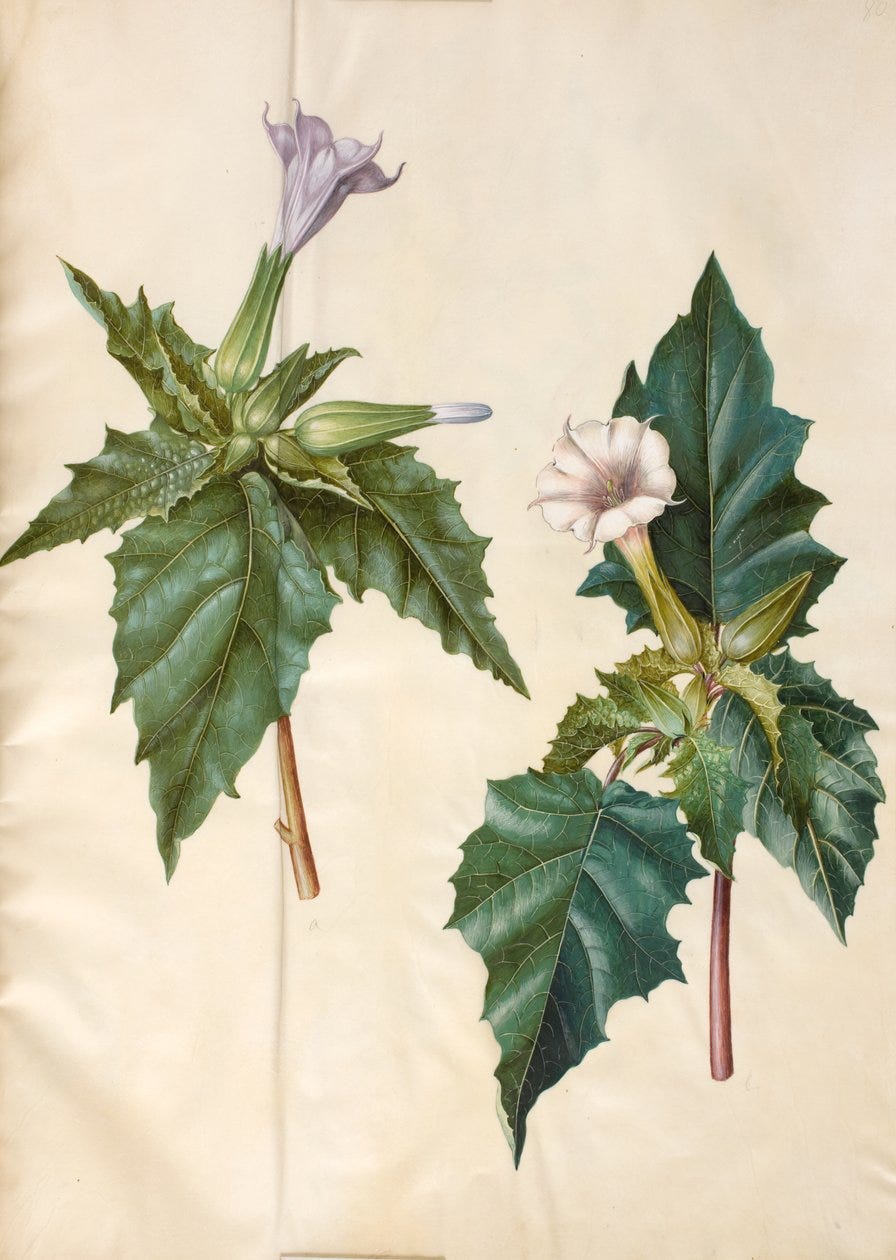
From the point of view of herbalism, the true active and catalytic base of the ointment is a precise and calibrated combination of lipid vehicles and plants belonging to the Solanaceae family, rich in tropane alkaloids. For reasons of safety and respect for the practice itself, I cannot provide the recipes. The main difficulty lies in dosage and in the purity of the raw materials, as these substances are extremely potent and unpredictable. According to the indications found in the texts of the period, the correct application of these ointments induced a series of precise stages of consciousness transition: a vivid sensation of real flight and levitation, the conscious experience of presence and simultaneous displacement in another place, a sense of physical heaviness and melancholy upon waking, and a clear temporary discrepancy in the perception of surrounding reality. These “symptoms” in fact represent the canonical stages of energetic dissociation, in which consciousness temporarily separates from the physical vessel while retaining lucidity and agency.
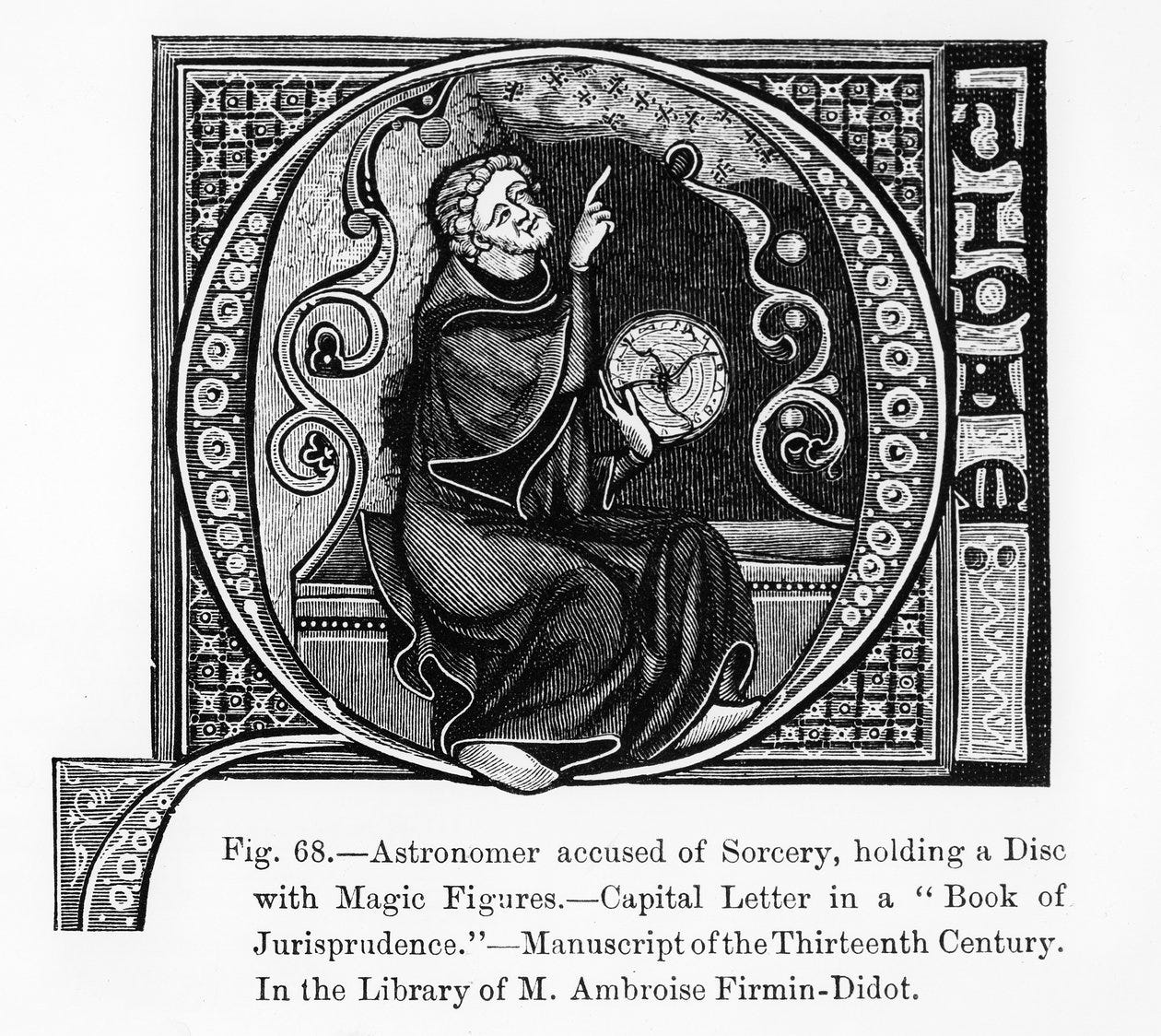
As a scholar and enthusiast of herbalism, this reconstruction challenges the dominant academic narrative according to which the ointment would have originated in the late Middle Ages as a by-product of alleged pacts with the Devil. The use of fats and ointments based on Solanaceae instead dates back to the sacred and theurgic medicine of classical antiquity, later profoundly demonised with the advent of Christianity. With the assimilation of pagan cults, rural herbal knowledge did not disappear, but instead remained confined to the hands of healers and the Benandanti. The plants used were not blasphemous elements: European folk pharmacopoeia made extensive and knowledgeable use of multiple botanical essences, some highly toxic, in order to alleviate intense pain, reduce cutaneous inflammation, and induce deep sleep. This tradition was fully aware of precise harvesting times and of the ritual processing of fats: a practical and therapeutic body of knowledge which inquisitors often misinterpreted in order to construct accusations of heresy and diabolical apostasy.
The actual purpose of these ointments was to facilitate the energetic transition of the subtle body and, consequently, the transformation of form known as shapeshifting or spiritual lycanthropy. These were practices of out-of-body travel and astral dissociation through the thresholds of the physical body. Within magical herbalism, tropane alkaloids were understood as channels capable of anaesthetising the physical senses and drastically altering bodily perception. Their transdermal use was associated with altered states of consciousness and, within an esoteric interpretation, with the emergence of the astral form. This should not, however, be understood as a safe alternative to ingestion, as these substances can be highly toxic regardless of the route of exposure.
Spirit houses: The Witch’s Alliance with Spirits
·
Jul 10
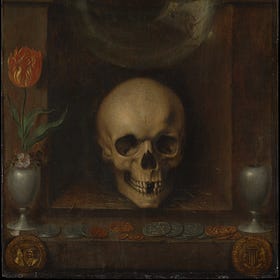
The witch is a liminal being, a bridge between the visible and the invisible worlds. This means that they belong to both worlds, and at the same time to neither of them entirely. They live upon the threshold, in that space where opposites can meet without destroying one another.
The majority of historical documents and judicial records analyse the ingredients of traditional recipe books in a superficial and often grotesque manner, reducing fundamental elements such as soot, charcoal, or ash to oddities. Soot, within magical tradition, is closely linked to the domestic hearth, which for millennia has represented a liminal threshold between the home and the external world, as well as a primary barrier against evil spirits. The fireplace was regarded as a channel open to the invisible realm; consequently, the soot deposited on its walls was not mere dirt, but a substance imbued with the protective energy and memory of fire. The use of soot in the composition of the ointment functioned as a true seal of astral concealment and anchoring: it protected the physical body during out-of-body travel and simultaneously ensured spiritual invisibility during the passage beyond the threshold.
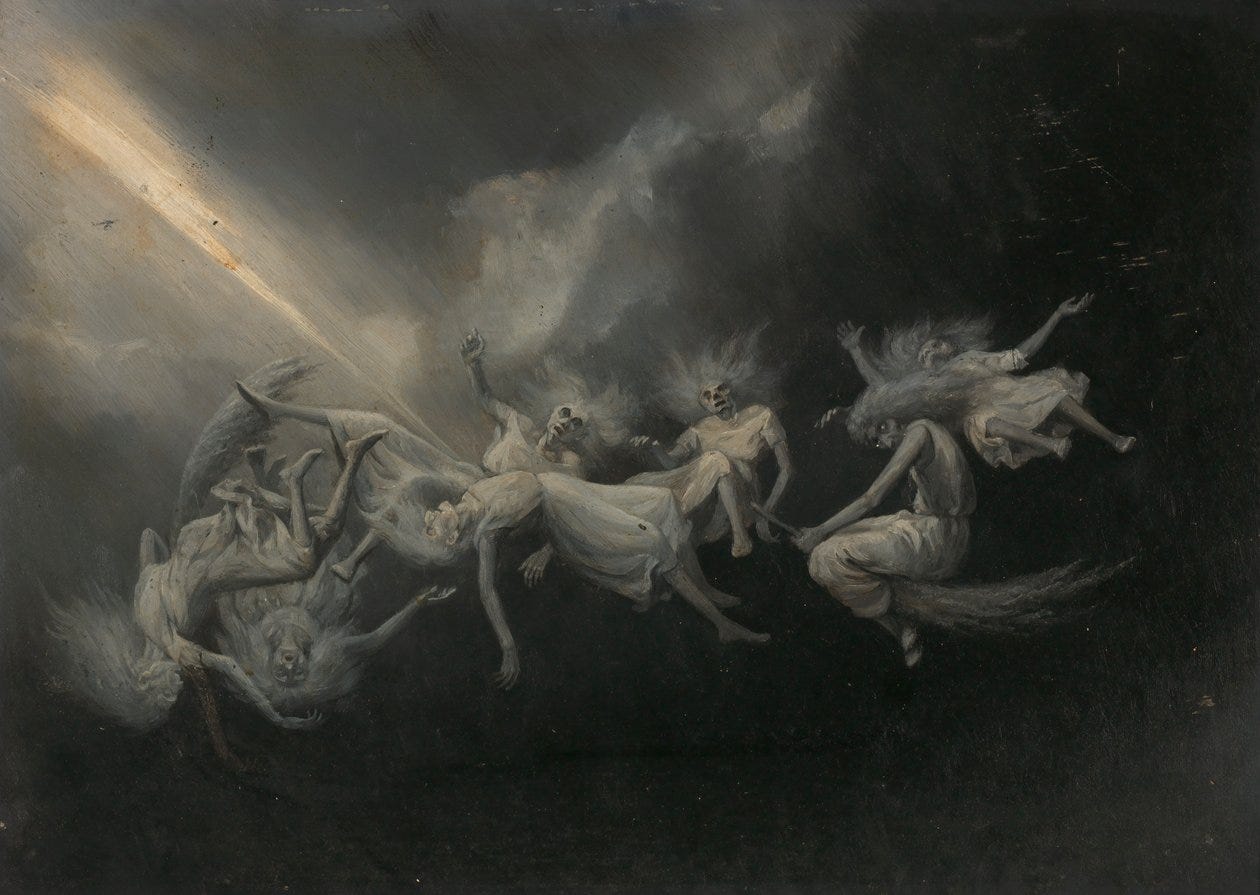
There are fundamentally three types of ointments. The first recipe enabled flight through “imagination” in order to reach the Sabbath, the second enabled physical flight, and the third enabled the transformation of oneself or of objects into animals. Giovanni della Porta, the well-known Italian philosopher and alchemist whom we have mentioned above, wrote in another treatise that he had witnessed the ceremony of witches in preparation for flight to the Sabbath, which naturally included the use of the aforementioned ointment. Broadly speaking, the treatise presents the idea that these women would gather human fat and then melt it in boiling water in a copper cauldron. Afterwards, herbs, soot, and some animal remains were added. Once mixed, historical accounts describe the preparation as being applied to the body as part of the ritual preceding the supposed flight.
Giovanni della Porta noted, unable to look beyond the veil of his own reason. As time passed, roughly until the early 1900s, many historians and philosophers attempted to understand and give a scientific, medical, or psychological explanation to these events. I am neither a physician nor a historian; I am a practitioner, and what I feel I recognise viscerally is not exactly what has been documented over the centuries. If I were to offer a more personal reading, attempting to bring together the anthropology of the imaginary and a phenomenology of the occult, I tend to recognise in the ointment one of the most complete expressions of the Old Religion. Where the inquisitor reads the binding of a diabolical pact, I instead see a fissure. It is a radical transformation in the relationship between consciousness and the body. In this perspective, the ointment does not “lift” the flesh, but alters its polarity. It acts as a principle of separation, a fracture between different layers of experience. There is also a precise esoteric logic in the choice of a lipid base: fat (or oil) functions as a condenser, and it is one of the best substances capable of trapping and transforming without dispersing. This allows consciousness to slip into a liminal state through a controlled shift of condition. The Sabbath, in this view, ceases to be a geographical place and reveals itself as an experiential configuration: a real dimension in which a profound recomposition between the human and the forces of nature takes place. There is neither delirium nor submission, but rather the conscious act of forcing the physical body in order to return, by right, to inhabiting the realm of the invisible.
The second part of this piece will be published shortly. While in this section I have focused primarily on the historical perspective, the next one will move into a more personal and practical dimension. In detail, I would like to discuss the Sabbath, the anointing, and how I and other practitioners approach this practice today using non-toxic ingredients, as well as the figure of the Devil and the Spirits of the Place.
If you are not yet subscribed, I recommend doing so now, because within the next couple of days I will be publishing an article on what I consider one of the most useful practices in Traditional Witchcraft.
Thank you for reading this piece. It is good to have you here,
Marta
Comments
Nothing yet. Say the first thing.
Sign in to join the conversation.