
Ever since launching Marshall Arts in 2023, it’s been my hope to make writing about movies a regular habit here, and not just because I’m a hardcore cinephile. It’s also because my writing career truly started roughly a quarter-century ago by writing movie reviews at RottenTomatoes.com, a then-novel way of communicating my (very) rudimentary takes on contemporary blockbusters and whatever musty entries from the IMDB Top 250 I procured from Hollywood Video. This early predilection laid the groundwork for a passionate writing career where I express my love for many things in detail. Naturally, that ought to both come full circle and evolve further at Substack.
However, so far I have trended more towards writing about music here, an understandable pivot given I’ve long craved having a sustained platform for rock journalism. Still, it’s honestly overdue to shift the focus to film. Well, let this post be a step towards making Marshall Arts a place for (as Gregg Turkington of On Cinema would put it) real movieheads. Today I want to start what could likely be a series with some iota of consistency, wherein I spotlight an overlooked movie worthy of fresh reappraisal. It’s straightforward, true to my ethos of shedding light on things that get left behind, and arguably of greater importance as the muddled frenzy of streaming makes accessing movies more complicated than it ever should have been.
Let’s start with three words: 1970s boxing movie. The moment you read that, you immediately heard the gallant strains of Bill Conti’s theme for Rocky at full blast in your head. You closed your eyes and saw Sylvester Stallone in a gray tracksuit and Converse sneakers barreling up the stairs of the Philadelphia Museum of Art. 50 years after its release, Rocky remains not only the obvious signature moment for ‘70s boxing movies, but arguably (at least tied with Raging Bull) also shorthand for pugilism in cinema in general.
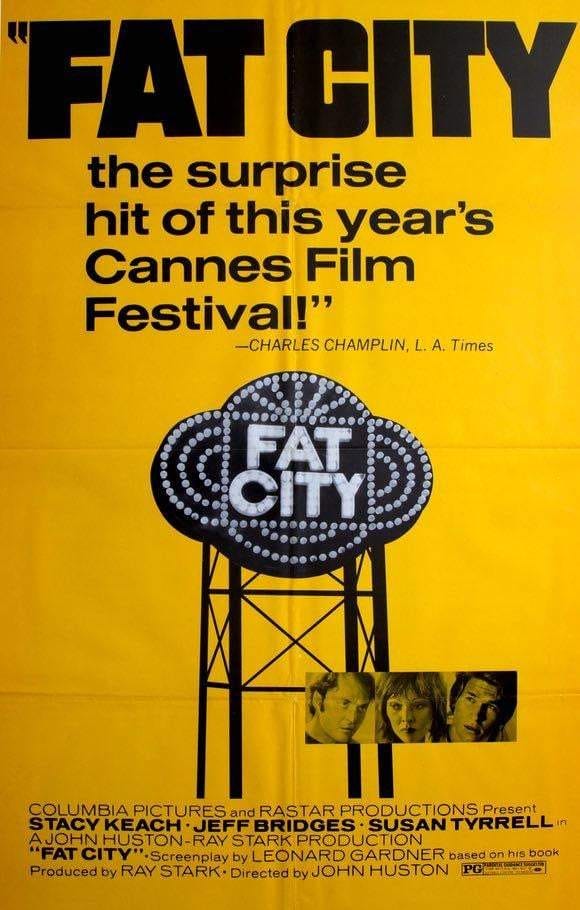
Truth be told, it wasn’t even the first all-time great boxing film released that same decade. Four years before Stallone punched above his weight to Oscar glory, the genre enjoyed one of its greatest installments with John Huston’s Fat City. An adaptation of Leonard Gardner’s 1969 novel of the same name written by Gardner himself, this 1972 sleeper classic centers around two boxers trying to slug their way out of the doldrums of Stockton, California. One is washed up veteran fighter Billy Tully (Stacy Keach), whose life vacillates between odd jobs, drunken arguments with his toxic girlfriend (Susan Tyrell), and assurances to his friends that he’s ready for a comeback. The other is budding slugger Ernie Munger (Jeff Bridges), a handsome teenager trying to navigate the equal vulnerabilities of laying his pride on the line in the ring and tending to his pregnant girlfriend.
Especially in a genre as eternally crowded as the boxing film, it behooves any entry to bring something relatively new between the ropes. Fat City distinguishes itself by eschewing familiar underdog/rise-and-fall tropes in favor of an unglamorous look at how the Sweet Science truly operates. Fights transpire in grimy local venues, while the boxers hastily slip into weathered groin protectors and a freshly vanquished fighter’s blood-stained trunks in the dressing room. The victories and defeats bring physical pain in equal measure, and even in victory, the promise of a payout befitting a boxer’s sacrifice is rarely - if ever - fulfilled. Billy and Ernie take humiliating licks both inside the ring and outside of it, their romantic tribulations and dead-end jobs creating an inescapable crucible that pummels them as mercilessly as any opponent.
Most commendable is the film’s primary focus on amateur boxing, a departure from most movies’ obsession with the professional realm. Yes, the pros make for a sweeping spectacle, but it’s in the amateurs that the crushing lows and edifying highs of the sport truly shine. Take the scene where Ernie and his gym mates roll out to their first amateur event, all smiles in the car with assurances from their coaches that victory is inevitable. A string of humbling defeats for all leaves them stewing in a local Mexican restaurant, nursing black eyes and broken noses in-between sips of beer and soda. The authenticity of every scene is captured by Conrad Hall’s natural, eye-level cinematography, while the spare soundtrack allows the biting dialogue and pummeling leather to breathe with intimacy.
While Keach and Bridges shine as the dual leads, and the late, great Susan Tyrell’s wounded turn earned her an Oscar nomination for Best Supporting Actress, the film’s mundane setting of Stockton is arguably the true main character. A contrast to how Rocky utilizes Philadelphia as the cauldron where the gritty streets mold a natural feel-good story, Fat City captures the sun-kissed stultification of California’s Central Valley, where shattered dreams fizzle out between all-night shifts picking fruit and another lost weekend at the local dive bar. As someone who’s lived most of his life in the region by way of Sacramento (which includes many drives past Stockton on the way to Southern California), the film’s eye for capturing its distinct feeling of aimlessness is downright eerie.
If Fat City has a substantial (and by no means fatal) flaw, it’s that it’s honestly too short. Clocking in at a mere 97 minutes, the film could have benefited from another 20-30 minutes that fleshed out Ernie’s character arc. His early scenes showing him navigating the highs and lows of amateur boxing and the perils of teenage romance are mesmerizing, and seemed to augur more development. But the film’s latter half pivots more to Billy’s haggard push for redemption, and Ernie suddenly feels almost like a side character in the process.
While that aspect of the movie left something to be desired, it doesn’t make Fat City any less of a treasure. I savored every minute of the film’s brooding milieu, and felt every welt of pain the characters endured as if it was happening to me. Even if you’re not a devout boxing fanatic like myself, if you have an appetite for gritty ‘70s cinema, this is a prime one to dive into.
Comments
Nothing yet. Say the first thing.
Sign in to join the conversation.