
Elektra Records in the 70s
As previously related in a different post, sometime in 1975, Russ Miller had convinced me that for my future success I should relocate in Los Angeles. With his urging I accepted a job in the west coast office of Elektra Records, one of the most respected labels in the business at the time. I flew out to Los Angeles to arrange for a place to live and start the Elektra job. When I arrived, I was graciously given a warm welcome by Russ Miller and his wife Clair. They shared their home with me and my son Steven for a few days while I found a place to rent. Searching the “for rent” section of the LA Times, I found a small apartment in the Hollywood Hills and decided that living almost under the Hollywood sign was a good sign.
Text within this block will maintain its original spacing when published
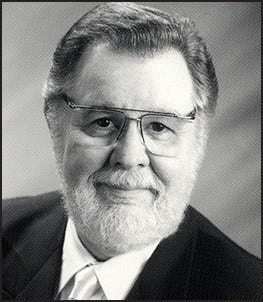
Russ Miller 1928-2009
I flew back to Muscle Shoals to get my VW Beatle and essential belongs to start my new Los Angeles adventure. My friend, Bill Jenkins from the Percy Sledge story, accompanied me on the drive across the United States. Neither of us had ever seen the open spaces that begin once you get past Amarillo, Texas. New Mexico and Arizona were extraordinary and breathtaking to a kid from Alabama—an inexperienced cross-country traveler. I made a mental note to try to explore this area at some future time.
My apartment was off a winding road up one of the Hollywood Hills. It had a great view of another apartment house across the parking lot. The architect must have been practiced at motel design, because that’s what the building looked like. But there was parking for one car and a coin laundry on the ground level, both important considerations. And it was a short drive to Electra’s building on LaCienaga Boulevard.
There was a pack of feral cats that shared the neighborhood. One afternoon, I had parked in my space and was walking toward the steps up to the apartment when I heard a course of cats howling. I was astonished to see about a dozen cats sitting on the steps, all howling loudly, more or less in unison. There was one larger long-hair on the top step who was perhaps the choir director; all the other cats were staring up at him. I watched and listened in amazement for several minutes, then started moving toward the first step. With that, the cats scattered in all directions. In Hollywood you can see show business hopefuls almost anywhere trying to get attention. I never saw the group together again, but one or two cats were always around. They would dash into an open apartment door when the opportunity was presented.
From the motel-like balcony walkway, I could see a small house, tucked away between larger apartment buildings. I later was told it was the home of Rita Tushingham, who stared in “Girl With the Green Eyes,” a minor B movie of the 60s. I can’t verify that as I never met the occupant, but it made a good story to tell people back home; I was already living next to a movie star. Unfortunately, the house burned down one night not long after I moved in. The firemen said, fortunately, no one was home.
One of my first days at Elektra, I met the founder and president of the company. The label was founded in 1950 by Jac Holzman from his college dorm in New York. He was normally in the New York office, but today he was in LA for meetings. He showed me around the offices and the two impressive recording studios. He explained what he expected me to do in my role in “Artist Acquisition” for the west coast. The most unexpected thing he said was, “Marlin we don’t make music here, we make units. Everything hinges on how many units get shipped each month.” I was now on the other side of the music biz desk.
Text within this block will maintain its original spacing when published
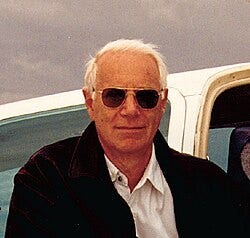
Jac Holzman
My job description was to be a nerve ending for Jac. He wanted me to listen to all the tapes that came in, to hopefully find an artist with the right “fit” for Elektra. One of the reasons I took the job at Elektra was because, in my mind, they always stood for quality music and promoted talent over schlock. That was still important, but with the overhead they had taken on, units shipped were also a top consideration. I met many of the artists who came in for sessions, including Carlie Simon, Bread, Badfinger, Judy Collins, David Gates, and others lesser aspirants who are not remembered.
Text within this block will maintain its original spacing when published
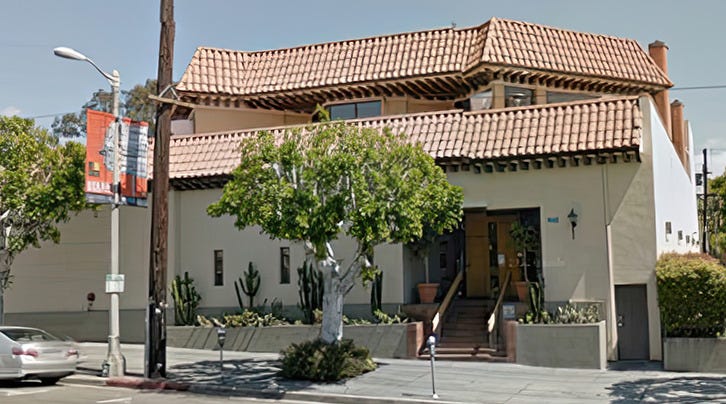
Elektra Studios and Offices
One conversation with David Gates stands out as one of the most intelligent assessment of the record business I ever heard. His plan was to get in, get the money, and get out. He used Bread to make enough bread to reach his goal. He stated at the time (the mid 70s) that he wanted to retire to a farm in the Northwest. He now lives up the road from me in the Skagit Valley of Washington. He doesn’t answer unsolicited emails, and I don’t have his unlisted phone number. I would like to say ‘hello David’ if you read this.
My first “discovery” for Elektra was a duo from Portland, Gary Ogan and Bill Lamb, who were brought to my attention by Greg Branson, their manager at the time. Gary and Bill had written a collection of impressive songs and they sang them somewhat like Simon and Garfunkle, before they had their falling out. Jac signed them, and assigned me to product an album of their material. I had met, and became quick friends with Neil Diamond’s drummer at the time, Dennis St. John. Dennis was a great help in assembling the musicians for my first LA project. It included studio musicians: Russell DaSchie: electric guitar, Emory Gordy : bass, and Richard Bennett : bottleneck guitar, steel guitar. The other notable contributors were my musician friends: David Briggs and John Bergeron. The album has a few rough spots, but Gary and Bill did a super job for their first major recording. The album didn’t break the charts, but I still like a couple of the cuts.
In remembering the Elektra days, I have had to sort out stories that are interesting, and at the same time, not tell those tales that might embarrass someone who is still alive—and me as well. This is an example of “shock events” that would never have happened in Muscle Shoals—but would in LA.
I had appointments with all sorts of people who wanted to present music for consideration by Elektra. One day a beautiful woman came into the office with the secure presence of LA success draped all over her. She must remain nameless—as she is still around and is still in show biz. Without revealing much about herself, she stated that she simply wanted to record some of her songs and asked if I would listen and consider them. I said, “that’s why I’m here”, or some other inept remark—I was still distracted by her appearance. She handed me a tape (pre-CD) and I patiently listen to several mediocre songs with marginal vocals. Her singing talent took a back seat to her striking physical presence. I explained that I didn’t hear anything that I thought would be right for Elektra, and thanked her for coming in. She smiled and said, “Well OK, but perhaps you would like to come over to a party tomorrow evening at my house—I could play you some newer things.” I replied with something like, “Well I don’t know, I don’t like parties much... how many people will be there?” She countered with “Oh just the two of us.” I found out that this is how so many deals are made in LA. I didn’t go to the party.
Another artist I brought to Elektra was Dana Cooper. He is still around and has a devoted following, playing small venue dates around the country. He is one of the most talented and poetic songwriters I ever met, which is what got my attention when I first met him. Wish you well Dana.
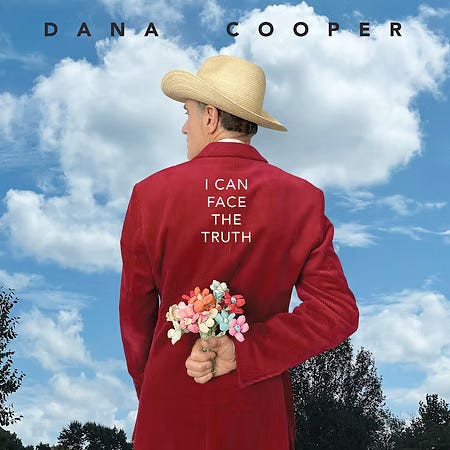
https://www.danacoopermusic.com/
I loved my time at Elektra. It was an education that I never had the opportunity to pursue in Alabama. I learned a lot about myself: that I had an insatiable curiosity, that people are not the same everywhere, that my greatest musical asset was judgment about other people’s talent. I was a record producer, not a studio musician. I found that out at my only LA session when the producer called in another guitar player to replace me.
After two years at Elektra, I was confident in my job and had made the transition to living in Los Angeles. I was happily in a relationship with Brigid Bazlen, a scrappy mid-westerner who had been in major movies and was working in the TV show “Days of Our Lives” when I met her, although I didn’t find out anything about her career until I had know her for several weeks—she never brought it up.
One day I came into the office and found a scrap of paper on my desk with one short sentence: “We won’t be needing your services any more... David Geffen.” The other staff members had all received similar notices. Geffen was cleaning house. He was the new head of Warner Records at the time, and unbeknown to any of the Elektra staff, Warner had bought Elektra from Jac Holzman. So, that was the end of my two-year Elektra adventure. I should have kept Geffen’s note, at least I would have had an autograph from an important entertainment executive. The dominos keep falling.
Seattle is the next stop.
I talked with Brigid about what to do. We were both up for trying something new somewhere other than LA. I had produced the group Painter, from Canada as my last Elektra project a few months before. We had picked Seattle for the recording session at a new studio called Kaye-Smith. Brigid had come up for the project, and we both had enjoyed being in Seattle during this visit. As a long shot, I contacted Lester Smith, co-owner of the studio we had used and inquired about a position with their new operation. To my surprise, he immediately invited me to Seattle to talk about what they were trying to create. I flew to Seattle a second time. Lester Smith explained that they wanted to create a Muscle Shoals kind of recording center that would attract artists in a similar way to what the Alabama studio did. They had invested a lot of money to build two recording rooms with state-of-the-art equipment and beautiful decor. I immediately signed on and moved up. Brigid and I found a great old house overlooking the water and I thought I was home.
Things at Kaye-Smith were difficult—there were several missing pieces to the “build a recording center like Muscle Shoals” puzzle. The most obvious one: no studio musicians. Number two: no songs. Muscle Shoals had a great drawing card with both great musicians and material. People like Dan Penn, Sponer Oldham and scores of other successful songwriters contributed to the reason artists came there to record. We also didn’t have a group of dedicated musicians in Seattle, willing to work long hours to please a producer. Missing puzzle piece number three was the culture of the owners, which set the tone of the studio. Both Lester Smith and Danny Kaye were Mormon, which dictated some rules that just don’t work with most musicians. There could be no alcohol at sessions, and God forbid, no pot. OK, so I found a few talented musicians who were willing to make concessions and come in for demos under these conditions because they loved playing music and wanted to see Seattle make some hit records. Joe Chemay : bass, Mike Maros : keyboard, Charlie Morgan : guitar, were the three core musicians I could depend on musically and personally. I could never find a Seattle drummer who compared with Roger Hawkins of Muscle Shoals or the LA session drummers.
There were some known artists from Seattle at the time: Heart leading the charge, but there was not a studio attracting artists from other areas. We struggled with local bands and artists for two years and only got one record contract for our efforts. Lester and Danny were ready to call the record production biz quits. I couldn’t blame them. It wasn’t in the cards to duplicate Muscle Shoals Sound in Seattle. So, another two years and another domino falls.
Next domino is Nashville. Stay tuned.
No posts
Comments
Nothing yet. Say the first thing.
Sign in to join the conversation.