
The good news? All that strategic theory about getting into your enemy’s decision-making loop and escalation dominance holds true. I have had my doubts at times, for example watching events unfold in Ukraine.
And the bad news? It is Iran that has demonstrated that these ideas remain valid, using them to shape events in the Gulf and beyond to their advantage.
For some fleeting moments it seemed that the US might grasp what was needed, but the activation of the Yemeni front once again shows the Iranians and their partners will still take dramatic steps. The Houthi attacks of the past week on Saudi Arabia’s oil infrastructure have again changed the calculus to America and its allies’ disadvantage
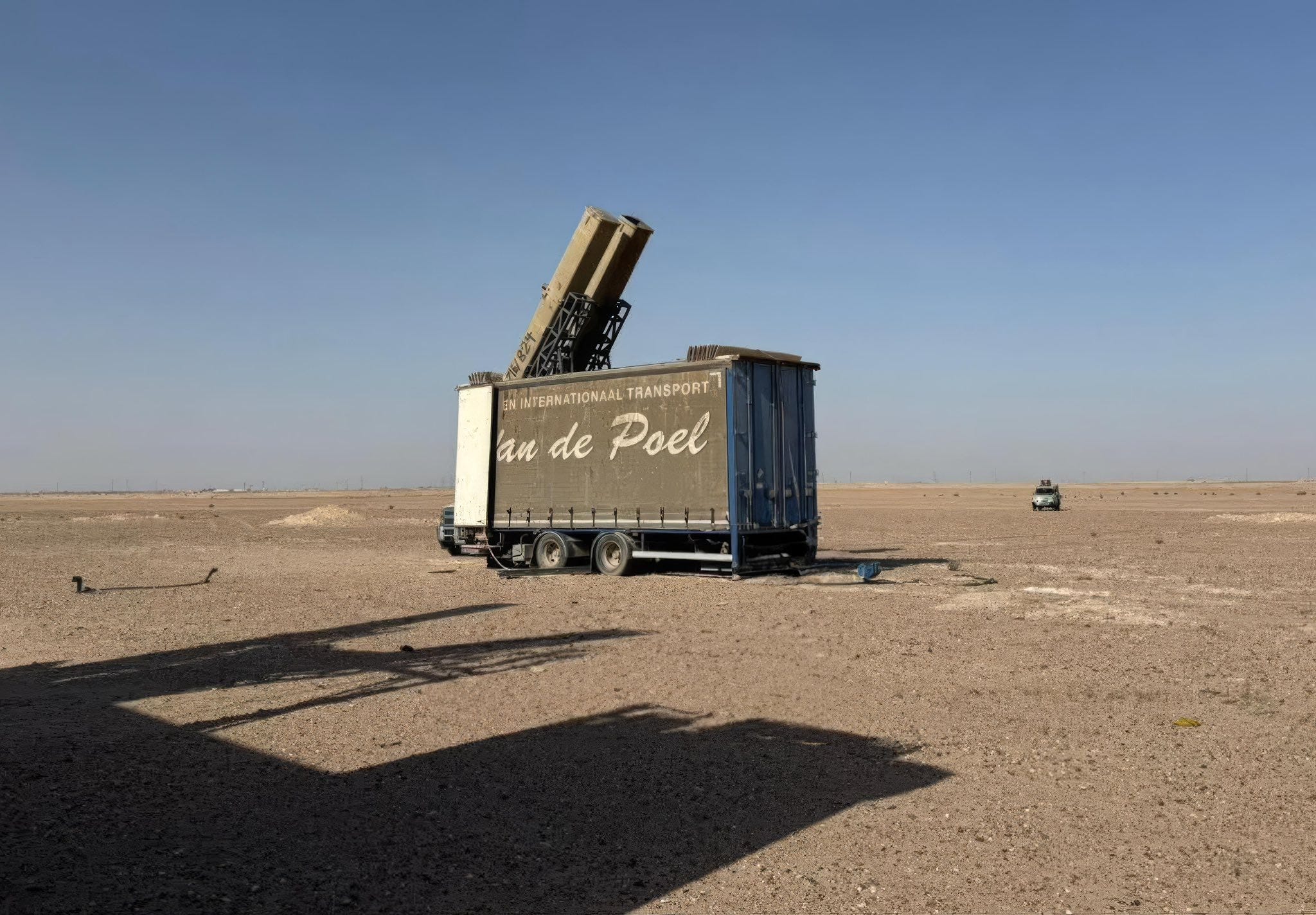
.Back in March, about three weeks into the US/Israeli bombing offensive, I blogged about how Iran had gained escalation dominance. Their attacks on facilities like the Ras Laffan gas terminal in Qatar or refineries in Kuwait and Saudi Arabia, following an Israel strike on the Iranian Pars gas field demonstrated a willingness to wield massive damage on energy infrastructure.
For good measure, as sound strategists do, the Islamic Revolutionary Guards Corps people now running the country thought a couple of steps ahead. If their enemies started retaliating against their own oil facilities, they would target Gulf states’ desalination plants, leveraging their greater dependence on such sources of fresh water than Iran’s.
Given that the business of escalation dominance often resembles a barroom fight, with the winner being the one who demonstrates the will to apply maximum violence without further hesitation, that did the trick for the IRGC. Could the US or Israel have ever got back into the strategic driving seat?
Benjamin Netanyahu would, I think, have been willing to call the IRGC’s bluff on this, and cripple the Iranian energy sector. That would likely have brought terrible retaliation against the Gulf States but not advanced the Israeli objective of regime change. It might though have brought them back to the negotiating table.
Instead, Donald Trump publicly rapped Israel across the knuckles when it did bomb the targets most painful to Iran (such as the Pars gas terminal) and put his hope on the economic blockade of Iran starting on 13th April.
Due to Trump’s overconfidence and the Pentagon’s miscalculations, the forces needed to enforce this operation had not been in place at the war’s outset. Once underway, it certainly got Iran’s attention, and it was noteworthy that despite threats of a Houthi counter-blockade of the Bab el Mandeb (the chokepoint where the Red Sea meets the Arabian one off Yemen), Iran did not escalate further at that time, instead returning to negotiations.
The collapse of the subsequent ceasefire – essentially because Iranian attempts to reinforce their grip on the Strait of Hormuz through violence against passing ships – has now led them to a further and very significant escalation.
After one month of unhindered trade, the US reimposed its blockade. This offered if not a path to victory, at least a chance to put Iran under negotiating pressure again. Having experienced the consequences, not least billions in lost oil revenues, of the first round of that, IRGC leaders adopted the mentality of the barroom fighter once again.
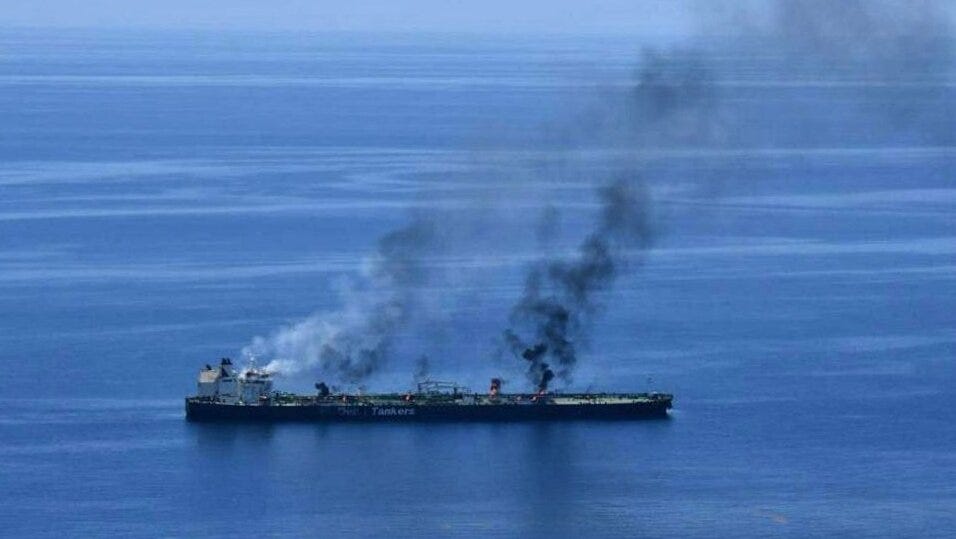
After many threats to play the Houthi card, they finally did it, initially targeting Saudi tankers in the Red Sea. Now in recent days they have struck key facilities – from the terminal at Abqaiq on the Gulf coast which is a major refinery in its own right as well as the starting point for their pipeline, across the country’s desert interior, to the Red Sea terminal at Yanbu, which they hit for good measure.
There are differing accounts on open source intelligence social media accounts as to whether these attacks have been completely successful or not. But one thing we can be sure of is that having managed to keep exporting nearly two thirds of its usual oil deliveries via the Red Sea route, this development will cause deep alarm in the Kingdom and has already made its effects felt in energy markets.
As in 2019, when Abqaiq was crippled for months by a cruise missile attack, this new blitz involved careful orchestration of Iran’s regional allies. IRGC-led militias in Iraq fired drones and missiles at both ends of the pipeline, while the Houthis targeted the Red Sea end of the Saudi operation with ballistic missiles.
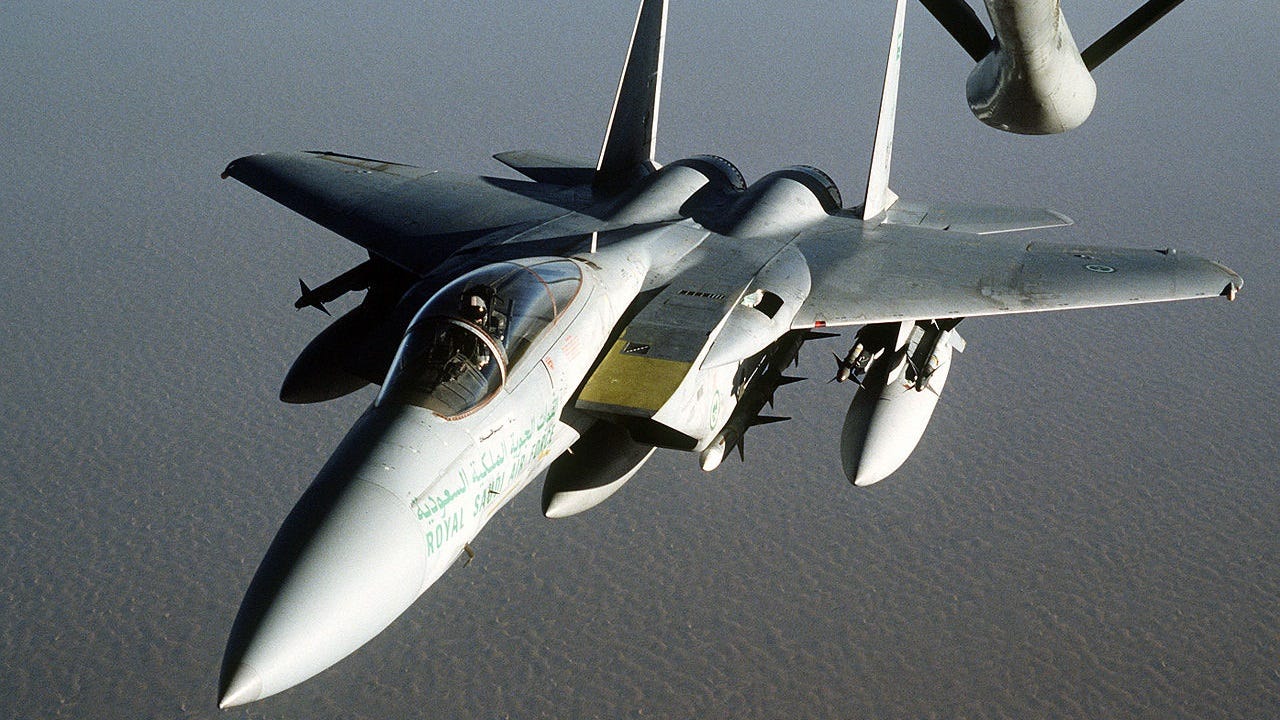
Evidently Saudi Arabia, which has one of the region’s most powerful air forces, can hit back and has done in recent days. Iran and its neighbours have their own escalation battle going on quite apart from that with the US.
Reliable accounts suggest the United Arab Emirates had already thrown in the towel, having been battered by Iranian strikes in March and April, began providing the cash-hungry Islamic Republic with the necessary incentives not to hit them again. Presumably Iran thinks it can now bludgeon Saudi Arabia into doing the same, and for good measure lean on the US to stop its bombing.
It’s notable that US strikes stopped at the weekend. We don’t yet know if that was as a result of US back channel diplomacy with Iran. Or was it simply the Saudi’s reining in the US in order to stop the pain?
That’s what happened, briefly, in May when the Pentagon announced its Operation Freedom escorting shipping through Hormuz only to abandon it 36 hours later: the Saudis shut it down. And without their cooperation American operations in the Strait really aren’t viable.
There are plenty of Americans whose dislike of Trump and Hegseth, with their blather about imminent deals and banishing wokery from the military, is so intense, that they take pleasure in the failure of this campaign. Some of the critical attention focuses on things like the lack of interceptor missiles, which is important but is an issue of the failure by multiple administrations over the past 20 years.
The big takeaway for me is not that the Chinese or Russians will be counting the number of Patriot or Tomahawk missiles fired, though of course they will. It is that America has forgotten both how to make war against another state or how to prevent allies from being turned from assets into liabilities.
No posts
Comments
Nothing yet. Say the first thing.
Sign in to join the conversation.