
A design feature of the changes in the US economy over the past fifty years has been the broadening and intensification of insecurities for the bottom 90% of the US population. This post is part of a series on that topic.
The US spends roughly twice as much per capita on healthcare compared to every other developed country.
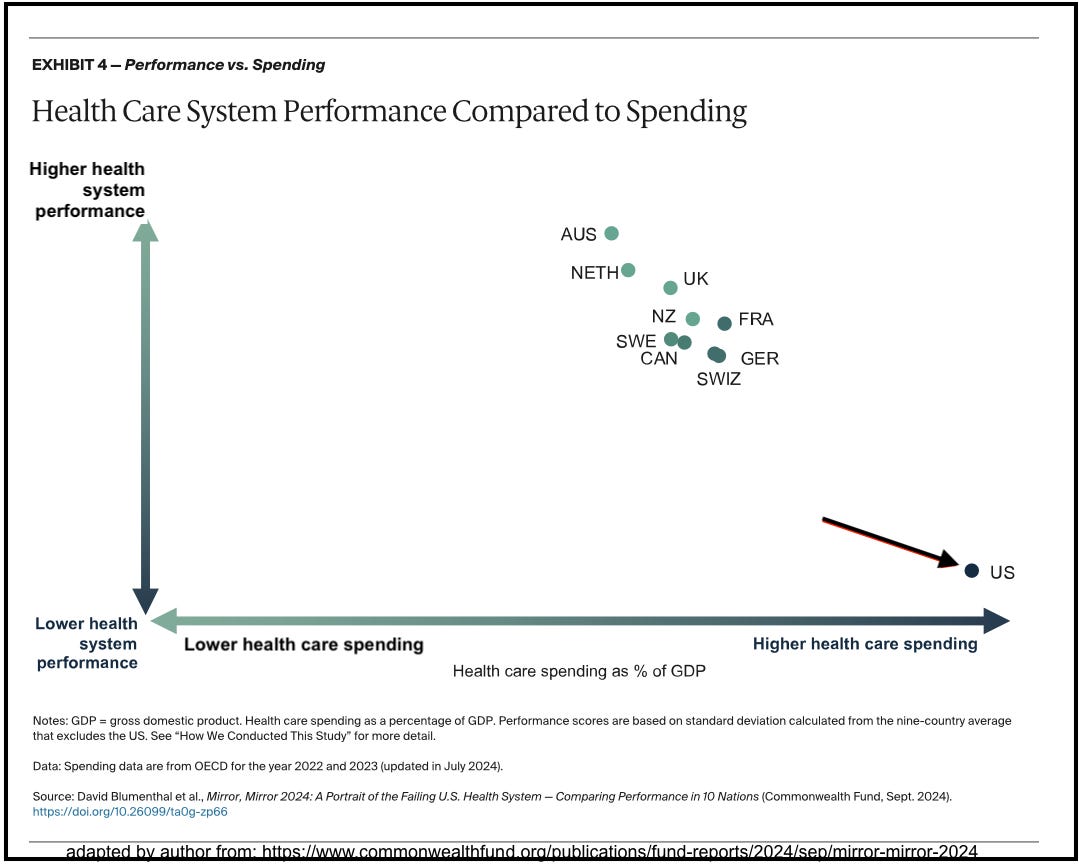
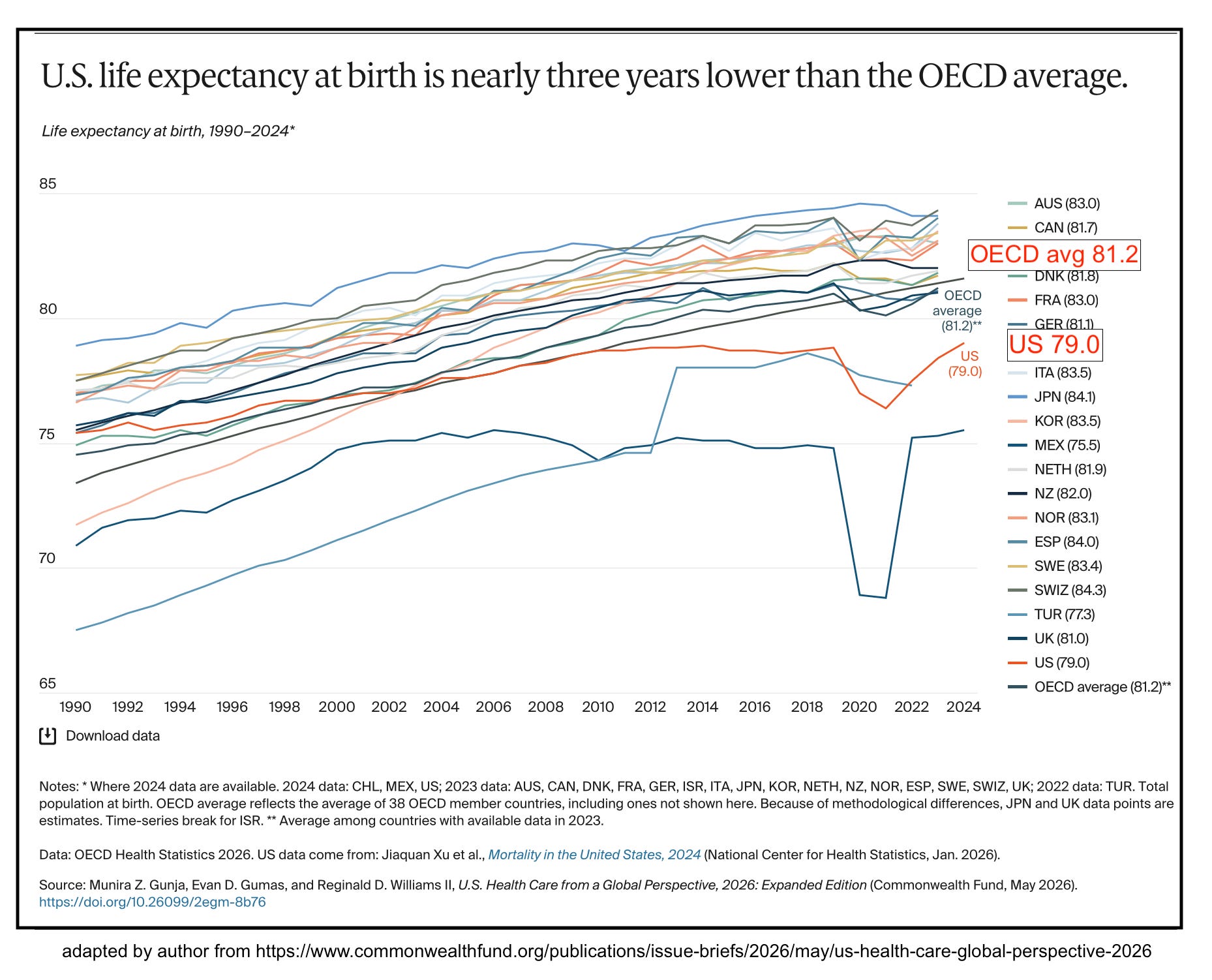
Yet we have outcomes that rank us far below those of other developed countries on key health indicators like life expectancy, with the US ranking 63rd in the world. More about this in my brief video, “US Healthcare compared to a tiny European nation – Slovenia”.
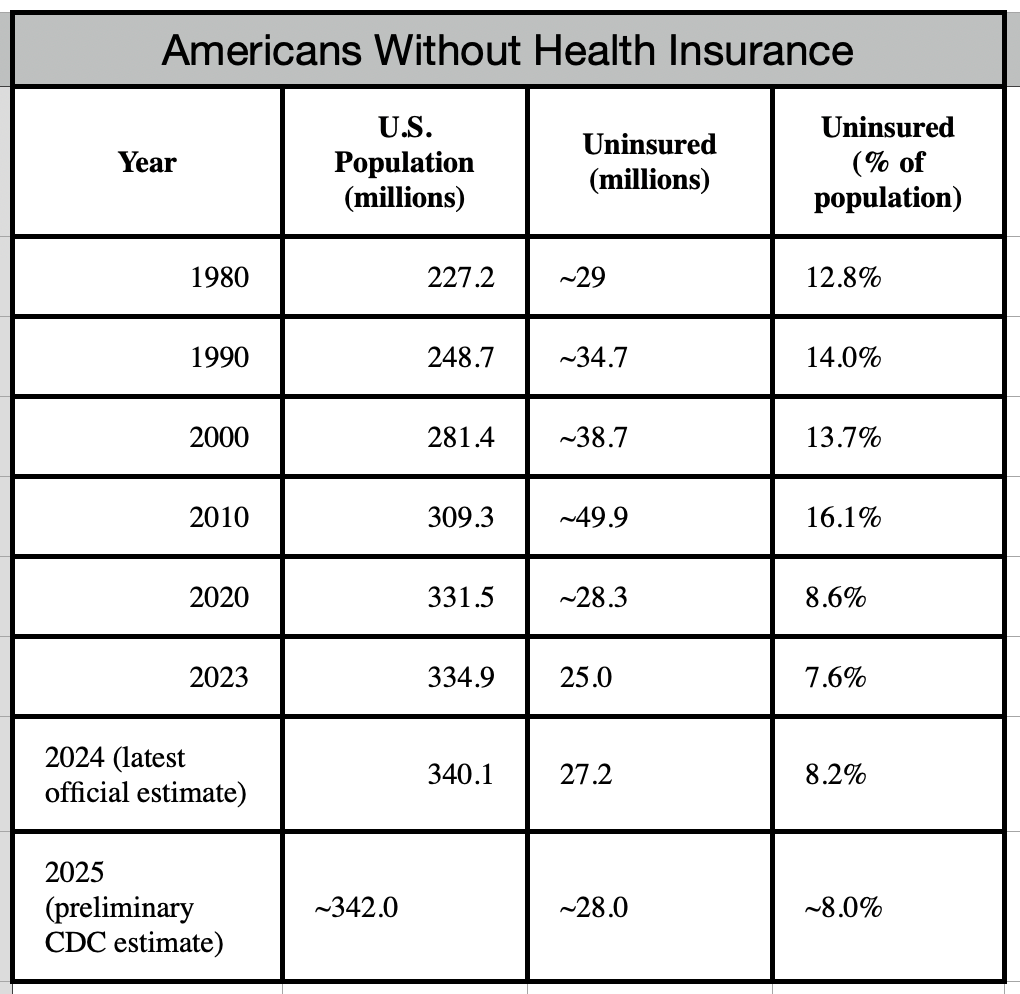
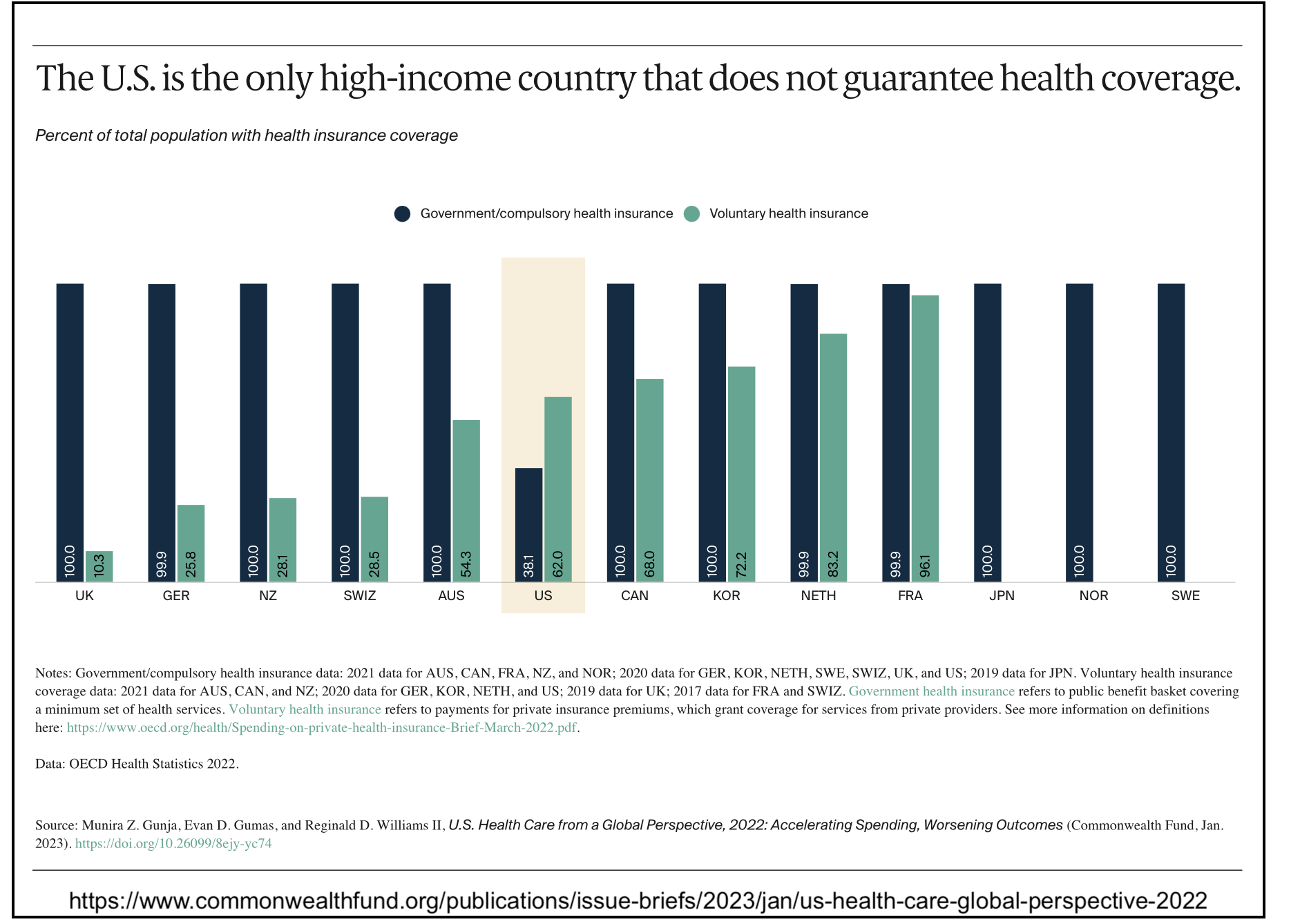
With the Trump regime’s failure to extend healthcare subsidies, the number of Americans without health insurance will rise sharply, but this reflects a long-term problem that was much worse in the past. Compare this with every other developed country in the world, which guarantees healthcare as a right.
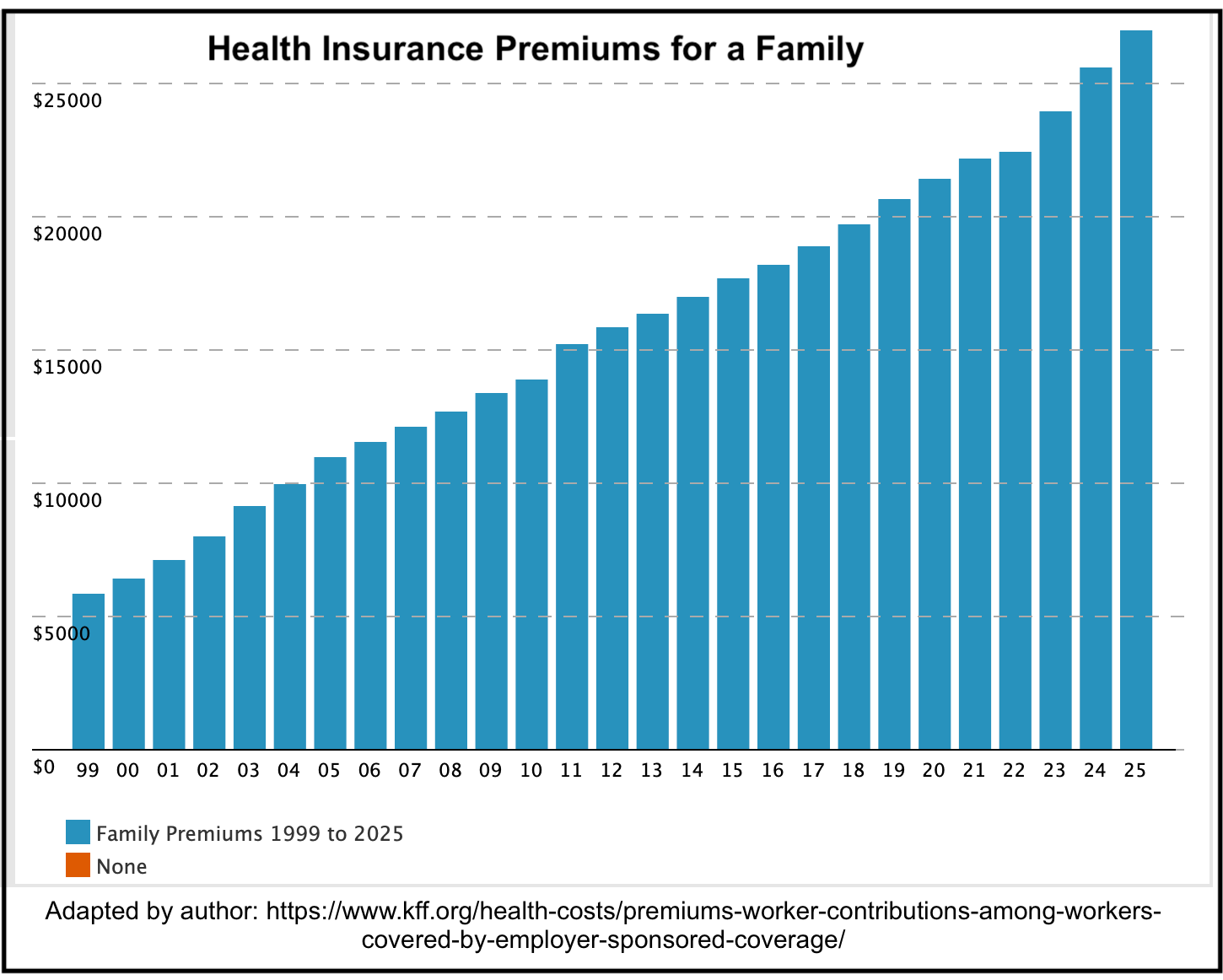
The cost of health insurance has skyrocketed over the past twenty-five years.
While 100 million Americans have at least some medical debt, about 7.4% of U.S. residents experience catastrophic healthcare expenses annually, more than double the rate of any other developed nation. Here, medical debt is defined as experiencing problems paying or being unable to afford any medical bills in the past 12 months, including those for doctors, dentists, hospitals, therapists, medication, equipment, nursing home or home care. And the term catastrophic is defined as out-of-pocket spending exceeding 40% of a household’s income after basic necessities have been met. Further, estimates suggest that inability to afford costs of medical care contributes to at least 530,000 personal bankruptcy filings annually. Approximately two-thirds of personal bankruptcies in the U.S. are associated with medical expenses or illness-related loss of work.1
This shouldn’t be too surprising in a country where 37 percent of American families cannot pay an unexpected $400 bill without borrowing or selling something.2
In contrast, these healthcare financial troubles are completely unknown in other developed countries.
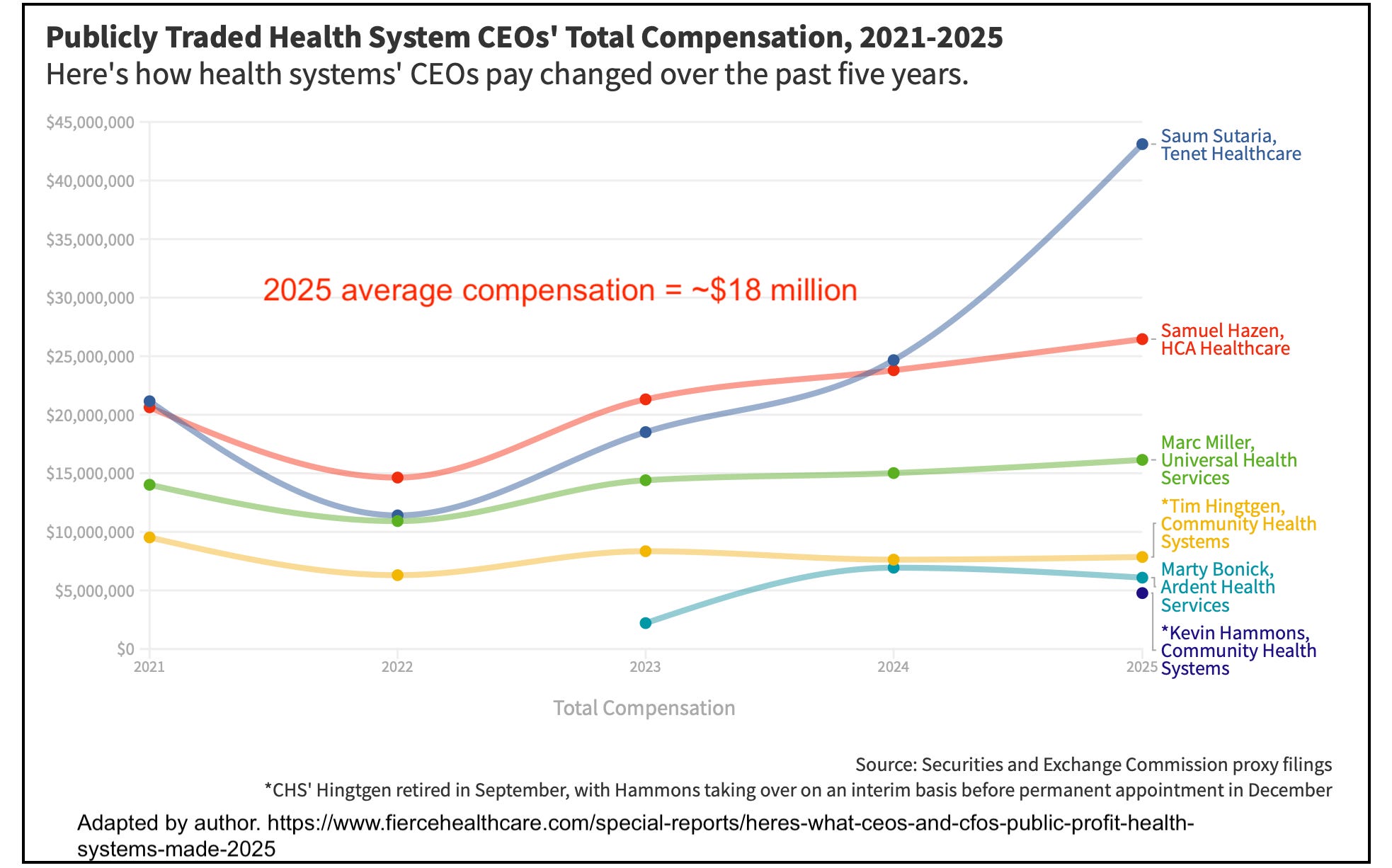
Meanwhile, executive compensation has done quite well.
Every other high-income country has universal healthcare. Many different models to pick from. All of them are less expensive and perform far better. Let’s pick one!!
https://www.forbes.com/sites/joshuacohen/2026/04/05/increasing-burdens-of-medical-debt-and-bankruptcy-are-uniquely-american/
https://www.federalreserve.gov/publications/2025-economic-well-being-of-us-households-in-2024-savings-and-investments.htm
Comments
Nothing yet. Say the first thing.
Sign in to join the conversation.