
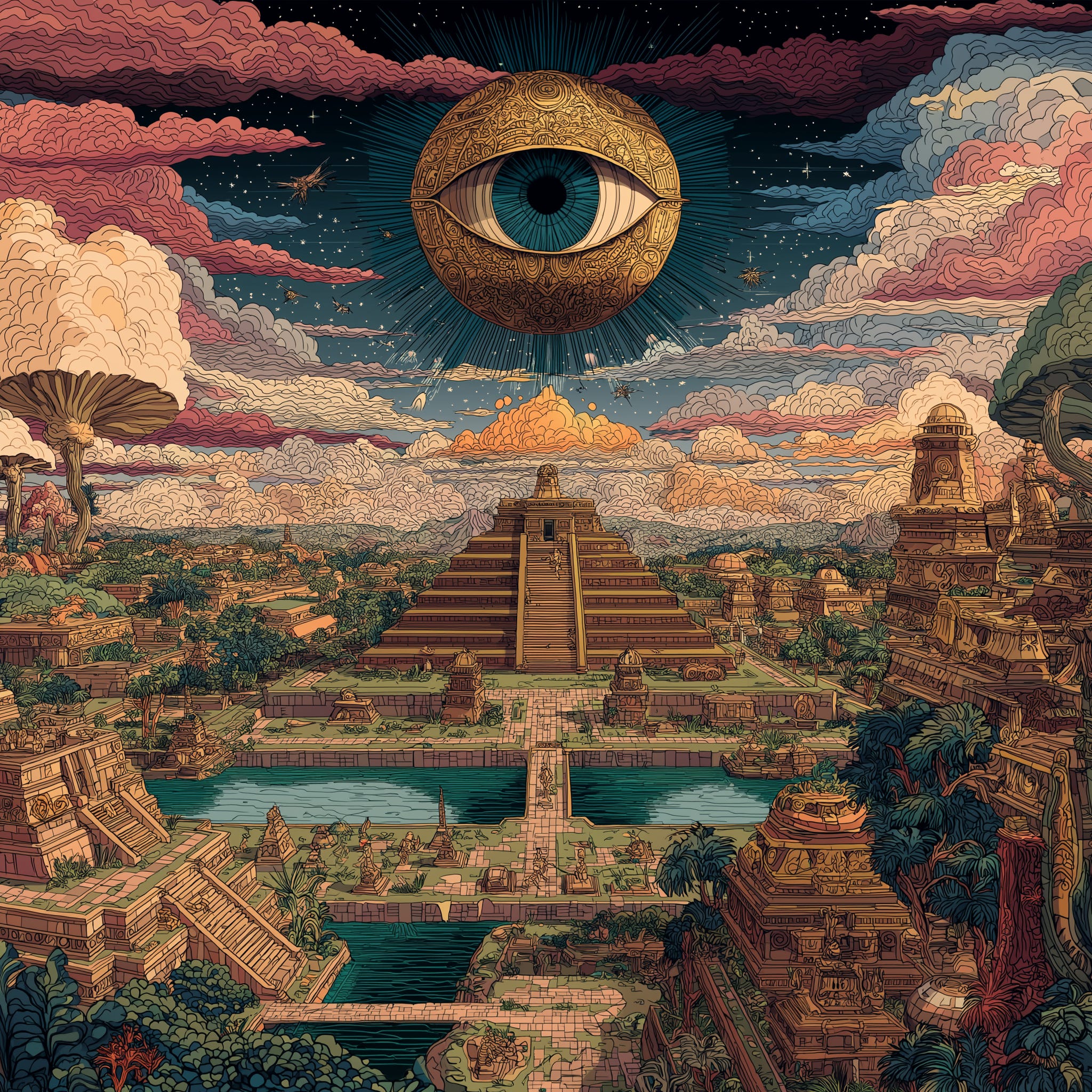
¡Hola amigos! The book club is back — and August’s pick is something that feels both super relevant and highly intriguing — You Dreamed of Empires by Álvaro Enrigue.
You Dreamed of Empires (Spanish: Tu Sueño Imperios Han Sido) is a psychedelic magical realism retelling of the Spanish conquest of the Aztec capital Tenochtitlán (now Mexico City) in August of 1519 — 505 years ago this month.

It’s a creative reimagination of the fateful encounter between Hernán Cortés and Moctezuma in 1519, where the Emperor Moctezuma is high on magic mushrooms for much of the story (as are most of the main characters), and the mood is tense as two curious and violent empires collide.
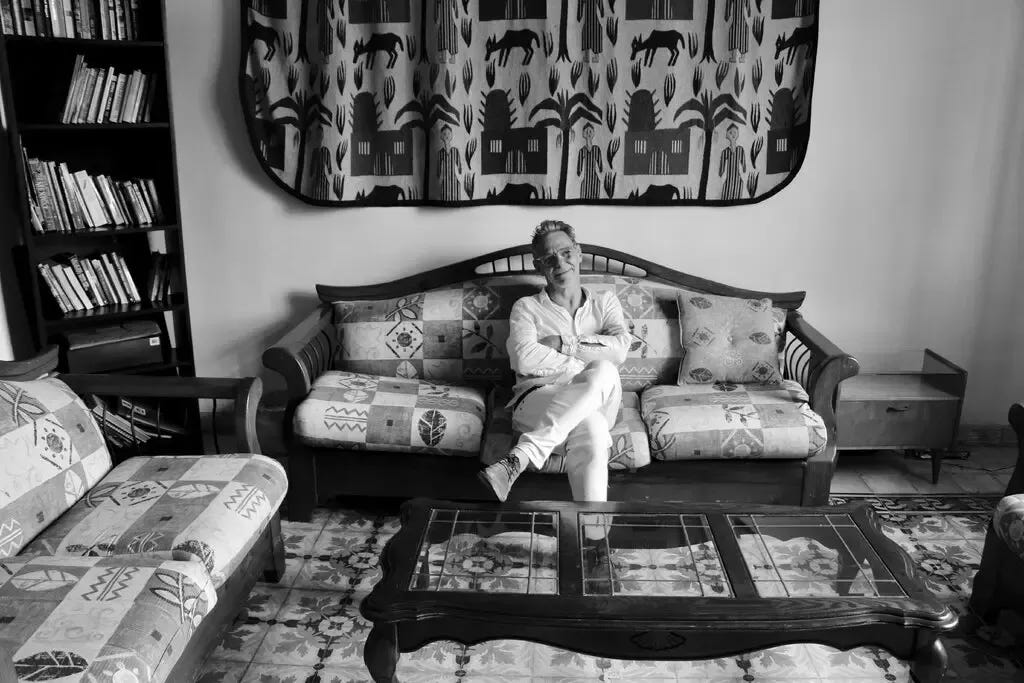
Álvaro Enrigue is a Mexico City native who lives in Harlem. He’s a professor of Romance Languages and Literature at Hofstra University and is one of the most influential Spanish language writers. This is his third book translated into English.

Why This Book, Why Now
As the gentrification debate rages in Mexico City—with some locals calling Americans "neocolonialists"— it's time we revisit the original sin of conquest that shaped this incredible city into what it is today.
A few years back we read the book Conquistadores, a sweeping history of the Spanish conquest of the Americas. It was thorough and illuminating — but I think this subject is better tackled by fiction.
This novel is both hyper-realistic while also channeling a Borgesian magical realism that makes the past feel startlingly present and surreal — like when Emperor Moctezuma is high enough on mushrooms to see the author writing the book in the future — and then start dancing to T. Rex’s Monolith.
According to the New York Times, You Dreamed of Empires is a "humane comedy of manners" that's "short, strange, spiky and sublime." As The Guardian's Anthony Cummins aptly described it, Enrigue "plays colonial conquest as a kind of heist comedy, with the target nothing less than a city."
I was pulled in from the opening scene — Moctezuma hosting a royal banquet in Cortés’ honor, the first real contact between the greatest empires of two rival continents. The Mexica (the correct name for Aztecs) don’t know what to do with the foreigner’s horses, while the Spaniards try to not to wrench from the smell of the Mexica priests’ robes of fresh human-skin. Locals eat tacos of grasshopper and “warrior’s arm” while the conquistadors complain of having swamp-ass from months of hiking over the volcanoes from Veracruz.
I’ve decided to attempt the book in Spanish, but Natasha Wimmer's English translation has received rave reviews, which The Times named a top 10 Best Books of 2024. The English version is also available as an Audiobook on Spotify (and only 6.5 hrs long). I am bouncing between the Spanish text and English audiobook as I go.
I’ve been discussing the gentrification debate with my local friends, and one thing that keeps coming up is how the issue is about so much more than gringos and Airbnbs. It’s a story of displacement, domination, and erasure that begins in 1519.
Which is precisely why I’ve chosen a fictional novel over a historical tome. Not just because you won’t lug a history book to the beach, but also because the challenge is less about memorizing facts and more about understanding the emotions that these histories produced — many of which are still present to this very day.
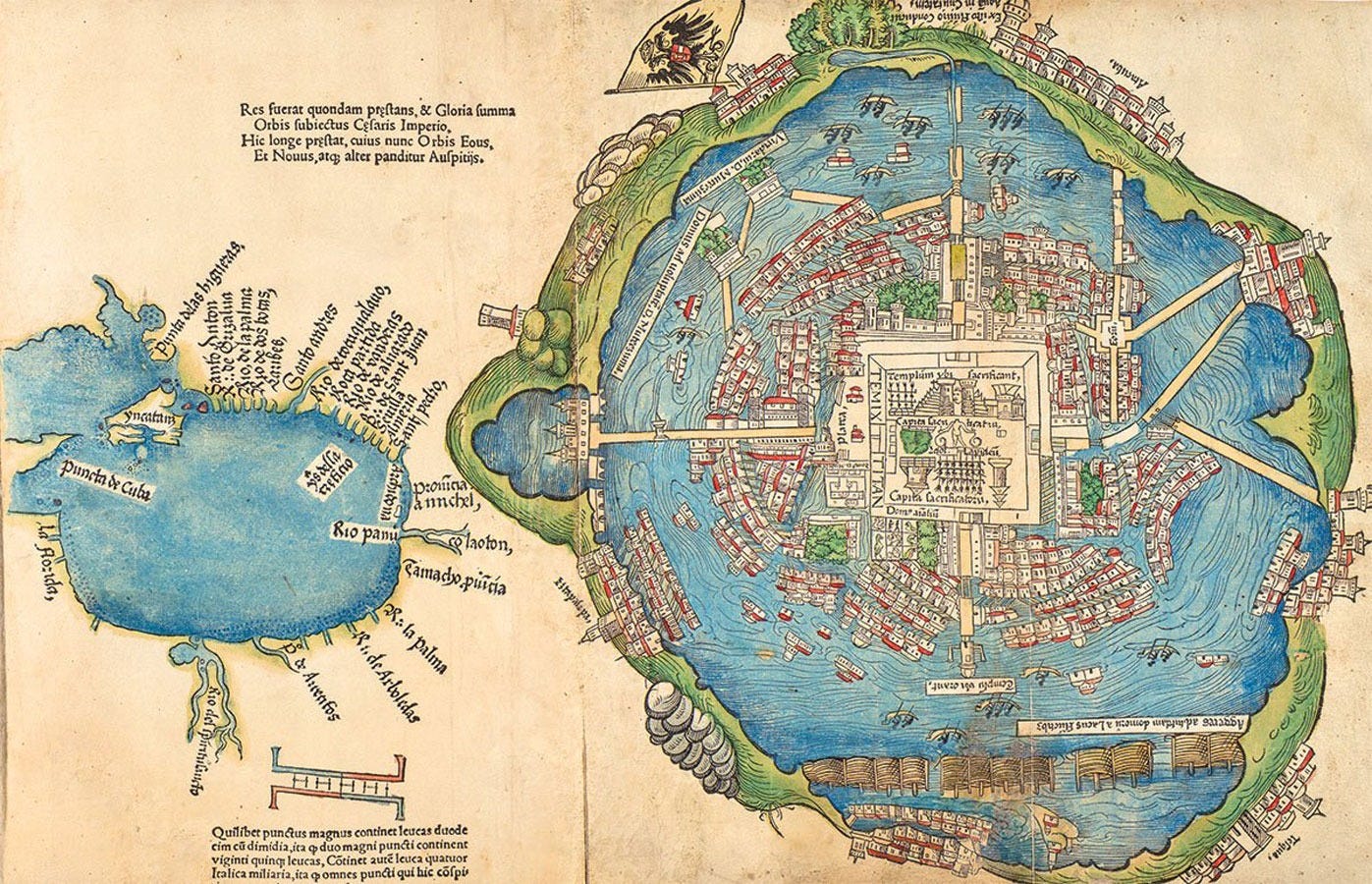
Enrigue did extensive research on daily life and culture in Tenochtitlan, the ruins of which are still visible underneath the Spanish buildings in Mexico City’s downtown.
The author’s immense powers of description truly bring the awesome beauty of the ancient city to life, from the rich markets, majestic canals, and stately causeways to the thousands of human skulls in the Templo Mayor (still visible today).
If you’re struggling to pronounce proper names, don’t stress. Enrigue deliberately complicates language to show his characters' mixed lineage, such as his choice to spell the city as "Tenoxtitlan" rather than the Spanish-influenced "Tenochtitlan." As he explains in a note to his translator at the beginning of the book:
“Don’t worry too much about the Nahuatl words you come across. Mexican readers won’t know right away what a macehual or a pipil is either. Let the meanings reveal themselves: the brain likes to learn things and we’re wired to register new words.”
The Nahuatl and Spanish names can make the audiobook version hard to follow, so I recommend getting a paperback copy, which is widely available in the US.
From what I’ve read so far, I’m loving the depiction of this meeting of two worlds. This is what so many travelers think they want — to discover another culture as if for the first time. To be the first of your kind in a new place. These days that’s practically impossible. Ever since the Columbian Exchange the world has become inextricably linked. This book shows the very first moments of that momentous shift.
As I read, I wonder: What does it mean to be an outsider in someone else's home? And how could the Spanish arrival in Mexico ended differently? Or was it fate?
Feel free to share your answers or questions in our subscriber group chat! 👇🏻👇🏻👇🏻
In-Person Meetups & Online Ideas
As mentioned in my previous email, I’m debating how to handle free vs. premium subscriptions. I want to experiment by hosting an in-person meet up here in Mexico City (details TBD). We'll discuss the book over coffee or mezcal, depending on the vibe, and explore how Enrigue's vision of conquest speaks to contemporary CDMX.
Want to join? Reply directly to this email for details.
If you want to support more events like this consider upgrading to a paid membership so I can make these Mexico City meetups a regular thing.
See you in the comments,
Marko
Suggested Reading Schedule
Week 1 (Aug 1-10): “Before the Nap”
Week 2 (Aug 11-17): “Moctezuma’s Nap”
Week 3 (Aug 18-24): “After the Nap”
Week 4 (Aug 25-31): “Cortés’ Dream”
Discussion Questions to Consider
As you read, think about:
How does Enrigue's magical realism illuminate historical truth?
What parallels do you see between 1519 and 2025 Mexico City?
How do economic and cultural power dynamics play out across both eras?
What responsibility do "outsiders" bear in understanding local history?
Comments
Nothing yet. Say the first thing.
Sign in to join the conversation.