
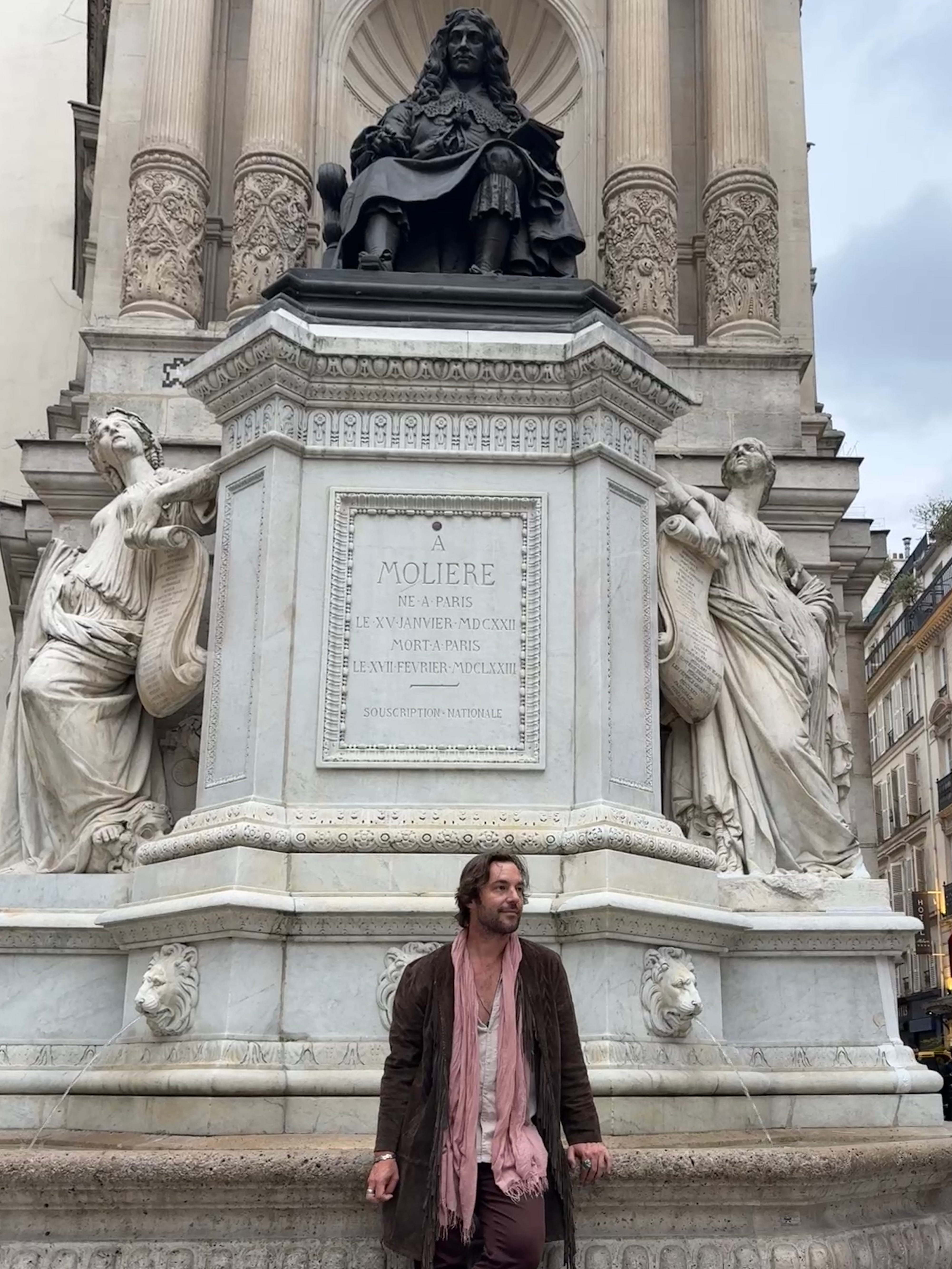
I have a lot of nostalgia for Paris. In my early twenties, I visited often while teaching English in a small Spanish town and dreaming of becoming a writer.
Paris always felt like the epicenter of that dream. So after Astral Plans, I lingered for a week, wandering the Latin Quarter like a ghost retracing a past life—revisiting haunts like Shakespeare & Co., and texting old friends I hadn’t seen in years.
In the fifteen years since my first fateful visit, some of my Parisian friends have died — most notably Jim Haynes, whose infamous Sunday Dinner Parties I frequented every time I was in Paris.
Another was a woman I’ll call Sophie — someone I’d once been convinced was the one.
We’d met traveling years earlier and had stayed in touch sporadically, always with warmth and a little unspoken curiosity. We last met in 2019, laughing over coffee about the foolishness of our younger selves. She was married with children by then, and we’d both moved on.
But this week when I looked her up on Facebook, I was shocked to learn she had passed away three years ago. Thirty-five. A brain tumor. I could not believe it.
The following story is a memory from long before that — a time when everything still felt possible. I wrote it years ago and never got to show it to Sophie. It’s not meant as a eulogy, but a tribute. A snapshot of who she was before the world really knew her.
To me, Sophie will always be the woman who wrote her email in my journal in Beijing — the one who made Paris shimmer just a little brighter that snowy night.
Enjoy this excerpt from my memoirs about a young idealistic writer chasing his dream girl on a cold winter night in Paris.
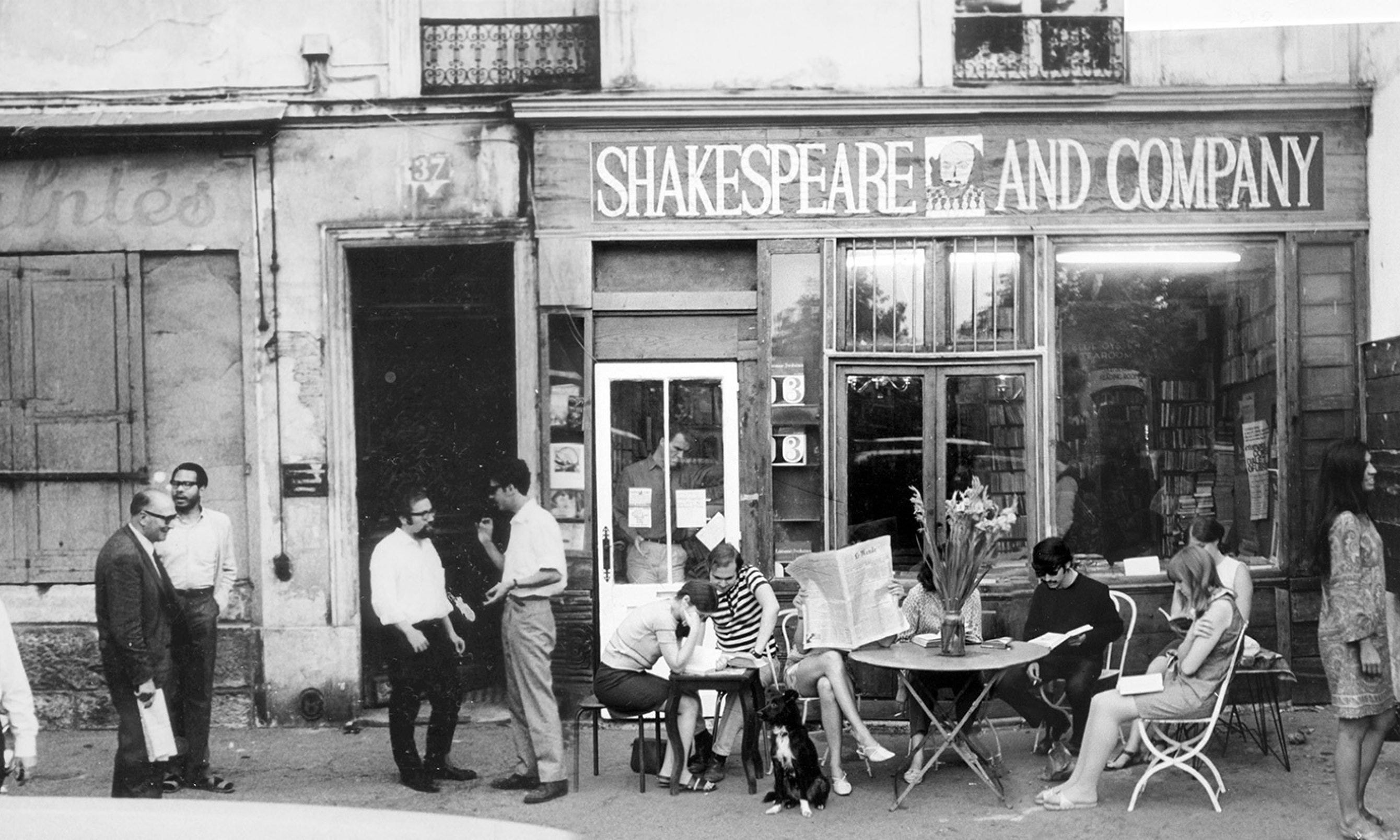
I stood across the Seine in the shadow of Notre Dame, staring nervously at the little green building called Shakespeare and Co. Bookstore. It was a cold winter afternoon on the first Sunday of 2010. I had a few hours until my date with Sophie — the seemingly perfect woman I had met while traveling the Trans-Siberian Railroad in opposite directions.
For months, I’d wrestled with doubt. Was I being naive? Unrealistic?
Absolutely.
I was reaching for the stars — asking out the girl of my dreams, pursuing my career in the footsteps of Hemingway, and reading my writing at the iconic bookstore that had nurtured Allen Ginsberg, Anaïs Nin, and Henry Miller.
But the audacity of this mission suddenly brought my father’s admonition to the forefront of my mind:
You’re like Don Quixote, he’d said over Christmas dinner. Stop tilting at windmills and be more practical. No woman will ever want to marry a starving artist.
Yet here I was.
Sophie had just emailed to confirm our date for 5PM. My hand clutched a black leather notebook containing my first slam poem, my palms sweaty despite the chill. My stomach twisted into knots as I approached the threshold of this literary landmark. I had never read my writing aloud — let alone in such a storied place.
I stepped inside. A bell rang above the door. The warmth hit me instantly, and the scent of old paper wrapped around me like a wool coat. Shelves meandered like alleyways, stacked high with books. I spotted an elderly man beside the register and approached him.
“Excuse me, sir,” I said, unwrapping my scarf. “Do you work here?”
“I’m George,” he replied. “The owner.”
“Nice to meet you. I’m Marko, a writer. My uncle stayed here in the ’80s.”
“A tumbleweed,” he smiled. “That’s what we call the travelers who stay here and write something for the shop.”
“He said he only sent postcards.”
George laughed. “Maybe you’ll leave behind something more substantial.”
“That’s the hope,” I said, pulling out my notebook. “I’m here for the writers’ circle. Am I too late?”
“Upstairs,” he said, with a wink. “Good luck. And keep writing.”
The staircase creaked underfoot as I climbed. I passed rows of dog-eared paperbacks, whispering to myself that this was what all writers do: they show up, even when they’re terrified. I reached the top to find a circle of writers in a cozy attic room. A man in tweed was finishing his poem. I waited.
“Here to read?” asked the facilitator, a kind woman with a soft British accent.
“I hope I’m not too late.”
“Everyone’s gone already,” she smiled. “You’re right on time. Take the floor.”
My heart pounded as I opened my notebook. I cleared my throat. “This is called The Career Chat. It’s based on true events.”
I began.
For those interested, I can publish this poem in a future Missive.
By the time I finished reading, the room had shifted. Faces were smiling. Some clapped. For the first time in my life, I felt seen as a writer.
“We always welcome talented young voices,” the facilitator said. “In which arrondissement do you live?”
“I’m just visiting,” I said. “I teach English in small-town Spain.”
“Spain! So romantic. Like Hemingway,” she said with a smile. “You’ll have to visit Paris more often. Our community can help you get published.”
Get published? I couldn’t believe my luck.
It was as if the world was conspiring in my favor to follow my dreams. Getting on the stage was one of the most nerve-wracking experiences of my life. But I’d done it. And now the universe was responding by introducing me to the people I needed to meet.
“Do you have plans this evening?” she asked, leading me towards the staircase. “A few of us are gathering at a very special weekly soiree in the 14th.”
“I have a date,” I said, “Maybe I could bring her?”
“Oh, it’s a lovely idea for a date,” she said, squeezing my arm. “Jim Haynes is an American expatriate who has been hosting weekly Sunday dinners since the 60’s. He’s a writer and a professor at the Sorbonne - and one of the most free spirits you’ll ever meet. His parties are the place to be on a Sunday. You’ll love it. Is it a first date?”
“It is.”
“Even better,” she said with a wink. “You’ll surprise her with something about her own city.”
She stopped by the register, grabbed a piece of paper and wrote down her name and email address, as well as the address of Jim Haynes’ atelier.
“I must run, dear,” she said, handing me the paper. “But I would love to read more of your work. Please do send it to me. I’ll help you find a publisher. A bientôt!”
I looked at the piece of paper in shock.
After months of unanswered pitches to magazines, finally it felt like I did have a guardian angel. Maybe this writing thing really would work out for me.
I left Shakespeare and Co. giddy with purpose. I’d read my first poem. I had a literary contact. And I had a date with Sophie. Maybe I was naive. Maybe I was setting myself up for heartbreak. But something about that crisp winter evening made me believe in magic.
I pulled out my copy of Paris Par Arrondissement, scanned the map for Jim Haynes house, and set off on the next leg of my mission — to go get the girl of my dreams.
I waited for Sophie outside the Montparnasse station, shuffling to keep warm. I fished my hand into my leather satchel to check if the gift was still there. Of course it was. But part of me still couldn’t believe I was doing this.
It felt crazy. There was no way it was going to work. She was brilliant, beautiful—completely out of my league. She couldn’t possibly be into me.
But I had to try.
Sophie was perfect. Or at least, that’s what I thought when we met in that dingy hostel in Beijing. She carried herself with a poise that made me feel like a scruffy stowaway in her presence. I was writing my final blog entries when she walked into the room, fresh off the Trans-Siberian. We talked, shared our plans. She told me about her dual degree at LSE and Sciences Po. I told her I was moving to Spain to write a novel. We promised to keep in touch. She wrote her email in my journal.
Now, six months later, I was in Paris—ostensibly to read at Shakespeare & Co., to visit friends, to get a taste of civilization. But really, I’d come to see her.
The gift—Belgian chocolates from Bruges—suddenly felt foolish. Too much? Too little? I had bought them to hedge my bets: a gesture that said I care, but I was not obsessed. Still, it felt like I was setting myself up for disappointment. I didn’t want another heartache.
But I had to try.
And then she appeared.
Sophie emerged from the Metro and glided toward me with the elegance of a film star. Her dark bob framed porcelain cheeks tinged pink from the cold. Her eyes sparkled when she smiled.
“Salut Marko!” she said, kissing each cheek. “Welcome to Paris.”
“Happy New Year,” I replied. “Thanks for meeting me.”
“Of course. I’m glad you stayed in touch.”
Yes, I thought. It’s mutual. Finally.
“I have a surprise for you,” I said, moving my hand to my bag to pull out the gift. But I stopped myself.
It was too soon. Too eager. I would wait until the end. Right before I leaned in for our first kiss.
“A surprise for me?”
“Yes,” I said, pivoting to point to the street behind me.
“A secret event,” I grinned. “Come on, I’ll show you.”
She raised an eyebrow, amused. “You know Paris better than me?”
“I am a travel writer,” I said. “Allons-y.”
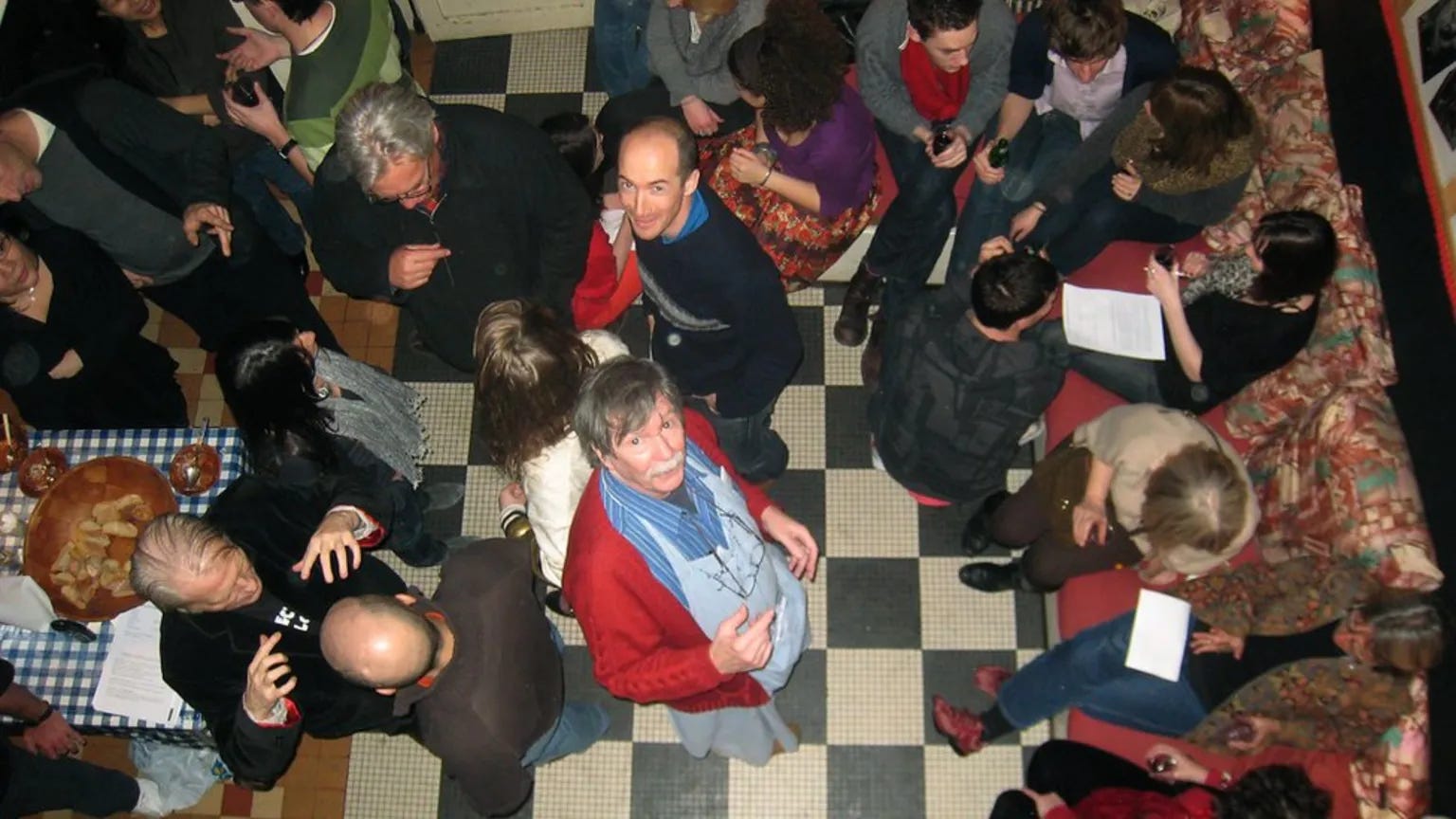
We could hear Jim Haynes’ party at 83 Rue de la Tombe Issoire from the street.
We arrived shortly before six, just as dusk settled across the city of lights. I pulled out my notebook and glanced at the instructions I’d jotted down from Jim’s reply to my RSVP. I entered the door code and waited for the large green gate to open.
Buzzzzz...click.
“Apres vous,” I said, pushing the door open and motioning for Sophie to go first.
We walked through the stone archway into a small garden where a hundred people were gathered sipping wine from plastic cups and eating off paper plates.
“What is this?” she asked, her eyes wide with wonder.
“A proper Paris salon,” I said. “Welcome to Jim Haynes’ famous Sunday Dinners.”
The guests were of all ages, all nationalities. They stood eating up, sitting on the edge of the garden, or gathered on the few seats inside the atelier that seemed to be the center of the action.
“It’s incredible,” she said as we walked into the fairy-like atmosphere of hanging bistro lights and lively conversation. “How did you hear about it?”
“I read my poetry earlier today at Shakespeare & Co,” I said proudly, “and some fellow writers told me about it. Look, there they are.”
We walked over to a group of three writers from the roundtable: the elderly facilitator, a young frail poet from Oxford, and an older Australian photographer.
“Jim’s a legend,” said the Australian. “He’s originally American but he came here to teach sexual politics at the University of Paris in the 60s and never left. He was basically the one to bring the American sexual revolution to Paris. He also founded the Edinburgh Fringe Festival. And he’s been hosting these Sunday Dinners at his home ever since the 70s.”
“That’s so interesting,” said Sophie. “I would very much like to meet him.”
“That’s him over there,” said the Australian, pointing inside with his wine cup. “He greets everyone as they pay their donation for the dinner. 20 euros is the suggestion, but you can give what you can. There’s a three-course meal laid out inside. To drink there’s boxed wine. But in France that’s usually quite quaffable.”
We thanked them for the context and walked inside. The atelier was a converted horse stable that contained a large open first floor with high ceilings and a loft above. A couch hugged the walls of the living room, which were covered with bookshelves selling Jim’s self-published books:
Everything Is! - A Manifesto; More Romance, Less Romanticism; Workers of the World, Unite - And Stop Working!; White-Washing Fences - A Biography of Jim Haynes; and Throw a Great Party - A Cookbook.
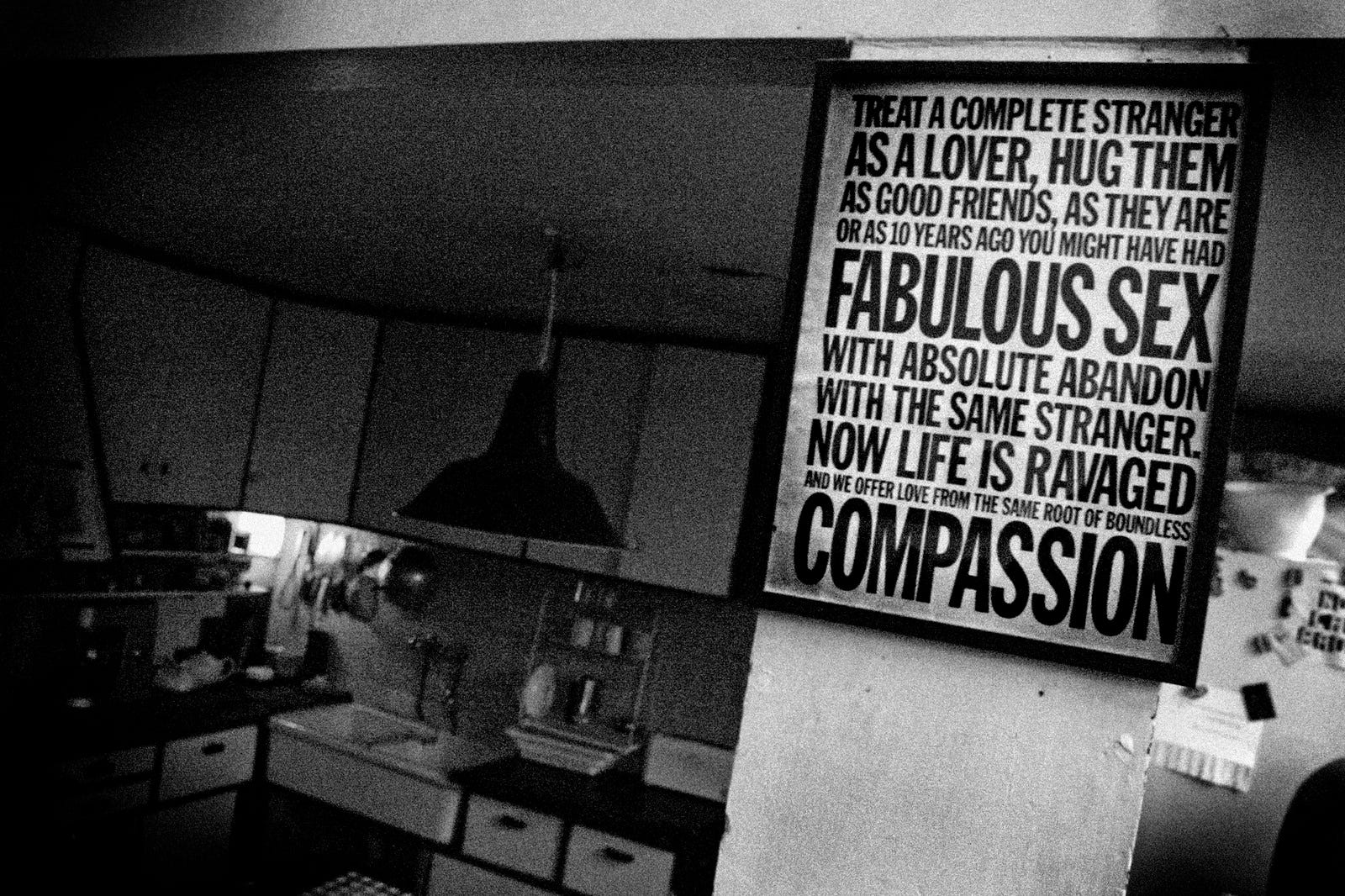
To my right was a poster with what appeared to be a manifesto for the entire gathering.
TREAT A COMPLETE STRANGER
AS A LOVER. HUG THEM
AS GOOD FRIENDS, AS THEY ARE
OR AS 10 YEARS AGO YOU MIGHT HAVE HAD
FABULOUS SEX
WITH ABSOLUTE ABANDON
WITH THE SAME STRANGER
NOW LIFE IS RAVAGED
AND WE OFFER LOVE FROM THE SAME ROOM OF BOUNDLESS
COMPASSION
We walked over to the line for food: Basque chicken with a side of pasta salad and peach cobbler.
Jim sat on a stool in the kitchen, collecting cash donations and handing out paper plates. He was in his late 70s, but still seemed lively and jovial. He wore a large mustache that seemed straight out of the Byrds.
“You two a couple?” asked Jim, eyeing us.
I looked sheepishly at Sophie and blushed. She made eye contact with me, laughed, and looked away.
“Just friends,” she said, handing him her 20€ note before I could pay for us both.
“Shame,” Jim winked at me. “You look great together.”
“Maybe one day,” I said with a nervous laugh. “So… where’s the wine?”
The next morning, Paris was blanketed in snow. I woke up on the couch of my Couchsurfing host, Matias, as he shuffled into the kitchen to make coffee.
“So?” he asked, raising an eyebrow. “How did it go with the girl?”
He poured boiling water into a French press, pulled out a cigarette, and offered me one. I took it.
I lit up and exhaled slowly.
“Well, at first things were going really well,” I said, letting out a long plume of smoke. “She seemed genuinely happy to see me—even though we’d only met once before, in China. But we’d stayed in touch for six months. She always replied to my emails right away. When I asked her out, she confirmed the date immediately.”
“So what happened?” he asked. “You took her to dinner like you planned?”
I told him about the detour to Jim Haynes’ soiree.
“It was… beautiful. We had a great time. We talked. We laughed. We were vibing the whole night,” I said, drifting back to the little moments that had felt electric. “Even when we wandered off to talk to other people, I kept catching her looking at me across the room and smiling. Her eyes said everything. It was like we were tethered by something invisible.”
“I know that feeling,” said Matias, taking a slow drag. “That’s when you know it’s real. Not just lust or infatuation, but actual connection.”
“That’s what I thought!” I said, shaking my head and flicking ash into a dish. “I’ve never felt something so mutual. We were on the same wavelength. We talked about all the same authors, the same dreams. We both wanted to use our educations to do something meaningful. She finished my sentences. So when the party ended, I offered to walk her home.”
“Where does she live?”
“Near the Eiffel Tower,” I said. “We took the train halfway and walked the rest along the Seine. It had just started snowing. It was freezing, so I offered her my arm, and she took it. We walked arm-in-arm the whole way.”
“That’s something.”
“It was more than something,” I said. “It was magic. The whole city felt like it had emptied out just for us. The bridges were glowing. The streets were silent. And as we got closer to her place, I got nervous. I was hoping she’d invite me up. But even if she didn’t, I was going to kiss her goodnight.”
“Bien sûr,” he said. “She gave you all the signs.”
I nodded, then looked down, ashamed.
“But when we got to her door, she let go of my arm and gave me a hug,” I said, my cigarette trembling slightly. “She told me she had to hurry inside… because her boyfriend had just gotten back from Bordeaux.”
“She has a boyfriend?”
“Apparently,” I said, turning to look out at the fogged window and snow. “She said she was supposed to meet him at the train station… but stayed with me instead.”
“So she likes you,” Matias said, pouring coffee into mismatched mugs.
“She has a boyfriend,” I repeated.
“Ce n’est pas important,” he said with a Gallic shrug. “In France, that doesn’t mean much. She clearly likes you. Otherwise she wouldn’t have ditched him at the station. What you had—what you were—was what we call the cinq à sept.”
“The five to seven?”
“Exactamente,” he nodded. “In France, everyone cheats. It’s part of our culture. You Americans act like one person should satisfy you forever. Your President Clinton gets a blowjob—just a blowjob!—and it’s a national scandal. Meanwhile our President Sarkozy marries Carla Bruni—supermodel—and they both cheat, and no one cares.”
“What’s your point?”
“My point is that we don’t confuse commitment with exclusivity. Most people have affairs. And between five and seven, after work but before dinner, it’s easy to say you were stuck at the office. But really, you’re in the arms of your lover. That’s the cinq à sept—the whole country is cheating at once!”
Somehow, Matias’ philosophical rationalization didn’t help. It didn’t make me feel sophisticated. It made me feel discarded.
No matter how hard I tried, I always seemed to fall into the same pattern: pining after women who didn’t want me—or couldn’t have me—and avoiding the ones who did. I’d spend months obsessing over a fantasy, only to watch it crash to earth. Then I’d hook up with someone I wasn’t even that into, just to feel wanted. And I’d end up feeling hollow. Every time.
“I don’t know,” he continued. “I think you still have a chance with her. Tell her how you feel next time you’re in Paris.”
Intellectually, I knew I should be grateful. These women wanted me in their lives—even just as a friend. What’s purer than friendship?
But emotionally, I felt like a teddy bear. Something soft to hold, not someone to love. I didn’t want to be the safe choice. I wanted to be the one they chose.
“Yeah,” I said with a shrug. “Maybe.”
I fell back onto the couch, suddenly drained of all the magic Paris had held the night before.
Suddenly, the whole trip felt like a farce.
What was I doing here? Sure, I’d wanted to read at Shakespeare & Co.—but really, I came to see Sophie. I wasn’t even honest with myself about that. And she wasn’t into me. She was out of my league.
For years, I’d told myself to believe in the impossible. I wrote about chasing wild dreams. I thought if I just kept going, the world would eventually say yes.
But that morning in Paris, I felt like I’d reached for the stars—and landed flat on my ass.All I wanted to do was disappear before anyone saw me cry.
I reached into my bag, ripped open the chocolates, and stuffed my face.
When I got back to Spain, the storm had worsened. Flights were cancelled across Europe. Luckily I made it to Madrid before it packed in. I took the metro from Bajaras airport straight to the bus station and caught a ride north to Arévalo.
My apartment was cold when I got home. I called out to my two remaining roommates, but only one appeared.
“Paco moved out,” he said. “I guess he was bored here and wanted to be with his friends in the pueblo.”
I sunk into our couch and pulled out a pack of cigarettes I’d bought at the bus station. I lit one up and looked over the place I decided to call home. I couldn’t believe I had actually requested to be assigned to small town Spain.
This village was so fucking boring that my roommate - who came from an even smaller village of just a few hundred people - had gotten homesick. Now it was just me and Beto. I watched as he pulled another frozen dinner out of the fridge, zapped it in our microwave and shuffled down the hall to eat it in his room.
I finished my smoke and walked down to my room. The window was still cracked and it was freezing cold and smelt of manure from the farms around the village. I threw down my backpack and opened up my laptop, plugged in the 3G USB modem and checked my messages.
Nothing from Sophie. Just a comment on my latest blog post from Maria, a Canadian I met while backpacking in Asia.
Marko, you should totally apply to be an intern for this new travel website - Off Track Planet.
I looked up the website. It was cool, edgy and definitely NSFW. It had guides to how to get laid in a hostel.
Moreover, it was mostly listicles - but I wanted to write my book. I looked at the walls of bedroom. Page upon page of my travel blog posts printed out, marked up and pinned to the wall. A vain attempt at organizing my post-college adventures into something resembling a manuscript. Each page was full of red ink.
My parents told me just to send it to a publisher as-is. But I knew I would have to re-write the entire thing before a publisher would look at it.
I emailed the woman from Shakespeare & Co to discuss publishing. I followed up repeatedly as January turned into February. She never replied.
Alone in my village with the manuscript, I was overcome by the fear that I had plenty words but nothing to say. I was stuck in the first act of my own life story.
My dad’s words came back into my head.
Stop tilting at Windmills, he said. Be more realistic - Just publish something! Publish publish publish!
Maybe my father was right. I was too much of a dreamer. I had to be practical. I had to be realistic. Besides, writing listicles was easier than wrestling with universal truths I still barely understood myself.
I pulled out another cigarette, typed up a pitch for 10 Things to Do in Madrid on a Backpacker’s Budget, and applied for the internship.
… to be continued…
Thank you for reading. Jim Haynes died in 2021 and Sophie a year after that. While I’ve changed Sophie’s name to protect her family’s privacy, you can read Jim’s obituary here and see this short interview I made of Jim in my 2019 during my last visit.
Comments
Nothing yet. Say the first thing.
Sign in to join the conversation.