
Of all the ways the human race could be extinguished (nuclear war, asteroid strike, a wet-bulb event), the most gruesome of all is surely an attack involving a biologically engineered pathogen. Think an excruciating headache, accompanied by sharp chest pains, burning fever and the leaking of haemorrhagic fluids from bodily orifices.
Now imagine that this pathogen spreads via coughs and sneezes like Covid-19 and has been engineered so that its victims initially feel euphoric, making it more likely they will spread the infection to others. Now imagine that the pathogen has also been “booby-trapped” so that it is resistant to antibiotics, confusing doctors and undermining trust in medical science.
This is the Doomsday scenario the journalist Annie Jacobsen invites us to consider in her new book, Biological Warfare, imagining the release of a weaponised plague virus from a secret Soviet research facility. Unlike nuclear war, which is theoretically survivable, the release of a germ modified to be hyper-virulent and for which there is no known cure “could be twenty-first-century humans’ last invention”, she writes.
But it doesn’t necessarily have to be a deliberate act of war. Humans could just as easily be wiped out by an accident at a laboratory where scientists have been engineering pandemic pathogens in search of medical countermeasures with which to neutralise them. By inserting genes to make the pathogens more communicable or to help them evade the immune system, the argument goes, these experiments also enable scientists to develop new vaccines and antivirals before disaster strikes.
To the Pentagon and the CIA, this is an entirely legitimate exercise that falls under the rubric “biodefence”. Unfortunately, it also describes the “gain-of-function” (GOF) experiments involving SARS-like bat viruses that were being conducted at the Wuhan Institute of Virology (WIV) in China prior to the pandemic of COVID-19.
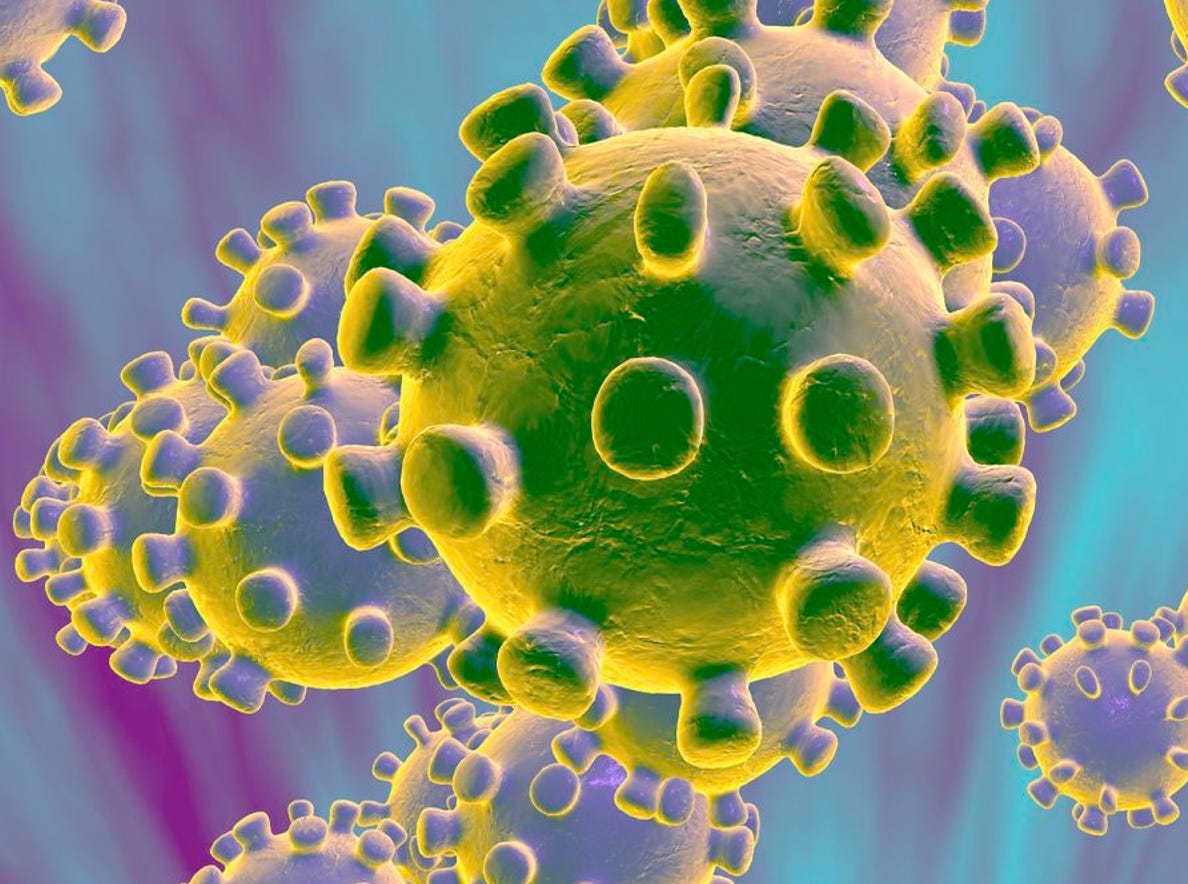
Following the sudden emergence of SARS-CoV-2, the virus of COVID-19, in Wuhan in December 2019, GOF has become a dirty word in US government circles. Spurred by conspiracy theories about nefarious Chinese actors and speculation about a “lab leak”, in late July the Trump administration rewrote the rules governing GOF research.
Under the new policy, the US government will end its support for what it calls “dangerous” gain-of-function (DGOF) research and strengthen oversight of life sciences research that “could pose significant risks to public health, biosecurity, or national security”. GOF research would not be banned outright. However, in practice the new policy would make it far harder for scientists studying pathogens such as influenza, Ebola and SARS with known pandemic potential to manipulate their genomes. Instead, such research would be assessed by an independent third-party review body using a “risk-based framework”.
The problem is risk is in the eye of the beholder and the new directive does not say who will sit on the review body and how they will make such adjudications. This could not only be bad for biodefense, it could be bad for public health, making it more difficult for scientists to study and develop counter-measures against pathogens with a theoretical but currently unknown potential to spark major epidemics and pandemics.
As the ASM, formerly the American Society for Microbiology, put it in a statement responding to the US directive: “The new policy … broadly defines several categories of research that, if shut down, will impede our ability as a nation to address infectious disease threats and respond to future outbreaks.”
Privately, many scientists go further, worrying that the new policy will be “a “bureaucratic nightmare” and have a “chilling effect” on research that uses recombinant DNA and gene-splicing techniques to explore ways of counteracting viruses and other pathogens that arise spontaneously in nature. The fear is that instead of judgements as to what constitutes DGOF being made by experts, in future it will be made by politicians hostile to mainstream science and vaccinology.
Even scientists who have questioned the benefits of GOF research worry that the new directive may be unworkable. “The error bars for how [the policy] could be implemented range from too permissive to too restrictive,” Marc Lipsitch, an epidemiologist at Stanford University who has advocated in the past for stricter controls on GOF, told Science.
It is no coincidence that the policy announcement came days ahead of Anthony Fauci’s appearance in August at the Senate Homeland Security Committee. The panel’s chairman, Senator Rand Paul, holds Fauci, the former director of the National Institutes of Health (NIH), who was pardoned by Biden in anticipation of a Republican witch hunt, personally responsible for the supposed lab-leak at the WIV and the research that led up to it.
From 1984 until his retirement in 2022, Fauci headed the National Institute of Allergy and Infectious Diseases (NIAID), a sub-division of NIH. During that period, scientists at the NIAID succeeded in reconstructing the genome of the 1918 “Spanish influenza” virus – a feat that had previously been thought impossible (for more information, see my podcast, “Resurrecting a killer”).
That research provided scientists with invaluable insights into what made the virus, which killed an estimated 50 million people worldwide, so deadly – insights that were subsequently used to identify virulence factors in other influenza viruses, including H5N1 bird flu. At the same time, the NIH supported GOF experiments on bat-derived SARS viruses at WIV and elsewhere. Although Chinese scientists created versions of these viruses so they could infect and study their virulence in mice, Fauci has long insisted these viruses were genetically far removed from SARS-CoV-2 and could not have caused the pandemic. That view is backed by biosafety experts and scientists with relevant expertise of the virology and epidemiology of COVID-19 – in a recent survey, 77 percent said they believed the pandemic was the result of a natural zoonosis. That position is endorsed by 23 of the 27 original members of the Scientific Advisory Group for the Origins of Novel Pathogens – the group commissioned by the World Health Organisation (WHO) to analyse the peer-reviewed literature on the pandemic.
Not that any of this matters to Paul, who opened last week’s Senate hearing by accusing Fauci of being personally responsible for the pandemic lockdowns by “aiding and abetting” scientists to conduct dangerous GOF experiments in Wuhan. Rather than risk incriminating himself, Fauci elected to take the Fifth and now faces being held in contempt of Congress.
Paul’s narrative is seductive precisely because it is simplistic, reducing a complex scientific topic to a digestible soundbite. “The American people weren’t asking for a semantics debate over what is gain of function,” said the Senator at one point, seemingly unaware or the irony of his statement.
Unfortunately, Jacobsen’s book feeds off this narrative and is guilty of falling into many of the same traps. “Gain-of-function is a euphemism… another way of saying ‘biological weapons engineering’”, insists one of Jacobsen’s “expert” interviewees.
Except it isn’t – at least not when the object is a pandemic vaccine aimed at preventing needless death and suffering.
Nor, despite acknowledging that the debate over Covid’s origins is responsible for “the deepest rupture in truth since the Vietnam War’, is Jacobsen much interested in the more scientifically plausible account of Covid’s origins. Instead, we are told there is no such thing as “safe” GOF research. “Gain-of-function is evil”, a senior presidential advisor on weapons of mass destruction informs her flatly (“no nuance there,” Jacobsen writes).
Jacobsen is right to point out the dangers of GOF. According to a recent survey, there are currently 110 top security BSL-4 labs scattered across 34 countries and more than 3,000 BSL-3 labs in 149 countries. That presents a lot of opportunities for things to go wrong – and, from time to time, things do go wrong: in 1988, a Soviet biological weapons engineer was fatally wounded when he accidentally pricked himself with a syringe containing Marburg, a deadly haemorrhagic virus similar to Ebola; another example is the surprise “re-emergence” in 1977 of a strain of H1N1 influenza that had been circulating in the 1950s (the fact that the virus was almost genetically unchanged after a 20+ year hiatus points to an accidental release from a Russian or Chinese laboratory or a vaccine trial, though the exact source has never been confirmed).
There have also been laboratory accidents involving the species of SARS responsible for the 2002-2003 global outbreak - the first, and until COVID-19, biggest outbreak involving the virus. And in 2019, a researcher conducting GOF research at the University of Wisconsin was scratched by a ferret infected with a lab-enhanced strain of H5N1. That accident had followed a brief moratorium on such experiments and the issuing, in 2014, by President Obama of the Dual Use Research of Concern (DURC) policy, followed, in 2017, by a new framework for research involving “Enhanced Potential Pandemic Pathogens”, involving influenza, SARS and MERS, among other viruses. The new Trump directive rewrites those policies.
But given the explosion of GOF research since the advent of recombinant DNA techniques in the 1970s, perhaps the biggest surprise is that there haven’t been more lab accidents. It is also misleading to suggest that GOF research always aims to make pathogens more virulent or transmissible. A good example is modifying E.coli to enable the bacteria to produce insulin for diabetics, or using GOF techniques to train viruses to attack tumour cells while leaving non-cancerous tissue unaffected.
“Unlike nuclear war,” the former Senate majority leader Tom Daschle, whose office was subject to a mysterious anthrax attack in 2001, tells Jacobsen, a major biological attack will be “a long painful, slow death.” But the same is true of outbreaks by naturally occurring pathogens such as Ebola.
Take the Bundibugyo species of the virus currently sparking a major emergency in the Democratic Republic of Congo (DRC). To date, 2,000 people have suffered slow and painful deaths from the virus and, according to the WHO, the outbreak in the DRC could soon “eclipse” the 2014-16 West African outbreak which killed in excess of 11,000.
Little wonder then that many scientists argue it is nature, not man, that is the biggest bioterrorist of all.
No posts
Comments
Nothing yet. Say the first thing.
Sign in to join the conversation.