
Our major Friday evening ritual is a negroni together to end the working week, and herald the weekend. Redolent of the languor and glamour of aperitivo, it’s also colourful, oily, fruity, sour and has just the right pizzaz to kick the evening off. We usually use a pair of Georgian cut whisky glasses but, if I’m on my own, I use a single late 18th or early 19th century glass beaker cut with a bonkers image that I bought well over 25 years ago. When I say bonkers, I mean it as it shows the devil, a Georgian woman, and nudity.
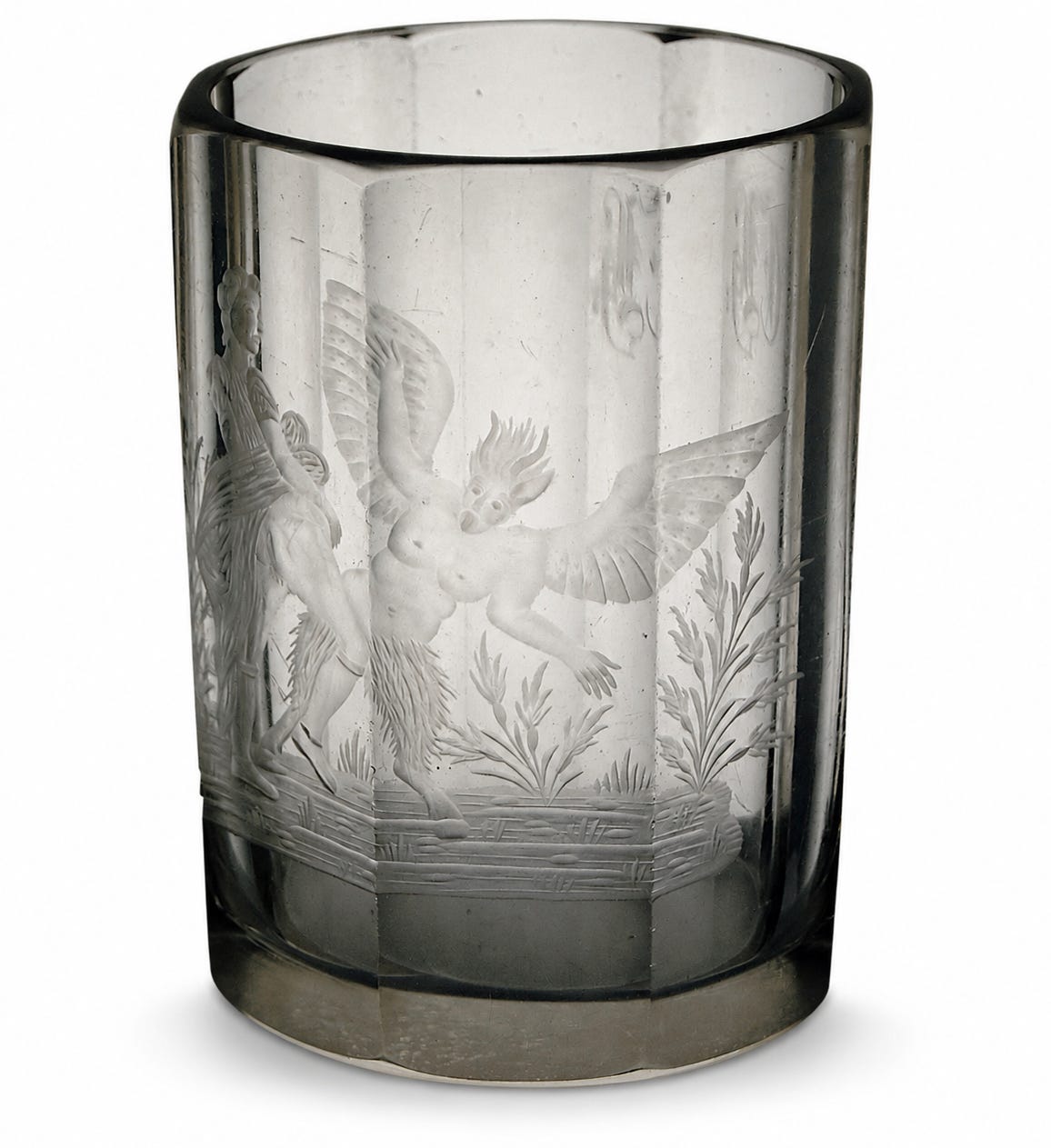
Surrounded by plants, a woman stands in front of Satan himself, and lifts the front of her voluminous skirt to reveal her genitalia. The Devil is clearly horrified, and lurches back, with arms flung wide, wings flared, hair on end, mouth agape, and tongue hanging out. The quality of the cutting is good, showing Lucifer with his cloven hooves and hairy goat-legs, and the fulsome skirt and even the stockings of the woman.
Hellfire & Damnation
When I bought it, I knew little about glass, and especially Georgian glass, but I imagined it to have been owned by a member of a Hellfire Club, due to its racy and saucy engraving and the owner’s initials ‘CFH’ [?], engraved into the back of it.
There were a couple of Hellfire Clubs during the 18th century, but it was the ‘Order of the Friars of St Francis of Wycombe’ organised by Sir Francis Dashwood from c1749-66 at his country seat West Wycombe Park, that had caught my young imagination the most. An earlier club was founded by Philip, 1st Duke of Wharton, in London in 1718, and there was another in Dublin, some members of which were painted by James Worsdale in 1735, below.
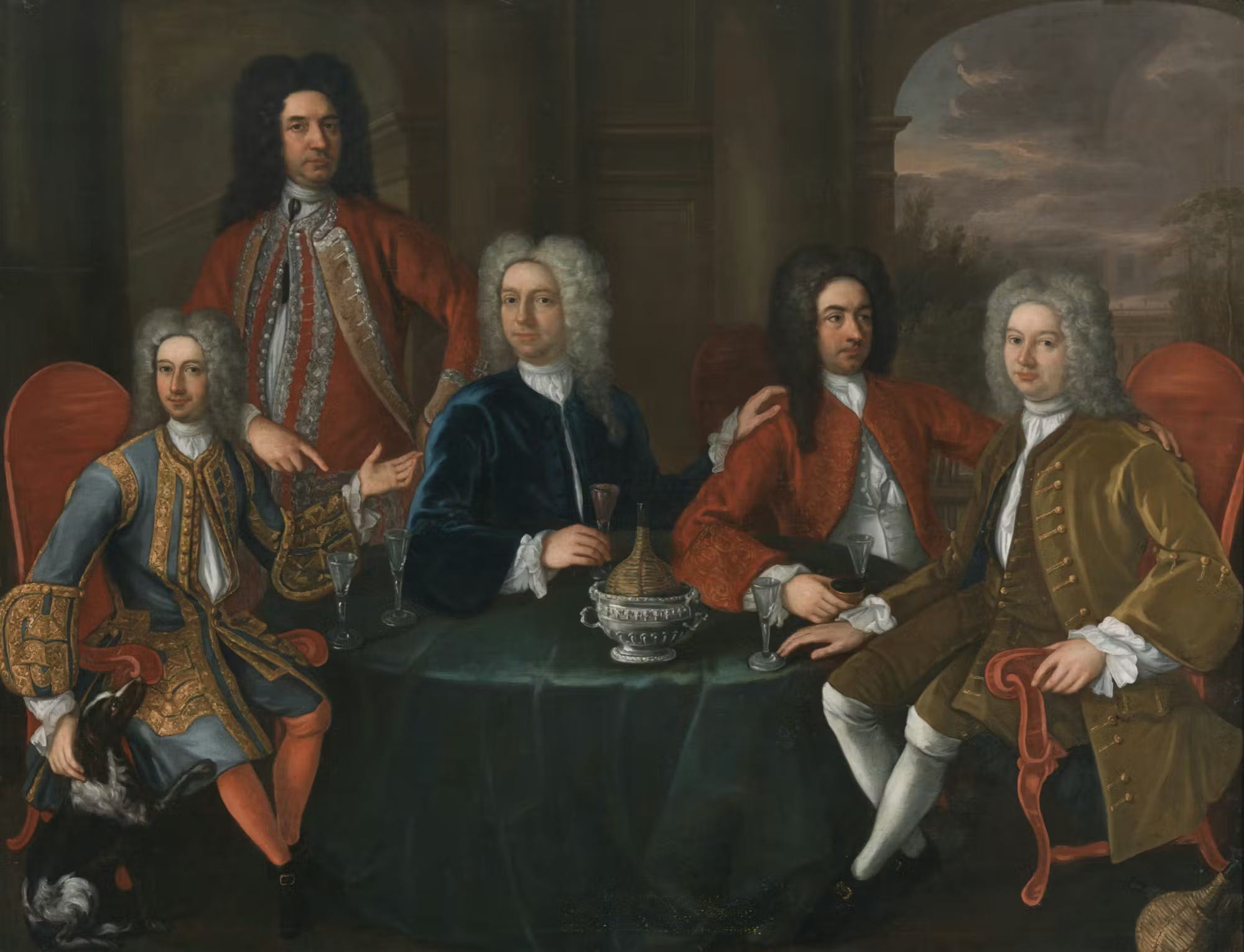
And don’t they look to have been rather grand, upstanding members of the aristocracy or landed gentry, or else successful businessmen? And this may have been true - but not when they were also high society rakes and Hellfire Club members. As the clubs’ name suggests, they didn’t just meet and drink, as the drinking glasses and hands on shoulders in the painting indicate.
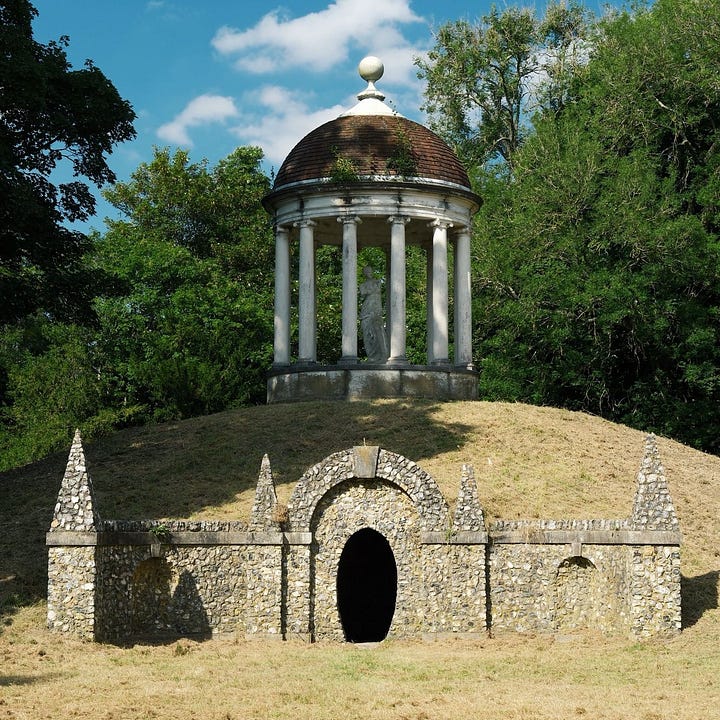
Although we don’t know exactly what went on, we do know that meetings were full of debauchery, gluttony, wenching, blasphemy, practical jokes, singing, revelry, and possibly a lot more or a carnal nature… Period records indicate that meetings also often included ‘obscene parodies of religious rites’ and mock pagan sacrifices amidst statues of Bacchus, Venus, Flora, and Priapus. Locations were as lavish and playful as one might expect from these wealthy, debauched dilettantes. So my cut glass somehow fitted in to all that - at least in my mind’s eye.

The Image Revealed
Chatting with my friend and colleague, the antiquarian Justin Croft, at the end of filming a BBC Antiques Roadshow in Caerphilly Castle last weekend, I happened to mention the glass to him. His eyes lit up, his razor-sharp memory kicked in, and he explained that it sounded like a reproduction of a well-known 18th century etching. Not well-known to me, but indeed it was.
Comments
Nothing yet. Say the first thing.
Sign in to join the conversation.