
It’s the things I know nothing about that interest me the most. So when I see something I haven’t seen before, and it looks like a good (at least) quality piece, and the price is right, it usually comes home with me.
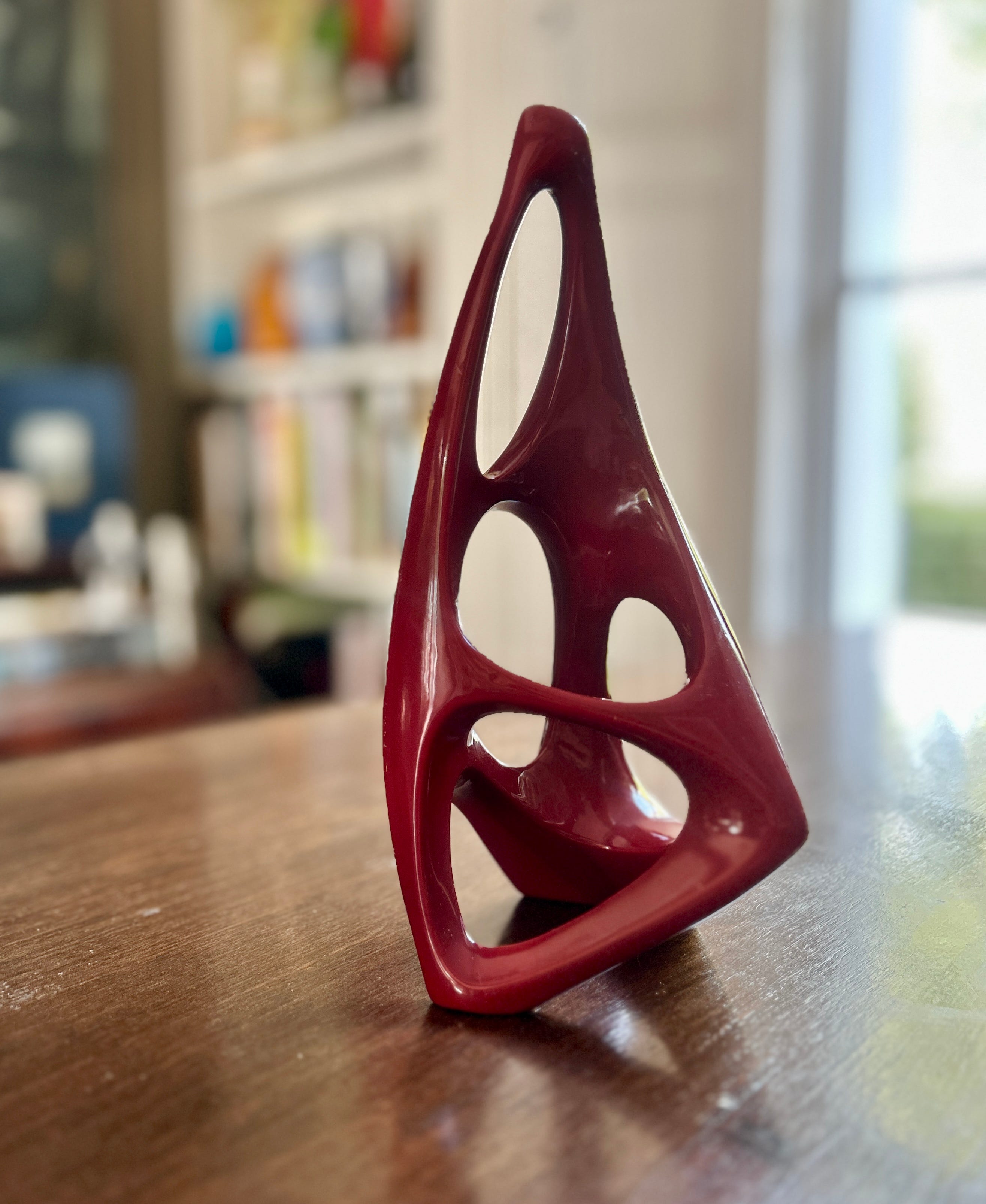
I spotted this curvaceous and cool red ceramic sculpture at a flea market in Berlin some years ago, priced at €8. Its fab form screams the popular midcentury modern period but, more importantly, I simply couldn’t work out how it had been made.
It was clearly slip-moulded, as indicated by the lack of signs of handcrafting, the recessed base, and the hole on the base showing it was hollow. But how would a mould work with all those curves, holes and recesses? How would you get the damned thing back out of the mould? It can’t be a two-part, three-part, or even four-part mould. It must have been made in at least two parts and then joined and carefully fettled together, leaving no trace of the joins. A bit of manufacturing quality - as well as aesthetic quality - there, then. And, because of the work required to create the form, I didn’t think it was something of recent manufacture. Whether new or old, it must have been fairly costly due to this work.
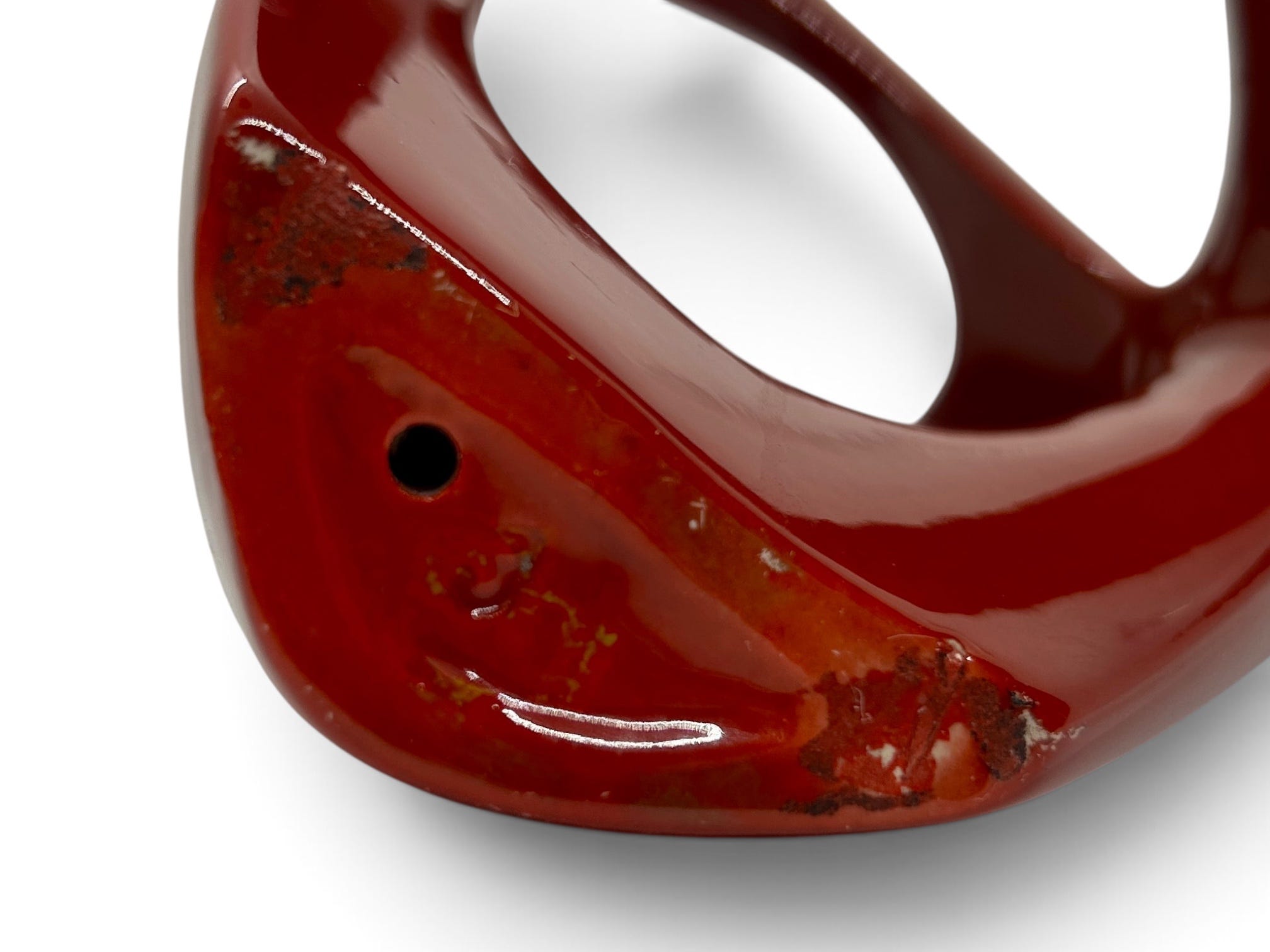
Apart from an impressed ‘3’, and what may be the faint traces of a possible mark around it, there were no clues as to the maker. The deep red glaze is unusual, but doesn’t really help with identification either. It sat on my shelves for years, and I always enjoyed it when my eyes fell upon it. It’s beautifully tactile, and presents a different view when seen from a different angle, so I often put it back on the shelf in a different position after holding it in my hands. Satisfying!

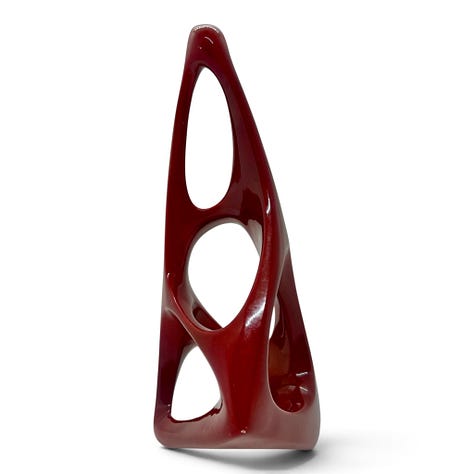
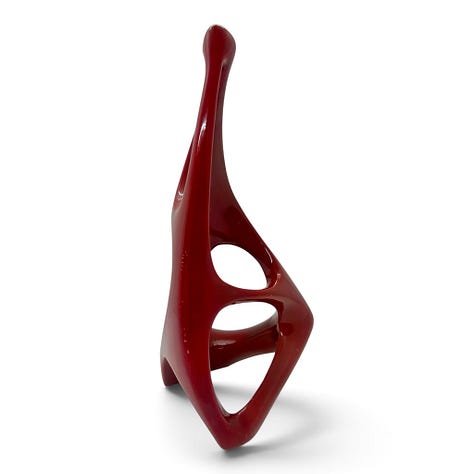
Browsing through the excellent Skoob Books in Bloomsbury, London, at the weekend, I made a discovery.
Comments
Nothing yet. Say the first thing.
Sign in to join the conversation.