
In the 20th century there was one abstract painter who migrated from Germany to Paris to New York and then Provincetown, Massachusetts, who had a unique and clear vision of what modern abstract art could be. He would dance while painting (which is actually something I do when I can) and his art was uniquely lyrical, energetic, even spiritual. Hans Hofmann was an artist and teacher who taught a legion of expressionists in the ways to approach form, color and perspective on a flat, two-dimensional canvas.
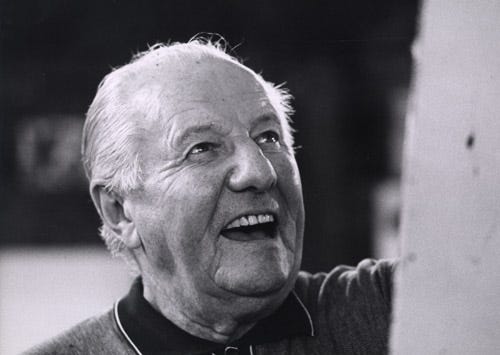
If you appreciate abstract art and have ever stood before a painting and felt your ribcage expand a little, or your breath catch like a wave receding—then you’ve felt that push and pull. What the artist and teacher Hans Hoffman taught students at his ateliers in New York and Provincetown was a new way of seeing: the Push/Pull nature of defining space in abstract art – that color, composition and proportion could suggest how elements of a painting might be arranged in space, and would create in the viewer’s eye an arrangement of things in perspective with maximum visual impact.
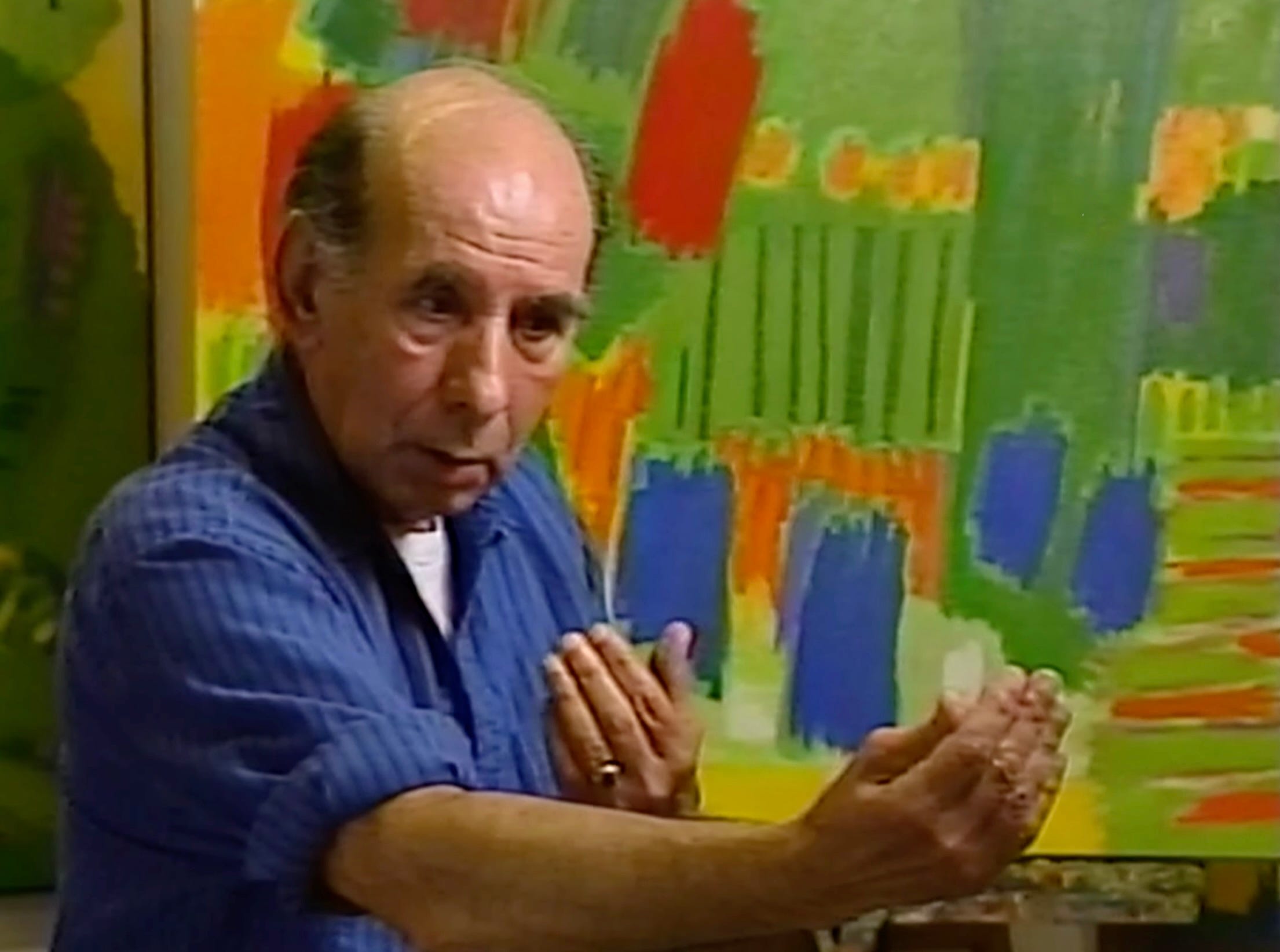
According to Hofmann, a viewer would see colors and elements of the painting pulled forward while others pushed back, and this would be an interactive experience. Warm colors come forward – cool colors recede into the background. Distance and depth were interpreted by the size of objects. Hoffman described how this visual tension would create a spatial rhythm that would draw the viewer in.
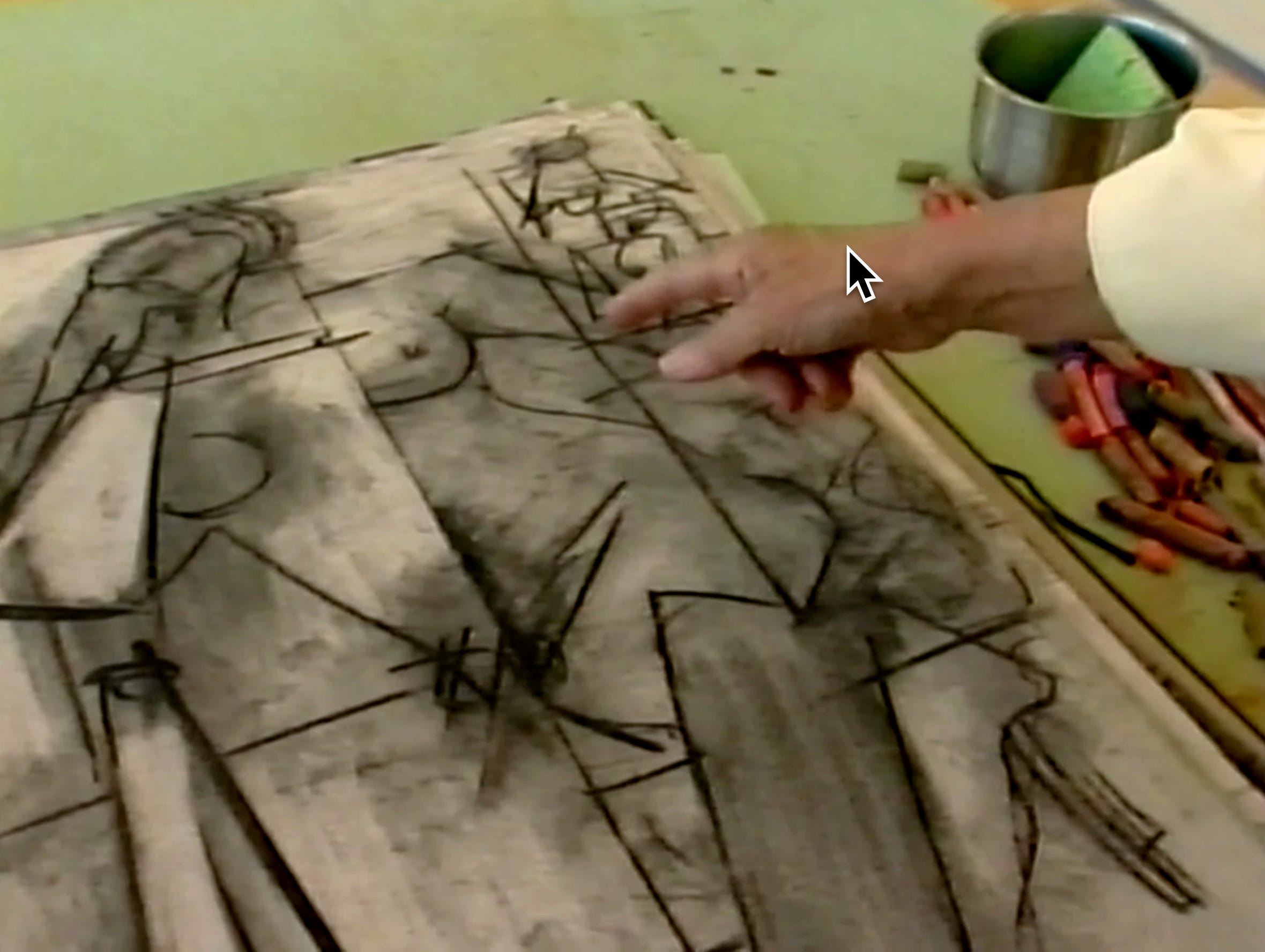
He taught his students these color arrangements and compositional techniques, but his lessons were more than visual theory. Hofmann would be the bridge between cubism and abstract expressionism, teaching a way of seeing that would fuel the Abstract Expressionist movement in the United States for decades to come.
Hoffman first taught art in his native Germany, but fled to Paris and then New York where he would become friends with Henri Matisse, Pablo Picasso, Georges Braque, and Robert Delaunay. These encounters placed him at the epicenter of Cubism, Fauvism, and Orphism — an avant-garde milieu electrified by the shock of color and the fragmentation of form.
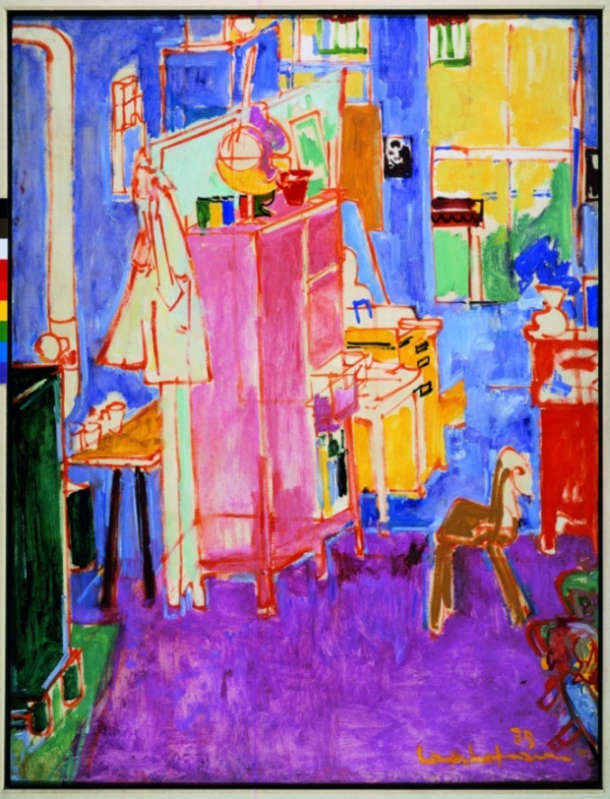
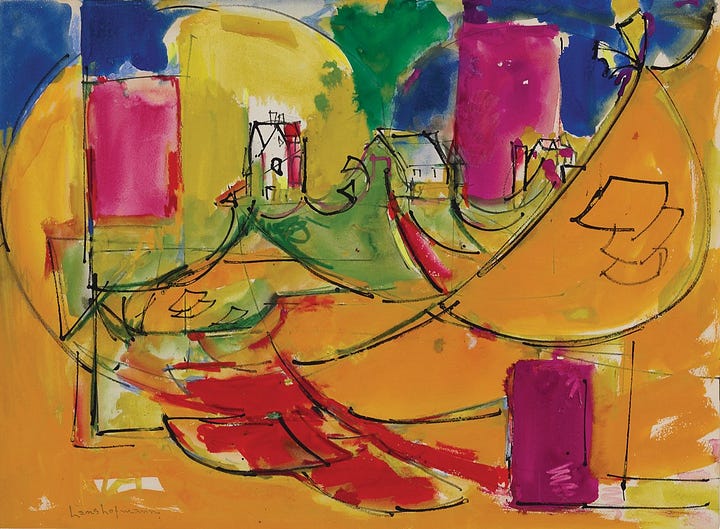
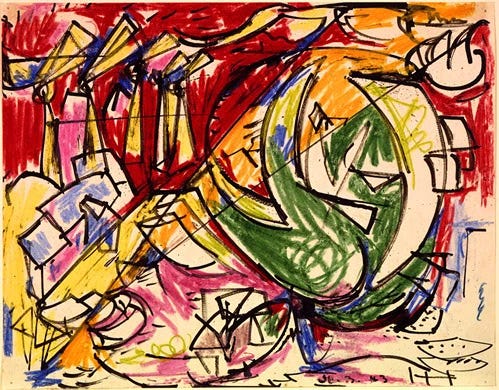
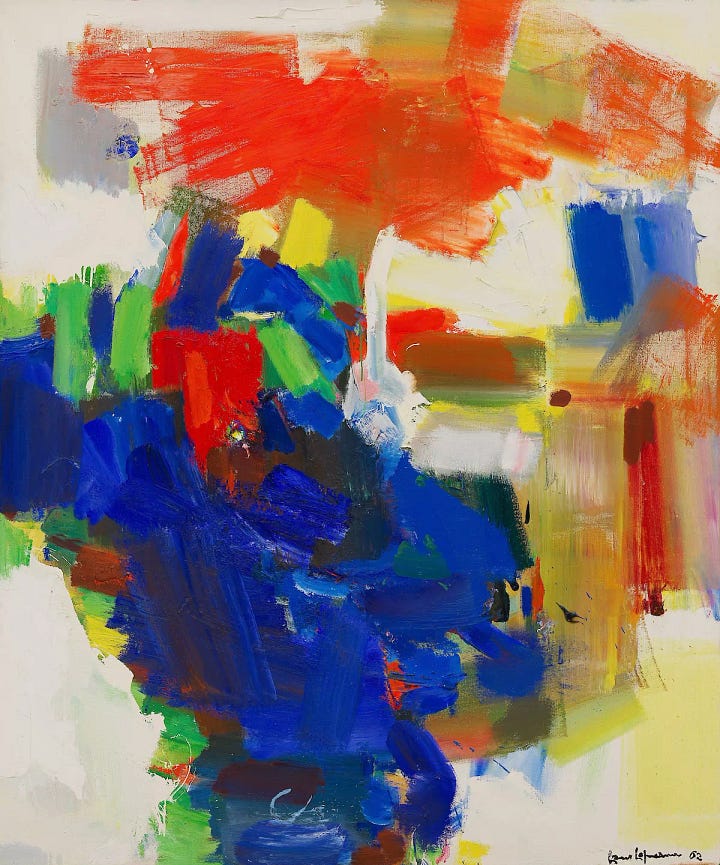
It’s said that Hofmann’s associates would marvel at how he would squeeze out a half or a full tube of paint for one of his thick impasto paintings knowing that was money that would pay for dinner for the next three nights. That didn’t stop him. Joyfully, he would lay on layers of thick paint, with a brush yes, but frequently using a range of other tools to create his marks.
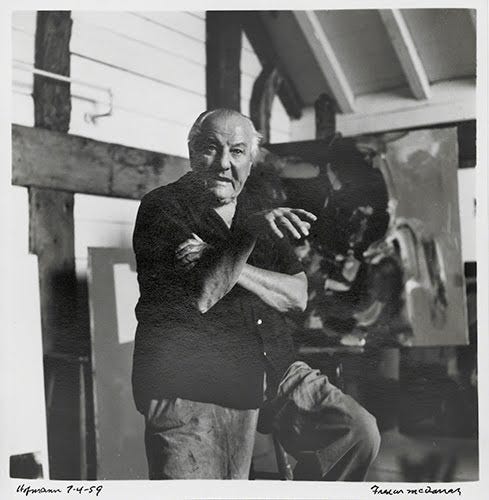
In Paris the distinction between art and philosophy often dissolved into a synesthetic blur. His dialogues with artists friends helped shape his own new ideas about abstraction — one that would later catalyze Abstract Expressionism in America through a profound philosophical reorientation of ideas about painting.
It is a sign of greatness, in the career of an artist, when his personal development cannot be separated from that of his epoch: such is the case with Hofmann. He is both a synthesist, who in his work and theory has concentrated the tradition of which he is a part, and a radical innovator who has given impetus to three generations of artists.” — Curator William Seitz, Museum of Modern Art 1963
The Hans Hofmann School of Fine Arts in New York City (opened in 1933) and another in Provincetown, Massachusetts (opened in 1935). His students? Among them were Helen Frankenthaler, Joan Mitchell, Lee Krasner, Larry Rivers, Robert DeNiro Sr., and Frank Stella.
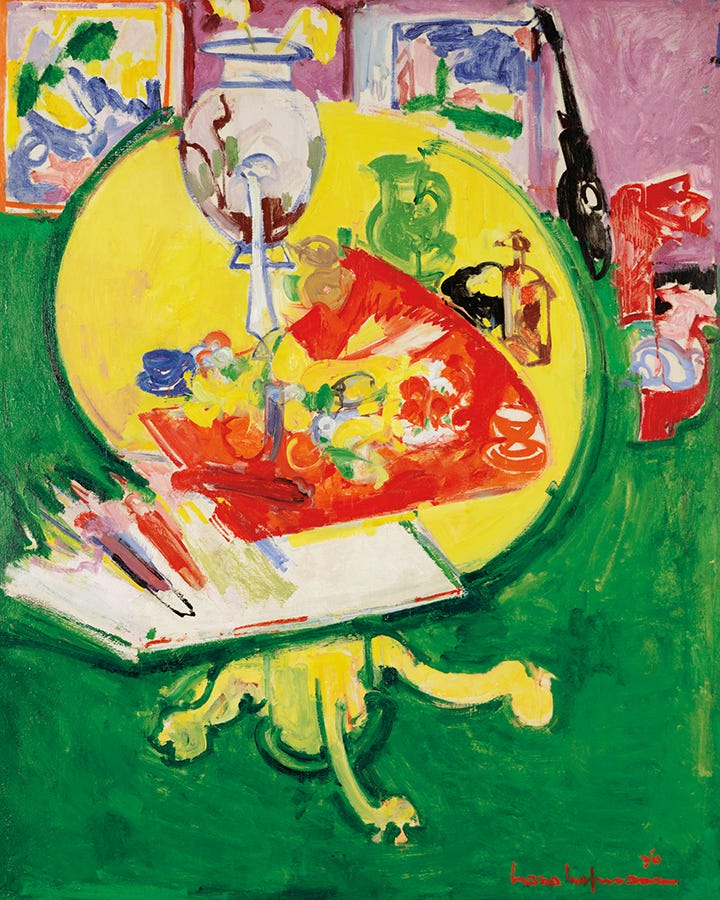
These were not mere ateliers—they were laboratories of perception. In them, Hofmann did not instruct in the traditional sense; he provoked, challenged, and illuminated. During classes he would throw down an arrangement of objects into a still life and challenge students to define the objects and their arrangement in space. The school in Provincetown became a laboratory of light, as Hofmann and his students would migrate to the town on Cape Cod to escape summers in New York City.
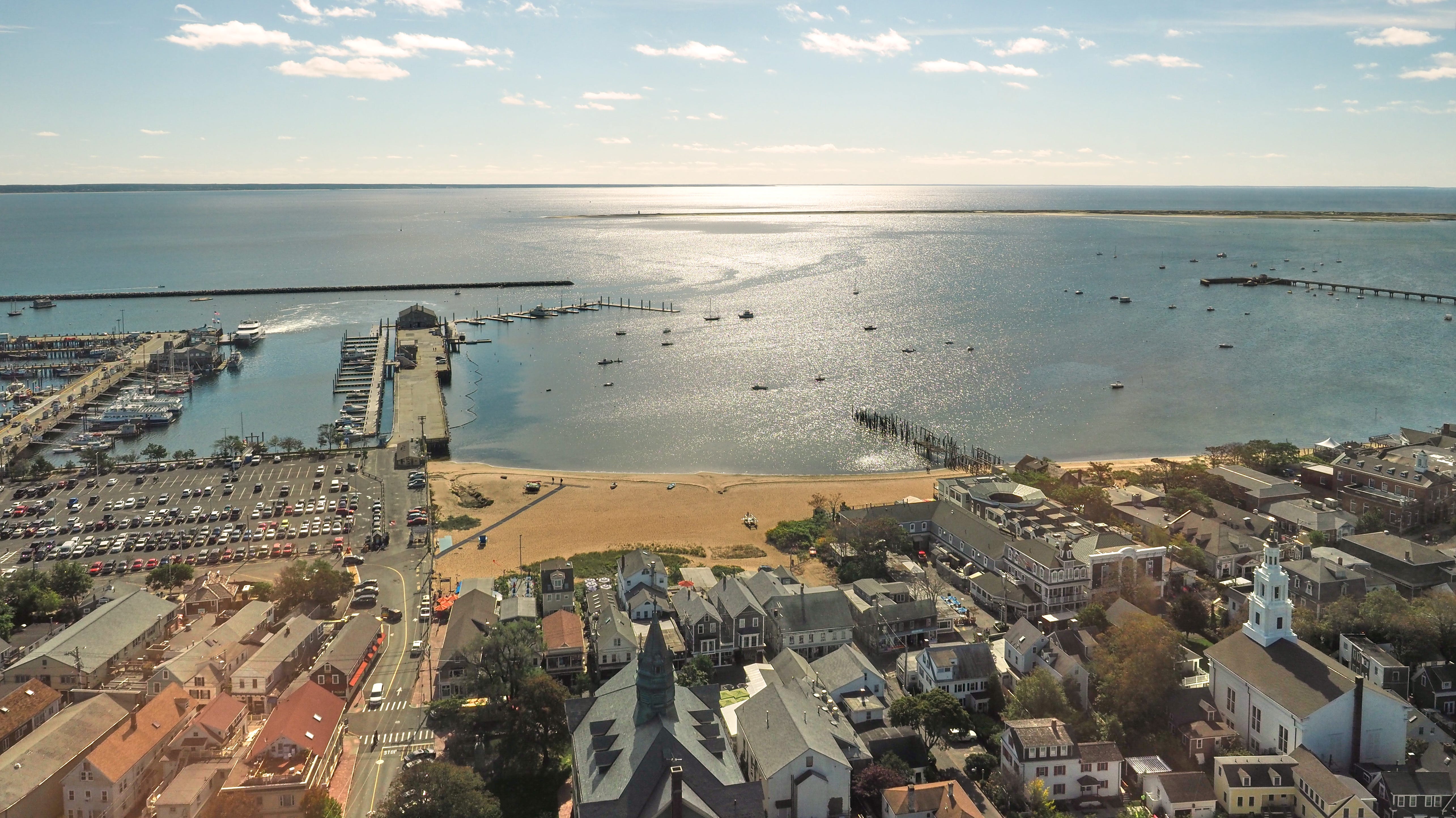
At the tip of Cape Cod 40 miles out to sea, Provincetown is one of the world's natural deep water harbors, and with sun reflecting off the ocean from two sides it creates a luminous display of soft, remarkable light that weaves through the dunes into town that is sparkling and ever-changing. Light in Provincetown isn’t still—it dances, ricochets off water, refracts in mist, and stretches long shadows across the dunes.
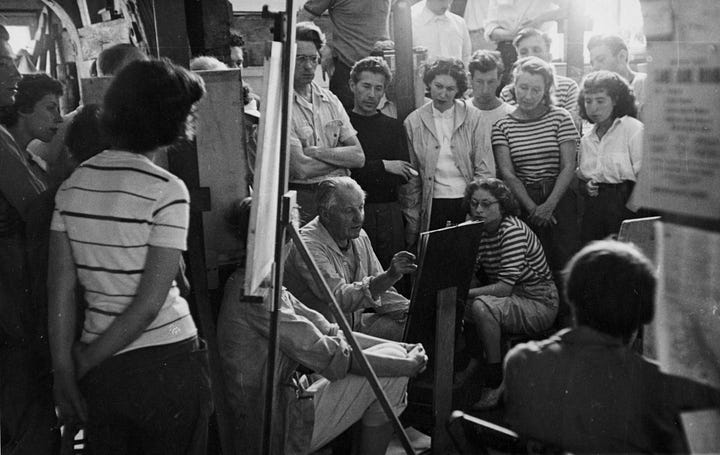
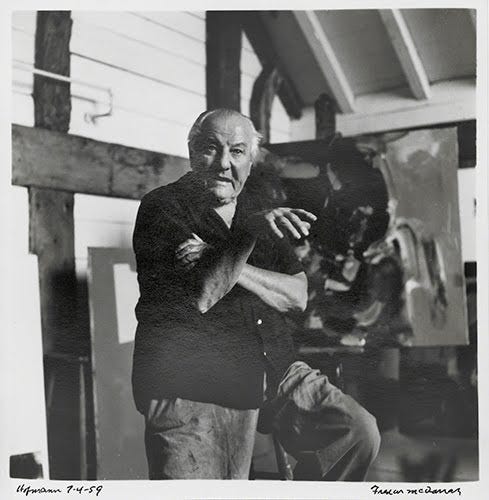
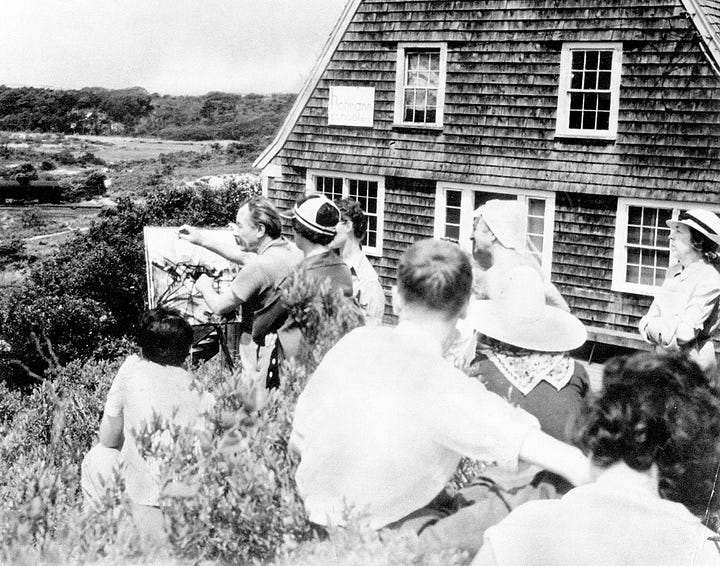
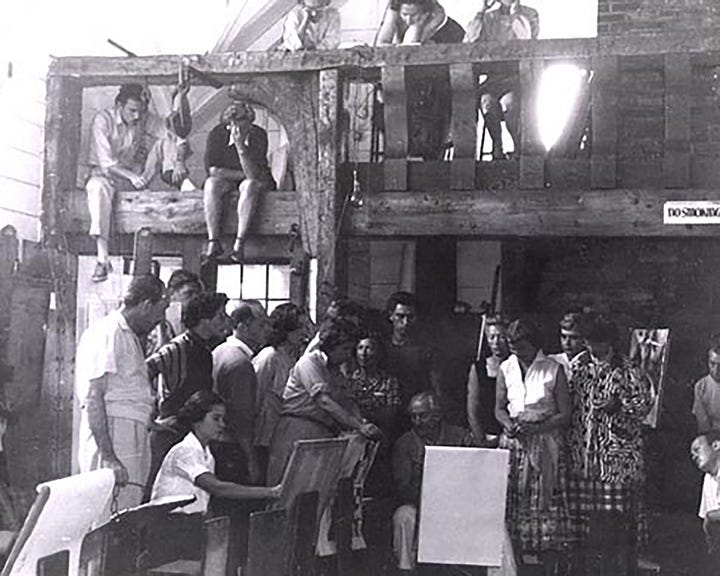
Hofmann’s schools were incubators for a new American aesthetic. Where other teachers gave rules, Hofmann gave forces. Space became elastic. Color soared. And painting ceased to be looking through a two dimensional window and became a field—a charged arena of motion, interaction, and transformation.
If you’re interested in learning more about Hofmann and his technique, I think you’ll find these films to be a great start. Thanks for reading Metaculture. I hope the paints on your palette are deep and saturated!
Comments
Nothing yet. Say the first thing.
Sign in to join the conversation.