
If you sat in a pub in 1990s and listened the conversations around you, you would hear an awful lot of Sigmund Freud.
This does not mean that you would hear learnéd discussions of psychoanalysis, or interpretation of mucky dreams, but you would hear the vocabulary of Freudian psychology.
The conversation, between two bricklayers, might go something like this:
— What’s wrong with Dave?
— God knows. He’s neurotic. He’s so bloody anal, Dave. He won’t let anything lie.
— If he’s a got a complex about it, why doesn’t he just come out and bleeding say it?
— I reckon he’s repressed or something. In denial.
— He should see a psychiatrist.
Importantly, neither person would ever have actually read a single word of Sigmund Freud. Some terms had simply drifted down. “Anal” was popular, derived from the stage that was meant to happen at one to three years old. But the other stages — oral, phallic, latency and general — never made it into popular vocabulary. Now did anybody use the term super-ego, but the subconscious was everywhere.
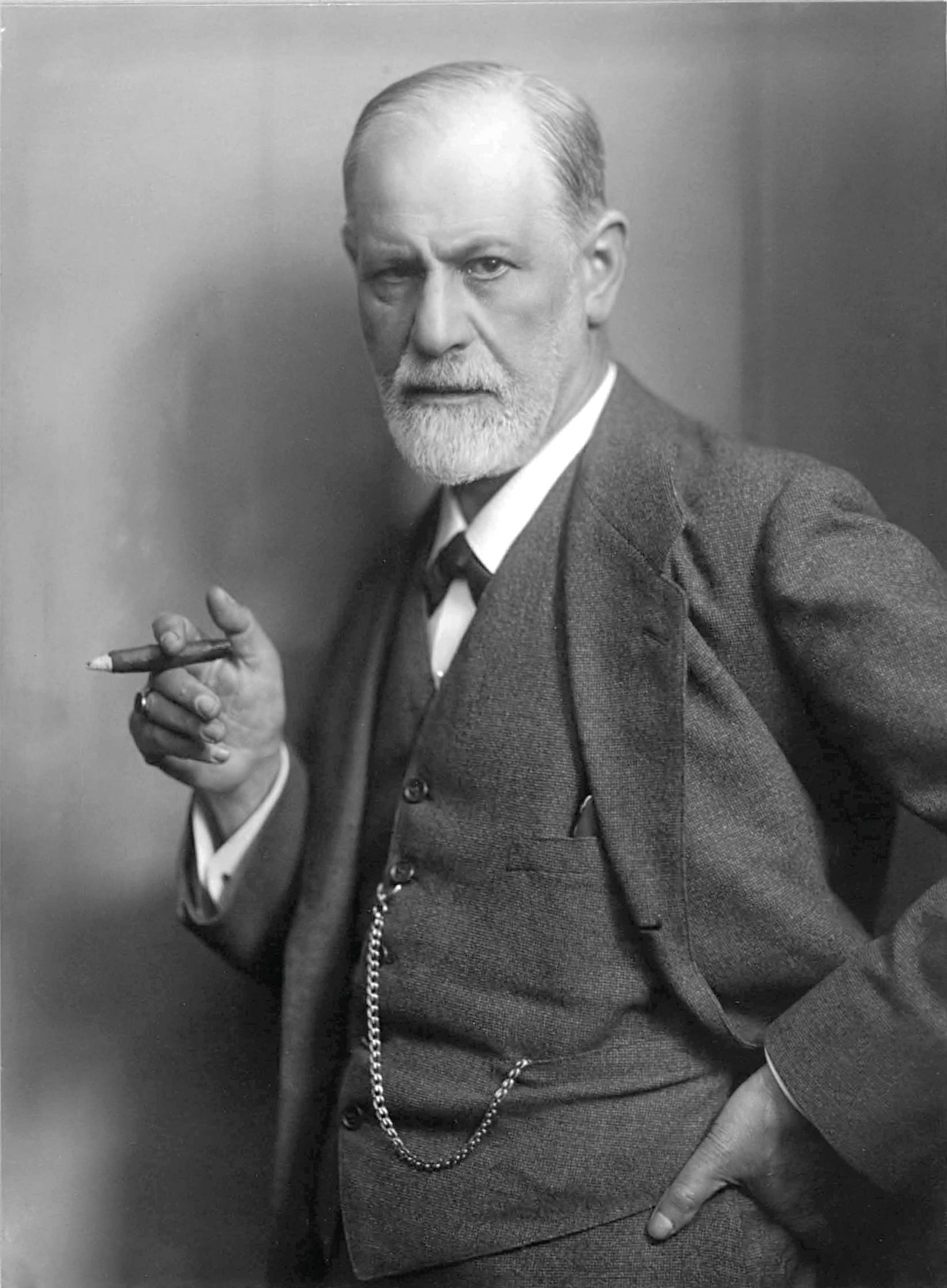
Everybody was said to have a complex, but nobody would have been able to define what a complex actually is (it’s complex). But back in the 1990s those were the words that we all used to discuss other people’s personalities. Usually in an unfriendly manner.
Sigmund Freud was still a big thing in the 1990s, but he was beginning to fade. The days of the superego and the id were fading away, along with the peculiar belief that Mother’s Day was somehow sexual.
Now, Freud has been largely debunked, disproved and disposed of. It is an embarrassment to the psychiatric business and has been buried in the landfill site of history.
Instead, psychiatry now uses the DSM, or Diagnostic and Statistical Manual of Mental Disorders. This is a big book with a list of names of disorders and the symptoms that you need to in order to claim to be a sufferer. There is no real architecture to it, no grand theory, no explanation of why you have this. There’s just a list of symptoms, and then there’s often some medication that can be taken.
And it is the vocabulary of the DSM that has drifted down to the pub for a pint. That same conversation, thirty years later, might sound like this:
— What’s wrong with Dave?
— Dave? I seriously reckon that guy’s on the spectrum somewhere.
— Yeah he’s ADHD or something. I know people with OCD and they’re all like that. Completely dysfunctional.
— He’s a sociopath, that’s what he is.
— He should take his bloody meds.
Again, nobody involved in such conversations has ever picked up a copy of DSM-5-TR. It costs $170 to buy first-hand, but its vocabulary is available second-hand for free over a pint of lager.
Freud’s Germanic angst, has been replaced by anxiety; anal is OCD; psychopaths are sociopaths; complexes are conditions.
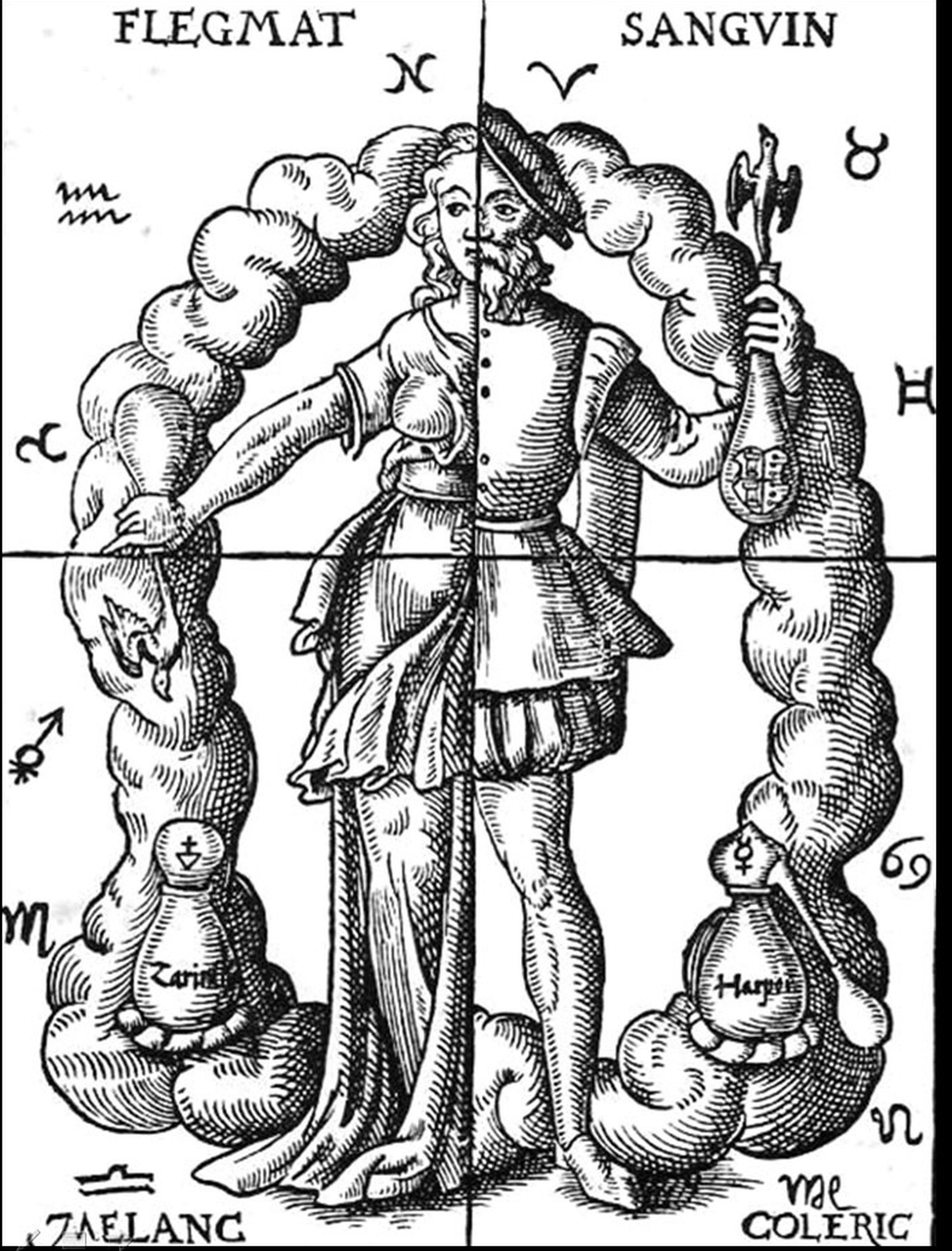
I sometimes wonder if this is how Shakespeare used the humours. If you read the footnotes to a Shakespeare play you will find learned discussions of exactly what he meant by bile, phlegm and melancholy. But precision isn’t precisely the thing. I think Shakespeare was using the medical terminology of the day in exactly the way we do: down the pub, without thinking it through very much.
N.B. I am still away on honeymoon, and can therefore not reply to comments etc.
No posts
Comments
Nothing yet. Say the first thing.
Sign in to join the conversation.