
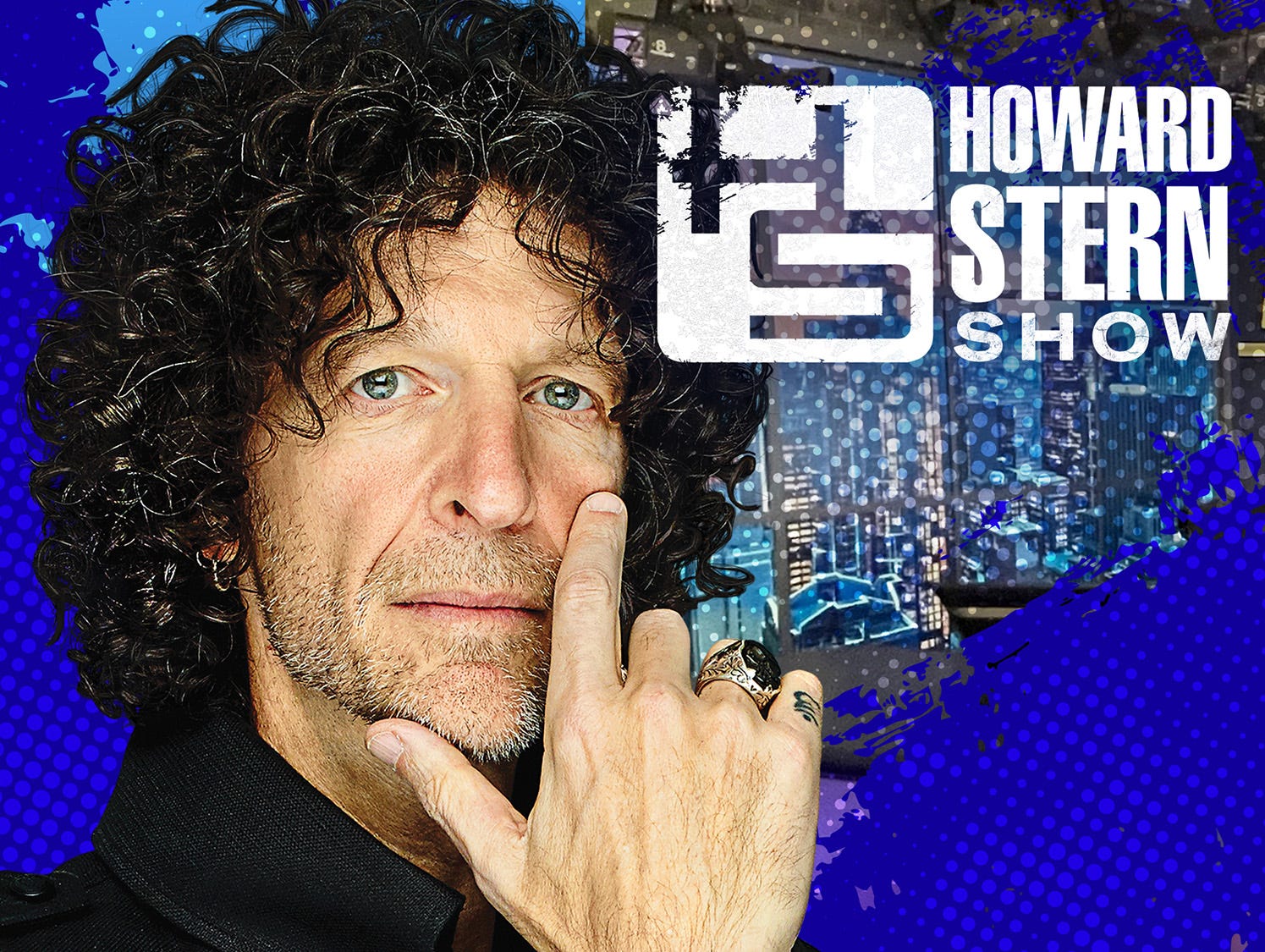
I’ve been listening to Howard Stern for most of my life. What has always fascinated me about Howard is his willingness to let millions of people watch him become himself in public. Over decades, I have heard a person think out loud, change his mind, contradict himself, go to therapy, grow older, and try to understand who he was becoming.
Howard has talked endlessly about his insecurities, ambition, need for approval, and fear of irrelevance. He has talked about his relationship with his mother, his complicated relationship with his father, his marriages, his therapy, his social anxiety, his need for control, and his obsession with his work.
He can be confident and deeply insecure. Confrontational and a people pleaser. Successful beyond almost anyone’s imagination and still worried about being relevant.
Those contradictions aren’t incidental to Howard Stern; they are Howard Stern.
Howard is one of those people you tend to love or hate, and chances are, you made up your mind about him a long time ago. And once we form an opinion about somebody, we rarely process new information with a completely open mind.
Psychologists call part of this confirmation bias. We tend to notice and give greater weight to information that supports what we already believe while discounting information that challenges it.
If you decided 30 years ago that Howard Stern is an obnoxious narcissist, a headline about him being difficult with his staff confirms what you already knew. See? That’s Howard.
If you’ve listened to him for decades, however, you might see the same information and think something entirely different: Of course Howard is weird around his staff. He’s been talking about how uncomfortable he is around people for years.
The facts don’t enter an empty brain. They encounter a story that is already there.
Psychologists also talk about motivated reasoning. We like to believe we collect information and then reach conclusions. Often we do something closer to the reverse: we form a conclusion and then interpret new information in ways that protect it.
If you dislike him, his evolution can look like hypocrisy.
If you admire him, it can look like growth.
If you thought his response to COVID was excessive, his behavior looked neurotic. If you shared his concerns, it looked cautious.
The behavior didn’t change. The frame did.
Howard is 72 now. He recently announced another three-year agreement with SiriusXM that gives him more flexibility while allowing him to continue doing radio. Reporting indicates his schedule will be reduced further and that staff has been cut as the show relies more heavily on Howard’s enormous archive. Employees have also reported that staff members were discouraged from approaching Howard at company parties.
But here’s what strikes me about these stories: How much of this is actually news?
Howard has spent decades telling listeners that he’s neurotic. He has talked endlessly about his discomfort in social situations, his relationships with employees, his need for control, and his tendency to obsess over tiny interactions. After the Stern Show’s 2021 virtual holiday party, Howard spent airtime analyzing the event and even fixating on Gary Dell’Abate eating chicken parmesan while Howard was speaking.
You can dislike the behavior and criticize it. But if you’ve been listening for years, it’s difficult to call it a revelation—because a fact can be accurate while the story constructed from it is still completely wrong.
Someone I love looked at my life recently and concluded that I was lost. What bothered me wasn’t that this person lacked information—they had the facts. They simply interpreted them through a model of what my life was supposed to look like.
I went to Columbia University. I worked at Mastercard and other major corporate institutions. I followed a traditional path that made complete sense on paper.
Then the ground shifted.
I didn’t step off that predictable path for fun, or out of some romantic desire to “find myself.” I did it out of necessity. The career I built in traditional marketing no longer exists. The playbook changed, the industry mutated, and staying still was an illusion of safety.
So I made a deliberate choice: I left the predictable life behind, started businesses, took risks, and accepted uncertainty because relying on an obsolete career path was the far greater danger.
Someone can look at those exact same facts and conclude:
“He had everything and lost his way.”
I look at them and conclude:
“I adapted to reality and chose to survive.”
Same data, completely different person. That is what assumptions do.
We don’t simply absorb information about other people. We construct mental models of them. Once that model exists, confirmation bias helps maintain it.
If you’ve decided somebody is irresponsible, every risk becomes evidence.
If you’ve decided somebody is lost, every setback becomes proof.
If you’ve decided Howard Stern is an asshole, every difficult interaction confirms it.
Eventually, we stop asking whether the model is accurate because we interpret everything through it.
And this is where my fascination with Howard connects directly to my work around data. Because data brokers do something remarkably similar.
They collect fragments of us: age, education, income, location, purchasing history, interests, behaviors, intent signals, and hundreds or thousands of other attributes. Sometimes those data points are simply wrong. But I’m increasingly interested in a harder problem: What happens when the data is right and the conclusion is wrong?
Columbia is accurate information about me. Mastercard is accurate information about me. Entrepreneurship is accurate information about me. Taking risks is accurate information about me.
None of those things is me. They are information about me. That’s an enormous distinction.
The Paradox of Data:
The most dangerous profile isn’t one filled with false information. It’s a profile containing enough true information to make a false conclusion feel certain.
That’s what Howard has helped me understand. His response to COVID doesn’t explain Howard Stern. His discomfort around employees doesn’t explain Howard Stern. Working from home doesn’t explain Howard Stern. Working less at 72 doesn’t explain Howard Stern. Neither does his relationship with his parents, therapy, ambition, wealth, insecurity, or fear.
They’re all pieces. The whole Howard Stern is the whole Howard Stern: decades of ambition, insecurity, relationships, therapy, mistakes, success, fear, humor, contradiction, and change.
The same applies to the rest of us. Columbia isn’t me. Mastercard isn’t me. Entrepreneurship isn’t me. One success isn’t me. One failure isn’t me. And somebody else’s interpretation of those facts certainly isn’t me.
This matters even more to me as I get older. I’ve watched people age and gradually stop learning. They stop taking risks, stop trying to understand technology, and stop questioning their assumptions. Then certainty replaces curiosity.
Sometimes they become deeply critical of people who are still experimenting. Someone who chose security looks at risk and calls it irresponsibility. Someone who stopped learning technology dismisses the technology. Someone who has become negative starts calling negativity realism.
I don’t want to age that way. I want to remain curious. I want to keep learning technology. I want to keep taking intelligent risks. I want to be willing to change my mind when the evidence changes.
In my own much smaller way, that’s another thing I admire about Howard. He kept becoming.
For years, marketers have promised to use data to deliver the right message to the right person at the right time. But there’s a question that should come first: Do you actually know the person?
Having thousands of data points about somebody doesn’t necessarily mean you understand them. That’s why data agency matters to me. It’s not simply about correcting an inaccurate address or income estimate. It’s about having some power over the story created from our information.
Who gets to decide what my data means?
Who gets to challenge that conclusion?
Who gets to provide context?
Who gets to say: “Those facts may be accurate, but the person you’ve constructed from them isn’t me?”
Howard Stern has spent most of his adult life giving us context. Thousands upon thousands of hours of it. And people still reduce him to a headline. Think about what that says about the rest of us.
Most of us don’t have 50 years of recorded conversations explaining who we are, what scares us, why we made our choices, and how we’ve changed. We have data points. And increasingly, other people and machines are using those data points to decide who we are.
That’s the problem I want to fight. Because a human being isn’t a profile waiting to be completed. We’re contradictions, experiences, relationships, choices, mistakes, risks, and changes.
We’re still becoming. And we deserve the right to be understood in context.
Comments
Nothing yet. Say the first thing.
Sign in to join the conversation.