
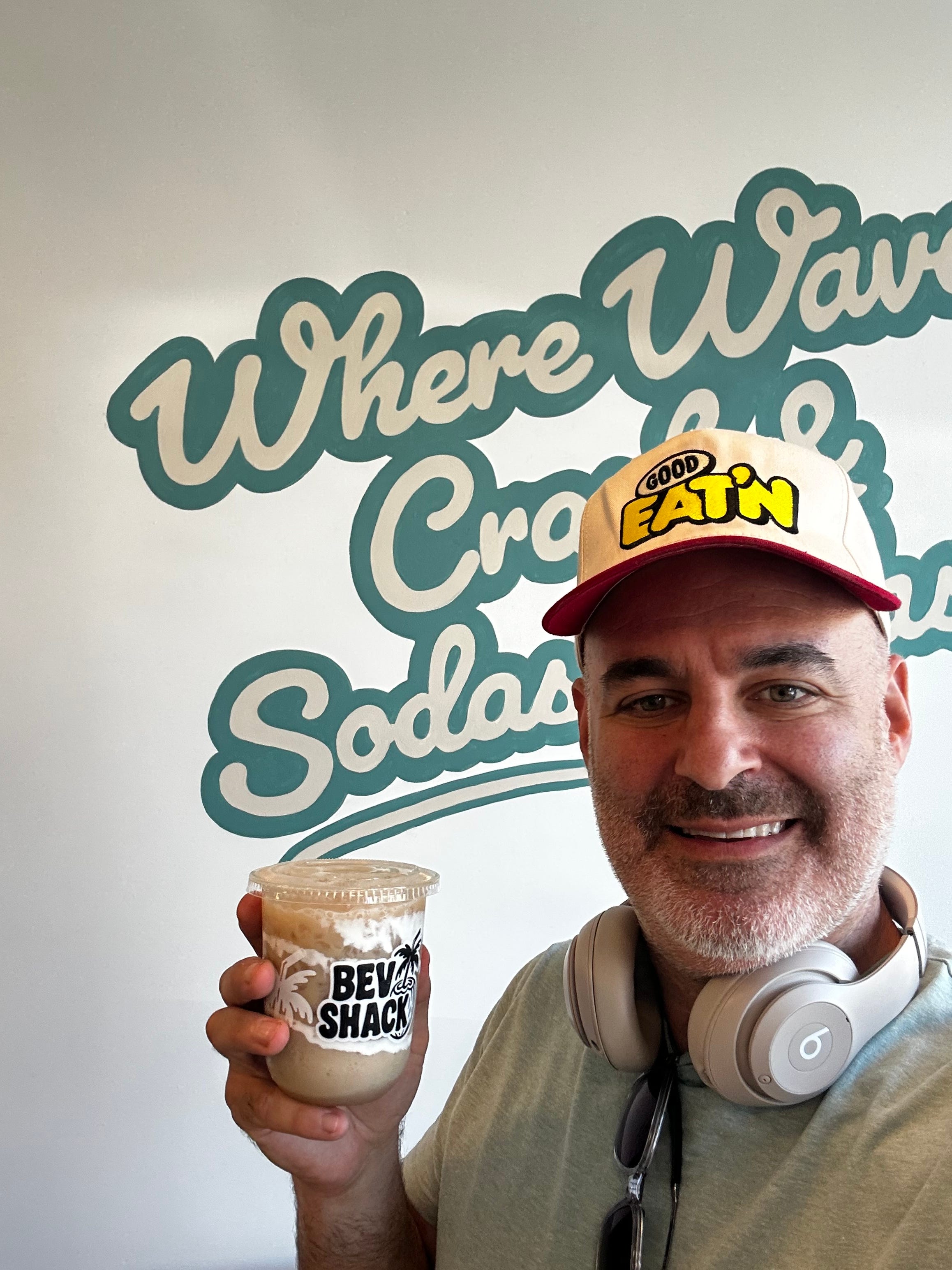
When evaluating retail concepts from a brand accountability and financial efficiency perspective, few founders possess the trend-spotting instinct, artistic execution, and operational grit of Abby Taylor.
In the summer of 2014, Taylor—a Monmouth County native with a Fine Arts background—set up a borrowed patio table, a small refrigeration unit, and a single blender on Ocean Avenue in Belmar, New Jersey. Having discovered açaí bowls on surf trips to Costa Rica, Hawaii, and Puerto Rico, she recognized that beachgoers in the Northeast had zero access to cold fruit bowls. She printed flyers at Staples, passed out samples on the sand, and used early Instagram as a daily visual diary.
Over the next decade, Taylor turned that initial cart into Playa Bowls, a massive national franchise footprint generating hundreds of millions of dollars across hundreds of locations.
Her success relies on a repeatable framework known as Trend Arbitrage:
Identify Subculture Velocity: Spot regional or digital food subcultures gaining organic traction online before legacy corporate brands notice.
Inject Lifestyle & Coastal Identity: Recontextualize the product within an authentic, aspirational beach aesthetic.
Package for Zero-CAC (Customer Acquisition Cost) Distribution: Design physical touchpoints so compellingly that customers handle the brand’s marketing distribution for free on social media.
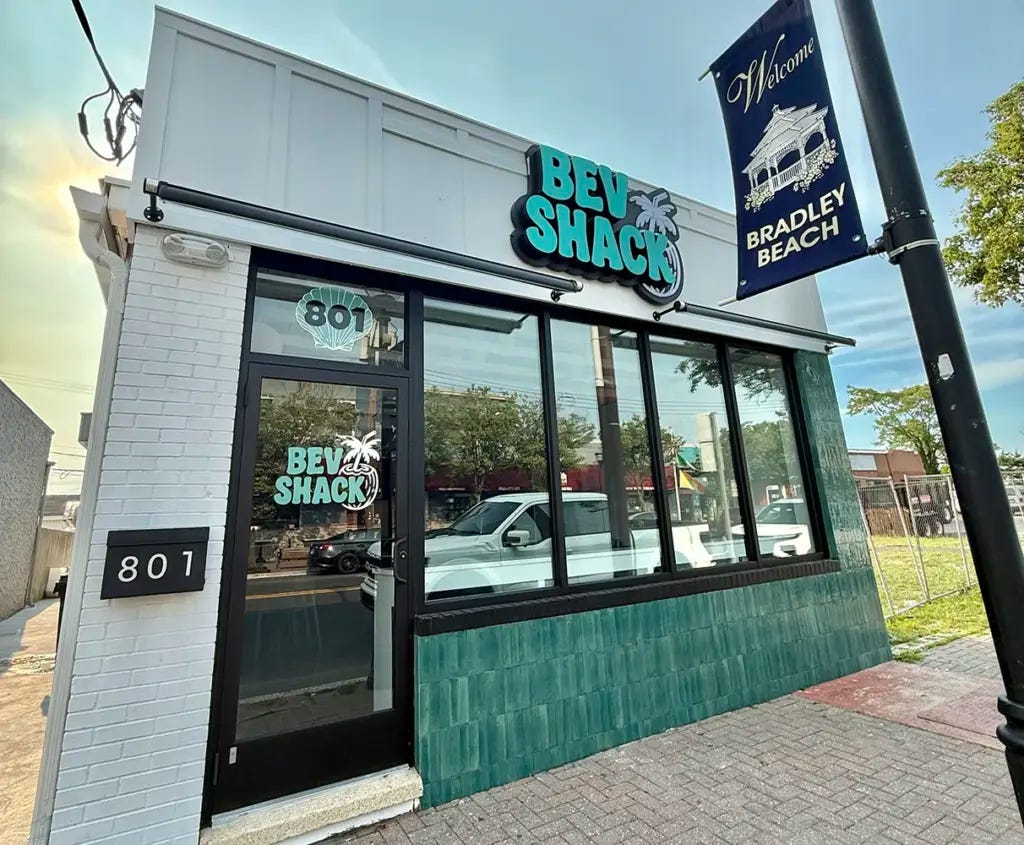
With her new concept, Bev Shack at 801 Main Street in Bradley Beach, NJ, Taylor is running that exact same playbook, shifting her focus from açaí blenders to soda cups.
A major reason Taylor’s concepts achieve immediate cult status lies in her mastery of simple, frictionless branding. As a BFA-trained graphic designer, she understands that modern consumers don’t want complex corporate storytelling; they want immediate clarity.
The Power of “Bev Shack”: The name eliminates all unnecessary noise. “Bev” honors modern vernacular for beverage, while “Shack” anchors the brand in casual beach culture. There is no mystery about what the shop offers, creating zero barrier to entry.
Designing the Physical Persona: Taylor oversees brand visual identity herself. Every choice—from the retro script font to the stylized palm-tree-and-coconut logo—communicates a specific feeling before a customer even tastes the drink.
Tactile & Visual Cohesion: The branding seamlessly flows onto custom paper straw sleeves, matte black straws, branded stickers, and denim tote bags. The physical asset is the advertisement.
The true engine behind this operational playbook isn’t just high-level strategy—it is founder involvement. Walk into Bev Shack on any given day, and you won’t find Taylor sitting in a corporate office analyzing spreadsheet metrics.
Instead, you’ll see her right on the shop floor: personally adjusting and fixing chairs, chatting directly with customers, and actively inspiring her young staff behind the counter. You can tell immediately that this venture is deeply personal for her.
That hands-on culture trickles down into every detail of the store. When a founder cares enough to line up furniture and hype up employees during a busy shift, it creates an electric, high-energy environment that corporate franchise chains simply cannot replicate.
The ultimate test of marketing strategy plays out in real-world consumer behavior. The potency of Bev Shack’s model can be observed through a standard customer interaction. To be explicit, this is exactly what happened with my 12-year-old daughter, who experienced Bev Shack for the first time the other day.
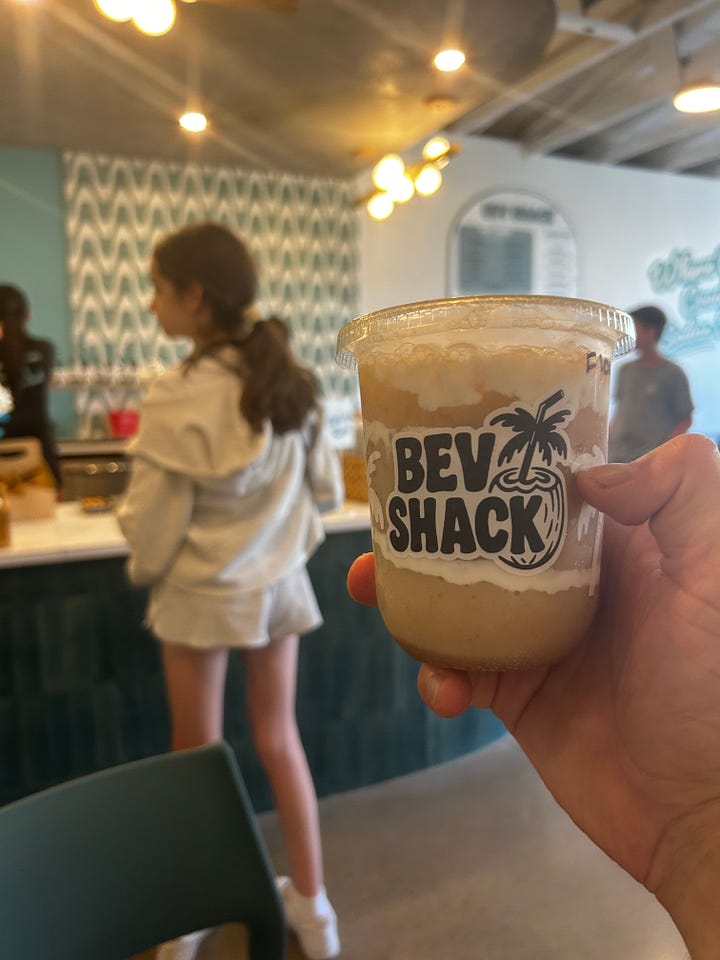
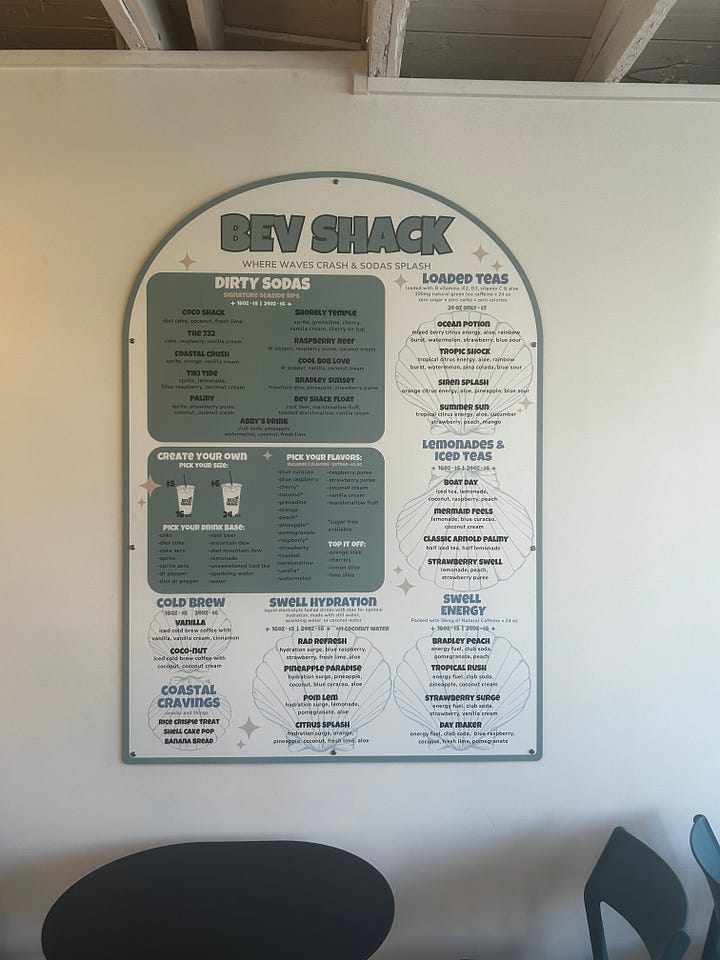
Visit 1 (Low-Barrier Entry): A teenager walks in, buys a small $5 dirty soda (like the “Shorely Temple” or “Bradley Peach”), and is immediately struck by the contrast of coconut cream cascading into brightly colored, syrup-infused soda over pebble ice.
Same-Day Repeat Intent: The product delivers such a distinct sensory and visual payoff that the consumer wants a second drink before the afternoon is even over.
Day 2 (Habit Formation): The customer insists on returning the very next day, bringing along friends to replicate the experience.
Post-Visit Advocacy (Unpaid Marketing): After returning home, the customer grabs soda, syrups, and creamer from their own fridge to film a TikTok or Reel demonstrating how to build a DIY “dirty soda.”
This closed-loop feedback mechanism converts a single $5 purchase into an ongoing marketing campaign. The brand doesn’t need to spend heavily on paid ad placement because its target demographic actively seeks out the opportunity to generate user-created content for the brand.
Bev Shack is part of a larger macroeconomic movement across the beverage landscape:
The Utah Origin Story: The “dirty soda” phenomenon originated in Utah within Mormon subculture, where religious restrictions on hot caffeine led locals to create customized cold sodas mixed with coconut cream, flavored syrups, and fresh fruit juice. Regional chains scaled the model locally, but TikTok turned it into a national movement.
Urban Validation (Cool Sips on the UES): The migration of dirty soda from suburban drive-thrus to metropolitan hubs was proven by concepts like Cool Sips on Manhattan’s Upper East Side. Sitting on the same block as historic, high-traffic destinations like the Lexington Candy Shop, Cool Sips demonstrated that urban Gen Z students, neighborhood families, and commuters would eagerly queue up for customized, non-alcoholic “afternoon treats.”
QSR Enterprise Response: Seeing the margins and afternoon visit frequency of boutique soda shops, corporate fast-food giants shifted their own menu strategies. McDonald’s launched its beverage-focused CosMc’s test concept and began rolling out dirty soda variations (such as Dirty Dr Pepper with coconut cream and lime) to core menus to capture the 2 PM to 5 PM daypart. Meanwhile, Taco Bell doubled down on its proprietary beverage strategy, expanding its Mtn Dew Baja Blast line and Freeze menu items with layered sour syrups and sweet cream toppers.
From a unit-economics perspective, specialty customized soda delivers far superior profit margins compared to traditional QSR food service or premium coffee retail:
Raw Material Input Costs: Fountain soda, club soda, flavored syrups, coconut cream, and pebble ice cost approximately $0.30 to $0.60 per serving.
Operational Simplicity: Unlike coffee shops, dirty soda shops require no expensive espresso machines to service, no milk steamers to purge, no grease traps, and no hot kitchen line. Assembly takes seconds, keeping labor costs exceptionally low.
Gross Profit Margins: High speed-of-service combined with low input costs generates gross profit margins hovering between 85% and 90%.
The Consumer Value Equation: From the buyer’s perspective, spending $5.00 on a massive, highly customized, visually striking dirty soda feels like an affordable everyday luxury. Compare that to spending $8.00 to $9.00 on a complex cold brew or iced latte at Starbucks, where wait times are longer, and the product lacks the vibrant visual novelty of a layered soda mix.
For the consumer, it is a $5 guilt-free indulgence; for the business operator, it is margin efficiency.
To ensure a simple fountain soda build commands a $5.00 price point without feeling cheap, Bev Shack engineers every physical touchpoint:
U-Shaped Ergonomic Cups: They avoid flat-bottom clear cups in favor of smooth, rounded U-bottom silhouettes. This custom shape showcases the layered cream-and-syrup gradients while providing a premium, distinct feel in the hand.
Cult-Favorite Details (Pebble Ice): Recognizing that ice texture drives massive online obsession, Bev Shack leans into pebble ice as a core brand pillar (“Kinda chic to be obsessed with pebble ice”).
360-Degree Packaging Touchpoints: Branding extends to custom “BEV SHACK” wrapped paper straw sleeves, matte black straws, bold logo stickers, and branded denim tote bags.
Photo-Engineered Store Interiors: The location features a custom teal wave-tile wall (“Where waves crash and sodas splash”), lit specifically to serve as a backdrop for customer photos.
Localized IP: Menu naming builds local pride by translating national soda trends into Shore culture, using names like the “Shorely Temple” and “Bradley Peach.”
The emergence of concepts like Bev Shack highlights a massive, structural vulnerability for legacy beverage giants like Coca-Cola and PepsiCo. For decades, legacy soda brands relied on massive linear advertising budgets and static grocery shelf placement. Today, younger demographics have completely steered away from traditional canned sodas, viewing canned cola as an outdated, uninspired commodity.
To stay relevant, corporate legacy brands are being forced to spend fortunes attempting to buy back youth culture. PepsiCo, for instance, has had to dump massive capital and distribution power into functional “prebiotic sodas” like Poppi—spending millions on high-profile marketing campaigns and retail distribution pushes to secure a seat at the Gen Z table.
This aggressive push smells of an acquisition strategy designed to make Pepsi’s core portfolio relevant and connected with a younger generation that rejects traditional soda.
While legacy giants spend hundreds of millions trying to retroactively fit modern trends into a 12-ounce aluminum can, founders like Abby Taylor are building agile, physical retail destinations where younger consumers willingly pay $5.00 to craft their own customized, social-ready beverage experiences.
Abby Taylor’s execution with Bev Shack validates a core principle of modern retail: You do not need complex food preparation or high raw-material costs to build a high-growth brand.
By identifying a viral digital trend, insulating it with ultra-low-cost inputs, optimizing the product’s visual presentation, and pricing it as an accessible daily treat—all driven by a founder who personally cares about every detail on the shop floor—Bev Shack demonstrates how authentic passion and smart brand positioning can transform a simple soda cup into a high-margin retail powerhouse.
For a closer look at Abby Taylor’s original startup journey and how her hands-on creative strategy built a national franchise, watch The Story of Playa Bowls with Abby Taylor.
This video provides direct context from Abby Taylor herself on how she took her initial sidewalk cart and scaled it into a multi-hundred-location movement using grassroots branding and community engagement.
Comments
Nothing yet. Say the first thing.
Sign in to join the conversation.