
A trigger warning before we start. I’m going to try to be lightly amusing about this, and I’ll hopefully manage that at least intermittently, but underneath this week’s column runs a low steady thrum of advancing hooves, which is the Grim Reaper riding over the horizon towards all of us. If you don’t feel like having your Sunday ruined by discussion of the stoic concept of Memento Mori, feel free to give this one a miss.
For the last month I’ve been supporting my board to write down a succession plan for Music Venue Trust. It’s something the Charity has been working on for some time but hadn’t yet made it into an adopted policy or an open position statement. Moving from the activity of getting on with it into a phase of putting into a document that says what you are doing about it involves quite a lot of thinking about not being here. It’s a peculiar thing to be spending time on, although obviously an entirely necessary one. Charities built from the vision and passion of a group of people that coalesce into a public face of just one person are not unusual, but they do have a habit of folding when that one person goes, and nobody in the charity or this sector wants that to be how MVT ends. So there is now a succession document, containing twelve lovingly crafted sections, no jokes in it, not one hidden mention of a song, and it calls me “the post holder” all the way through, which is what such a document calls you because it’s the politest way it can think of to say that it is, at its rawest and most unpalatable, preparing for you to be dead.
Section four is headed “What remains concentrated in the post” and lists four things that remain firmly grasped in my hands and that still remain to be wrestled away from me, preferably before a poor decision about when to cross the road lets a bus do that work for us. The last of those four is what the document describes as ‘the public authority attached to the post holder’, which the paper says is a non-transferrable asset which any successor would have to build up over time; Charity Commission facing governance prose for the fact that nobody else will be allowed to get away with what I get away with after twelve years of getting away with it, they will have to do it their way. And see if eventually people will let them get away with it too.
The rest of it was significantly more reassuring than you might expect based on a widely-held, and entirely erroneous, idea that I have a controlling hand in absolutely everything the Charity does, especially that thing that annoys you. MVT has been busy restructuring itself into four departments, with a strong and solid management team in place, and with increasing frequency my input into those departments is solely to be either publicly credited for work I didn’t even know was happening or told off for it. The Chief Operating Officer holds standing authority to act in my absence and would take over immediately, with no board resolution required. We created a Financial Controller post in February so where all the money is and how it got there has already stopped running through me. A succession plan like this needs to imagine dates on which the removal of the current post holder would have no impact, with milestones along the way where the impact gets less and less. MVT’s schedule for me to completely vanish runs three years, although that doesn’t mean the Grim Reaper can put that date in his diary, it just means that if we deliver the Succession Plan we can be certain me not being around wouldn’t result in any detrimental impact on the work delivered. The plan includes the concept that it gets tested annually by sending me away for a fortnight and refusing to escalate anything to me, which is either a robust example of testing governance control or a not-too-subtle hint. The most striking finding was how little of the daily work already doesn’t need me at all. Excellent news for the risk register, not so kind to my ego.
A charity is an organisation, and organisations can, and should, build robust succession planning, especially around the potential departure of the founder. Succession planning for a grassroots music venue is much, much harder. And we all know how much harder it is because of real cases where it wasn’t possible to achieve it.
The Sicolo family took on a building in Newport in 1971, ran it as a restaurant, then as a club called El Sieco’s, and from 1985 as TJ’s. John Peel started calling it the Legendary TJ’s sometime around the late eighties and the name stuck because it was entirely accurate. Something like five thousand bands went through the room over four decades, just a few of them being Green Day, Oasis, the Manic Street Preachers, Primal Scream and Joe Strummer. Legend has it that Kurt Cobain is supposed to have proposed to Courtney Love there in 1991, which may or may not be true but it tells you an important thing about the mythology of the place either way. John Sicolo had been a merchant seaman before he was a club owner, and a good deal of the ship’s discipline stayed with him, and was passed on liberally to the community that grew around the place. John was sixty six when he died suddenly and unexpectedly after going into the Royal Gwent for a knee replacement in March 2010.
TJ’s, like so many of the GMVs in the UK, had been losing money for years and John, like so many of the venue operators in the UK, had been covering it by not paying himself and dipping into his own money. His daughter Leanne went to the solicitors to try and save her father’s life’s work, and came out with the answer this sector always eventually has to admit; it was in far worse trouble than anybody had known. TJ’s closed within weeks of his funeral. Somebody set fire to the building that used to house it in 2013, and someone else had a go at doing it again, this time much more thoroughly, in 2016.
It would be cheap and entirely wrong to call the closure of TJ’s simply a failure of succession planning. Day to day, John Sicolo did the only thing available to him, personally funding the music venue he loved for as long as he was alive to do it, while an entire generation of Welsh and international music careers were formed in his building. No successor prepared to act like that was found, and not for want of love for the place or for John; a few thousand people turned out for the tribute gig that July. The challenge was, as it is right across the grassroots sector, that the current job description for a venue operator includes a willingness to hand over your savings, your evenings, your knees, and your peace of mind, to a business that will almost certainly never be able to pay you back for it.
Everybody in the grassroots sector knows that story, or they know another one close enough to it that the details vary only by the name of the person sat in the middle of the story. Every venue operator wants to leave their music venue as a legacy, but far too often succession planning sits near the bottom of a list that starts with making sure there’s enough loo roll in the ladies to open the doors tonight, and carries on through the PRS invoice, the rates bill, the sound engineer who has just gone travelling, the roof above the stage and the man who keeps ringing about the fire extinguishers test. Succession planning comes in somewhere below getting the ice machine fixed and slightly above taking a night off. Nobody is putting off planning for the future deliberately. It’s just that the To Do Task List gets rewritten every morning by whatever broke last night.
If that all seems a little bleak, it’s not meant to be. It’s just the practical reality. And I can prove that, because succession planning has yet to make it to the top of the To Do list at the venue I’m most closely associated with; The Forum in Tunbridge Wells. Four of us started it in 1993; me, Jason Dormon, Pete Hoare and Spike Oyarzabal. It’s now run by a Community Interest Company, which in practice means Jason and Isobel Dormon, and, trust me on this, it’s run much better than it ever was when I had anything to do with it. In Tunbridge Wells, the two of them are local legends in exactly the way John was in Newport. Everybody knows them, most people have a story about them, and a good many local musicians, artists, poets, and even the occasional BDSM night, wouldn’t have a place to call home if one of the pair of them had not said yes to something nobody else would touch. None of what they bring to The Forum appears in the accounts, or the governing document, or on any deed.
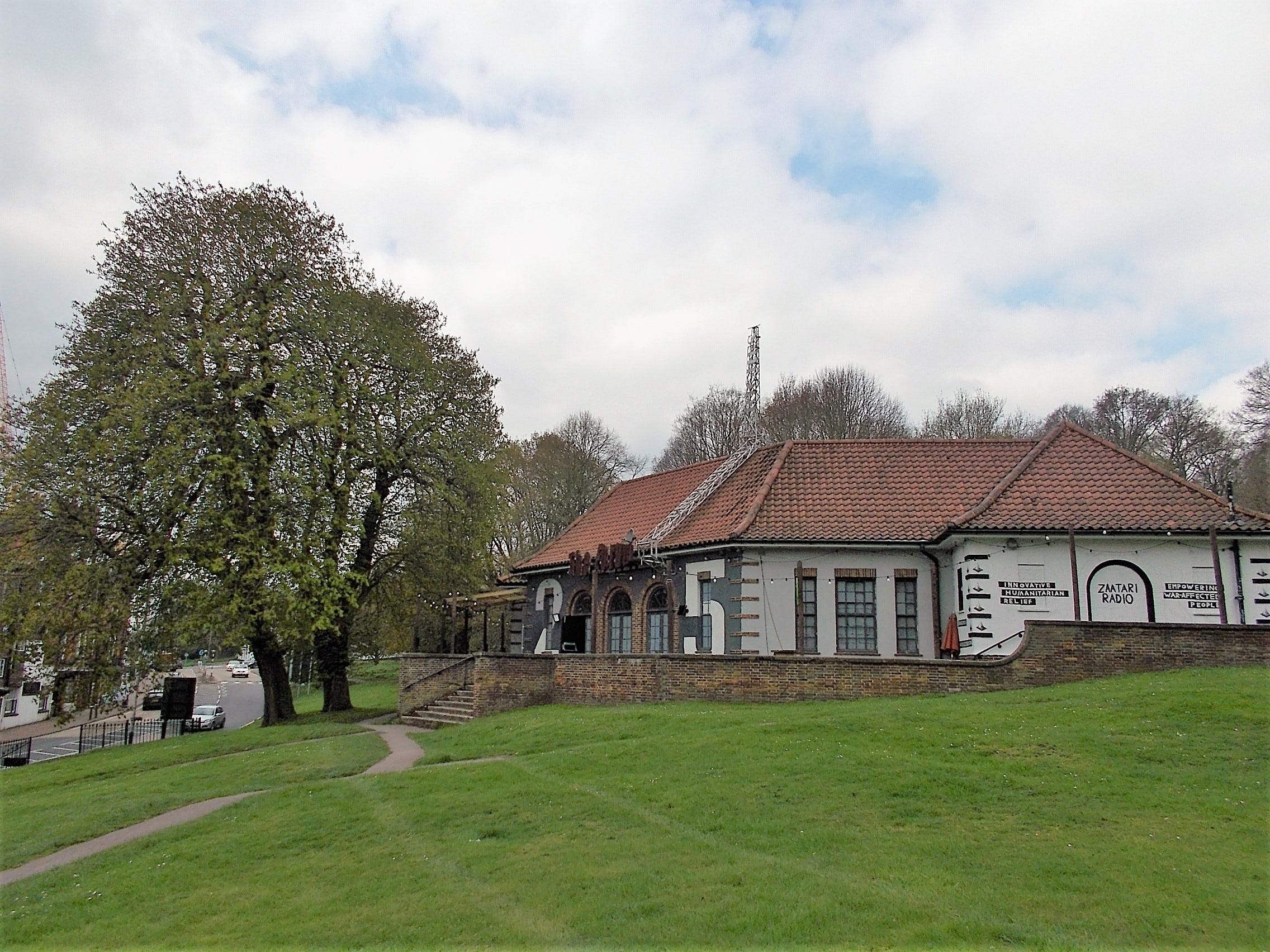
When it comes to succession planning for the Forum, two things stand out to be resolved. Firstly, nobody knows who takes on the CIC if Jason and Isobel stop. A community interest company doesn’t simply conjure directors from thin air; somebody has to want the job, and so far, despite the fantastic and dedicated team they have put in place down there, no one has been hinting that they quite fancy doubling their hours for half the pay and have a massive interest in lying awake at night trying to puzzle through why that toilet keeps backing up.
The second issue is that the building itself, thanks to a long and exceptionally unlikely story involving squirrels, a dodgy roofing contractor, a whip-smart lawyer, and the lead singer of a notorious punk band, belongs to a handful of individuals rather than any structure built to keep the place a music venue. Two of those individuals are me and Jason, which sounds like a fantastic and secure arrangement until you start considering it was founded 33 years ago and we have both matured in that period. Him like a fine red wine, me more like a lump of Bitto Storico. Our ownership of the building is one of the main reason it has survived, but as time has moved on it has now emerged as a central challenge to its future.
As a music venue the site is only worth what any over-optimistic fool is prepared to pay for it. As a plot of land in a prosperous Kent town it’s worth considerably more than that as just about anything else; a bar, a restaurant, a pizza takeaway or, if you really wanted to cash in, four or five flats in a pretty exclusive location. And any property speculator that wants to have a go at that as the future for this particular plot of land doesn’t have to buy a bus and hope we all decide to cross the road together at an inopportune moment. Without a succession plan that resolves the ownership of the building, all they have to do is just be patient and eventually The Pale Rider will free up the property for them. Inheritance tax and death duties alone would almost certainly require the building to be sold for its maximum market value just to keep HMRC happy. I did warn you at the start that the column is a bit dark this week.
It can be done, though. When Jan Oldenburg died in 2018, the Night and Day in Manchester passed to his daughter Jennifer, who had worked alongside him for years and knew where everything was and why, which is why it’s still open. At the New Adelphi in Hull, Paul Jackson turned the club into a community interest company in 2017 with a proper board around him, and when a reporter asked whether he was chasing investment he said no, he had become conscious of his own mortality. Neither route is complicated. Both need somebody in good health to think seriously about not being there, which is quite a big ask in a sector full of people whose whole method of keeping the venue open is based on their refusal to accept anything is inevitable.
It’s important to say that the finances are not just an additional factor here; they are pretty much the giant roadblock that stops most venues from having any sort of succession plan. The sector managed a combined profit margin of 2.5% in 2025 and over half of them made no profit at all. There’s no financial goodwill, nothing to sell but a bar, a PA and whatever time is left on a lease. Consequently, when venues from across the country gather together once a year for Venues Day talk often turns to the amount of grey hair shared among the attendees, largely because they are the same people who were doing it fifteen years ago. The generation who took these rooms on in their twenties and thirties did it when a lease was cheap and you could live above the bar because nobody wanted the rooms. What’s on offer now is a career structured around an eighty hour week for the slim chance of a wage that even if you manage to find one almost certainly won’t cover rent in the town where the building you’re saving stands.
The fix is achievable if we recognise this is as a core problem.
On ownership, we need to rapidly escalate projects like Music Venue Properties, taking the underlying ownership of the buildings away from the day-to-day operation of them, into a body that can’t sell the building for anything else, with a long lease underneath saying what the room has to be legally used for. On who those operators of the future will be, we need significant and sustained investment into the venues to reduce their operating costs, increase their profit margins, and thereby create a gap in the basic economics of running a venue into which real pay and manageable conditions for venue operators can emerge. Because that gap is the mechanism which would mean that Jason and Isobel, and people just like them all across the country who have held this sector up through personal sacrifices for the last 20 years, can finally look someone in the eye and honestly say to them ‘there is a life and a living here for you’. Both of those things have to happen while everyone involved still has the appetite for solicitors and, more to the point, a pulse.
We sadly lost Paul Jackson this year. Because of the thought he put into succession planning for his venue, early on, with time for it to develop and grow its own personality, we did not lose the Adelphi. A version of that hallowed space has emerged that respects the importance of his vision, glows in the shadow of his legacy, acknowledges that it misses him, but doesn’t demand his physical presence. Which is exactly what Paul wanted. It’s what everyone wants for their venue.
“Don’t behave as if you are destined to live forever. What’s fated hangs over you. As long you live and while you can, become good now.” —Marcus Aurelius
So that’s Death dealt with then. Next week I shall be interviewing Conquest, War and Famine to get their thoughts on the newly expanded deluxe version of Tom A Smith’s already excellent Put On a Record Tommy EP.
No posts
Comments
Nothing yet. Say the first thing.
Sign in to join the conversation.