
Innovating Communities is a reader-supported newsletter. I invite you to leave a comment, share this article with others, consider a paid subscription, or support my efforts more directly. I offer talks, panels, AMAs, keynotes, and subscriptions. Please let me know how I can help.
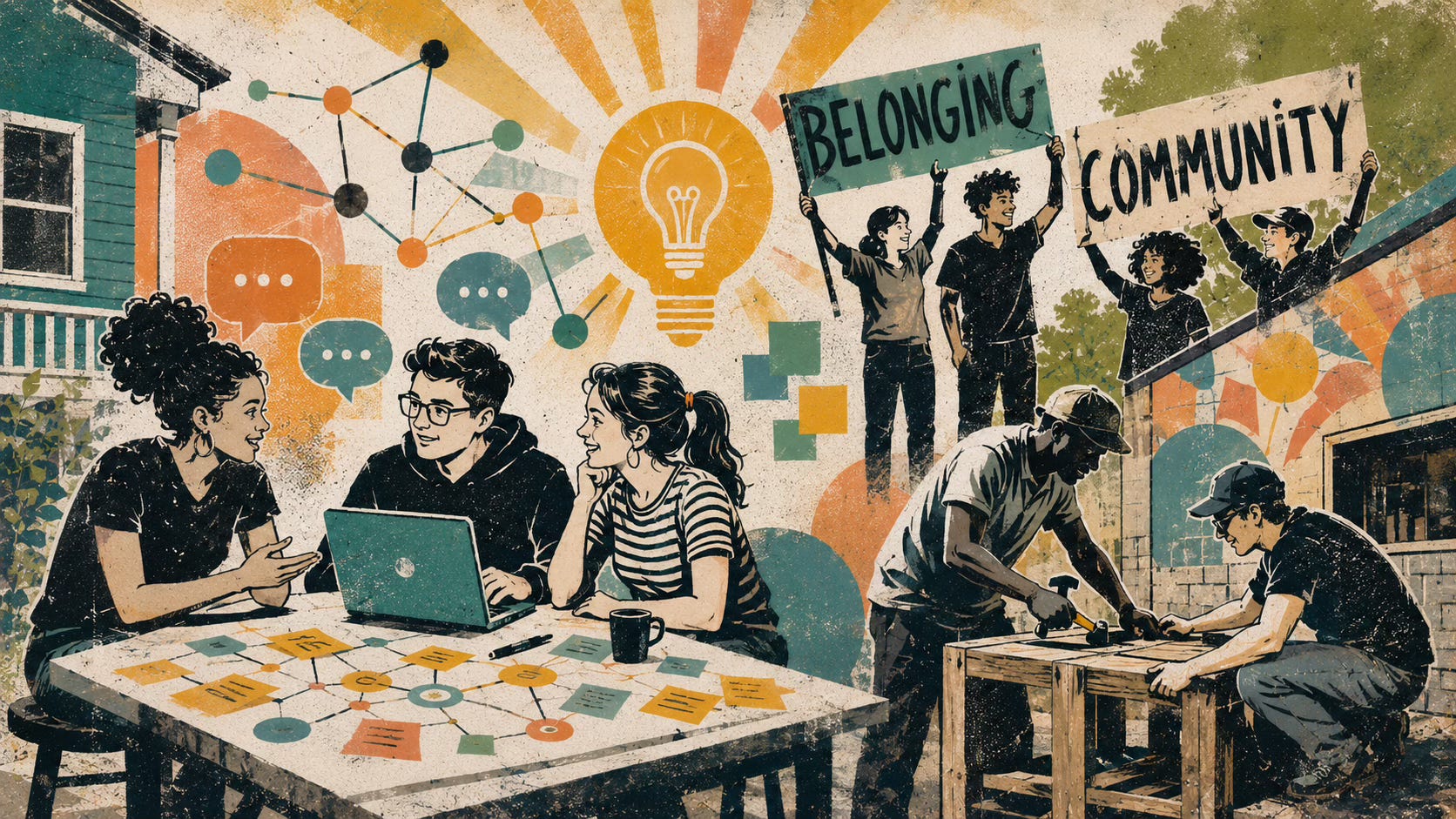
This is my fourth “look back” edition, each one a search for wisdom in editions written long before I started writing about innovating communities. This one may be the most important. Belonging is what communities do best, perhaps what they do above all else. But belonging is not engineered from above; it grows from the ground up, nurtured by people who feel it first—who find in their community a place that helps them thrive. The tech startup world, with its hard-won understanding of how belonging precedes innovation, has something to teach us.
Building communities is essential for business innovation–do B2B leaders understand this?
The principles Amber Atherton describes—find the people who already feel belonging, start with them, build from there—apply to every concerned community leader, educator, business owner, skilled worker, and civic organization working to make their place stronger.
This is a short article with links worth exploring. Atherton’s original piece, and the thinkers she draws on, will help you draw your own conclusions and provide a foundation for working with others to make a difference where you live.
One of the most direct ways to engage technologists is to reach out to the founders and startups in your own community, especially if they’ve organized as a group, and ask them to bring what they know to where they live. This article offers a bridge for starting that conversation.
These reasons to read on are generated with AI and reviewed by the author.
Amber Atherton is the head of strategic communities at Discord. For the unfamiliar, Discord is an app that helps more than 150 million artists, activists, study groups, and more come together to hang out and explore their passions. More than most, Atherton understands that growing a startup requires more than building a killer product. Startups must also make a community that is highly engaged and intensely loyal. Startups know this, but I wonder if B2B leaders have the same awareness and understanding.
In her excellent article on Future, a newsletter by Andreessen Horowitz, Atherton offers essential concepts to help early-stage startups allocate resources to get moving on communities. In this edition, I share her ideas and explore how leaders of established businesses might leverage the power of communities to challenge the status quo, set a new direction, and restart or refound their business for the digital age.
Atherton explains that not all customers are alike, and not every customer belongs in a community. She identifies four “buckets” of customers. Customers/users are simply those that buy and use a product. Evangelists are volunteers who “tell everyone they know to buy or use your product because they genuinely love it.” Companies may also recruit “ambassadors”—customers incentivized to act as promoters and compensated through payments and other rewards. Communities are distinctly different, and that difference defines their power.
Before we dig in, let’s parse Atherton’s definition of community, especially her choice of words. Communities are a “group of people who’ve found belonging and utility through your product.” I take this to mean that community members must be known as people, not buyers or users. Members come together with something shared in relation to one another. From products, businesspeople gain practical outcomes for their work. From a community, businesspeople achieve the human need to be part of something.
Atherton counsels, “What distinguishes community members from those in other groups is the congregation element: Beyond using, liking, or writing glowing reviews of your product, they spend time forming connections with other people based on a shared affinity for [your product].”
As on Discord, communities often interact online, but collaborations between members are personal, not shallow or virtual. Community connections are not abstract; they are felt and, if I may, loved. By fostering community connections and talking about innovation, community members offer more than feedback; they create foresight. Communities let the future belong to your customers.
Atherton’s article offers invaluable requirements, examples, frameworks, and images. It is a must-read for my audience and a foundation for working with companies and industry associations. But for now, I see a path forward in her observation that customer groups “reliably emerge in a fixed order: Users/customers come first, followed by evangelists, and then community.” (Ambassadors do not emerge on their own but are instead created by marketing.) There is an evolutionary flow for building a community, highlighted by Atherton’s actionable advice:
The ideal time to launch a community varies, but you should wait until you have confirmed evangelists.
Next, start a conversation with this founding group in a private space designed for that purpose, such as a Discord server, a Slack channel, a Telegram chat, or even a group DM on Instagram.
The early days of community-building should feel like user research. You’re not trying to build an audience or sustain engagement. Instead, you’re experimenting with different offerings to figure out what your evangelists want.
For B2B innovators, Atherton’s sage advice goes to investing in capabilities that create value for community members but not immediately building a customized platform for members to gather. Examples of member wants include audio, AMA (ask me anything) sessions, IRL (in real life) meetups, and more. Atherton says: “Ask them directly. Not only will you learn what they find valuable, you’ll also give them a sense of belonging.” As for platforms:
One thing you shouldn’t do is waste engineering resources on building out your own community infrastructure. At this stage, third-party community platforms will meet all your technical needs. Plus, your target community members might already use them. Meeting people where they are never hurts.
This sounds like work, and the article provides justifications for making investments. Communities “create a built-in source of real-time user feedback, critical for building a product people really want.” Moreover, communities “foster friendships rooted in an affinity for your product, which drives lifetime value and new customer referrals.” Realizing these returns starts with a clear understanding of what B2B innovators do and what they don’t do:
When it comes to community-building, it’s your job to spark the fire. But you can’t keep it burning alone. The key to a thriving community is members who care enough to take initiative—they pose thoughtful questions to the group, introduce new topics to explore, and sometimes even plan events, online or off, to help people bond. And they’re invested enough in the community to assume some of the responsibility of steering it forward.
Communities are essential for B2B innovation, especially as offerings push beyond physical products to offer services, customer experiences, and reinvented manufacturer/distributor partnerships. Do you agree? What have you seen? How can I help? Please share your comments below or reach me at mark.dancer@n4bi.com.
Together, let’s build thriving communities, one innovation at a time.
Comments
Nothing yet. Say the first thing.
Sign in to join the conversation.