
WHAT IS A COTTAGE GARDEN?
What actually is a cottage garden? Historically, it seems the term first arose in literature in around the mid eighteenth century, and then, as the lot in life of the peasant worker changed and slowly got better, the idea of the romantic ‘cottage garden’ developed and was changed further and became as much a ‘style’ as a fact. What had been a place where poor labourers grew their own food, their own ‘medicines’ and their own decorative flowers, became eventually a lifestyler choice. Essentially though, the cottage garden was, and still is, ‘a plot of one’s own’, filled with flowers and vegetables, useful and productive, a place to potter and a place to relax. It’s usually a smallish plot, characterised by a jumble of simple plants that fill the space in an undesigned way; there are no rules, there is no pomposity and anyone can do it. It’s haphazard, homespun and humble. There will likely be recycled and reclaimed features, a mixture of simple flowers, some annual and some perennial, vegetables, herbs, climbers and wild flowers. It will probably have a romantic feel, some hidden corners, a higgledy-piggledy path, a pond, and some rustic plant supports. The shed will be filled with saved seeds, old tools and a pile of terracotta pots. It’s a haven for wildlife and it’s a haven for the gardener, somewhere to escape the daily grind and get your hands dirty.
A view from inside Beth Tarling’s potting shed, looking at her wonderful cottage garden in summer
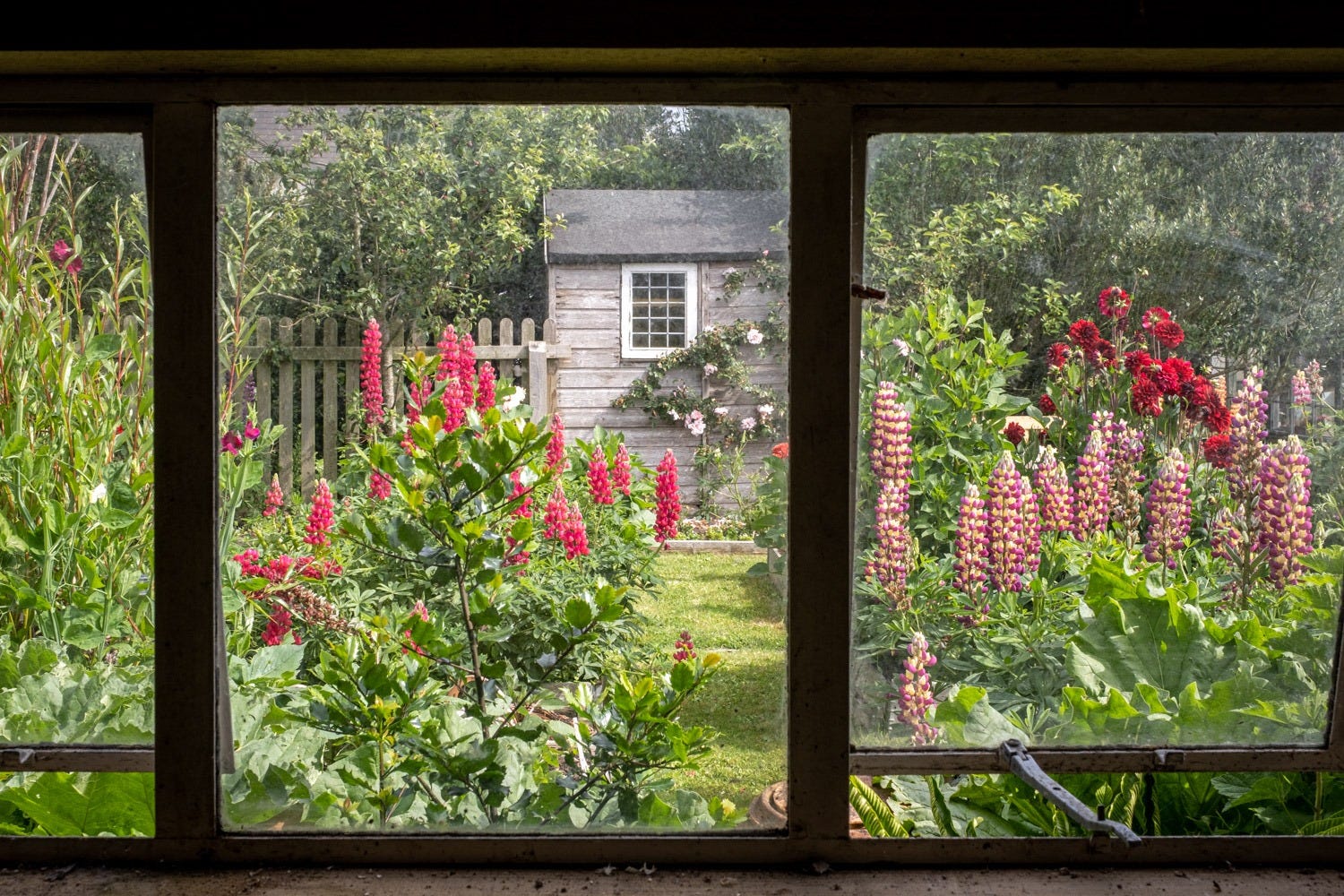
So then, let’s look at the history of the cottage garden. In mediaeval times, the workers on large agricultural estates were housed in virtually hovel-like cottages that had a tiny patch of land on which the ‘peasants’ would grow a selection of herbs and vegetables. The diet of these peasants was rudimentary, and meat, which was more than likely beyond their reach, was replaced by a narrow range of vegetables. During Elizabethan times, availability of vegetables increased, and the cottager even started growing flowers, sometimes to mask the smells of daily life, but also for pleasure. Hollyhocks and Sweet Williams, for instance, became popular. As the eighteenth century approached, migrants from Europe bought in new types of plants, including different vegetables and a greater range of flowers. These migrants had hybridised plants to improve their form and performance, and as a result, particularly in the North of England, competitive showing of these saw the beginnings of the village flower and produce shows. ‘Florist societies’ were common, with cottagers competing for best Polyanthus, Pink or Pansy.
Sweet williams (Dianthus barbatus) and Foxgloves (Digitalis purpurea) at Bowhay House, my own garden
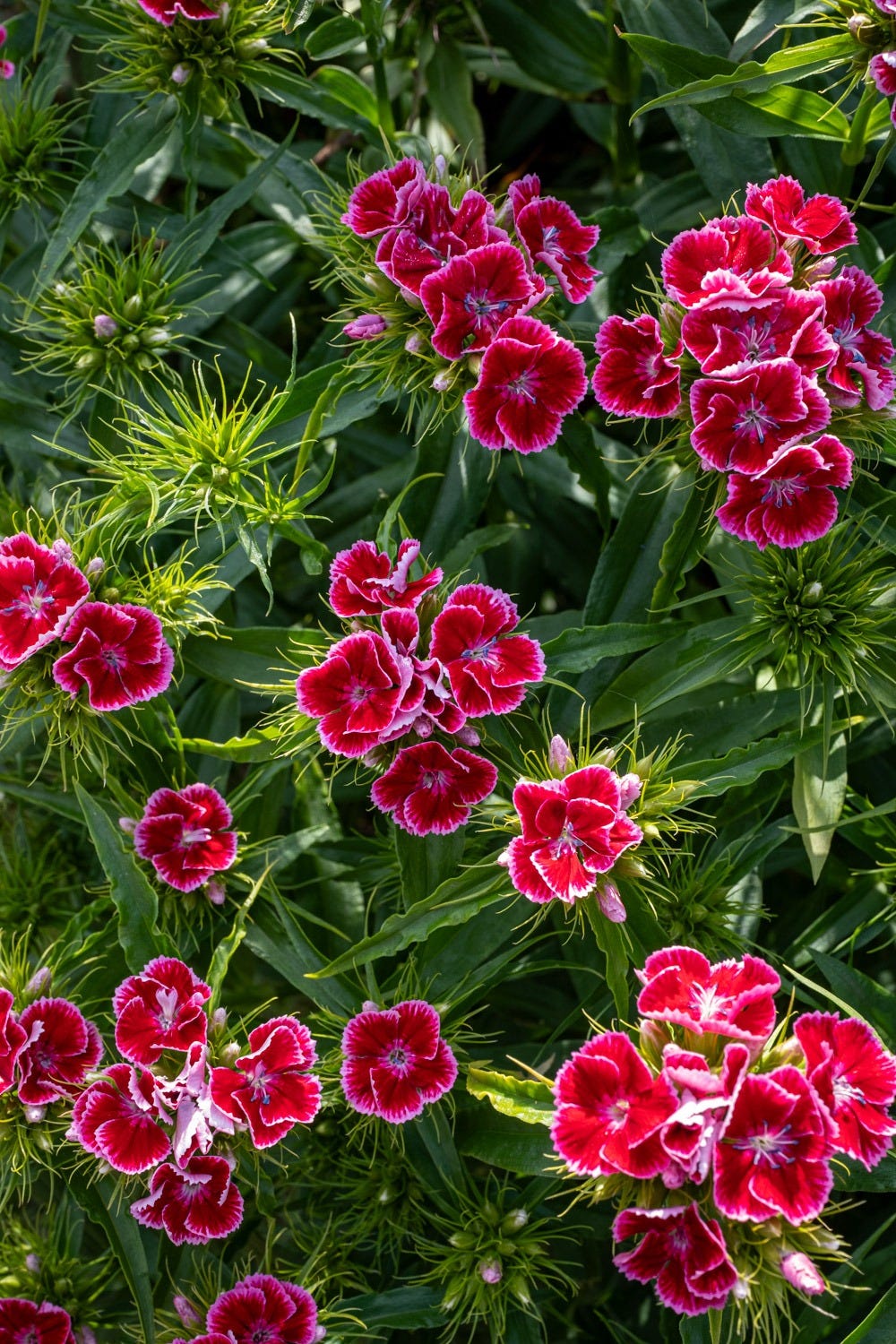
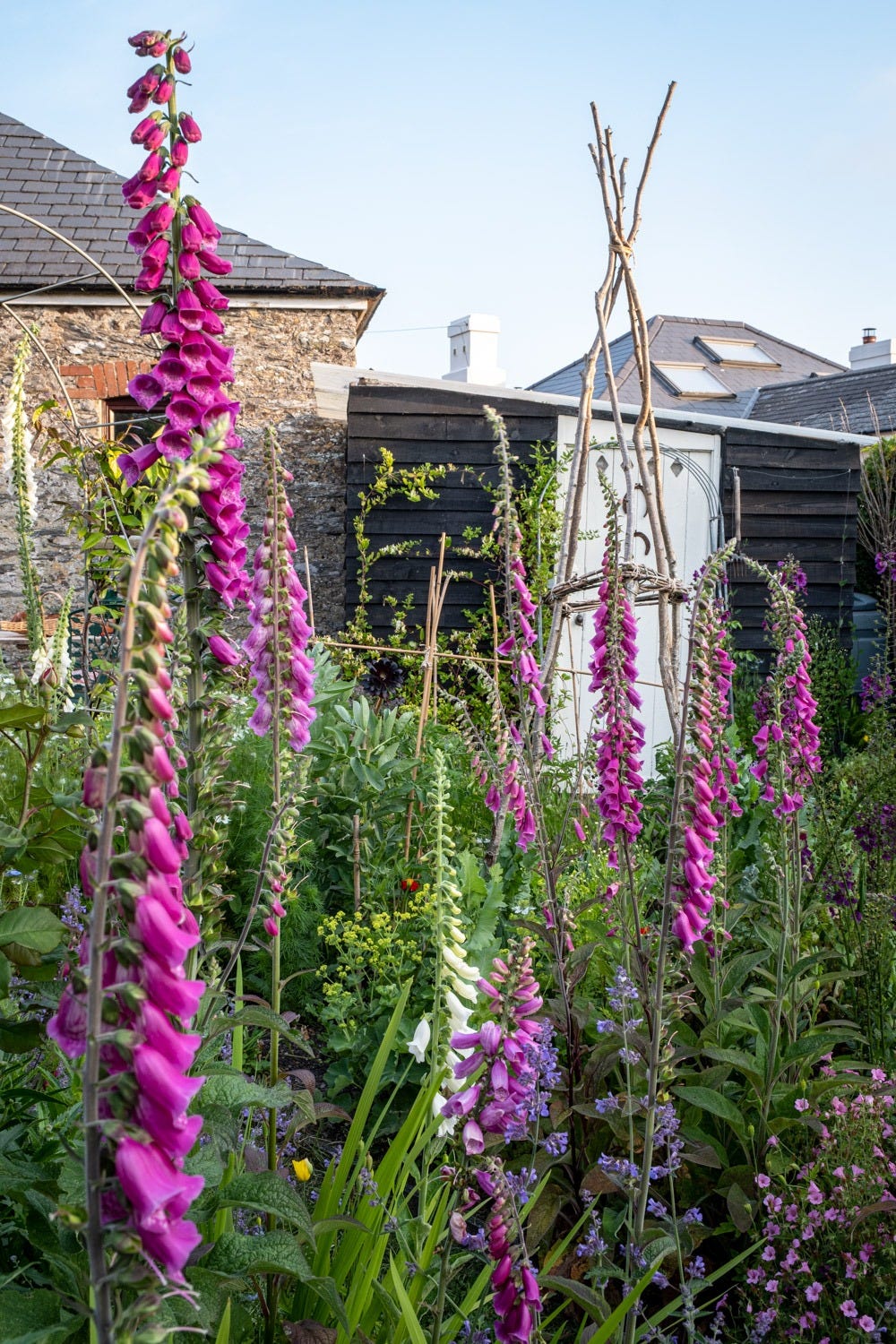
At the end of the eighteenth century, the ‘rural idyll’ began to gain traction with romantic poets and artists who moved away from increasingly dirty cities. Wordsworth and Coleridge filled their cottage gardens with foxgloves and buttercups and began swapping seeds with their neighbours, and it was these artists and writers to whom we owe much of our ‘cottage garden’ tradition.
By the mid nineteenth century, William Morris, another artist of great renown, had eschewed grimy industrial city life and set up home in the countryside. He was an environmentalist, a gardener, a designer and a poet, and he was a forerunner of the ‘back to nature’ movement. His designs are still popular today and his garden at The Red House, his first country garden, was a series of small garden rooms, filled with climbers and scented flowers. In other words a set of connecting ‘cottage gardens’.
Then we come to William Robinson and Gertrude Jekyll, as formidable a pair of gardeners as you could imagine. These two did more to establish and modernise the idea of the cottage garden than anyone. Up until this point during the Victorian period, the prominent style of gardening was a formal one, with bedding planted each year, in rows, with garish colours and uniform height. These large beds would perhaps be punctuated with ‘focal point’ of tender and exotic plants. The whole show needed lots of labour (planting out in rows, deadheading, then ripping it all out in autumn) and it needed greenhouses to bring on the bedding early. William Robinson in particular, hated this style of gardening and along with Gertrude Jekyll, the pair were instrumental in revitalising the idea of the ‘cottage garden’, the complete flipside of the bedding plant gardens. William had been trained in formal horticulture, but had quickly rebelled and his brilliantly practical and enthusiastic championing of the ‘wild garden’ through his books and magazine articles revolutionised gardening. He loved wild plants, bulbs, climbers and self seeded annuals, and believed that gardens should be much more reflective of nature and the natural landscape. The garden he made at Gravetye Manor is a mecca for cottage gardeners and students of gardening history. He oversaw a return to the use of perennials, to give structure and longevity to a border, amongst which he allowed self seeded annuals to appear. And he planted thousands of bulbs, including 100,000 daffodils planted alongside one of the lakes at Gravetye in 1897. His two most important books, ‘The Wild Garden’ and ‘The English Flower Garden’ cemented his reputation.
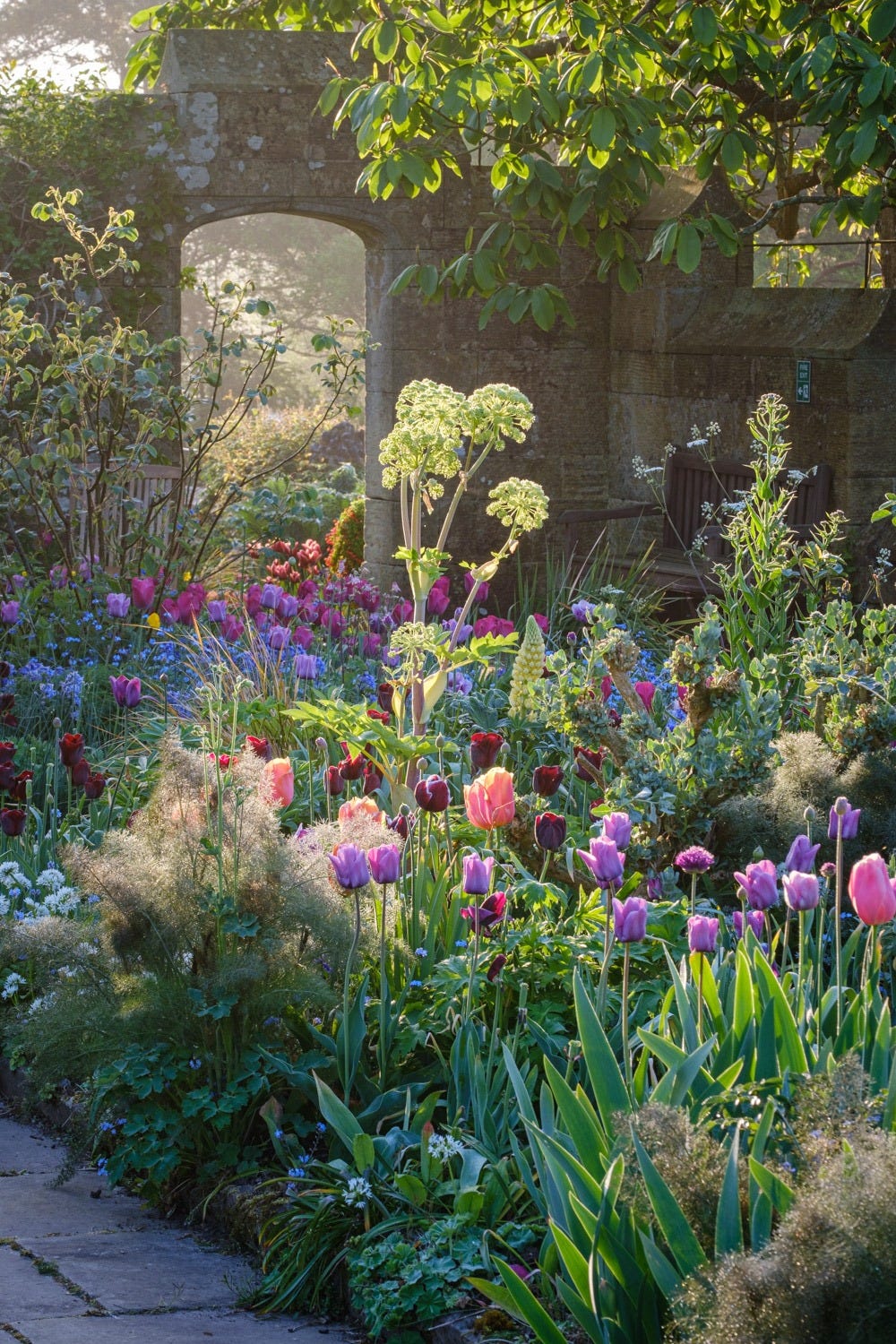
Gravetye Manor gardens in September, its glorious tiled summer house surrounded by billowing late summer borders.
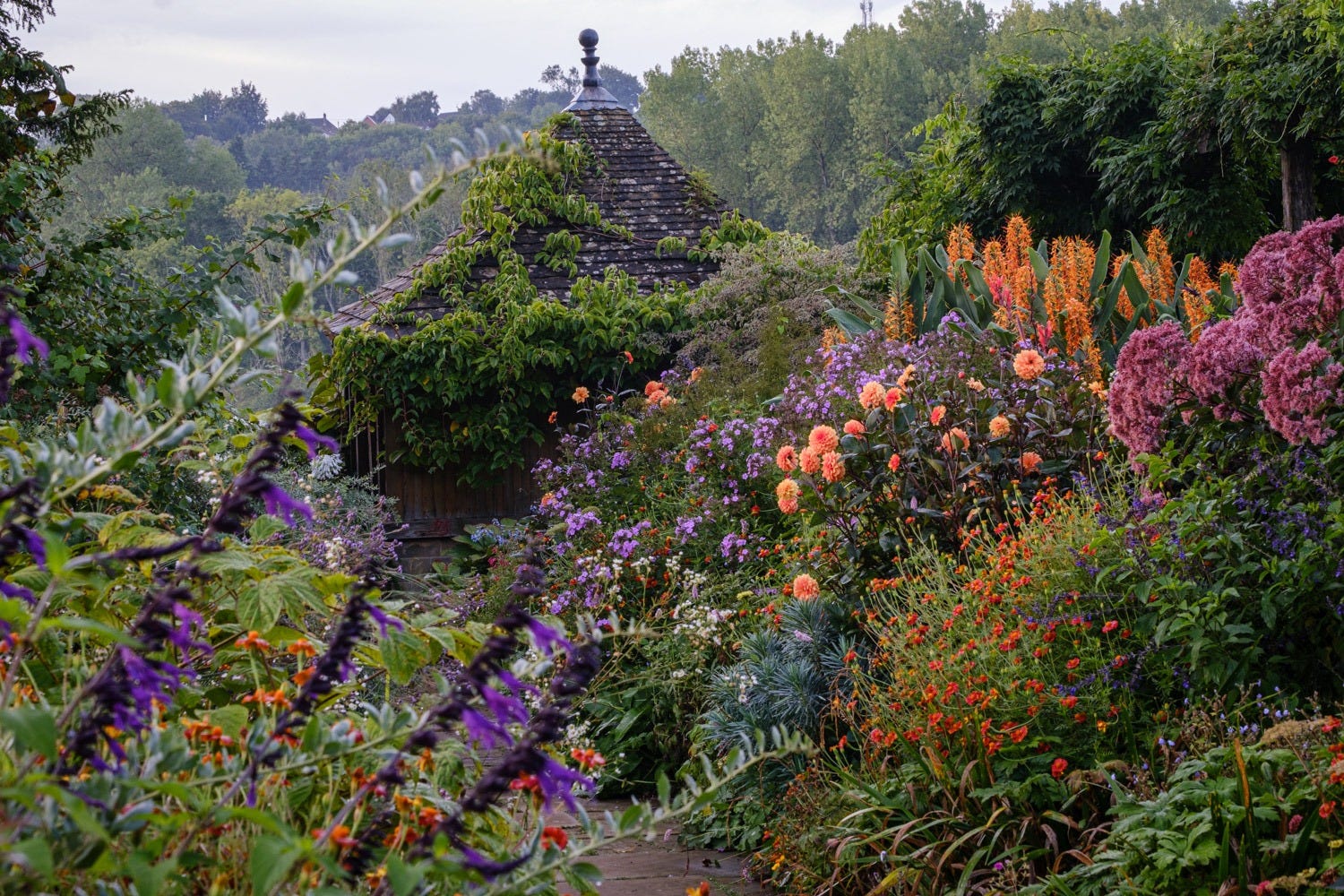
He first met Gertrude Jekyll in 1875 and they had a close friendship and professional association for over 50 years. He helped her with her garden at Munstead Wood (well worth a visit); and she provided many of the plants for his garden at Gravetye Manor. Robinson’s reputation cannot be overstated. His prolific (and vehement!) writing and above all, the garden that he built at Gravetye, are testament to his standing as the father of the modern cottage garden. The garden is now watched over by the brilliant Tom Coward, who has taken over and modernised the garden, adding new planting and more modern varieties, such as tender salvias, persicaria, Helianthus ‘Lemon Queen’, Dahlia ‘Magenta Star’ and Kniphofia rooperi. He has also given the kitchen garden a makeover, much of which is used in the restaurant of the Gravetye Manor Hotel.
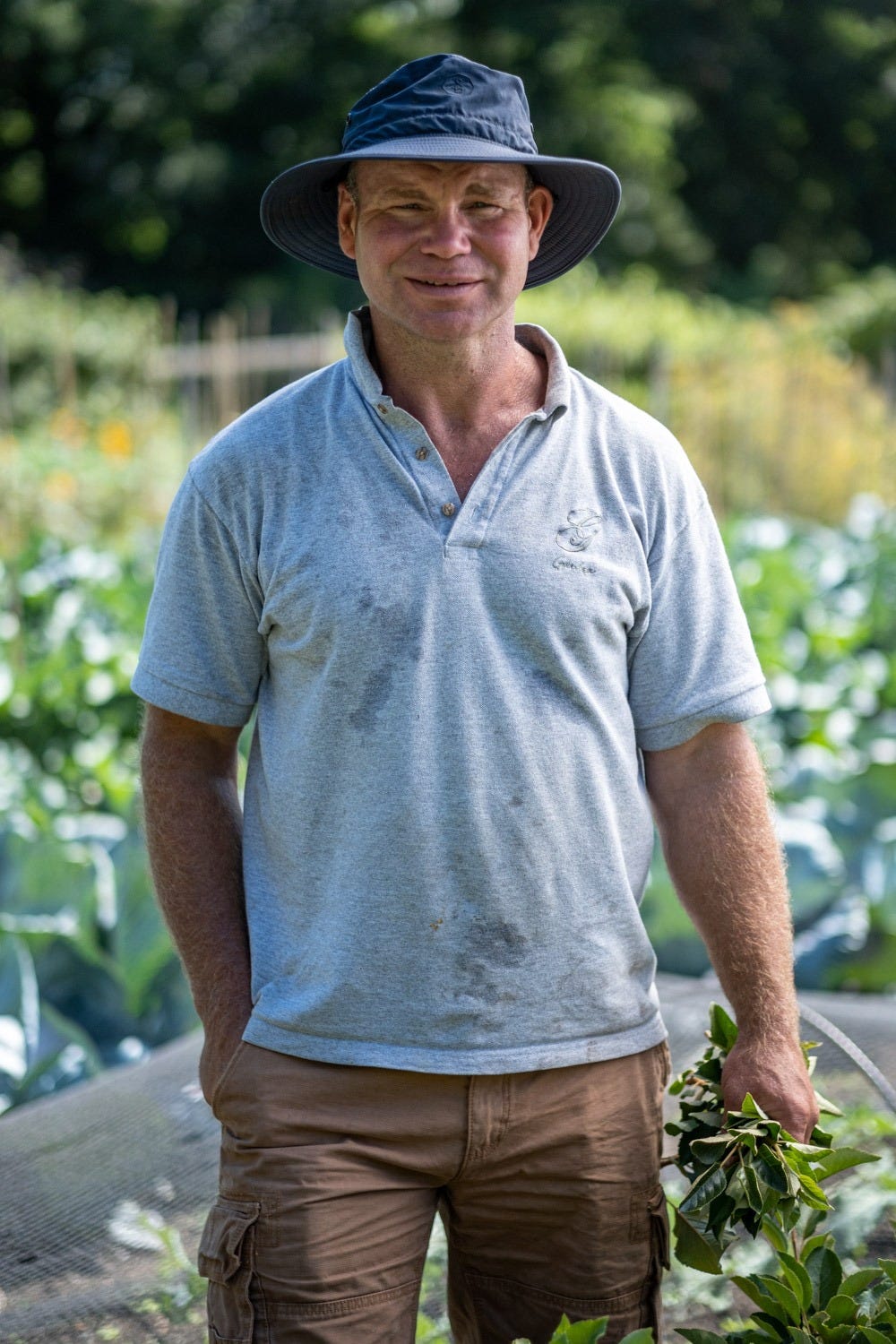
Tom Coward has taken on the job of head gardener at Gravetye Manor, following in the footsteps of William Robinson
Gertrude Jekyll became one of the most famous and lauded of all garden designers, and alongside the hundreds of gardens she made, she wrote a thousand or so articles for eminent magazines. She was particularly known for the colours she wove in to her borders, the hard landscaping she used to show off the plants, but also for the craftsmanship that she placed enormous emphasis on. She designed gardens for the new wealthy middle-class based on what she had seen as she grew up; small thatched cottages, with climbers around the door, and borders stuffed with flowering plants, including annuals, biennials, bulbs and, of course, roses. She organised the colours though, and importantly she mixed plants with different flowering periods to ensure non-stop bloom from spring till autumn.
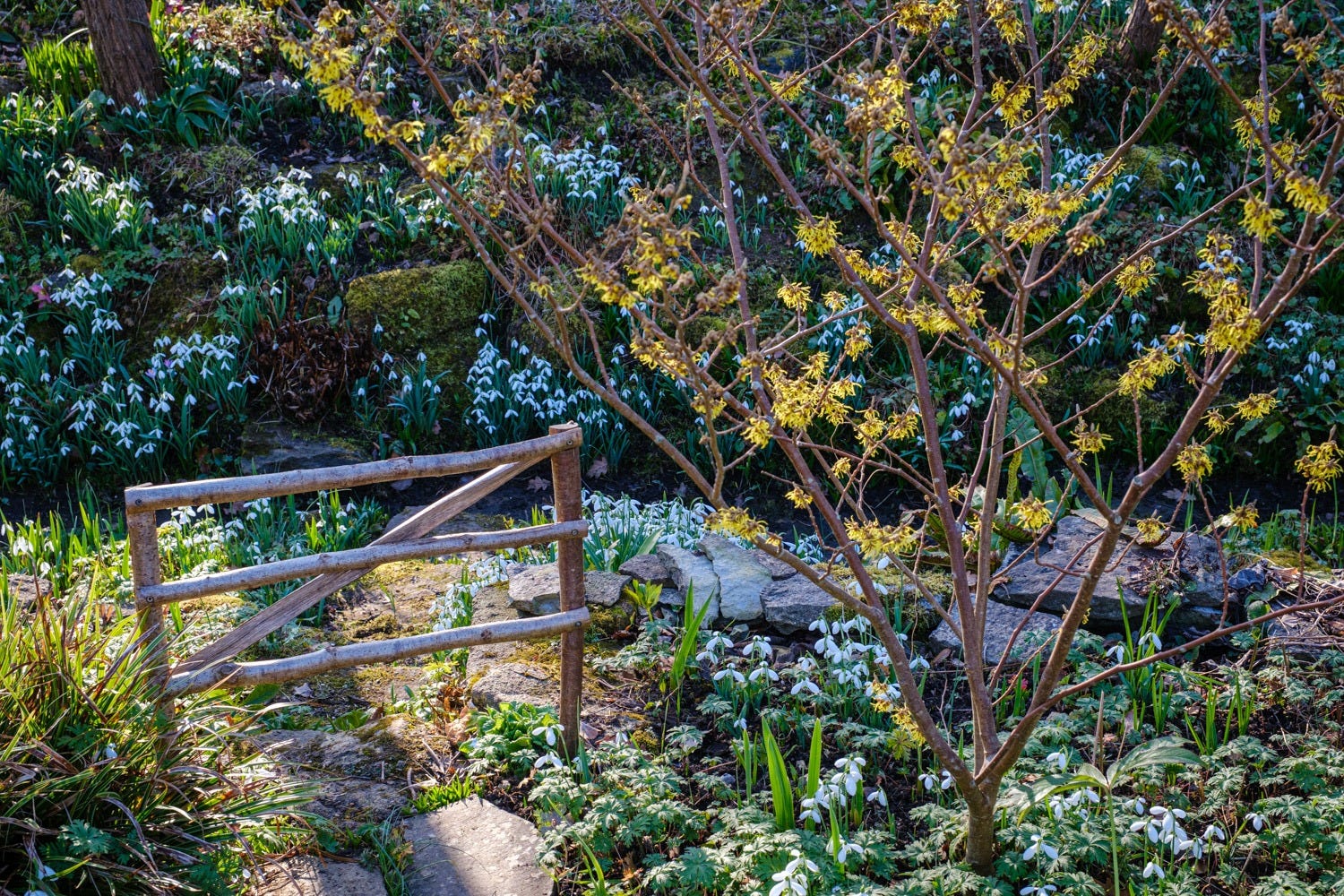
As we enter the twentieth century, the story of the cottage garden continues at East Lambrook Manor, and it’s owner, another formidable plantswoman, Marjery Fish. During the late 1930’s, Marjery and her husband arrived in a small village in Somerset from London, and they set about making a new garden around their old manor house. A novice gardener, Marjery went on to become one of the great plants people of the twentieth century, using her two acre plot to save many traditional cottage garden plants, and breed many new ones as well. There are numerous plants that bear her name, or that of her home, such as Penstemon ‘Marjery Fish’ and Euphorbia ‘Lambrook Gold’, and the nursery at East Lambrook is well known for it’s variety of cottage garden favourites. The garden is a collection of small ‘rooms’ all held together with a tapestry densely planted herbaceous perennials, ground cover and self seeding annuals. The borders are underplanted with bulbs, and there is a particularly fine show of snowdrops in February.
There is a particularly fine show of snowdrops these days at East Lambrook Manor, one of the great twentieth century cottage gardens.
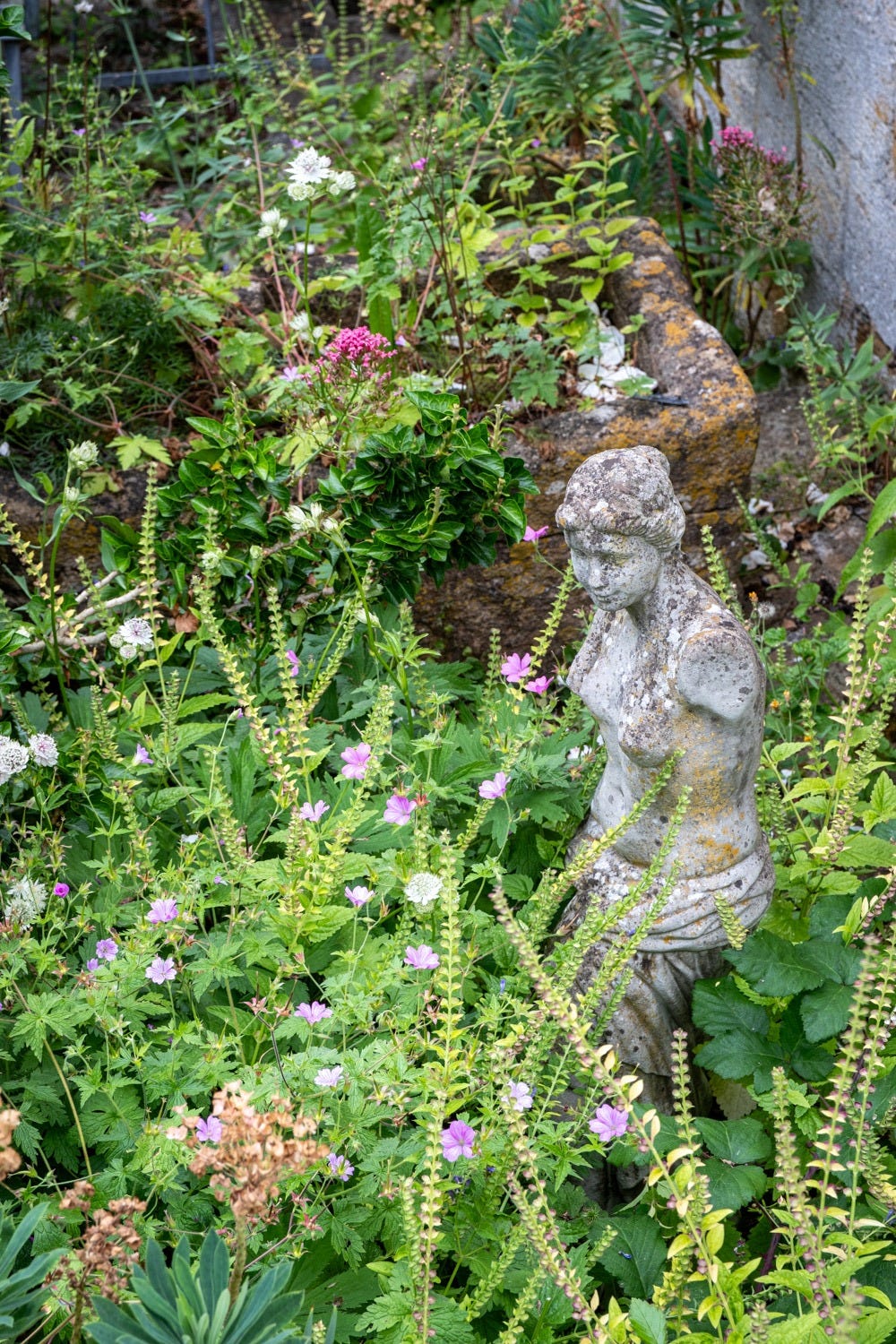
As the second world war ended and a new austerity set in in post war Britain, Marjery realised that gardening on a domestic scale needed to be more ‘low maintenance’ and she found that a good hardy perennial almost looked after itself. So, an informal cottage garden, mixing the old classics with some new modern plants was born. Gardens such as Hidcote and Sissinghurst were already using the cottage garden style, but Margery’s development was different because of its domestic scale. It allowed visitors to easily understand what she was doing and how it could relate to their own garden. A visit to her garden, which has been developed further by the current owner Mike Werkmeister, is a joy in early summer, the crooked paths that wind through the borders are spilled over and colonised by Geraniums, Penstemons, Salvias and Nepeta. The air is full of scent and the sound of bees. Margery’s legacy is truly deserved and even though is has an old fashioned air to it, with the hamstone 16th century manor catching the sun and billowing planting softening the clipped yews, it’s also a truly modern garden. The plant nursery is bustling, and the tea house is filled with contented tea drinkers.
East Lambrook Manor during early summer; blurred edges, soft planting and the warmth of old stone.
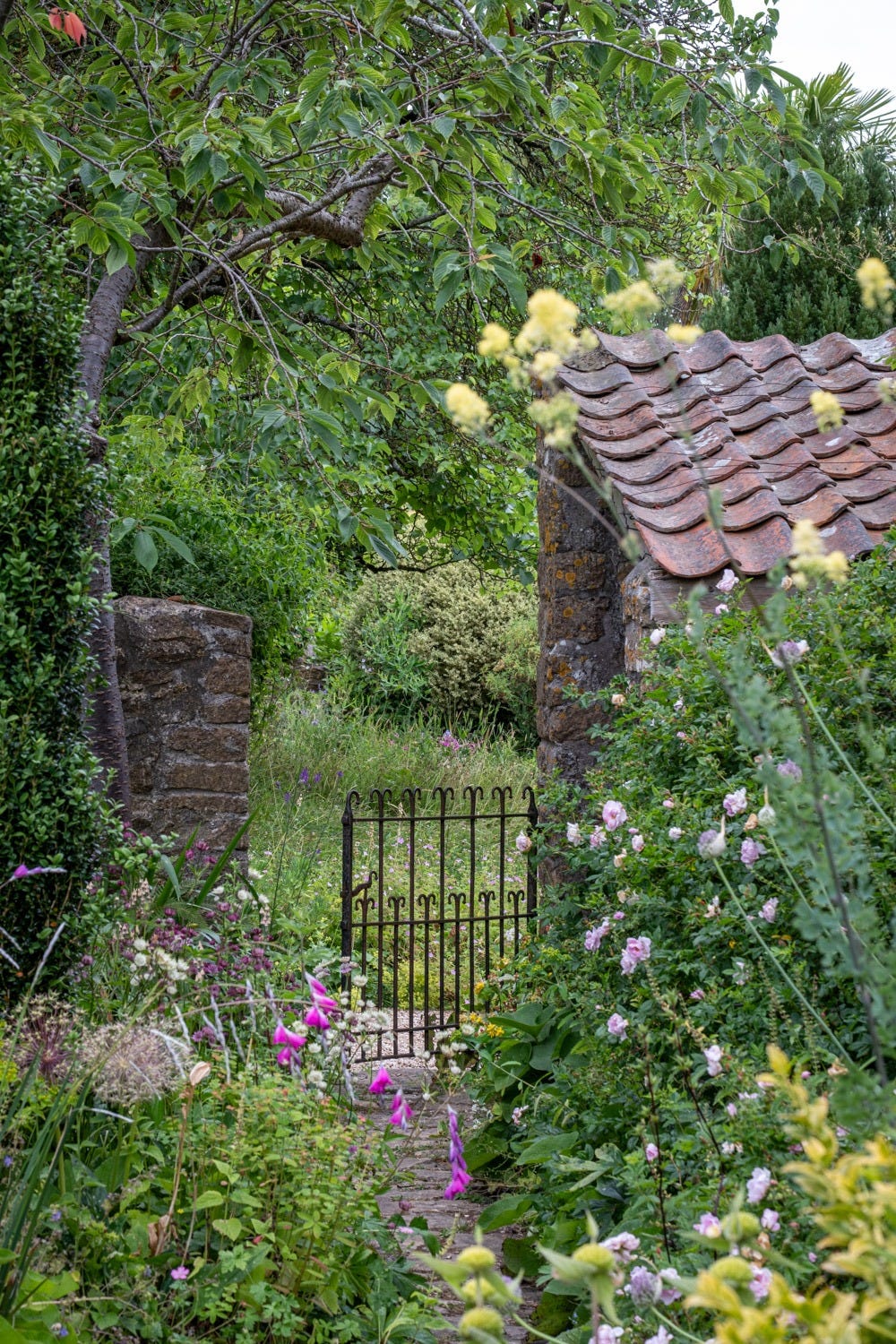
As we come into modern times, the cottage garden still thrives and the uncertain times we live in has given it new life. The return to nature, the desire for a cosy home and a productive garden, and above all the need to escape the wall to wall social media and rolling news has led to a resurgence in gardening; getting out in to the garden, feeling the soil between your hands and sun on your face is greatly beneficial to us all, from a physical, and mental health viewpoint. I can think of no better way to start the day, or finish for that matter, than planting seeds, weeding a border or deadheading a rose. And whether you do that in a cottage garden, a tiny backyard, or even on a windowsill, is irrelevant. Try it!
A New Cottage Garden is available from good bookshops and from Amazon. If you’d like a signed copy, I can help out with that, please email me with your details. Thanks for reading!
Comments
Nothing yet. Say the first thing.
Sign in to join the conversation.