
Recently I sat outside a restaurant watching athletes make their way home after Ironman Ottawa.
You could tell almost everything you needed to know without hearing a single word. Bikes rolled slowly beside tired legs. Gear bags dragged along the sidewalk. Shoes squished from a day of rain.
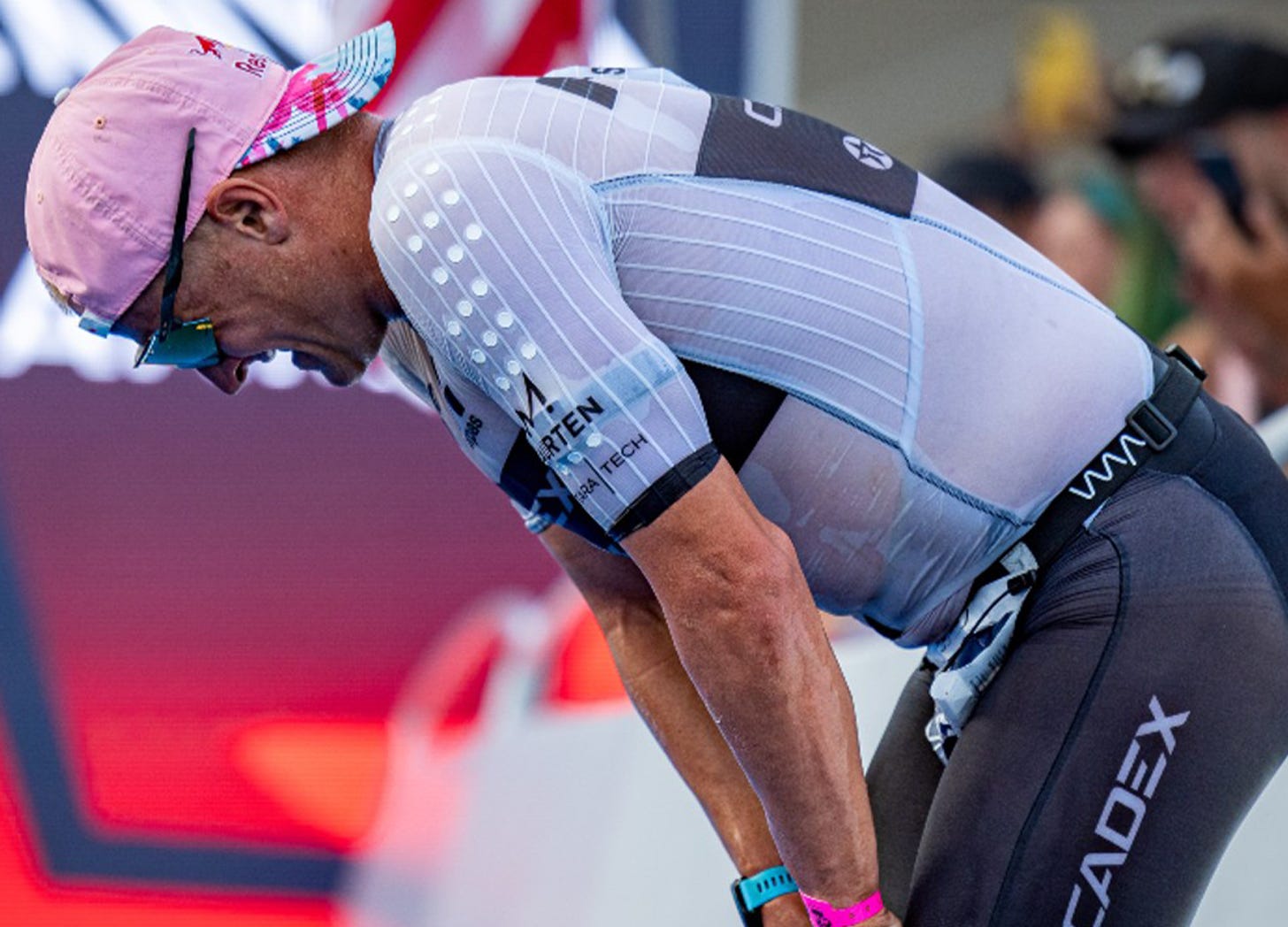
Some people carried themselves like they had just conquered the world. Their posture gave them away. Their smiles did too. Others wore the unmistakable look of disappointment. Their shoulders sagged. Their eyes were fixed somewhere ten feet in front of them.
And then there were a couple who looked completely deflated. I had seen both of them crash during the race. Months of preparation had disappeared in a single moment. You could almost feel the questions running through their minds.
Why did I put so much into this?
How can something so important end like this?
Watching them made me wonder about something we rarely talk about.
How do we go home after an Ironman?
The athletes who are thrilled with their race generally fall into two groups.
The first group goes home filled with energy. They’re excited to return to ordinary life. Taking out the trash. Making the bed. Grocery shopping. Catching up on emails. Calling friends and family. Those simple things suddenly feel wonderful because they no longer have to live with the laser focus that preparing for an Ironman demands. The race is over. Life can simply be life again.
The second group is also energized by what they’ve accomplished, but when they get home, something feels missing. They look around and think, Is this it? Take out the trash. Make the bed. Buy groceries. Answer emails. After spending months pursuing something so enormous, everyday life suddenly feels strangely small. Without a massive goal pulling them forward, they feel adrift. The ordinary almost seems meaningless compared to the magnitude of becoming an Ironman.
The disappointed athletes often divide the same way.
Some welcome the return home. The simple routines become medicine. Cleaning the house. Putting good food back into the refrigerator. Answering the texts asking how the race went. No, it wasn’t the day they dreamed about. But those ordinary tasks help them recenter. They remind them that life is always bigger than one race.
Then there are those who add another layer to their disappointment.
“This is my reward?”
“I failed, and now I get to come home to laundry, grocery shopping, and an unmade bed?”
For them, nothing feels restorative. Even ordinary life seems like another burden.
As I sat there watching muddy bikes and exhausted athletes disappear into the evening, I realized something. My entire attention was focused on the racers.
Then I noticed everyone else.
Couples walking home after dinner. Families laughing. Friends heading back to their hotels. Most of them had never raced. Many never will.
For them, this was simply another pleasant evening. Maybe it was a great meal. Maybe one they’ll completely forget in a few weeks. Their day simply came to an end.
But the athletes walking past me were ending something very different. They were closing the final chapter of a journey that had begun months before. They had chosen uncertainty. They had willingly stepped toward something that demanded discipline long after motivation disappeared. They had asked more of themselves than comfort ever would.
Whether the day ended in triumph or disappointment almost became secondary. Because months before race day, something had already started changing.
Every early alarm. Every lonely workout. Every workout they almost skipped but didn’t. Every moment they chose purpose over convenience.
Those moments carve something permanent into your character. Race day simply reveals what those months have built.
I understand why some athletes struggle after a big race. The enormous goal is suddenly gone. The calendar is empty. The next finish line doesn’t yet exist.
But maybe that feeling misses something important.
The mundane isn’t the opposite of the extraordinary. It’s where we recover from it. It’s where we quietly prepare for whatever comes next.
The same presence that carries you through an Ironman can carry you through making your bed.
Think about it.
When you clean your house, are you simply trying to get it over with? Or are you completely present with each small action?
During an Ironman, are you wishing the marathon would just end? Or are you simply running this step, then the next, then the next?
Presence doesn’t belong only on race day. It belongs everywhere. The ordinary moments of life become extraordinary when you actually live inside them.
So to everyone who raced Ironman Ottawa, whether your day ended exactly as you dreamed or nothing like you hoped, give yourself permission to appreciate something much bigger than your finishing time.
You dreamed boldly. You committed. You prepared. You became someone different along the way.
That transformation didn’t happen at the finish line. It happened over months of quiet mornings, ordinary Tuesdays, lonely training sessions, and countless decisions that nobody else ever saw.
Be grateful for that.
Then go home. Take out the trash. Make your bed. Fill your refrigerator with good food. Answer the texts from people who cared enough to ask how it went. Do those things with the same presence you tried to bring to race day.
Because those simple moments are not interruptions between great adventures. They are the foundation that makes the next adventure possible.
And never forget how fortunate you are to have chosen a journey that demanded so much from you.
Had you never signed up, you might simply be walking home after a pleasant dinner you’ll barely remember a month from now.
But this race, no matter how it ended, will stay with you for the rest of your life. Not because of your finishing time, but because of who you became while trying.
Comments
Nothing yet. Say the first thing.
Sign in to join the conversation.