
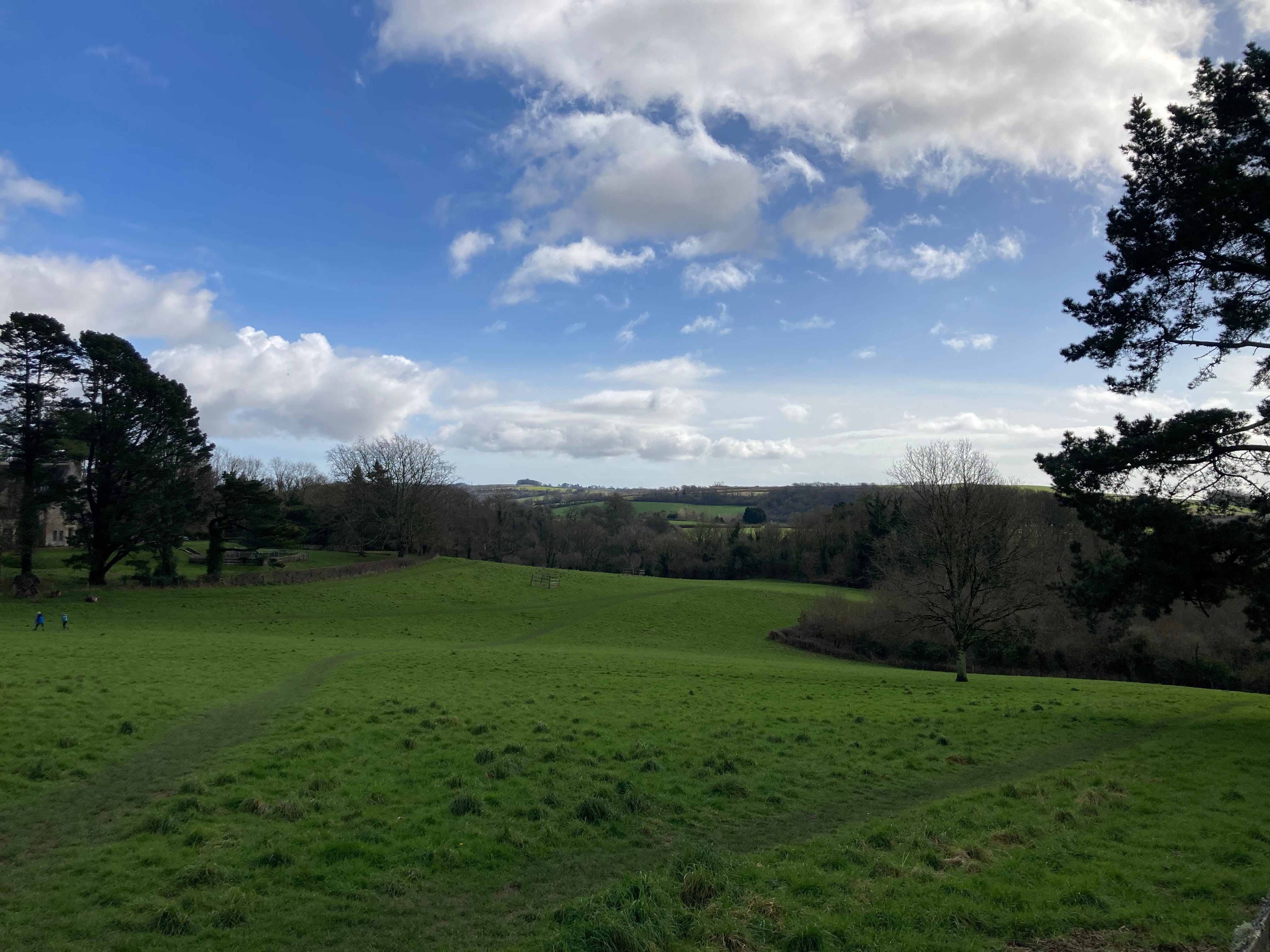
In my last letter, I wrote about Imogen Holst (1907-1984), and while she is my inspiration when it comes to portfolio careers, she was also one of the early inspirations for my 6-week walk last summer. People ask me a lot what inspired me to go on the hike, and while the answer can be simply, “I love the English seaside”, or “I wanted to challenge myself”, or “I wanted to see what happens if I walk for weeks”, I think the whole idea might actually have started with Imogen.
In March 2024, I had the opportunity to come to England to visit some archives and the places where my inspirational composer women had lived and worked. I probably got the biggest introduction to Imogen’s life, because all her papers are safely stored in the Britten-Pears Archives – very unusual for a female composer. But my inspiration from her for walking didn’t come from Aldeburgh, where the archives and her home are, but from South Devon, where I visited next.
During the Second World War, Imogen had a crazy job going around in South West England bringing music to villages, conducting bands and choirs. It was a scheme run by an organisation that would later become Arts Council England, meant to keep morale high in wartime in rural communities. Imogen tells in an interview that her area consisted of seven counties in the South West of England, and that she didn’t always have access to petrol, so she would often walk miles from a choir practice to another. She sometimes stayed in Dartington Hall in South Devon, and when she was exhausted by that job after two years, she was invited to stay there for a few days to have a holiday. It was a college run by the Elmhursts, who later became her good friends, and a place where she would also later work for a decade. On her holiday, she’s said to have just slept, eaten, and walked.
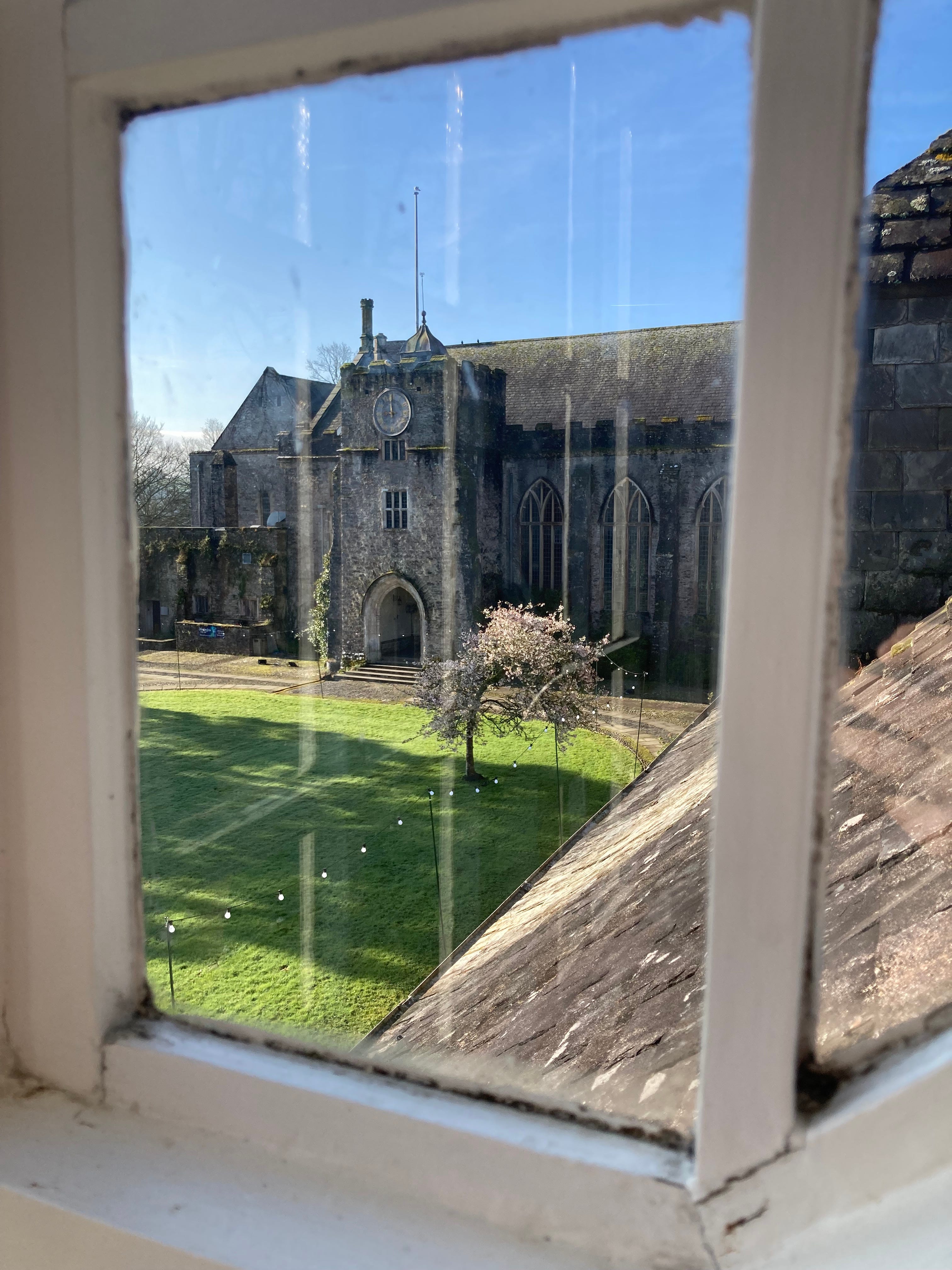
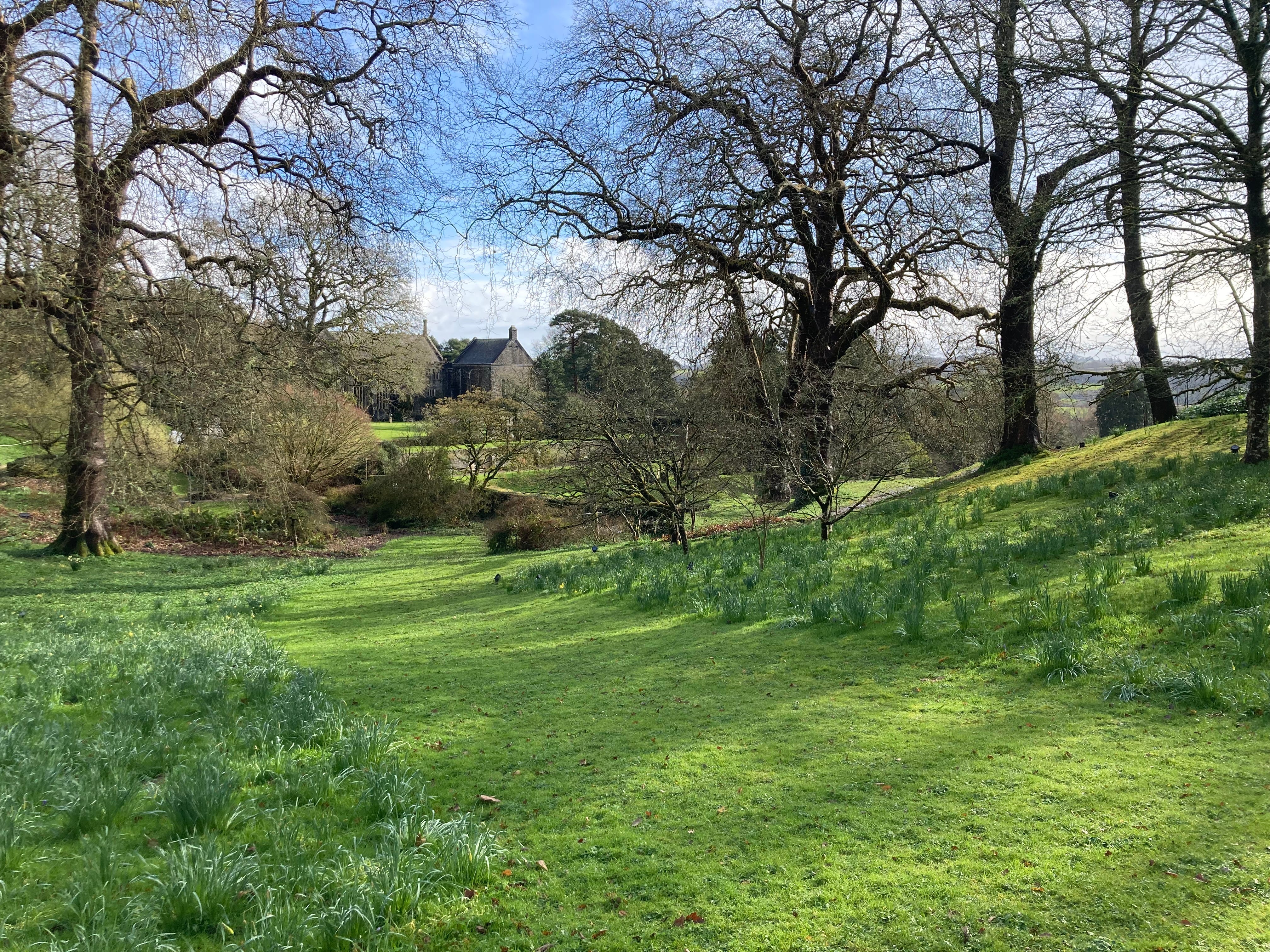
So, on my trip, while reading about her and staying in Dartington, I kind of went with the same cure. It was easy, because Dartington Hall is one of the most beautiful places I’ve ever visited. It’s centred around a medieval great hall, and the old stone buildings form a beautiful courtyard. I slept in a comfy bed, moved the table in front of the window so that I could eat and write with a view of the courtyard and the hills beyond it, and ate the hearty English breakfasts and a fish pie in the pub. I walked through the incredibly beautiful gardens and around the estate filled with forest and fields, I walked down to the river, the muddy paths lined with daffodils. I walked to the town, to the stormy sea and to Agatha Christie’s holiday home. And after all my walks, Dartington Hall was there, warm and inviting, like it always was for Imogen. After walking up the hill from the town with a heavy bag of groceries, in a drizzle that developed into proper rain, I could have a hot shower, sit in my room, drink tea and watch the light disappear behind the hills.
This idea that walking and creative work are linked lingered with me. For Imogen, walking was a necessity in her job, but she still wanted to do it while on holiday. After walking, eating, and sleeping, I just wanted to write. There was so much of this creative energy in me, and it felt like the landscape and the act of walking had brought it up. The hills and cliffs of the South West stayed with me, the landscape that is gentle and rugged, depending on the spot you happen to stand in. I wanted to learn everything about Imogen and her time at Dartington, and I wanted to find other women for whom walking and creativity were somehow linked. When I had to leave after three nights, I was unbelievably sad, even though a week in London was waiting for me. There was something really special in that experience, the old buildings, the nature, the feeling that Imogen was once again guiding me.
Later on that same trip, I flirted with a coastal path for two days, even though it was in Sussex, so not so much where Imogen had walked, but where Virginia Woolf had walked (another inspirational artist-walker). And I had walked on the Yorkshire coast and Scottish East coast before, and had a tiny dream of walking the Cornish coast for a week sometime. But afterwards, it all got a bit out of hand, and I might just blame Imogen.
Ten months after my initial trip, I returned to South Devon and stepped on the nearly 1000-kilometre-long South West Coast Path for the first time. That was another Imogen Cure for me, a week in a stone cottage about 20 kilometres south of Dartington, a stone’s throw away from the sea, reading, cooking, sleeping and walking. I started to read about walking, and I noticed how my thoughts cleared in a moss-covered valley on a particularly damp winter day. The initial Dartington thoughts hadn’t left me alone, so I had applied for and gotten a big grant for my artistic project about women, walking, and creativity, and my head was buzzing. Something that started from a feeling that wouldn’t let go, had actually transformed into a project recognised by some people who control the money. I started to plan the first, and probably the last, time in my life when I could get paid for walking, and that felt completely absurd, but also completely exhilarating.
And thirteen months after leaving Dartington, I got out of a bus on the coast, a bit north of North Devon, and started my big walk. It was no holiday, no cure, with massive uphills and downhills, sore muscles and cold nights in the tent. But it might have been just the coolest thing I’ve ever done. If there is a moral to this story, it probably is that listening to those feelings and thoughts that won’t go away, might lead to the best things in life and bring you somewhere you didn’t even know you wanted to be.
No posts
Comments
Nothing yet. Say the first thing.
Sign in to join the conversation.