
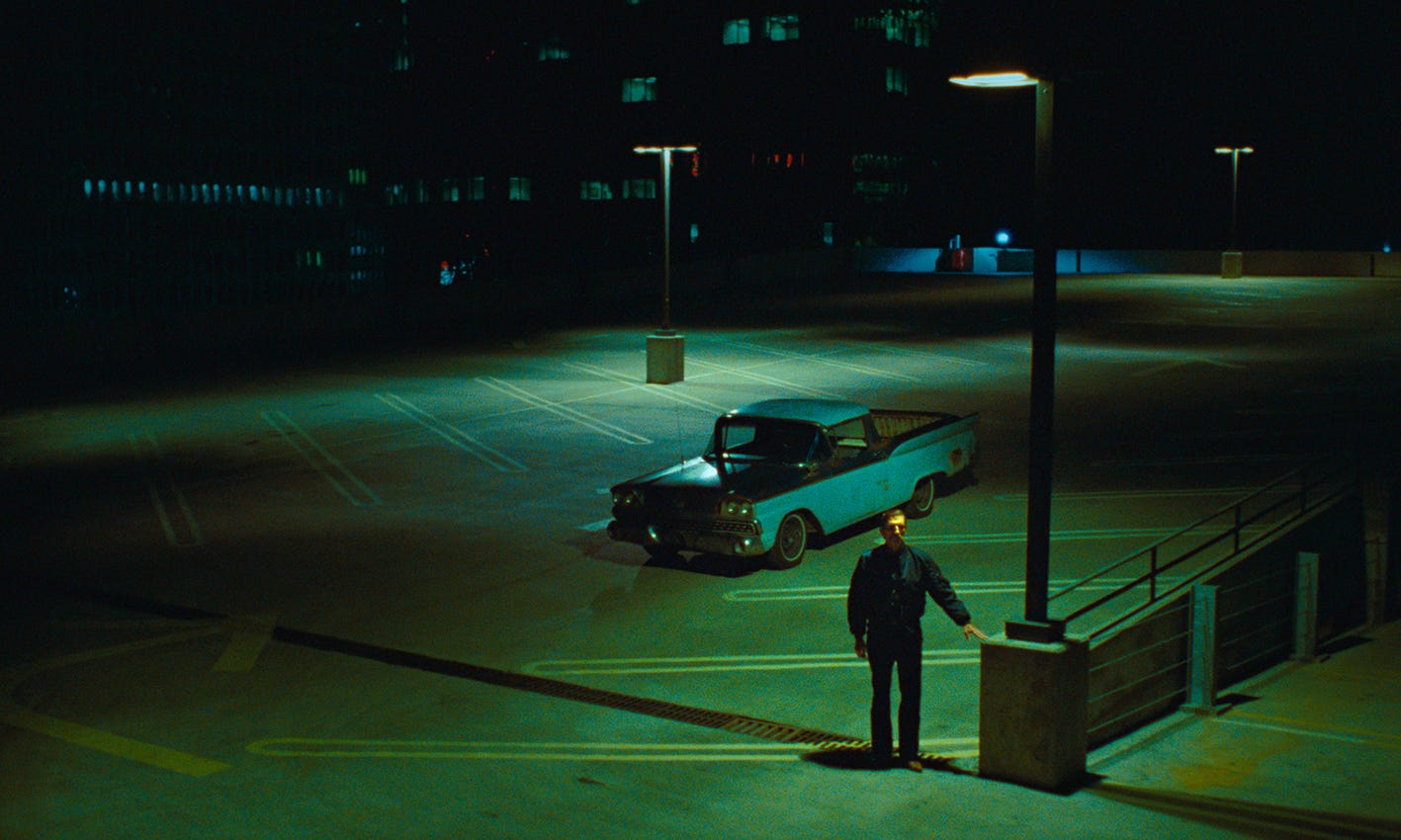
For years, my TikTok “Explore” page has been possessed by Paris, Texas (1984), directed by Wim Wenders and written by Sam Shepard. The clips are endless and looped, sliced and softened with filters. They appear like the recurring dream that is the film, with language that’s effortless, dry, and spiritual. TikTok delivers them to me set to emotionally charged background music like Jeff Buckley’s Lover, You Should’ve Come Over, as well as various Emile Mosseri remixes. I watch each clip in full and heart them automatically, with little consciousness around the debasement of consuming a 1984 arthouse film as 15-second emotional pellets. I wonder what kind of person makes these deranged and indisputably powerful homages; it’s something I’d probably do on Klonopin.
A few weeks ago, I opened the app and felt assaulted once more by the same intense emotionality, the same desert-washed longing, the same algorithmic insistence that these are for me. This time, I put my phone down, surrendered, and watched the film in full, for the first time. I resented it before I even pressed play, knowing many of the lines already. I resented the fact that the algorithm knew me so well, and even worse, that it knew the story depicted in Paris, Texas was a personally familiar one, with themes of failed communication and longing that refuses to resolve. The precision of this disturbed me greatly. The algorithm is relentless in its knowing and also correct. It was easily one of the best movies I’d ever seen. How could I be so predictable?!
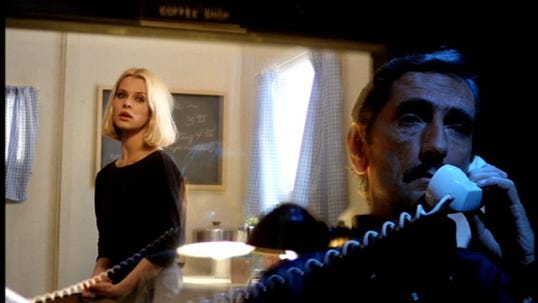
Nastassja Kinski’s voice reminds me of Holly Hunter’s, but with slightly less of a peanut-butter sound. I often imagine the musicality of Holly Hunter’s voice and think it might be my favorite voice ever, but Kinski’s is a close second. There is a texture to it, not an accent, but more of a rip inside the vowels that is soft and guttural. The most circulated clip I see on TikTok depicts her softly saying, “I hear your voice all the time. Every man has your voice.” I can’t even type these words without hearing her voice. Another frequently used quote is, “I used to make up long speeches after you left. I used to talk to you all the time, even though I was alone. I walked around for months talking to you. Now, I don’t know what to say.” Here is my favorite video, utilizing that quote. Sentimentality in Shepard’s writing occasionally creeps in, but mostly it is bone dry. These TikTok vignettes break open the film with a simple song in the background, like butterflies flying out of a corpse.
Paris, Texas depicts the beauty, disjointedness, and inherent ache of being American. It reveals the never-ending sorrow of a family broken by poverty and circumstance and the tenderness in acknowledging that no one is at fault for the breaking. It renders the loneliness and pain of being alive with a gentle honesty that hits hard. There can be much urgency and even violence in attempting a hopeful possibility of an impossible repair.
It made me cry, of course. But more importantly, it made me feel oddly proud to be alive and even to be American. Proud to endure and to have endured. Proud, even, of the ache the algorithm kept showing me.
No posts
Comments
Nothing yet. Say the first thing.
Sign in to join the conversation.