
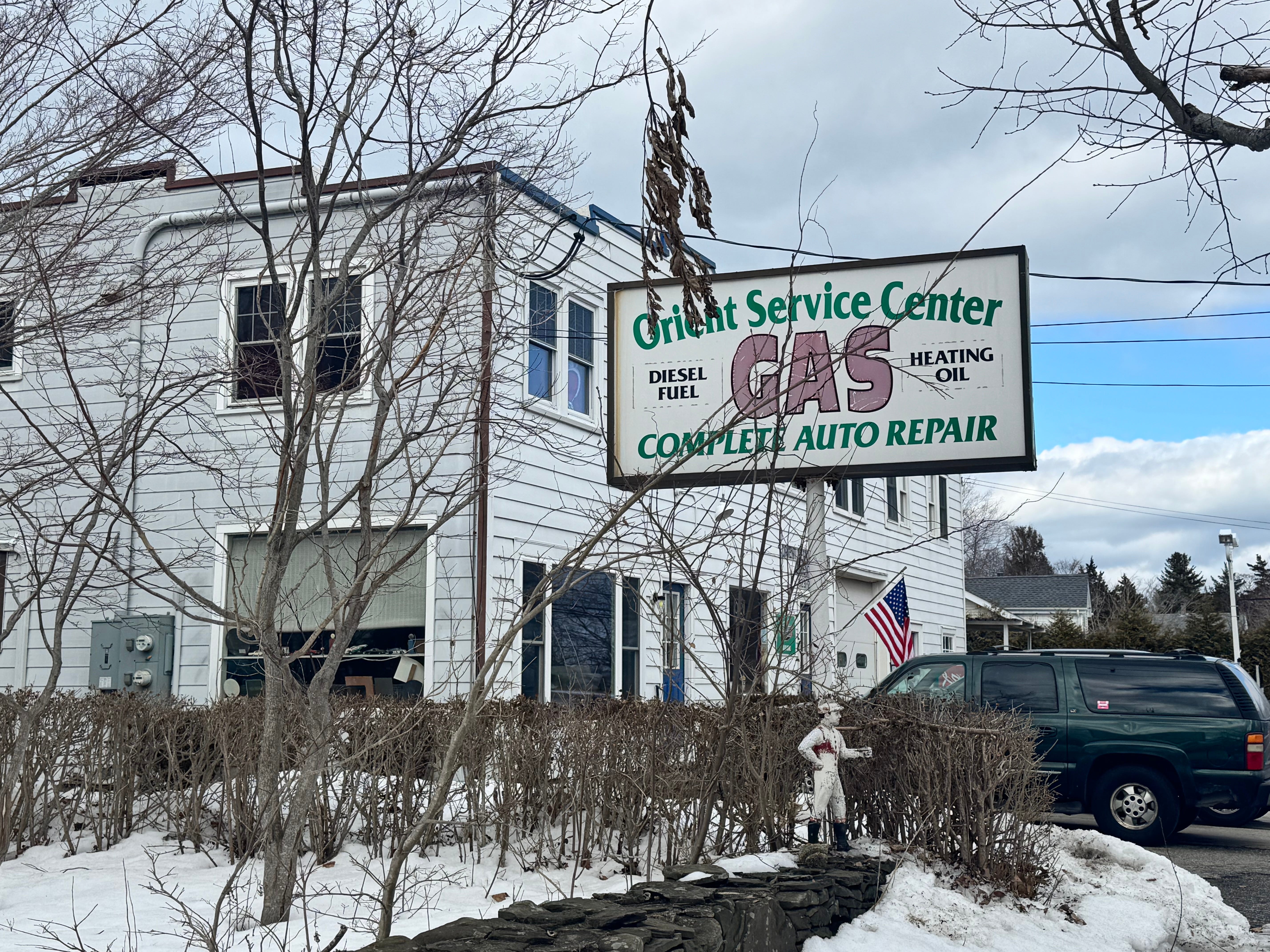
I hope my Northeastern friends are staying warm. I’m completely snowed in. The snow is heavy, too, and it just keeps falling.
A bit of housekeeping: I’m pausing all paid subscriptions, for now. Between returning to the city next month, and everything else, I can’t keep my word to paid subscribers here, and I’m sorry.
*
My first month living in Orient, New York, I saw a flyer for a poetry club taped to the window of the country store. Curious, I showed up, not knowing a soul. That’s how I first heard about Billy Hands, a central figure in the North Fork poetry community. He also runs the Orient Service Center, the only gas station and auto mechanic in town. My poetry mentor, the late Robert Funge, was an auto mechanic in San Carlos, California, who took his pension at fifty and lived on black coffee, cigarettes, and writing for the rest of his years. I loved Robert dearly up until his passing fifteen years ago. So I immediately felt something kindred and familiar in Billy. I love cars and poetry, and feel they pair well together, something corny about how they’re both here for the journey and not necessarily the destination.
Billy Hands is a poet, performer, auto mechanic, and community pillar. He grew up in New Jersey, the son of a Major League baseball player for the Cubs. He is the Poetry Editor for the East End Beacon. He lives in Orient, New York. His son, Alex, works alongside him at the Orient Service Center.

*
Billy: I was working on the saddest song I’ve ever heard in my life.
Marissa: You were writing a sad song?
Billy: No, I was trying to figure it out. Like, what’s the saddest song?
Marissa: Nutshell by Alice in Chains?
Billy: I was thinking Tears in Heaven by Eric Clapton. That’s a real tearjerker. George Jones did a song called He Stopped Loving Her Today. You should read the lyrics, not just the song, because when you hear the song about a man who stops loving a woman, you figure, okay, that’s it. That’s the end of the relationship or marriage or whatever. But there’s more to it as far as why he stopped loving her today. And I’ll leave you in suspense for that.
Marissa: I need to know what happened and why he stopped loving her today, Billy.
Billy: Reading it without the music is good. Reading it like it’s a poem. It’s a tearjerker.
Alex: He said 60 and 80?
Billy: Yeah. I’m doing 60 and 75.
(He picks up a poem.)
Billy: So this is all pretty soft. It looks fluffy, milky, and you think the weeds are moving back and forth. It finds a suitable rock… From a calculated height to split open its prey. Today it’s a crab. That’s an important line, because who is the victim today of this person? Today it’s the crab. Maybe last weekend it was a salamander. Maybe it was a robin. And those are the people that I think he, or this person, is seducing. That’s what I took.
Marissa: I see.
Billy: I could be wrong. (to Alex) Come on, Charlie. A buck and a half.
Alex: I was just gonna say 120. 130?
Billy: Okay, deal. How Orient service negotiates prices.
Marissa: No, trust me. I get it.
Billy: But you know, sometimes, you’ll write something, and all you want is for the reader to connect, even if it’s not what you had in mind, but they made a connection with you, the writer.
Alex: Or you make them think they made a connection.
Marissa: Right, the deception at the end.
Billy: Billy Collins is one of my favorite writers. One of his books is called The Trouble with Poetry. And of course, the poem is in there. But the opening poem is called “You, Reader, You,” and it’s a great preface to this collection. I can’t quote it. I can’t even quote my own stuff.
Alex: Well, that would be copyright infringement.
Marissa: Who are some other writers who have influenced you?
Billy: It’s funny. It’s gonna sound cliché. I love Billy Collins very much. I grew up with the Beat poets. Didn’t understand them in the 70s, but I understood them better in the 80s. I’m a big Jack Kerouac fan.
Marissa: I have the same birthday as Frank O’Hara.
Billy: I love O’Hara. I love Sylvia Plath. And not to sound like, “oh, that’s easy.” I love Emily Dickinson. I love Poe. I do not like World War I poets.
Marissa: Okay. Such as?
Billy: Well, I mean, Cummings kind of falls in there, but I like Cummings. I found with the World War I poets, it was a lot of love poems, a lot of writing letters home—“I’ll wait for you,” that type of thing.
Marissa: Yeah.
Billy: I always look at what is going on in the world when this person is writing. One of the funniest things is that Emily Dickinson and Edgar Allan Poe wrote at the same time. Poe spent a little time in Massachusetts, but pretty much around Baltimore, Delaware, that area. And here you have Emily, who had everything at her fingertips as far as education and publication because of her dad with the college, but she didn’t leave the homestead much. I think she only published three poems while she was alive. It’s funny to me that Dickinson and Poe wrote about very similar things at the same time, but there was no interaction. And of course, Emily didn’t have much interaction with newspapers and things like that. She just didn’t do it, yet she did what she did. The funny thing about Emily was that she wrote more winter, spring, summer, and fall. And he was like—
Marissa: Winter.
Billy: Winter and autumn.
Alex: (picking up the phone) Balls and wieners!
(laughter)
Oh, they’re kosher. All right, man, your truck’s all set. See you soon.
Billy: Anyway…
Marissa: T.S. Eliot was World War II, right?
Billy: Yeah, Eliot was great. So anyway, I ended up with the Beat poets. I was taught by some of them… so I’m being taught things in college in the late 70s, early 80s. Obviously, the people that are teaching me were products of the Beat poetry era. I’ll never forget, one time, John Giorno—we were doing a writing thing. We weren’t in a class, we were in an old house or something. John Giorno showed up, and I didn’t know who he was. There was a flyer. I had him sign it, and I still have it. John Giorno’s signature.
Marissa: Here in the shop? Or like at home?
Billy: Oh, no, home. Which is like here. And then I started to learn a little bit more. I wish I had met Burroughs. I really do. Beat poetry is almost lyrical, and it performs well. But the trick is: it’s one thing to do something audibly because people are looking at you. If you’re an animated person, you can write a piece of shit that would go over really well because they’re looking at your face or your expressions, but then you put it on paper and they’re reading it with a cup of tea in the morning and it falls flat.
Alex: Nothing like a flat cup of tea.
Marissa: How old were you when you started writing?
Billy: My grandfather was big in music. He had a band. He was a character. He had a recording studio in his basement. So, of course, I liked playing with the drums and percussion and things. I wish my parents had forced me to play piano. I also had an English teacher in 7th grade. He was really good. He was a hippie—the ponytail, dungarees, type of deal—but he was good.
Marissa: In Jersey?
Billy: It was in New Jersey. He did things in our writing class that made us want to write. You remember overhead projectors? We walked into class one day, and the lights were out. In the center of the room, the overhead projector was propped so the light shone down on the floor, where his pants, shoes, and shirt lay like a flattened-out person, like a colorform. Next to them was a piece of paper that read: “There’s a strange light. I feel something I’ve never felt before. I don’t know what’s coming over me. I think that…” and then it scribbles. Five minutes later, he walked in, startling me because I’d never seen him in anything other than those clothes on the floor, and he turns on the lights—
Marissa: He’s naked!
Billy: No! This is a public school. 1976. He tells all of us to sit down and finish the story. And we recorded an album in 7th grade. We wrote poems, and he wrote the music for them. He’d already spent a week dissecting Pink Floyd’s Dark Side of the Moon with us. His name was Bill McGuire. Years later, I wrote a poem called “Bill Maguire.” After breaking down Dark Side of the Moon, he had us pair up and write our own poems, many about time. I partnered with a girl named Kim Brower, and we wrote one called “Where Has It Gone?” Bill set the poems to music, and we recorded an album called But Seriously, Folks. The cover was illustrated by Greg Hildebrandt, the Lord of the Rings artist, and the Little Friskies cat guy. Seventh grade.
Marissa: You were already on the road to stardom?
Billy: Not stardom, but between my grandfather and Bill McGuire... Also, I’m a big Elton John fan. I was blown away by Bernie Taupin. The lyricist. I didn’t realize it was unorthodox to have the lyrics written, and then the music gets done to go with the lyrics. But with Elton and Bernie, it was two rooms, two countries. That’s how they did it.
Marissa: How does living out here impact your writing?
Billy: Oh, it’s great, because I’m outside all the time. And the people. I spend a lot of time on the water year-round. Scalloping, clamming, fishing, and writing year-round.
Marissa: Do you live on the sound or on the bay?
Billy: Sound, but I’m not on the water. I’m on the side of the river.
Marissa: So you like to write near water.
Billy: Yeah, and water comes out in a lot of my pieces. There’s a lot with nature. I love cemeteries.
Marissa: Me too.
Billy: I do a lot of writing, listening to music. I’ll put on Dylan’s Blood on the Tracks. Simon & Garfunkel. John Lennon—Plastic Ono Band’s first album. Springsteen’s Greetings from Asbury Park. If I’m in a funky mood, maybe Kraftwerk’s Autobahn. Catcher in the Rye is my favorite book.
Marissa: Makes sense.
Billy: This guy said to me one day that he wanted to discuss my process with me. And I thought about it and said: that’s kind of like seeing me without my pants on.
Marissa: You felt exposed?
Billy: It’s personal.
Marissa: Listening to you talk about your father on that podcast made me think about how so many writers have parents with almost mythological stories. I grew up knowing what was in front of me was a story. It made me sort of obsessed with stories.
Billy: A lot of times you don’t realize it until years later. You’re living your life and it’s like, “oh, that’s just that.” Then you reflect, and he’s passed, and you realize: “son of a gun.” And that’s worth writing about. But sometimes you’re too close to something to write about it. People say, “you must write about cars.” I’m too close to it. There’s too much.
Marissa: Or maybe, do you just prefer to keep cars and writing separate?
Billy: I wrote one piece called “Love Poem.” I wrote it with Elaine Sexton. It’s about my car, where it has taken me, which turns into life.
Marissa: Is it the same car you still have?
Billy: Yes.
Marissa: Tell me about it.
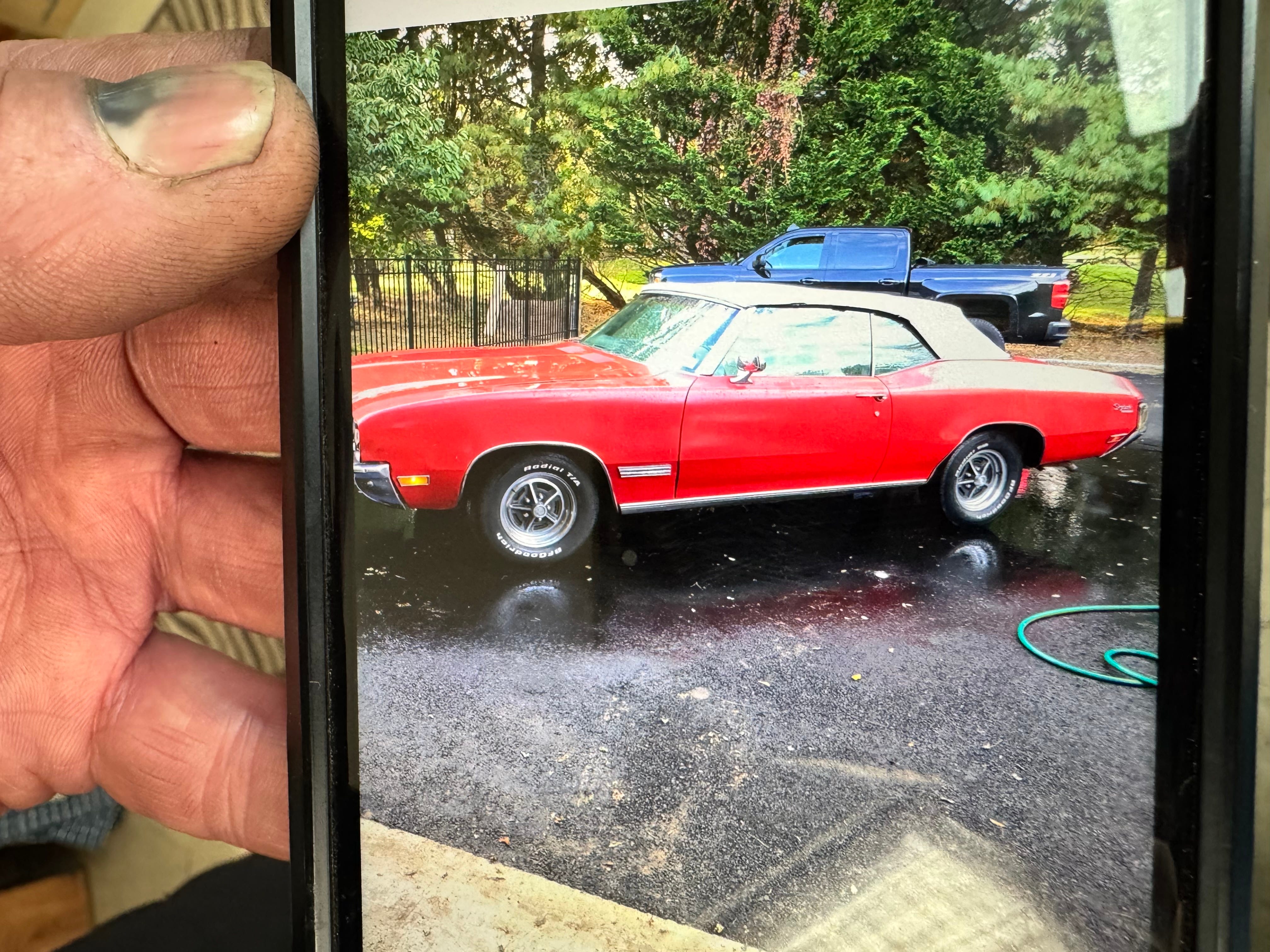
Billy: It’s a 1971 red custom Skylark convertible. All original. I bought it in 10th grade. It needed work. I bought it from my mother in 1978. I got married in that car. We drove away with the top down. I brought all three of my kids home from the hospital in that car.
Marissa: That’s a huge love story.
Billy: Yeah. And she just sits in my garage.
Marissa: Is she here?
Billy: Now? Not in this weather.
No posts
Comments
Nothing yet. Say the first thing.
Sign in to join the conversation.