
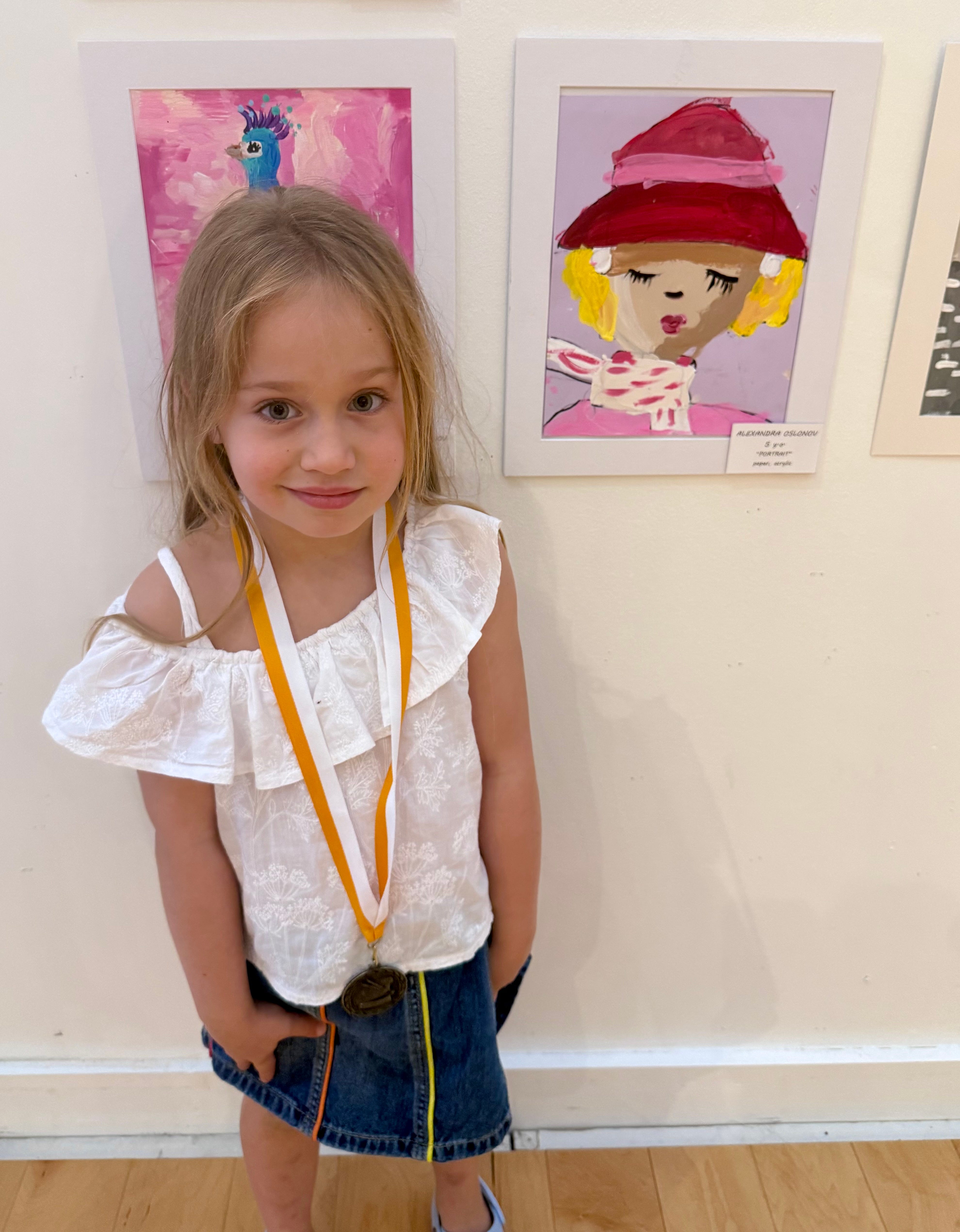
My daughter recently made the Broadway Company competition team at her performing arts school. (I won’t bore you with further explanation, other than to say I might be expanding my travels to the glorious towns of rural Florida in the not-so-distant future.) We flew to the last-minute audition on a whim, with our one-year-old baby tornado in tow, and she somehow managed to overcome a rare bout of shyness and shine brightly like the little attention conduit that she is. At the end of the audition, they informed us that she was in.
The surge of pride I experienced was euphoric, much like the times I’ve watched her on stage, performing with a fearlessness and energy I’m endlessly impressed by. (Perhaps because it is so far removed from my own comfort zone.) It also mirrored the highs I’ve experienced from my own professional accomplishments, which have lately migrated towards less buzzy and more family-centered pursuits. I allowed my mind to start wandering, an entire acting future playing out like a montage in my brain. What if she’s destined for Broadway? Is this how Natalie Portman started out? Maybe, in the age of AI, this distinctly human skill is something we should encourage her to pursue? All of a sudden, her accomplishment was connected to my happiness, her win to my pride, her future to my daydreams.
A couple of weeks later, Sasha lacked her usual spark at her school recital. To a casual observer, she was fine, but my partner and I could tell that she was tired and unfocused, typical five-year-old traits that come with having an overpacked schedule and an aversion to early bedtimes. As I watched her fumbling with her Jasmine costume instead of channeling her focus into the show she had spent months preparing for, it took everything in my power to not project my frustration. Surely, Natalie Portman had never dozed off during “A Whole New World!”
I’m certainly not alone in this pursuit of excellence for my child. In fact, one may say I’m lagging behind. As my daughter moves beyond her preschool years and into a more advanced stage of development, certain parents around me are becoming increasingly serious about extracurriculars and accolades. While most still approach their kids’ after-school activities with casual non-commitment, others are becoming bona fide momagers—chauffeuring their overstimulated offspring from one class to the next, signing them up for private lessons, creating designated Instagram accounts to showcase their evolving talents. With it comes this quiet undercurrent of competition, as though there’s suddenly more to cross-reference than luxury SUVs and European summers.
I never set out to participate, predominantly because there’s only so much time in the day, and I’m still very much committed to my own professional pursuits. And yet, I also happen to have a child who loves being challenged, has never said no to an extracurricular activity, and happens to have a natural gift for the arts. As I see her shining on stage or being praised by her (unfazed, Russian) art teacher, I experience a desire to push her harder, to invest in her talents and drive her to lessons and see how far we could take this. What started as intuitive parenting, built on cultivating her budding interests, ultimately landed us at that audition on that Monday evening, with me plotting out her Academy Award-winning future.
There’s absolutely no doubt that most great talents are developed from a young age, and that behind many a child prodigy is a Richard Williams who put in hours of relentless work. Friends of ours, whose daughter almost made the U.S. Olympic skating team, spent years walking her to Chelsea Piers at 5 a.m. every morning. Another family we know, whose child recently got signed by a professional sports team, dedicates six hours a day to taking him to practice, a commitment that has altered their life and practically become a religion.
My partner, who comes from an athletic background (wrestling, baby!), is supportive of this phenomenon, for he believes that honing a child’s focus and determination from a young age gives them a step up in life. I don’t disagree, and yet I also see the downsides and the nuances. I worry about the burnout from thousands of hours of practice that leads to child ballroom dancers never dancing at parties, and former tennis players never again touching a racket. (I’ve seen both examples in real life.) I worry about the pushy stage parent energy that trickles down to a child and makes them feel like their value lies in their accomplishments. After all, children sense pressure, and there is something about always needing to please the one person who is supposed to accept you unconditionally that can do a number on one’s self-worth.
Most of all, I worry that pouring unilateral focus and energy into one single activity during childhood may impact other areas, not allowing for the development of a strong sense of identity outside of the activity. I don’t like using myself as an example of anything, because my accolades aren’t high enough, and I lack a level of confidence and follow-through. And yet, I see a certain value in how I was raised. I was guided but never pushed, and with that, my interests evolved on their own, quietly circulating through a web of pursuits until I finally found myself in writing. I never had an identity crisis, because I always felt an inner freedom to follow an inner compass and be whoever the hell I wanted. My parents were my harbor and my safe haven, and disappointing them was never a threat. Dave, the more disciplined and goal-oriented of us, spent his youth listening to guidance and following a more linear path, which ultimately led to him working in the wrong industry for a full decade before transitioning to hospitality. (He also had no choice but to support himself in lieu of bopping around in the pursuit of self-discovery, but let’s leave privilege out of the conversation just this once.)
Like most modern parents, we’re always thinking about what we want to instill in our children in order to prepare them for this world—a growing challenge given that we recognize said world less with each passing day. And yet something tells me that, in the age of robots, what will matter most is our humanity and individuality. What I wish for my daughter is not an Academy Award, because there may very well be no Academy Awards in ten years. What I hope for her is to preserve her curiosity, her love of learning, her sense of self. I want her to participate actively in her own life and feel confident making her own decisions. I want her to know how to think for herself in a landscape where basic cognitive skills are being diminished and independent thought is being drowned out by algorithms. I want her to know how to choose for herself, how to fight for herself, how to love for herself. I want her to know herself, and not the version of herself that I, or the world, tells her to be.
No posts
Comments
Nothing yet. Say the first thing.
Sign in to join the conversation.