
Every August, my family, by which I mean the family into which I was born, my sisters and my parents, our husbands and our children, decamp to Austria. It’s the country from which my mother hails and has been a part of my summer for my whole life. We go for weeks and yet we pack extremely light. This isn’t because it’s so hot that you barely need clothes - on the contrary, the weather can be extremely unpredictable. You don’t know if it will be 30 degrees and blue skies or 12 degrees with snow on the tops of the mountains.
No, the reason we pack so light is that there is no need for smart clothes. For on this holiday, in the heart of the Alps, we embrace not only the Austrian way of life, but the Austrian dress code. If I’m off somewhere where I want to look nice, instead of donning my usual - an effortlessly chic Wiggy Kit dress for instance - I would always wear a Dirndl. This traditional Austrian garb is, certainly in Salzburg, widely worn. At most restaurants you’ll find the waitresses dressed in dirndls, on Sunday as the catholic country celebrates Mass in one of Salzburg’s number of churches, the vast majority will be in Tracht or Austrian national dress.
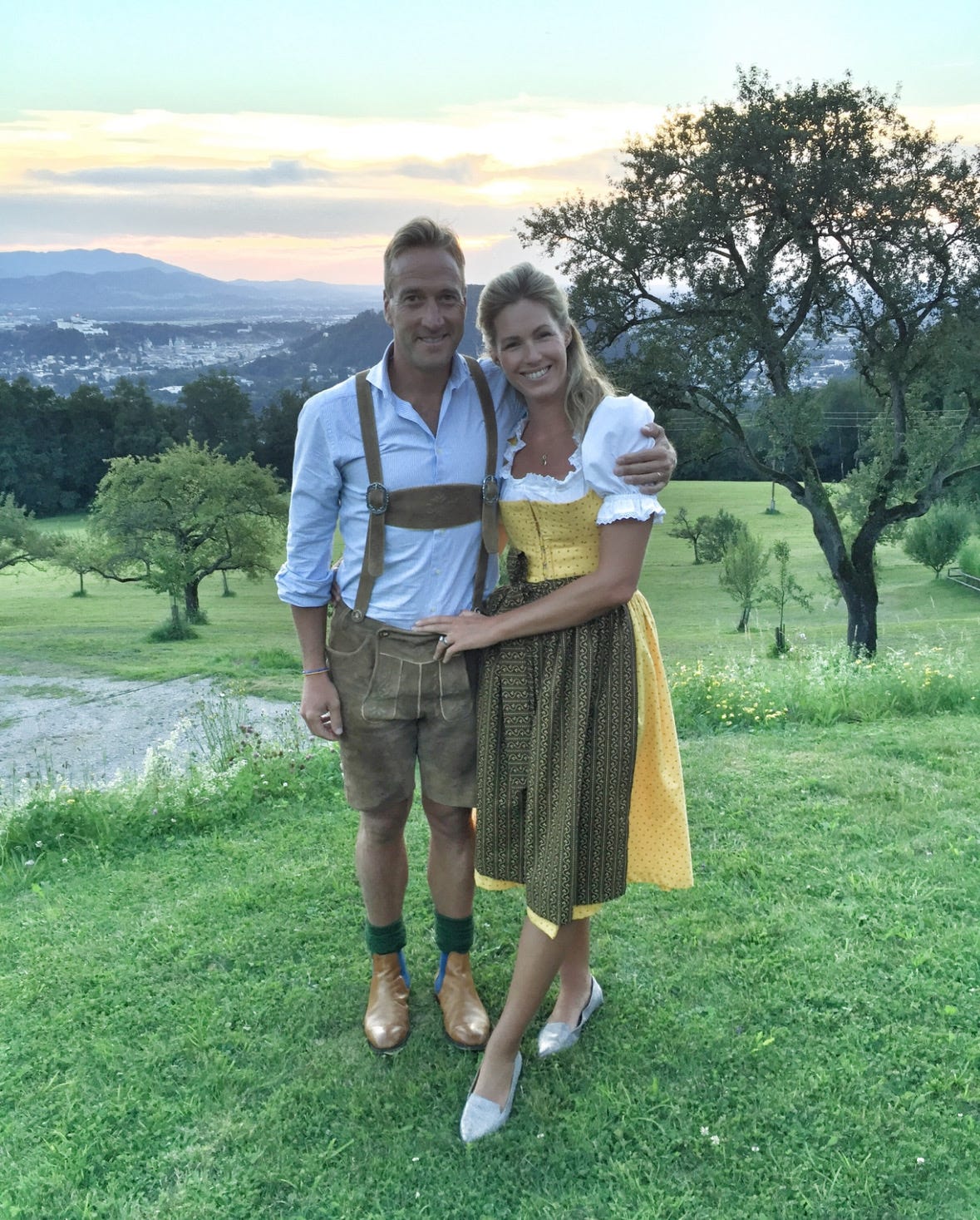
It’s become the stuff of legend for our family. For as long as I can remember, the Dirndl cupboard was revered. Stuffed with 40 odd dirndls, passed down through the generations of our family, there is something for everyone. Hidden in there are velvet dirndls worn by my great grandmother that she had made at the turn of the twentieth century, cotton dirndls made by my mother in the 80’s, linen dirndls which are shorter having been hemmed meaningfully in the 60’s. There are dirndls for funerals, for weddings, for christenings, for Christmases, for climbing mountains, for babies, children, teenagers and grandmothers. Whoever you are, whatever age or shape you are, there’s something in there for you.
The dirndl consists of a short blouse with puffy sleeves. It’s half a blouse really as it finishes just below the bust, so that the linen bodice that forms the upper part of the dirndl can fit as tightly to the wearers body as possible. It’s then finished with a full skirt and an apron. And even though its design has not changed in hundreds, if not thousands of years, it is far and away the most flattering, practical and comfortable piece of clothing I wear. The bodice will give anyone a waist. Hooked tightly across the the front, it pushes up the wearer’s breasts giving even the most flat chested lady an impressive cleavage. I remember even my school friend Nicky, affectionately nicknamed niente on account of her small breasts, was rewarded by a dirndl.
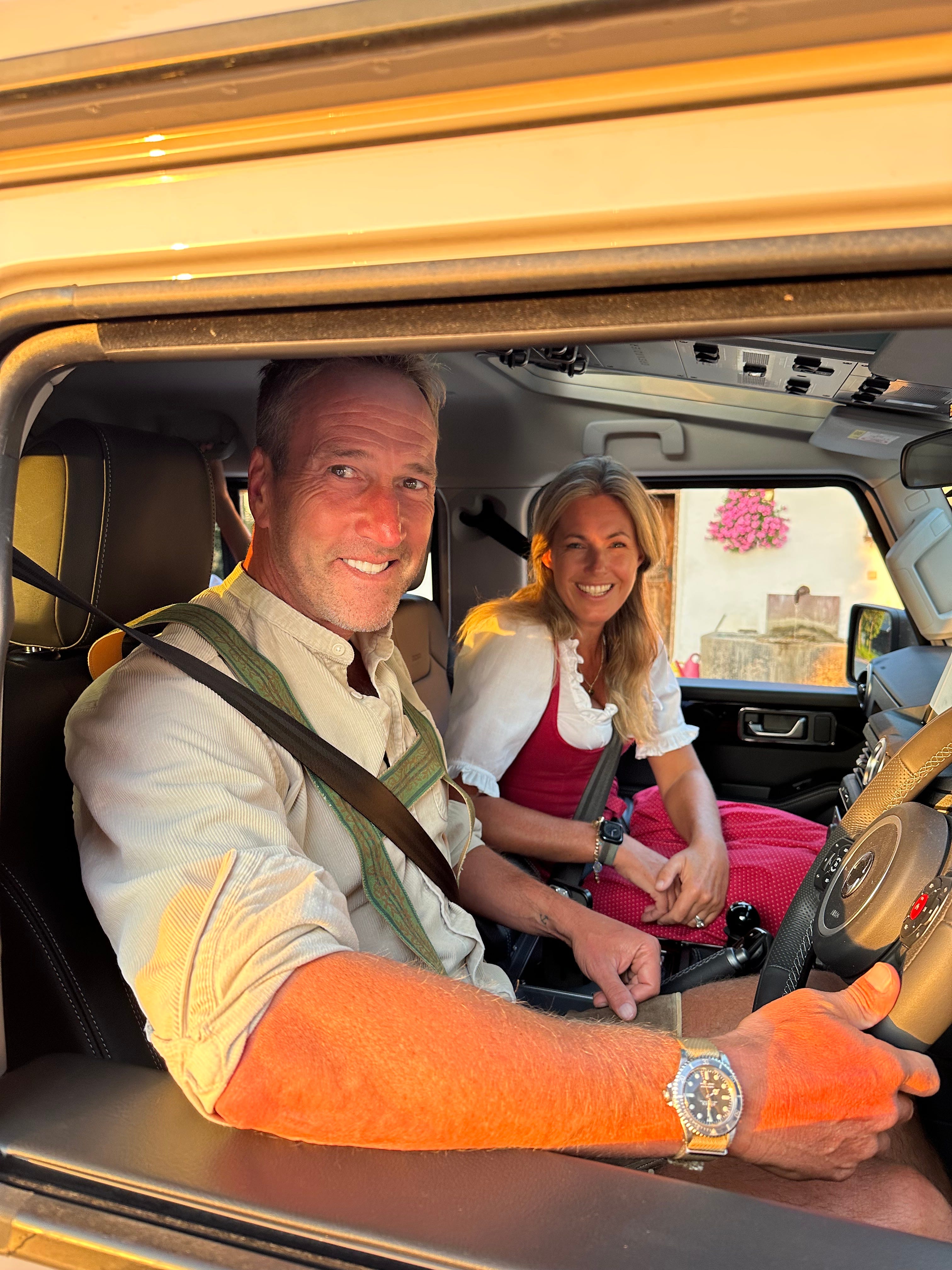
For those with a less defined waist, the bodice, in what appears to be a feat of extraordinary textile engineering, pushes stuff up and stuff down and, combined with the positioning of the apron, gives everyone a waist. The apron is then tied with a bow in the front, never at the back (a rookie mistake that tells all other dirndl wearers that this is your first time in a dirndl). In fact, the positioning of the bow is significant - it tells others about your marital status. Tied to your left you’re single, to your right you’re married, in the middle you’re committed but not married. At least that’s what I’ve been told but it could vary.
But isn’t that clever, a piece of clothing that not only flatters a woman’s assets but also communicates her romantic availability? Like a kind of dating app that’s been around for hundreds of years.
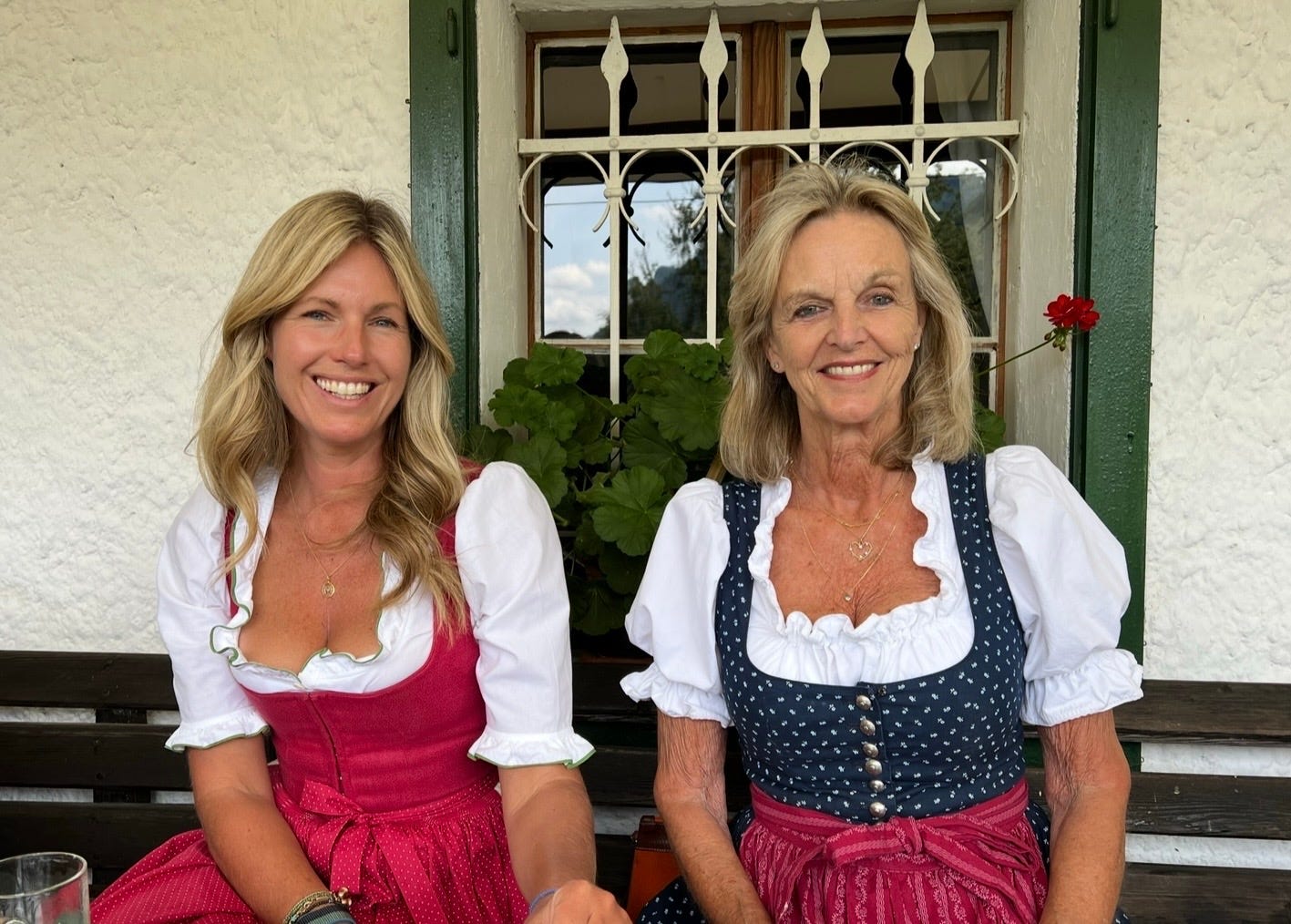
You can change your dirndl up as you like, making it as flexible as it is flattering. Add in a silk apron for some evening glitz, change the blouse for one with a fancy edging for a more formal dinner. It’s also very eco friendly as mostly you’d just wash the blouse and the apron the leave the rest.
Which is why I always wear a dirndl a lot when I’m Austria. It’s not a naff tourist thing like all those people at the Oktoberfest in Munich, it’s genuinely what Austrians wear. And as a mother negotiating body positivity for a future generation, I love how it flatters a healthy woman’s body. It’s not a backless dress that can feasibly only be worn by someone who has no need for a bra. A dirndl shamelessly celebrates the curves of a healthy woman, embracing wide hips and a healthy bust. It’s like it’s a dress for women who enjoy life, who rejoice in good food, are strong enough to scale mountains and want a piece of clothing that will enable them to wrangle cows, a steep cliff face, bear children and still look effortlessly sexy.
I have dirndls for thinner times, and those for larger times. I just about managed to squeeze into one when I was seven months pregnant and while breastfeeding. I love that I can simply loosen the apron if I’ve enjoyed a large Schnitzl and get on with ordering Kaiserschmarrn for pudding.
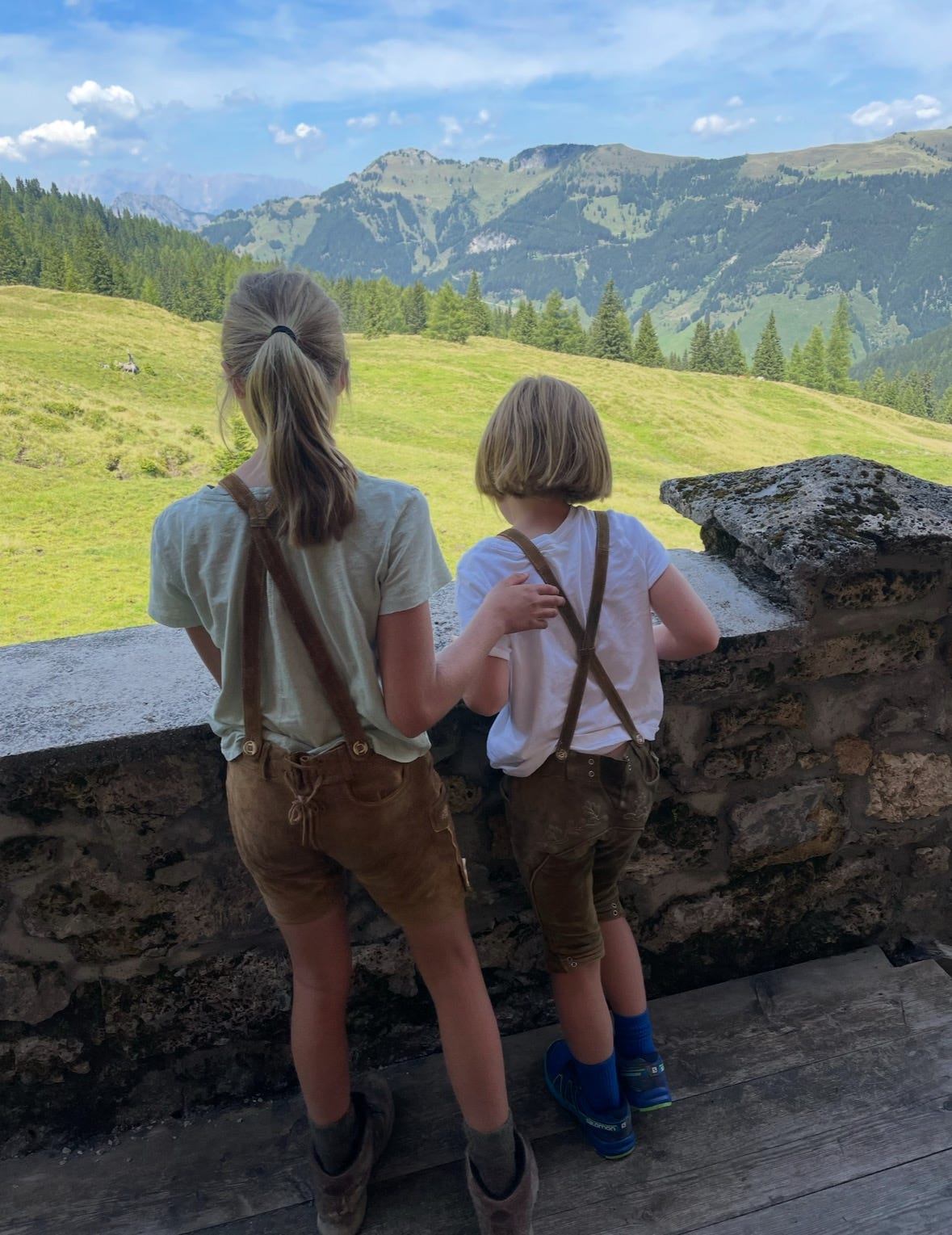
It’s not just the girls who embrace this dress. A lover of shorts anyway, Ben is rarely seen out of his lederhosen while in Austria. Another genius piece of clothing, their literal translation, leather shorts, do not do them justice. Traditionally made from Hirschleder - the tough, beautiful leather from a stag, Lederhosen get more comfortable and more beautiful the more you wear then. And by wear them, I mean, beast them. These are trousers that are made to slide down a rocky face on your bottom when it gets too steep to walk, trousers that are enriched by the wiping of your dirty knife on. Some people, it is said, even pee in them. I’ve not seen (or smelt) this first hand but it gives you an idea of how robust they are.
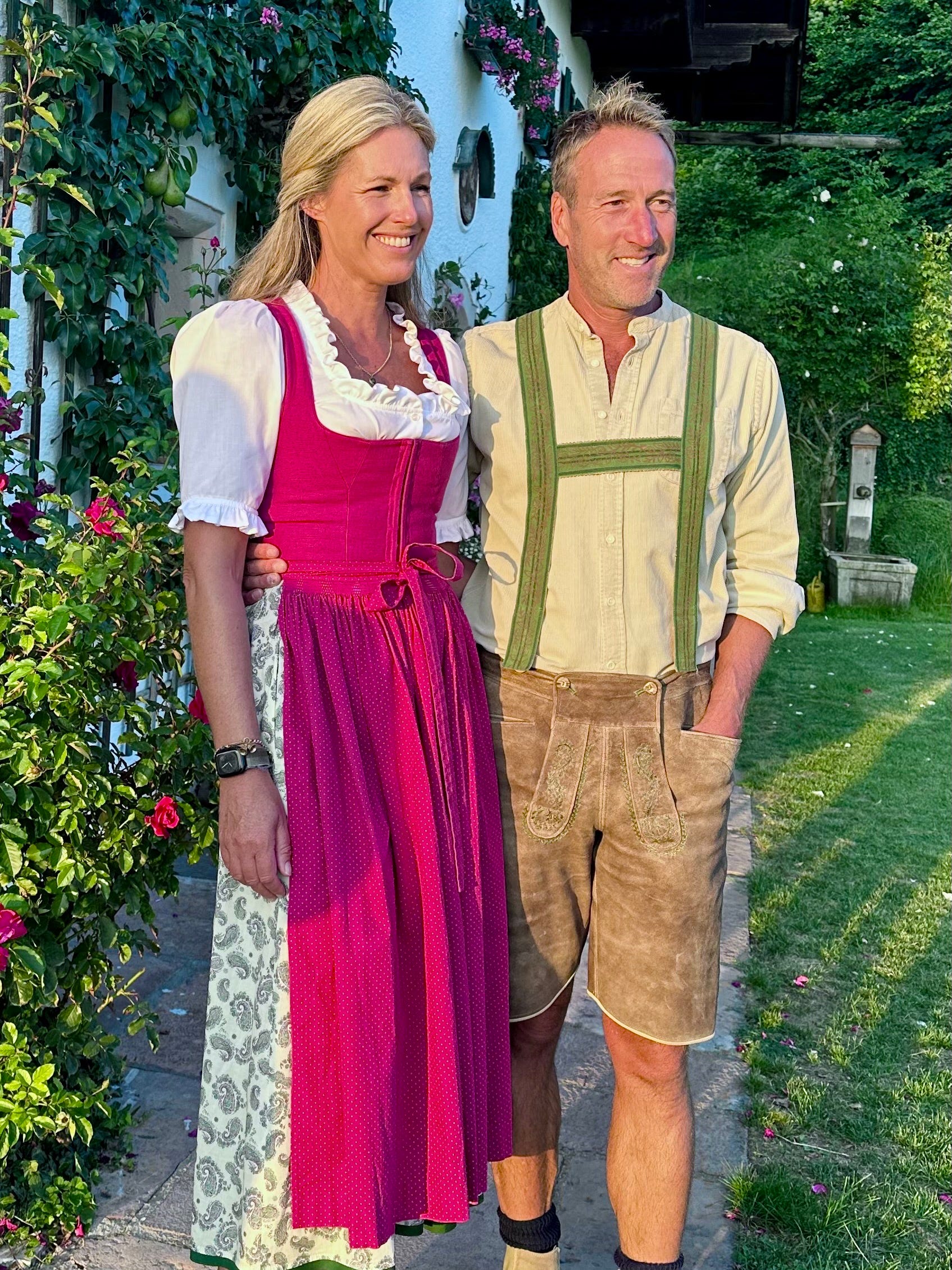
The lederhosen cupboard, I will admit, is smaller than its Dirndl counterpart. A generation of our family is just girls, so for thirty odd years, the lederhosen were poorly used. But family holidays in Austria were always a good barometer of whether a boyfriend was a keeper or not, as was their willingness to put on Onkel Alfred’s lederhosen. My two sisters and I are all married and I’m happy to say that all of husbands are not only happy to wear Lederhosen, but look absolutely splendid in them. In fact, for Ben’s fiftieth birthday, I had some made especially for him by the company who made Lederhosen for my grandfather and his father before him.
My nephew Alby, who has just turned 6, inherited his Lederhosen from his older cousins, his idols. Imagine then, when he explored the pocket, and found a little horn handled knife, tied with a piece of string to the lederhosen, from several summers ago. He has not taken them off, even to sleep. My sister, Olivia, his mother, is delighted. With Alby only wearing his Lederhosen, there is much less washing to do. These tough trousers require, at most, a wipe.
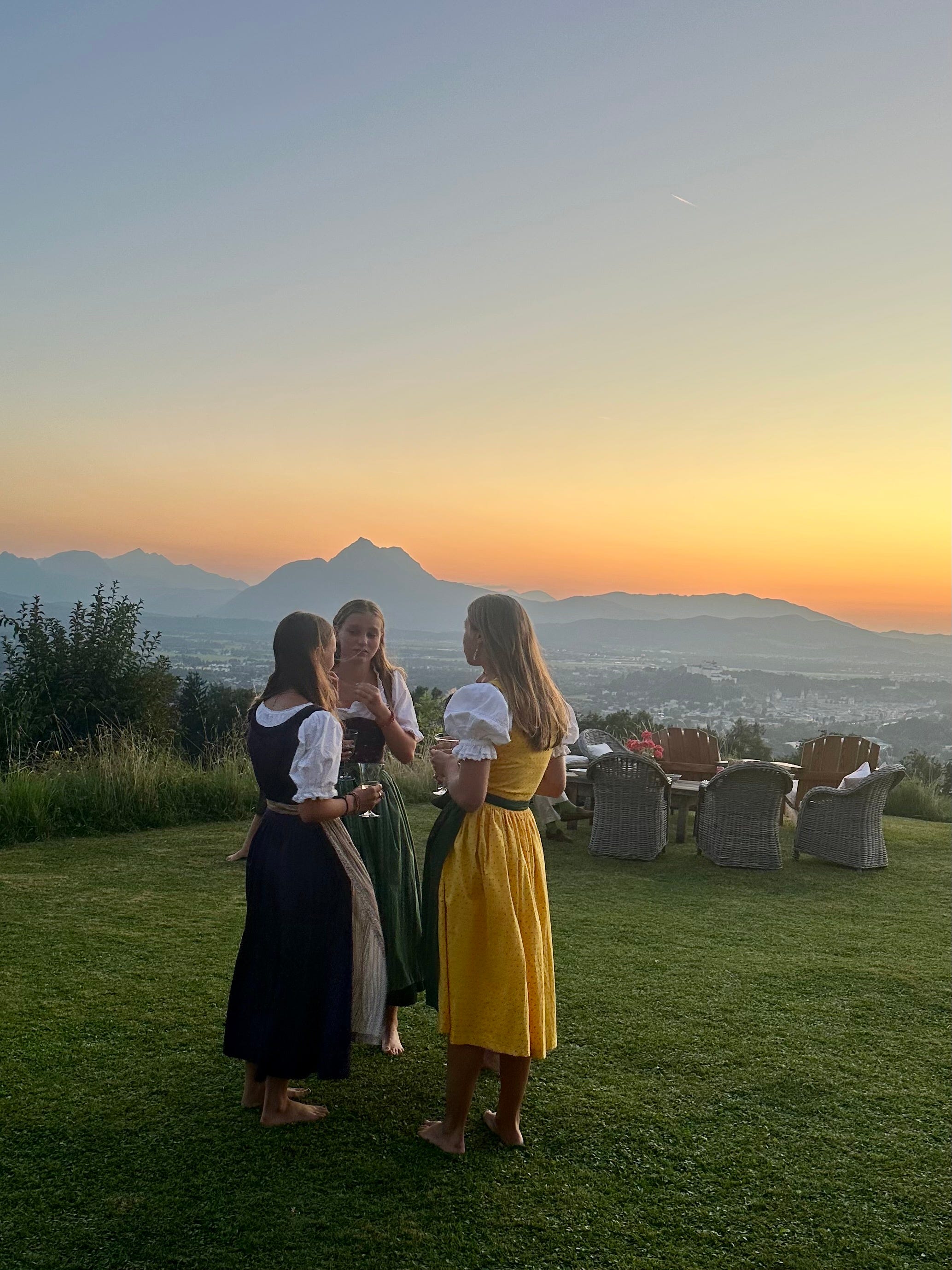
This summer, for the first time, the children had some of their English friends come and stay in Austria. There had been a lot of talk about the Dirndl cupboard but this group of girls were fully committed tomboys, usually seen in jodhpurs and sensible boots. But a sense of hush fell as they they opened the hallowed cupboard and one by one they those their Dirndl and I realised that we’ve created a new generation of women who love a Dirndl.
This is my free Substack. If you’d like to know when the next one comes out do subscribe
Or if you think someone else would like it you can also share.
No posts
Comments
Nothing yet. Say the first thing.
Sign in to join the conversation.