
Tape Study 2.0: Post-Wrestling School Tape Study for Wrestlers
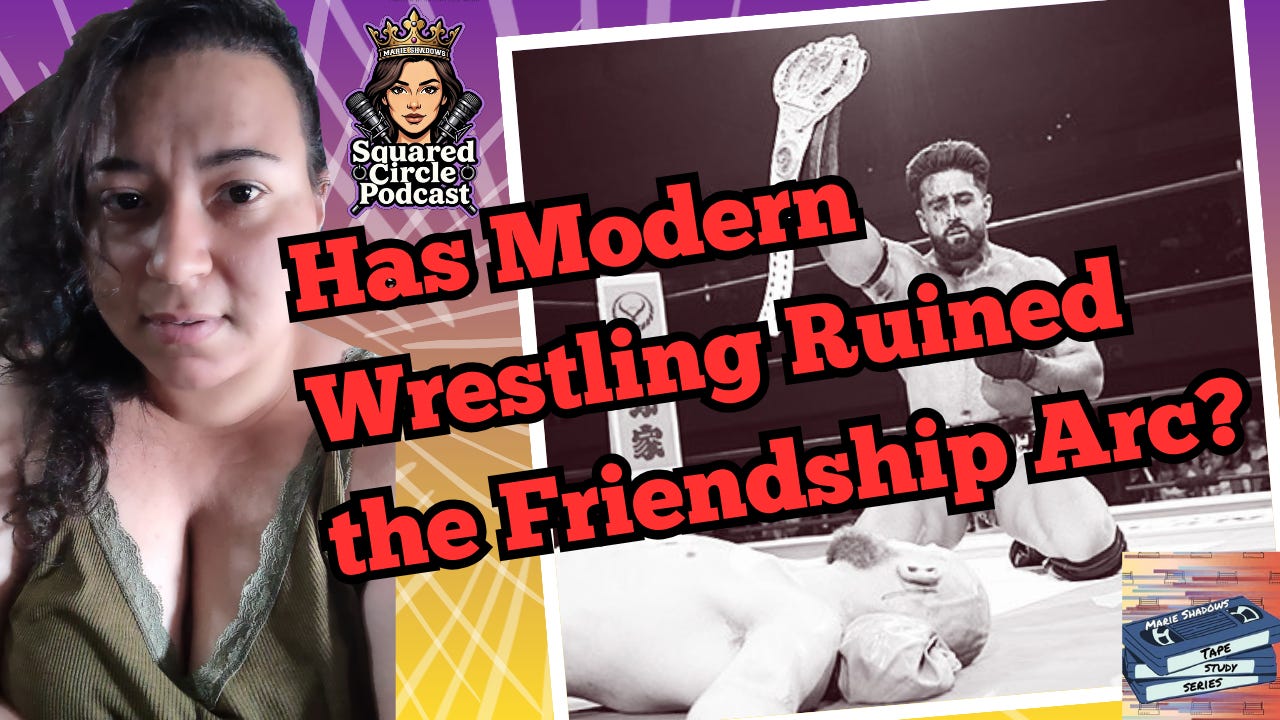
Professional wrestling is at its absolute best when sports entertainment meets raw, believable human emotion. When two performers who came up together on the UK independent scene collide on the big stage of New Japan Pro-Wrestling’s G1 Climax, the story should write itself.
However, watching Gabe Kidd face off against Drilla Moloney in the G1 Climax 36 raised a critical question that I keep coming back to in modern professional wrestling: Has modern wrestling destroyed the natural storytelling of a friendship arc?
My answer? Not entirely—but modern habits are suffocating it.
We’ve relied so heavily on meta driven narratives, quick social media angles, and crossover promotions that we’ve forgotten how to execute the fundamental, in-ring psychology required to make a betrayal feel real.
A friendship arc doesn’t die because fans lack patience; it dies when the performers fail to treat the emotional stakes with total conviction from the moment the bell rings.
Lately, it seems like every modern wrestler want to wrestle as friends rather than eventual rivals or eventual enemies due to circumstances that changes the stakes of the stories being told.
Let’s dive into the tape to see where this match fell short—and how you can avoid these exact traps in your own work.
A wrestler’s character cannot exist in a vacuum. When backstage promos and social media posts promise pure, unadulterated hatred, the in-ring work must match that energy from the very first bell.
Excessive profanity does not equal smart heel work: Gabe Kidd’s current character direction relies heavily on screaming profanities at the crowd and press. Overusing low-hanging insult tropes like calling everyone a “pussy” trains the audience to disconnect rather than draw real heat, turning what could be a smart heel into a middle-school caricature.
Character actions must align across promotions: Kidd’s crossover into AEW as a “Death Rider” altered his character motivations. While commentary noted how “money changes people,” Kidd’s erratic behavior creates a disconnect between his NJPW origins and his AEW presentation, taking fans out of the kayfabe realm.
Storylines require named conflict, not vague dissatisfaction: Claiming NJPW management “held you back” without naming names or demonstrating actual in-ring urgency undercuts the high-stakes narrative the match is supposed to portray.
Not every big-match rivalry needs to start with standard fundamentals, but taking a match into the crowd early must serve a clear narrative purpose.
Early crowd brawling without stakes creates empty filler: The first half of Moloney vs. Kidd spent significant time in the crowd trading chops and guardrail spots without using environmental hazards or collateral damage (like planted fans) to build real hostility.
Blood and high-intensity spots need seamless execution: The turn in the match occurred after a chair shot to Moloney that led to explicit blading. When a spot is telegraphed or forced late in a match to generate instant sympathy, it pulls the trained eye right out of the illusion.
High energy should answer the storyline’s emotional core: Given Moloney’s anger after Dominion—where Kidd rushed the ring to target Shota Umino instead of supporting his War Dogs partner—Moloney should have started the match with an explosive ass-kicking rather than waiting for the middle act to turn up the intensity.
For post wrestling school students getting their match reps in, structure and psychological walls are essential for long-term career success.
Every match needs a clear 3-act narrative arc: A successful match clearly defines its beginning (setting expectations and rivalry stakes), middle (the emotional rollercoaster and back-and-forth exchanges), and end (the logical crescendo). Jumping straight into arbitrary exchanges without establishing the beginning leaves the crowd waiting for the match to truly start.
Gimmicks protect the wrestler and clarify the story: Defined gimmicks build a protective wall between the performer’s real life and their character. When wrestlers lose their defined gimmick boundaries, the crowd stops understanding their core motivations.
Babyface vs. Heel dynamics is still necessary for structure: Without a clear hero/villain dynamic or contrasting moral stance (such as Moloney standing for NJPW integrity versus Kidd selling out), storylines dissolve into generic “two friends fighting” formulas.
Want to make sure your next match doesn’t fall into these pacing traps? I created a free 1-Page Match Prep Checklist over on Buy Me a Coffee. Grab it, print it out, and run through it before your next show!
Comments
Nothing yet. Say the first thing.
Sign in to join the conversation.