
Many people use the freedom of summer holidays to finally take that long-desired vacation. For some, this might mean a flight to another continent, where ancient ruins steeped in history beckon travelers into their presence. For others, it might be something simpler: a camping trip to a remote corner of the country, a weekend by the sea, or a long-awaited visit to somewhere new.
But travel is not always possible. Responsibilities get in the way, and sometimes the budget simply does not stretch to plane tickets and hotel rooms. The good news is that a summer does not have to be uneventful simply because you cannot go anywhere.
Those of us who love novels understand this instinctively. Give us a gripping enough story, and we can travel between its pages. Books can carry us farther than an airplane ever could, transporting us across continents, through centuries, and sometimes into entirely different lives.
A summer spent reading is a summer well spent. It can happen anywhere, at any time, alone or in the company of others. And the books in question do not necessarily need to be typical “beach reads.” There is nothing wrong with reading about a house caught in a blizzard or a village preparing for autumn while the temperature outside is pushing ninety degrees. A good book has never cared very much about the season.
Summer is now nearing its tail end. The heat is still with us, but the nights are beginning to cool. Stores are filling with school supplies for students preparing to resume their educational journeys. It feels like the right moment to look back at the books that accompanied me through these last few months.
Here are six books I read this summer—six books that made the season feel a little more distinctive, memorable, and full of places I could visit without ever leaving home.

Ann Patchett’s The Dutch House is a novel about family, memory, and the strange power that the places of our childhood can hold over us.
Danny Conroy looks back on his life with his older sister, Maeve, and their complicated relationship with their father, Cyril, whose grand Pennsylvania mansion becomes both a source of fascination and a symbol of everything the siblings have lost.
When their father’s new wife takes the house away from them, Danny and Maeve are forced to build their lives elsewhere, yet neither ever quite manages to leave the Dutch House behind. Told through Danny’s reflections across several decades, the novel explores how memory shapes the stories we tell about ourselves and the people we love.
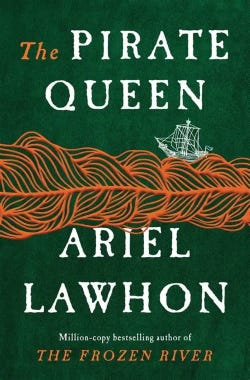
Ariel Lawhon’s The Pirate Queen brings the extraordinary life of the Irish pirate Grace O’Malley to the page.
Set in sixteenth-century Ireland, the novel follows Grace as she defies the expectations placed upon women, becomes a formidable sailor and leader, and navigates a world shaped by political conflict, family loyalties, and English attempts to control Ireland. Known as Gráinne Mhaol, Grace becomes a legendary figure on both land and sea, eventually finding herself face-to-face with Queen Elizabeth I.
Lawhon combines historical research with the sweep of an adventure story, creating a portrait of a woman determined to control her own fate in a world that repeatedly tries to do it for her.
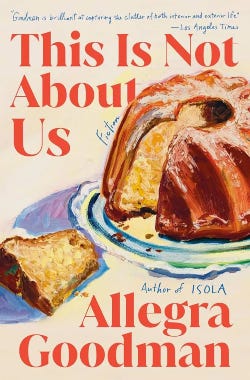
In This Is Not About Us, Allegra Goodman explores the complicated threads of family, memory, and forgiveness, reminding us that the greatest conflicts are often the ones that unfold quietly behind closed doors.
The novel follows the divisions that quietly grow within the Rubinstein family after the death of the youngest sister, Jeanne—in her seventies, no less—leaving behind her older sisters, Helen and Sylvia, along with their children and grandchildren. What emerges is a family shaped by years of resentment, misunderstandings, rivalry, and unfinished conversations.
Like much of Goodman’s work, the novel rewards patient readers, asking us to pay attention to the expectations carried from one generation to the next and the ways love can be both comforting and complicated. The result is an intimate, thoughtful, and deeply human portrait of family life.

In After Annie, Anna Quindlen explores what happens to a family when the person at its center is suddenly gone.
Annie Brown is a devoted mother and wife whose unexpected death leaves her husband, four young children, and closest friend struggling to understand how life can possibly continue without her. As they navigate grief and the practical demands of everyday life, the family slowly discovers that love does not disappear simply because the person who gave so much of it is gone.
Tender and deeply observant, the novel considers motherhood, friendship, loss, and the quiet ways people help one another survive devastating change.
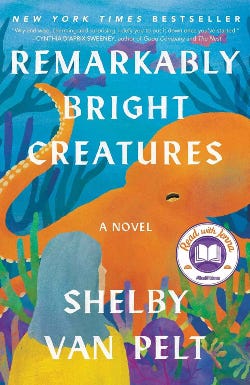
Shelby Van Pelt’s Remarkably Bright Creatures is a warm, gently unconventional novel about loneliness, friendship, and unexpected connections. Tova Sullivan has worked the night shift cleaning an aquarium since the death of her husband, keeping busy while carrying the grief of losing her son decades earlier. There, she forms an unusual bond with Marcellus, a remarkably intelligent giant Pacific octopus who observes the humans around him with considerable insight.
When Cameron, a young man searching for answers about his own past, enters Tova’s life, their stories begin to intertwine. The result is a charming story about the families we are born into, the families we find, and the possibility of discovering a new beginning when we least expect it.

Maria Semple’s Go Gentle follows a woman navigating the strange, messy terrain of adulthood, family, and the expectations we place upon ourselves.
Semple brings her characteristic wit and emotional honesty to a story that examines the ways people can become untethered from the lives they thought they wanted—and what it might take to find their way back. Beneath the humor is a thoughtful exploration of relationships, self-discovery, and the desire to live more authentically. It is the kind of novel that balances levity with vulnerability, making room for both laughter and the quieter moments of recognition that come with seeing oneself clearly.
A summer of reading does not have to involve packed suitcases or a destination marked on a map. Sometimes, all it takes is a comfortable chair and a story capable of carrying you somewhere new. These books took me through different times, places, families, friendships, and lives, and each one left something behind when I turned the final page.
As summer draws to a close, I’d love to know which books accompanied you through the season. Did you discover a new favorite, revisit an old one, or find yourself unexpectedly transported by a story?
And if you enjoyed this little journey through my summer reading, please consider sharing this post with another reader. You never know whose next favorite book might be waiting for them here.
Comments
Nothing yet. Say the first thing.
Sign in to join the conversation.