
0:00
-6:53
All (graphic) novelists share something in common: we are irrational, and some might even say certifiably insane. Choosing to spend years (or even decades) on a story that may never be picked up by a publisher or find its reader defies logic and practicality. Even if we manage to land a book deal with a major publisher and receive a fair advance, the reality is that once the hours (days, weeks, years!) spent researching, writing, revising, and illustrating are factored in, our earnings will fall well below minimum wage. Why would anyone choose this?

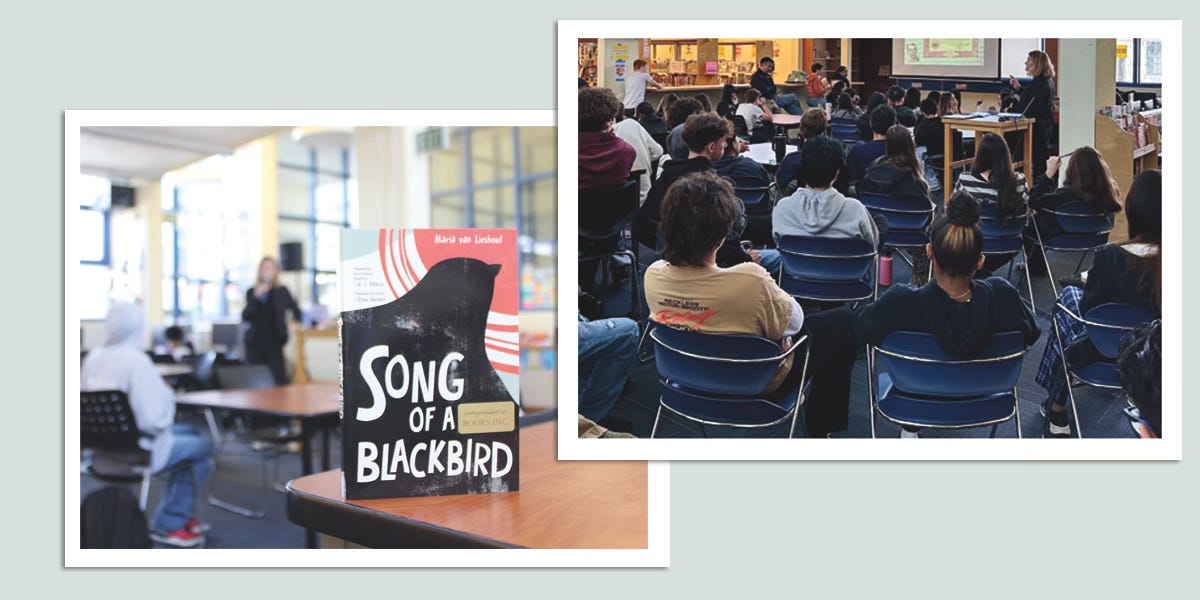
When I speak about Song of a Blackbird at schools and organizations, I am often asked what compelled me to spend twelve years creating this book. My answer is always the same: “Inspiration!” I was so moved by the brave people who resisted the Nazi regime that I literally couldn’t work on anything else. I felt an urge to share the stories of the everyday people who took great risks to save others. Especially because many of them had remained anonymous.
Interestingly, I believe that the people who inspired me were also inspired by something greater. Nobody guided purely by logic and practicality would choose to take such tremendous risks, with little or no upside to them personally. After spending a decade learning about those who chose to resist, I believe the vast majority was inspired by something greater than themselves. Perhaps it was loyalty to country and Queen, or the realization that the Nazi ideology clashed with their religious or political beliefs. Some felt a moral obligation to protect targeted groups from persecution. Others witnessed something that challenged their sense of justice and decided to act. I realized that the most effective acts of Resistance (the ones that saved the most lives) were committed by folks inspired by a higher cause.

In Song of a Blackbird, there is a spread in which my main character Emma argues with Erik, the artist who taught her
to forge identity papers. Erik runs ID Central, an operation that keeps people out of Nazi hands by providing them with fake identity papers. But Erik is attracted to the more dangerous, action-oriented side of the Resistance and joins a mission to break prisoners out of Nazi captivity. Emma pleads with him not to go, “Let the fight club handle it,” knowing thousands depend on his skills.
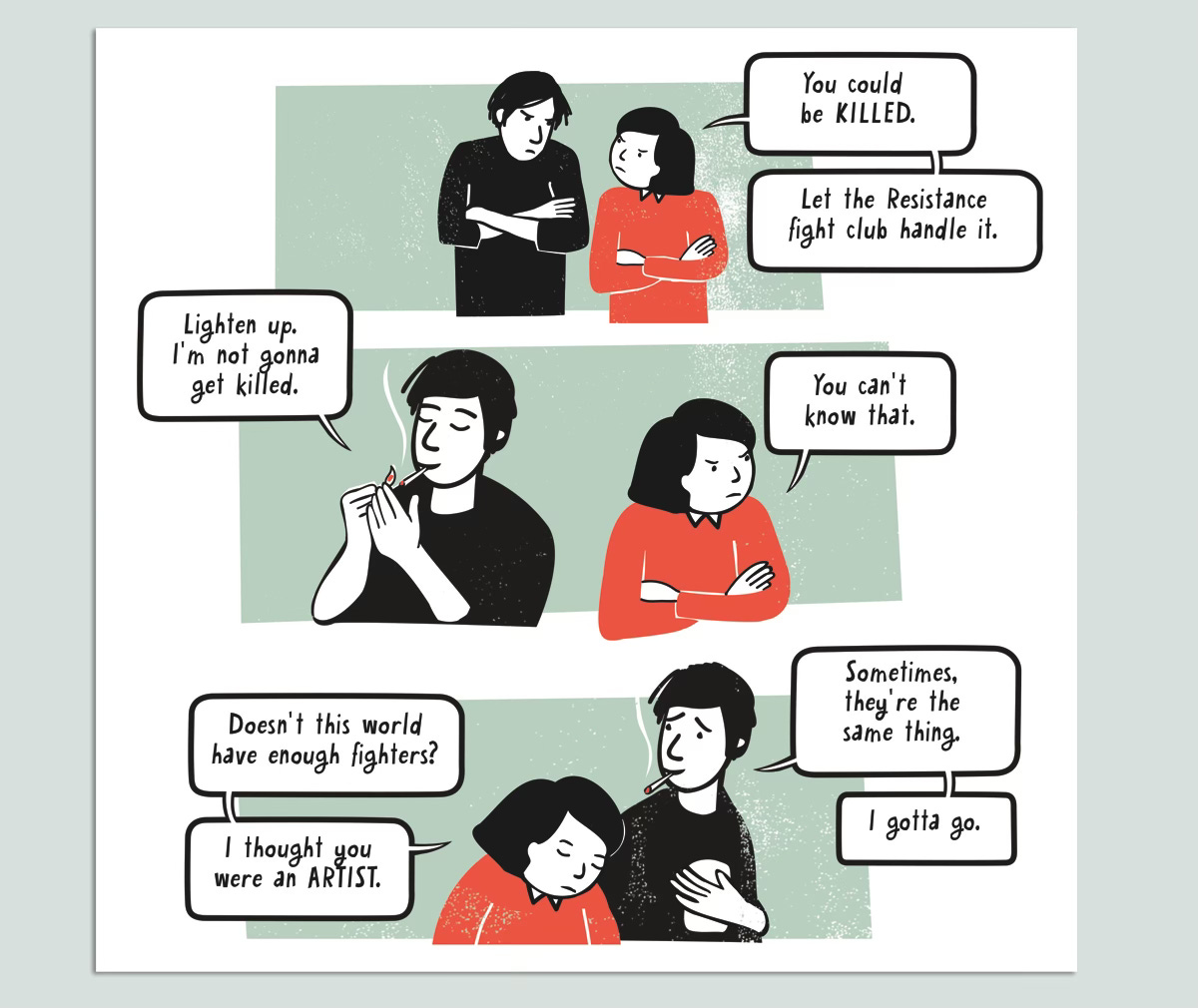
During the break-in, Erik is shot and he is ultimately arrested and executed. Erik’s character is based on Gerrit Jan van der Veen, a historical figure whose impactful work as leader of ID Central ended the same way. Like Gerrit Jan, many others were drawn to the thrill of the more dangerous side of the Resistance: the excitement, the drugs and the promiscuity. But the violent side of Resistance often led to arrests, charges of criminal acts, and public executions meant to instill fear.

It was often the quiet, nonviolent forms of Resistance that saved the most lives. The work by those inspired to prioritize the wellbeing of another person ahead of their own comfort and safety. Make no mistake, many who chose this path were still murdered by the Nazis, but since it was harder to label them as radical criminals, they were often sent to concentration camps rather than being publicly executed to instill fear in others. Many of those nonviolent resisters were women and artists. And many have remained anonymous, unnoticed by the Nazis as well as by historians decades later.

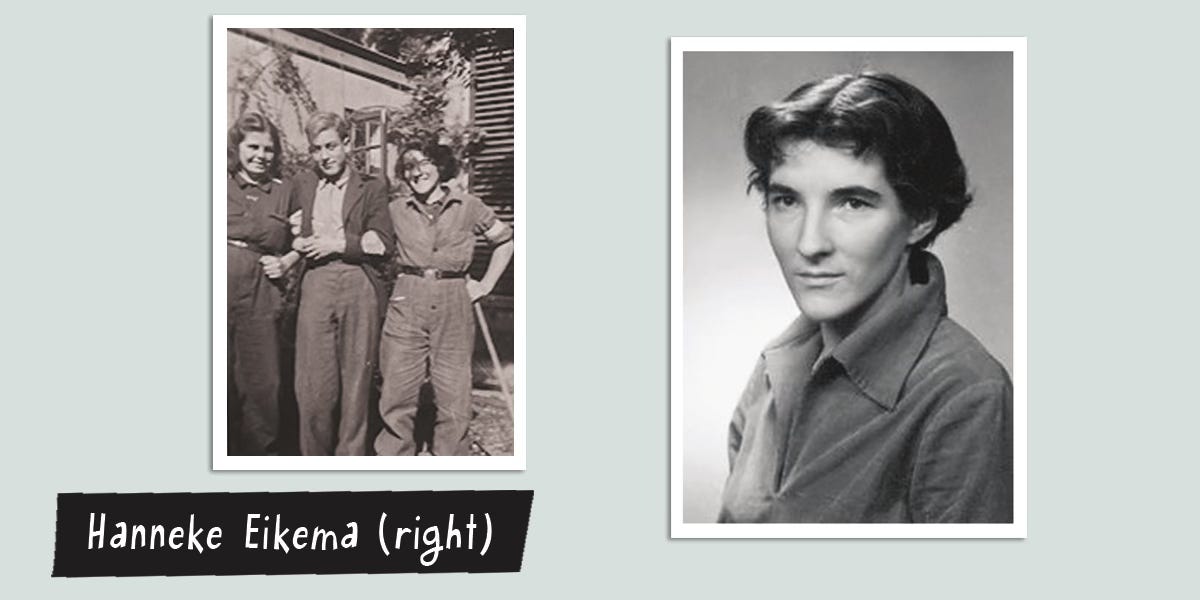
One of these nonviolent resisters was Hanneke Eikema, who inspired my character Emma. Hanneke was a teenager when began smuggling Jewish children from the deportation center to host families. She later became the personal courier for Walraven van Hall, the mastermind behind the historic bank heist at the center of my book. Hanneke was captured by the Nazis, along with Walraven and my grandfather’s friend Frits Nieuwenhuijsen (both of whom were publicly executed on a busy street corner while neighbors, including children, were forced to watch). At just nineteen, Hanneke was imprisoned and interrogated in the Nazi prison until the country was liberated by Allied Forces.
I am not the only one to conclude that nonviolent Resistance is often more effective than its violent counterpart. Harvard political scientists Erica Chenowith and Maria Stephan have studied Resistance movements throughout history and have discovered that nonviolent resistance is more likely to be successful in effecting change than violent campaigns.

The women who rescued Jewish children from the Dutch Theater deportation center in Amsterdam, the artists who worked through the night to forge identity papers and treasury bills, the students who cycled through wind and rain to deliver those documents – they were the ones who saved tens of thousands from being captured, deported and murdered. They are the ones who inspired me to spend twelve years researching, writing, drawing and bringing this story to life.

I am in awe of the power of Inspiration, which is why I chose it as the narrator of Song of a Blackbird. Yes, the blackbird that narrates the book is a metaphor for the force that compels us to defy logic and practicality, to follow what moves us. It’s the thing that makes us irrational, and some might even argue, a little crazy.
When the Blackbird sings to YOU, I hope you’ll let yourself be swept away.
Open mind. Open heart.
Maria van Lieshout
PS: Tell stories. Make ART🐦⬛
Comments
Nothing yet. Say the first thing.
Sign in to join the conversation.