
Hello folks,
I finished a book last night, you know one of those books that you just know will stay with you for ages after you’ve read it? One where when you turn the final page, you know you will sink into a depression after because what can possibly follow that will be as eye-opening, gratifying, and moving?
Well, “Anita de Monte Laughs Last” did just that to me. Written by Xochitl Gonzalez about the lives of two Latina artists, Anita de Monte during the 1980s in New York, and Raquel Toro, a Brown University art student. While their lives don’t overlap as such, the chapters switch and flip between their somewhat parallel lives and experiences navigating the art world in a very white-saturated, WASPy era.
Backtrack to Sunday night when I couldn’t for the life of me fall asleep (can I not fall asleep because I know there’s a full moon looming overhead, or is the moon genuinely affecting my sleep patterns?!), so I pulled out my book. As I knew the book was coming to an end and wanted to soak up the continued bliss of this author, I did a quick google search and quickly found that this book did in fact follow the life of a very real and prominent art figure in the 1980s.
Enter Ana Mendieta.
You know when you fall down one of those internet rabbit holes that there’s no coming back from? You’ve discovered not just a little nugget of information, but a whole compendium that’s there waiting for you to uncover and smother yourself in for days on end.
The last time I fell into one of these endless holes was in January 2024, when I binge-watched every single Nirvana YouTube video I could find, dissecting lyrics, and binging their three main albums. Must be something in the January air for me.
And perhaps I’m drawn to, as many of us are, the faintly sickening allure of famous people’s deaths.
Ana Mendieta was a Cuban-born performance artist, sculptor and painter who was sent to the US when she was 12 as part of a US government asylum programme after the Cuban revolution. She went on to become a powerhouse in feminist art, securing a scholarship with the Guggenheim Foundation and Rome Prize from the American Academy in Rome, highly prestigious artist awards.
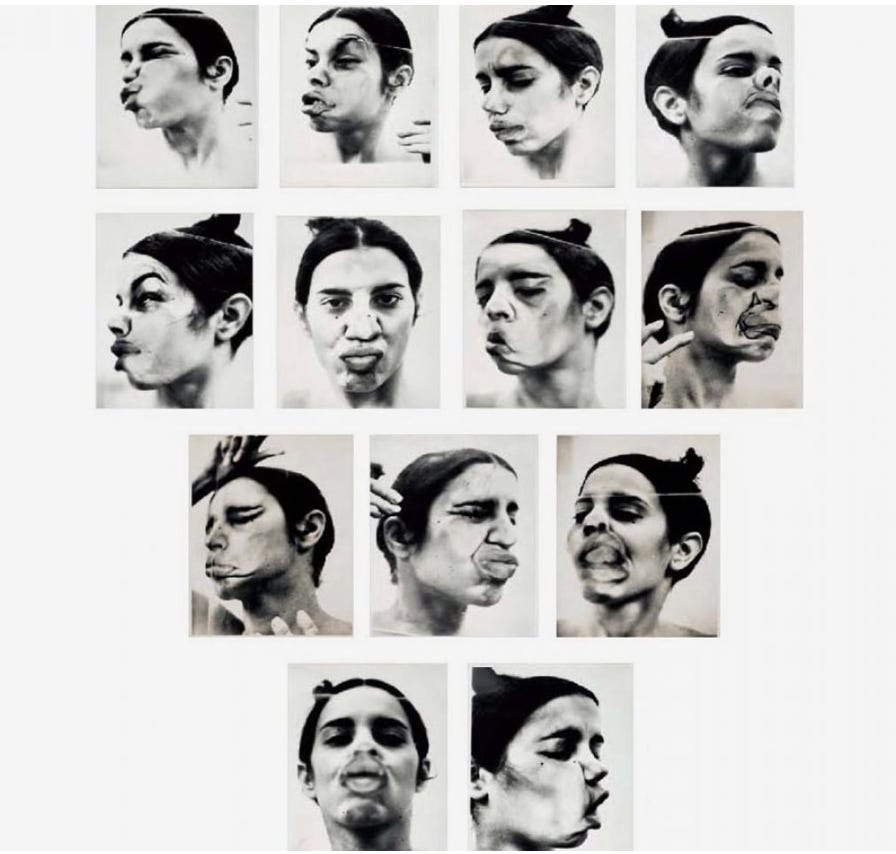
Her work spanned almost two decades, the 70s and 80s, and within that time she left her mark. She carried out performances that challenged the male gaze, with some of her performances using a glass pressed against her body to create funny folds of skin, or taking a colleague’s facial hair and applying it to her own face, disrupting what it meant to be a woman at the time.
She also used blood in her work, as well as creating sculptures in sand, clay and mud to signify the flux of nature and how she felt she was embodying the world around her.
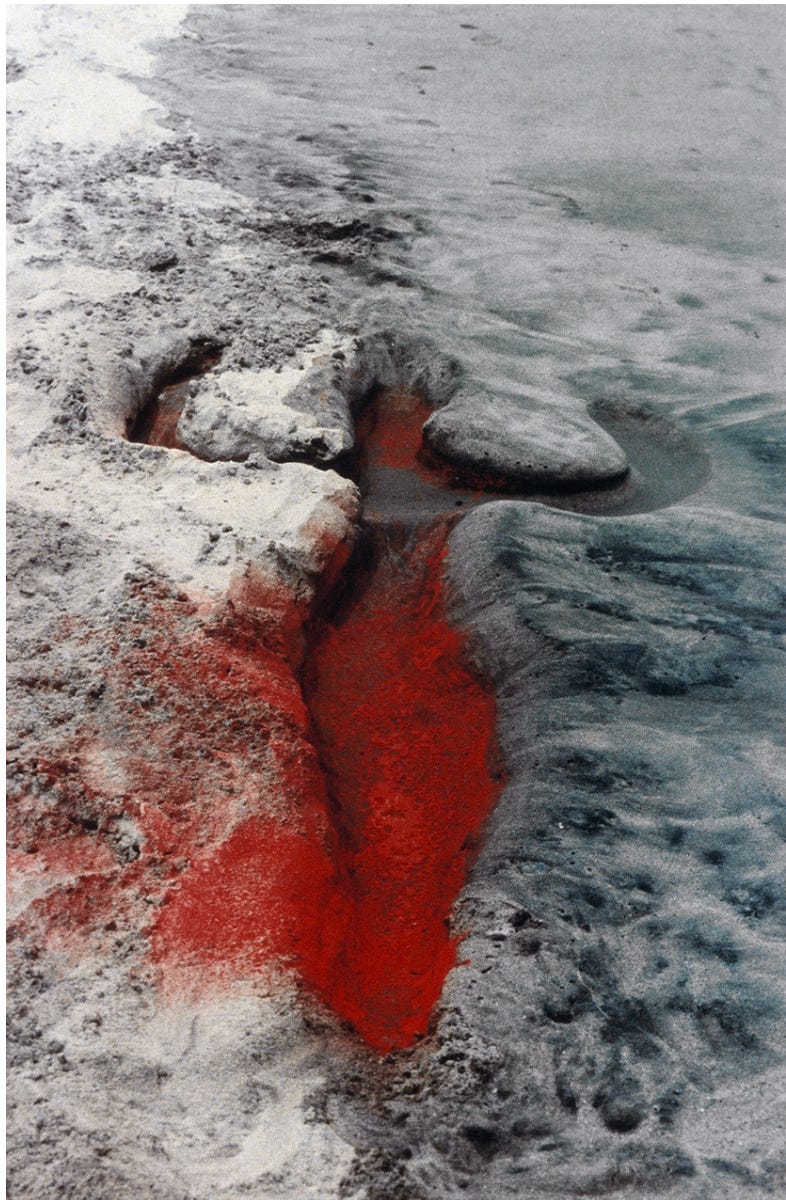
I’ll admit, I don’t know a lot about performance art nor do I critique art in general, but when I read about her pieces and her reasoning for her works, they really strike a chord. She spoke out about her pieces as feminist art, but not necessarily agreeing with the feminist movement at the time because of how white-washed and non-inclusive of immigrants it was (and that was in the 70s, yet we’re still having the same conversations today…), and she challenged what it meant to exist within nature and how we treat the lands around us.
"My art is grounded on the belief in one universal energy which runs through everything - from insect to man, from man to spectre, from spectre to plant, from plant to galaxy." Ana Mendieta, artist statement from the 1980s
She has such a vast collection of art; from reenacting the aftermath of a rape scene of a woman at the same university she attended, to carving out female forms from mud which to me, look very similar to Síle na Gig; the Irish medieval stone carvings. Her pieces bring me a sense of peace and comfort. I don’t feel very sensual in my body that much, but seeing these curves and lumps in the sand makes me at once want to strip down and bathe there in the muck and puddle.
Her Alma, Silueta en fuego (Soul, Silhouette on Fire), makes me want to scream into the void at the state of the world, and her use of blood I can absolutely reasonate with as when I’m on my period sometimes I just want to scoop myself out and hurl great giant blobs and hiss at anyone who so much as breathes in my direction.
As influential and eye-opening as Ana’s works were for the time, her art went on to be overshadowed by two horrible factors; her husband, and her untimely death.
I don’t want to talk much about her husband because even if he wasn’t involved in her controversial death, he was also just another white male artist who did minimalist art. Boooooring. Bitch please, there’s enough beige and neutral and black and white thinking in this world, go out and play with some curvy shapes and colours please.
Ana fell from the 34th floor of her husband’s apartment when she was just 36. Her husband was initially charged with her murder, and two years later aquitted due to insubstantial evidence. I should also add, when he first called the police he told them he had been fighting with Ana, but then later rescinded that statement and said he couldn’t remember what happened when she went out the window. He was also covered in scratch marks when the police came to his apartment.. and nearby doorman dowm below said he heard a woman shout “No, no, no,” from up above.
So make of that what you will.
In her murder trial, they tried to latch onto the fact that she was into “satanic art,” when it was in fact an ancient Afro-Caribbean spiritual practice called Santería, and that what she carried out was indeed an act of suicide.
It pains me to learn about her early death, when it sounds like she was just at the beginning of her career, having received another scholarship to work in Italy; a place where she felt at home given her tumultuous upbringing.
Of course, we can never truly know what goes on in someone’s life and how she was in the relationship, but uggggh I am so sick of hearing about powerful, successful, fun-loving and wild women either dim their shine or have their spirits dampened by their partners, by boring fucking men who want to dim the lights of others. We’re tired.
Raquelin, her sister, and Coco Fusco, a prominent Cubo-American performance artist, have both said that she would want her work to spark conversation and be celebrated, and not be influenced or perceived through the lens of how she died.
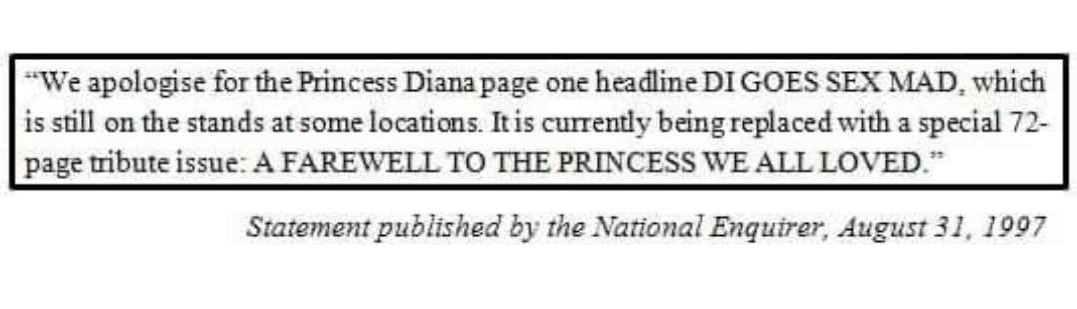
Which is always the way, no? When Princess Di died, The National Inquirer newspaper had published a heading “Di goes sex mad,” and then had to publish a note the following day apologising and committing to a 72-page spread on the celebration of her life.
The 180 degree turns these people make be breaking necks…
Researching Ana’s art this week, along with reading this beautiful quote here on Substack about the imperanence of it all compelled me to write about her, and also do some of the seemingly hard things: like sitting down to write this newsletter that I’ve been putting off for far too long.
Ana had so many moving hurdles thrown at her throughout her life, and yet managed to continally scream out, make ferocious art, and speak her mind at every chance she got (she was known to have a fiery personality!). What a courageous, wonderful soul.
So often, loud women are told to quieten down; to relax, stop being so brash, and return home to raise a family. Ana took the experiences and cards she was dealt and, through her impactful art, showed us how to return to ourselves and our native traditions, while offering hope to Latin and othered people in the US that they could be loud and still thrive in the art world and beyond.
See you all again very soon.
Maria xxx
Comments
Nothing yet. Say the first thing.
Sign in to join the conversation.