
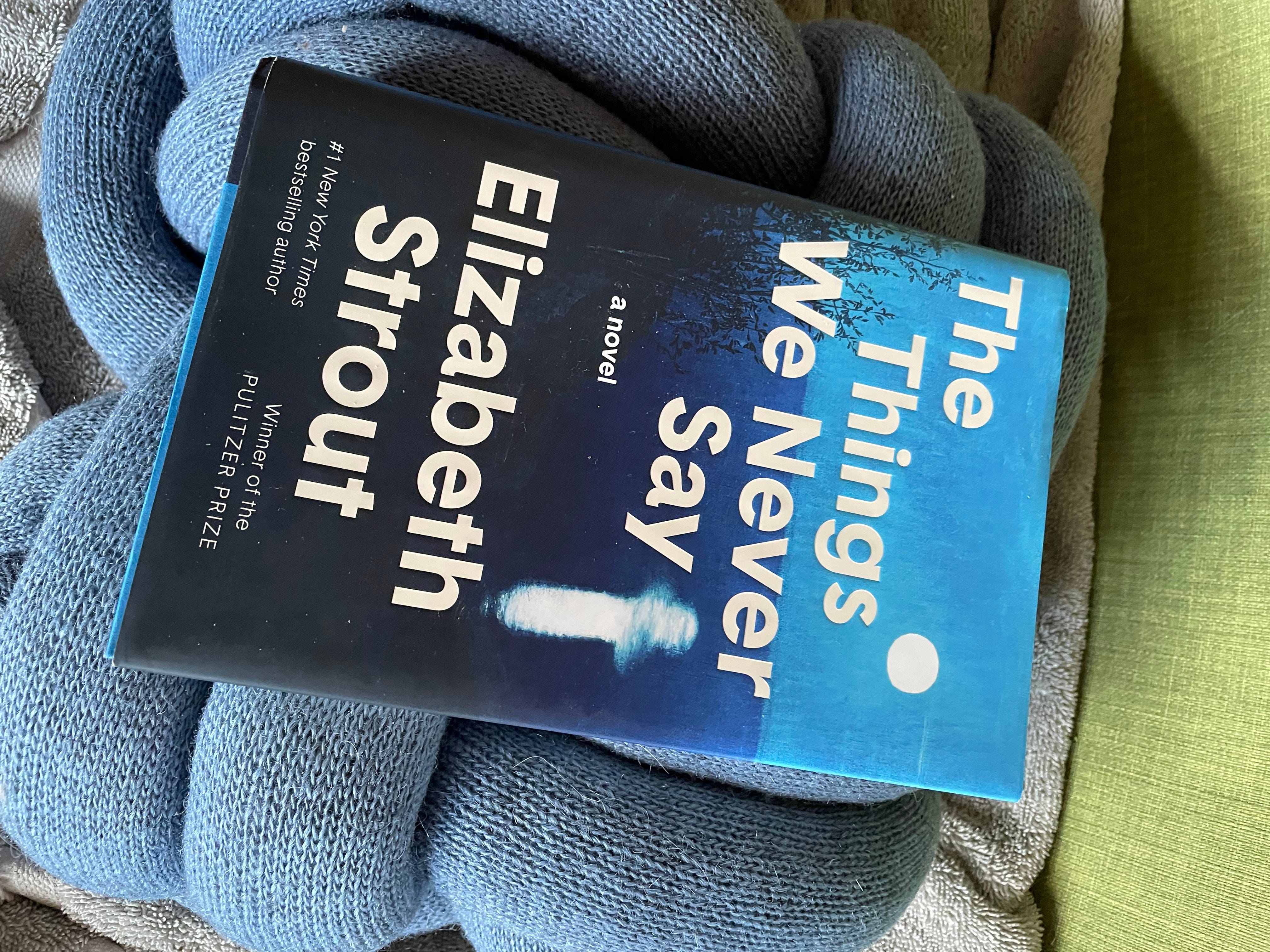
The opening epigram of Elizabeth Strout’s latest book is from Carl Jung: “Loneliness does not come from having no people about one, but from being unable to communicate the things that seem important to oneself, or from holding certain views which others find inadmissible.” And from this we might think that saying certain things is a good thing—it makes us feel less lonely. But the theme of this book actually seems to be different: some things are better not being said. Secrets, secret lives, and the price and value of not telling people certain things are the themes of the book.
Artie Dam considers suicide, but doesn’t tell anyone and wants it to look like an accident. He wonders if there is free will; he is moved by a not-very-talented student who seems to understand how Othello ruined his own life by believing Iago and by another who is awkwardly nerdy.
We learn early on that Artie will be dead of a heart attack in two years, and that his thoughts about suicide are motivated not by a particular event, but by an overwhelming loneliness. When he tries to ask people whether they think there’s free will, many of them don’t answer, preferring to talk about light and chatty topics. He and most of his friends despair about Donald Trump’s presidency, but he discovers that the friend he values most is a Trump supporter, and decides not to talk about politics with him. Artie becomes a shoplifter, but is saved by the generosity of a store owner who chooses not to tell anyone that Artie has tried to steal from him. Sometimes, it seems, there are certain things that we don’t say, and shouldn’t.
Artie has lots of people around him—he has friends, co-workers, and students—but he feels lonely. When he almost drowns accidentally (REALLY accidentally), his desire to kill himself disappears, and when his son tells him a secret that his wife has been hiding from him for most of their married life, Artie becomes closer to his son, but he must decide if he should tell his wife that he knows it and reframe his life. His friend at work, Anne, wants to tell him about recent events in her marriage, but he doesn’t remember some of the basic elements of the plot. Loneliness, it seems, can come from not being able to tell others things, or from talking to others about things that they aren’t interested in, but it also seems to be the price of some relationships. The moral of the story about Othello seems to be: If Iago hadn’t led Othello to believe that Desdemona was unfaithful, the play would not be a tragedy in which Othello loses everything.
Strout’s previous book was Tell Me Everything, and that seemed to be a book about the things we feel compelled to tell—a compulsion that might be driven by a desire for connection or a desire to hurt. It is a book about telling; The Things We Never Say is, in contrast, about not telling. Neither telling nor keeping quiet is the guaranteed road to virtue and connection. And even when we tell, or ask, there is no guarantee that what we say will be heard.
Reviewers of The Things We Never Say remark on the spartan prose style and Strout’s interest in issues of meaning and value. One might see in this book yet another story about midlife, or New England, or marriage, or family. But I think what’s compelling about it is the way that it shows us that loneliness might be the human condition, but it might also be the price of being with others.
Are we free? The answer that Artie seems to land on is ‘no’, but not because we don’t make choices, but because we are destined to be lonely, even when—or especially when—we are surrounded by others. The book might sound depressing—and in many ways it is—but it is also an investigation of what it means to love and be with others.
Comments
Nothing yet. Say the first thing.
Sign in to join the conversation.