
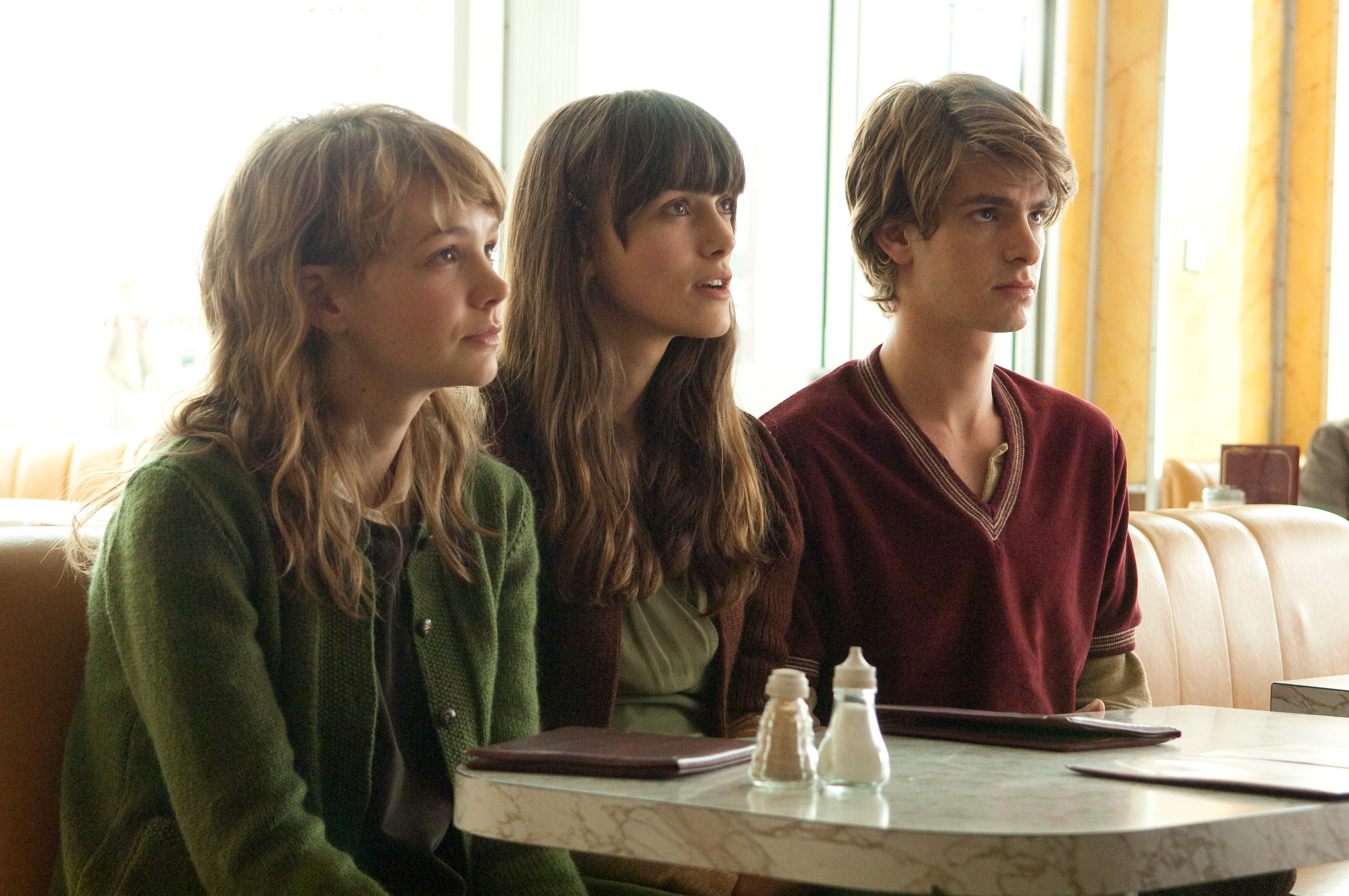
The story starts at a private school in England. We know this scene. It is the classical setting for a coming-of-age story.
But this is an odd coming-of-age story.
First, there’s not a parent in sight. The story is told by a narrator who is a student at the school whom we later learn is named Kathy. She tells us of about the school, about the guardians, about the odd behavior of some of them, and about her friends Ruth and Tommy. Ruth and Tommy are romantically involved, but Ruth seems more interested in the approval of other people at the school than in defending Tommy.
There are mysterious sales and the students’ artwork is taken by a mysterious ‘Madame’ who seems oddly afraid of the students, giving them a wide berth whenever they get near her.
Tommy, Ruth, and Kathy eventually end up at another school together, and it is then that they learn that their futures are settled. Of course, this isn’t that different from other schools. I know that at some private schools, the idea is that the students are headed to great colleges and then to careers that will be lucrative and important. At my college, Hamilton, as students leave us we see that they are headed to careers in academia, or as doctors, lawyers, or finance bros. Like Tommy, Ruth, and Kathy, their fates are pretty much determined.
WARNING: This part includes spoilers, so if you don’t want to know a lot about the plot, you should stop reading now and read the book first. Then c’mon back!
But Tommy, Ruth, and Kathy are destined for other fates. They will be donors or carers—and maybe both, eventually. Their coming-of-age story is a story about learning that they’ve been created to serve—as organ donors and caretakers of those donors.
The students at this tony private school are being given the best education and a good life, but they are destined for lives of service. And they are creations: we see what they see. They have been cloned from other living beings.
Do they have souls? There seems to be some doubt about that among the populace. The school and Madame’s work on their behalf is meant to show that they have souls, and to give them a good life before they go off to the lives that they have been created for.
In the podcast Philosophy Talk about philosophy and literature, Lanier Anderson of Stanford argues that one of the virtues of fiction is that it can serve as what Borges called philosophy Als Ob: the philosophy of ‘as if’. Never Let Me Go poses the question: what if we treated clones well before we used them for the common good? So it gives us a thought experiment, like Ursula Le Guin’s “The Ones Who Walk Away from Omelas,” about the idea of unconditional good and consequentialist ethics. But it also poses the question: how do we understand the idea of individuality and uniqueness?
Comments
Nothing yet. Say the first thing.
Sign in to join the conversation.