
Benny Oh hears voices. The voices start after Benny’s father dies and his mother retreats into hoarding objects, often found in thrift stores. Sometimes the voices tell him bad things, critical things about himself. Other times, they are the voices of objects, objects that hold their own memories. The window at school tells Benny of its pain when a bird hits it and falls dead. The glass remembers when it was sand, when birds landed and walked upon it. A table tells Benny of a baby that was tied to its leg, the child’s mother leaving him alone in the house.
Benny is diagnosed as mentally ill. He is sent to a psychiatric hospital. This does not help him. What does help is meeting a group of outsiders that live in and around the library. People like the Aleph, who carries a ferret in her jacket, and Slavoj, an amputee poet. Benny is skipping school and forging notes from his mother. He no longer tells his counsellor that he hears things talking to him, but his new friends know and understand. It’s not an illness he has, it’s a gift, and Slavoj, aka the Bottleman or the B-Man, tells him he must write down what he hears.
Benny Oh is the protagonist of The Book of Form and Emptiness by Ruth Ozeki. Chapters are told alternately by The Book, an omniscient narrator, and Benny. I’ve reached halfway through Ozeki’s book, and it is at this point that Benny learns of his need to write, of the power of writing things down.
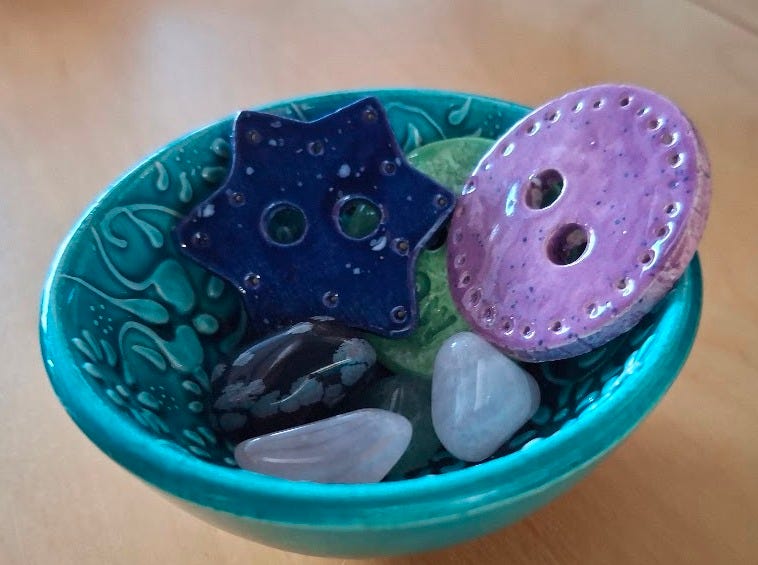
Objects hold memories, often used as a starting point for writers, for exercises in writing workshops. They unlock memories for the writers. For Benny Oh, he hears the memories of the objects themselves. A writer friend once told me that she bought a winter coat secondhand. She felt a strong sense of the previous owner of the coat when she wore it, someone my friend had not known. It was disconcerting, disquieting, and she gave the coat away.
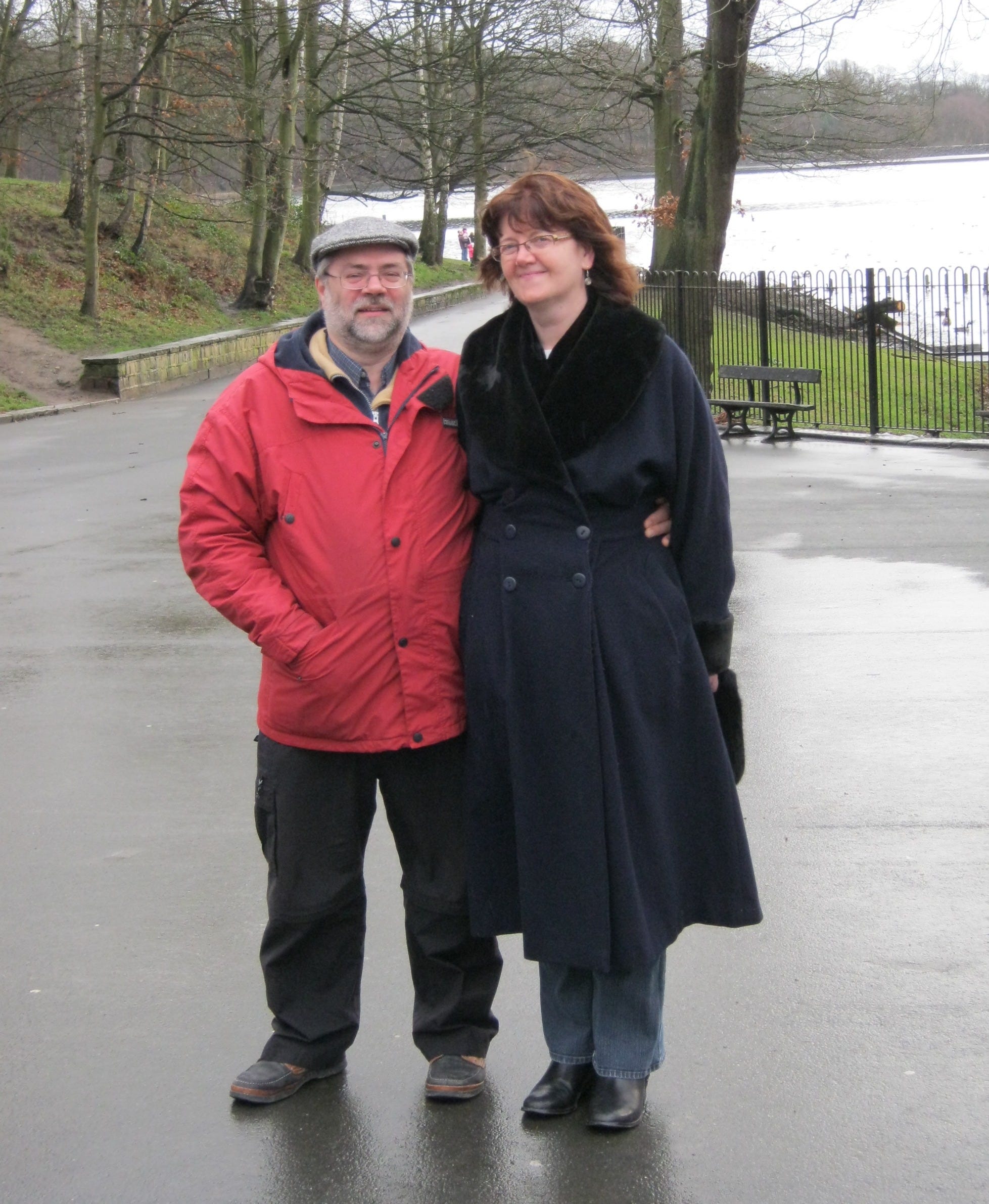
I am a great forager of the secondhand, in charity and junk shops. I haven’t felt that disquiet in objects I have found, I am just curious sometimes. I have a beautiful winter coat, which I’m sure is from the New Look era, with a cinched waist and a half-belt at the back. It’s wool, with (I hope) a fake fur trim. I found it in a charity shop in Chertsey more than twenty years ago. The outside of the pocket needed repair, and I bought a mini sewing kit in Woolworths, being away from home at the time, to stitch it in time for an outing to a formal event that evening. I wonder who once owed that coat. No doubt she is dead, her belongings discarded or donated.
Like Benny Oh, I had a spell of hearing voices. Objects did not speak to me, instead the voices spoke of death. Death was mostly what I thought of at the time; my own death. ‘Who will bury me when I’m dead?’ a voice spoke as I stood in my kitchen one afternoon. I didn’t tell my Community Mental Health Nurse about these voices, or of all of the intrusive thoughts that plagued me. I was working in mental health advocacy, and had witnessed the treatments that some of my severely mentally ill clients endured. Strong medication, hospitalisation, outpatient appointments with psychiatrists lasting less than ten minutes, which only consisted of medication reviews.
I had two teenage daughters to care for, as a single parent. I was not going to desert them in favour of a hospital bed. My saviour was to be writing. In time, I was to begin writing poems and keeping a journal.
Slavoj, the poet, tells Benny:
‘“Let me tell you something about poetry, young schoolboy. Poetry is a problem of form and emptiness. Ze moment I put one word onto an empty page, I hef created a problem for myself. Ze poem that emerges is form trying to find a solution to my problem.” He sighed. “In the end, of course, there are no solutions, only more problems, but this is a good thing. Without problems there would be no poem.”’
The voices that I heard were a temporary phenomenon. I remembered a psychiatrist’s speech at a work conference, telling us that hearing voices can be a one-off or short-term thing. Mine were temporary, though I sometimes lost the ability to distinguish between dreams and reality. I was chronically sleep-deprived, and this is a symptom.
Refusing to see a psychiatrist, I accepted the help of a Community Mental Health Nurse, and went without medication. My GP described me as ‘non-compliant’. I didn’t receive a formal diagnosis, but chose to read my nurse’s notes, which I knew was my right. I did so in the company of another mental health nurse, whom I knew through my working life. It was an uncomfortable crossing of boundaries from ‘one of us’ to ‘one of them’.
Lynsey, the nurse, took a stance of compassion and colleagueship. I doubt that it was the first or last time she’d seen a mental health worker cross that line. I was surprised by the notes describing a woman with a traumatic childhood, an alcoholic father and an emotionally volatile mother. She wrote that I had experienced, ‘complete practical and social disablement,’ and had only shown minor progress. The notes went on: ‘she has a tendency to wander, to lose touch with reality, and is at risk of being exploited.’ I wished I had not exercised my right to read the notes.
‘But I’m better now,’ I said to Lynsey. I had returned to work, and was functioning, after a fashion.
‘Don’t expect to always feel brilliant,’ Lynsey said. Within fourteen months, I’d broken down again. My illness - physical and mental - became chronic, and from the age of 39, I was not able to work full-time again.
It wasn’t until a few months into my second breakdown that I began to write. Writing saved my life. A number of misdiagnoses were made, only discovered when I changed GP, and he ran a series of blood tests. I was seriously hypothyroid, a condition that carries mental as well as physical symptoms. Many, many years later, a chance discovery of coeliac disease was made from a blood test to monitor my B12 levels, and going gluten-free has made the biggest difference. There are severe neurological and mental dysfunctions alongside the gastrointestinal symptoms of coeliac disease. I had been complaining of both for years, but everything was put down to anxiety and depression. The loss of feeling in my hands and feet? The fight or flight response (coeliac neuropathy). The painful skin breakouts? A nervous reaction to anxiety (a coeliac symptom). Likewise the brain fog, insomnia, depression, constant stomach problems, all symptoms of coeliac disease.
Was I right to refuse psychoactive medication all those years ago? It felt, and still does feel right for me. When it seemed that my judgment was not to be trusted, my instincts for what would serve me best remained strong.
I recently read Margaret Bennett’s piece on Substack, When your friend becomes homeless: Mental Health is everything, about a friend who has fallen into illness, wondering what she could do for him. I was prompted to write about my own experiences, after reading Margaret’s piece, and The Book of Form and Emptiness fell into my hands the same week, having sat on my shelf a while. Sometimes the things you need find you at the right time.
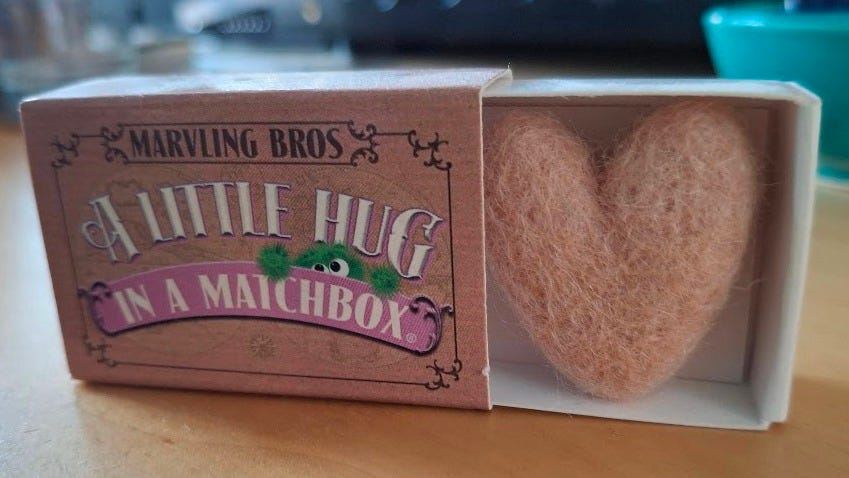
I have many objects given to me by a friend when I was going through hard times; things that have arrived unannounced through the letterbox. I have a hug in a matchbox, which I keep beside the chair where I sit when I read or write in my notebook. I also have a pocket penguin, which I carry in coat pockets to turn over in my fingers when I am feeling troubled. This same friend is going through a mental health crisis at present.I have not known what to do to support them So, as they have done for me, I sent them an object that I found at a craft stall, a large ceramic button with the words Best Friends embossed on it. I hope that it carries a message of telling them of the love that their friends hold for them, and that we are keeping them safe in our thoughts until they come through, as I know that they will.
As a footnote, I am not anti-medication. I know that many are helped by it, and cannot function without it; ‘non-compliance’ was my choice. Although the weekly visits of a Community Mental Health Nurse were supportive (I received such help, on and off, over a 20 year period), I found NHS services blinkered by a mental health focus, so that medical diagnoses for some of my symptoms were not explored, in fact dismissed as part of a mental illness. I felt that I wasn’t being listened to, that my reality was denied. In itself, that made me feel I was going mad.
The best help I have had was from a private therapist, whom I still see on an occasional basis. I found her by chance, through a friend who is a counsellor. Sometimes the right person comes your way just when you need them.
For more information about coeliac disease, go to Coeliac UK
For information about hypothyroid symptoms, go to Thyroid UK
For help with a mental health crisis: Mind has a good guide.
May those of you that need help find the right book, the right person to guide you, and a notebook and pen to write things down.
No posts
Comments
Nothing yet. Say the first thing.
Sign in to join the conversation.