
Roger McGough is coming to Chatham Library! I've seen him once before, at Chatham Central Theatre, nearly 30 years ago, but there was no chance of a quick hello to tell him how much his poetry meant to me. I wasn't writing back then, but I have been for 26 years now . If I do get the chance to say hello, I shan't be offering him a copy of any of my books. I read his autobiography a few years, and those slim volumes and pamphlets that are offered to him at readings are quietly discarded on the train home, unread. Instead, I shall ask him to sign my copy of Penguin Modern Poets 10: The Mersey Sound.
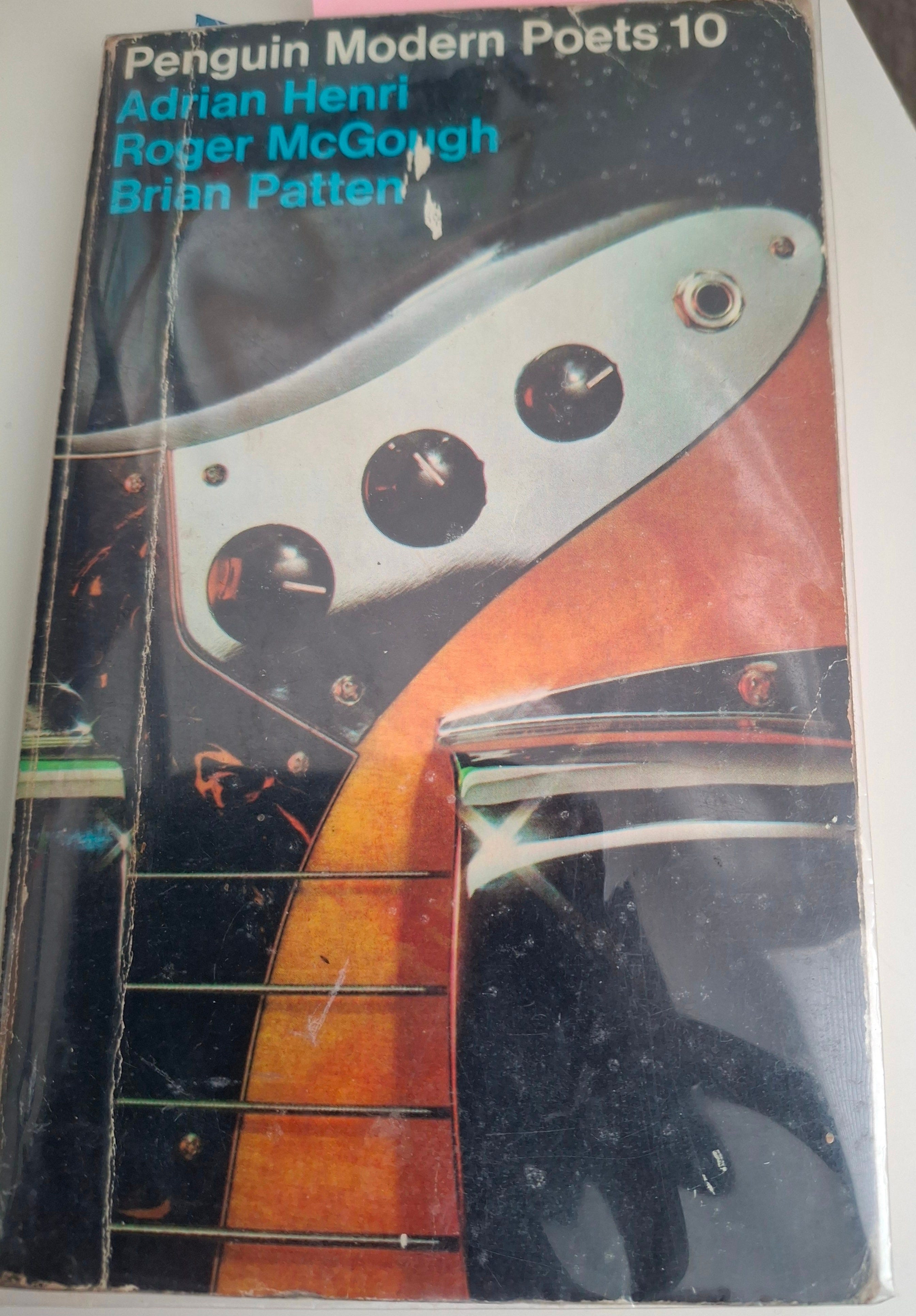
Featuring three Liverpool poets, Adrian Henri, Roger McGough and Brian Patten, The Mersey Sound was the the first poetry book I ever bought, and the third book that I owned. The first was Mary Plain, VIP, By Gwynedd Rae, which was a prize for English at my primary school. The second was a pale blue hardback copy of Songs of Praise, required when I joined secondary school in 1971. The copyright page of my edition of The Mersey Sound tells me that it was reprinted in 1974, so I would have been fourteen or fifteen by then.
I'd not been given books as a child, only the Christmas Annuals, which often had poems or short stories within their pages. No doubt they were out of copyright to appear in such publications. I was introduced to Lewis Carroll's ‘The Walrus and the Carpenter’ and Oscar Wilde's ‘The Happy Prince’ in Christmas Annuals, and loved both.
Although I was a voracious reader, the books I read were from school, from Epsom Public Library, or from my mother's collection of paperbacks, piled in a tea chest in the cupboard the stairs where the electric meter was housed. I leaned over Mum’s books when called upon to feed coins into the meter. We called it ‘Money for the light’. Mum's library was not geared towards children. The best of it was reading a Pan Horror collection and Agatha Christie's They Do It With Mirrors. The worst was a salacious biography of King Farouk, and the odd Harold Robbins volume.
Why no one thought to give this bookish child books for birthdays and Christmas, I don't know. I do recall being annoyed with Auntie Kathleen and Uncle Jack, former purveyors of Annuals at Christmas, when they presented my little brother with an Enid Blyton book one Christmas, and gave me a couple of pairs of American tan tights.
My English teacher, Mrs. Edwards, set up a bookstall one day a week, and you could pay so much a week towards your desired books. I remember asking her what would be good for my little brother, four years younger than me, and she recommended Down with Skool, by Geoffrey Willans and Ronald Searle, and the Professor Branestawm books, by Norman Hunter, which my brother loved. Ever the buyer of gifts for other people, and rarely treating myself, for once I succumbed to the charms of book buying. So the first book I actually bought for myself, and the third I owned, was The Mersey Sound.
Mrs Edwards had brought out the poetry lover in me in class, and this slim paperback was the perfect start to building a book collection. I bound it in see-through plastic to protect the cover, but somehow it has a scratch across the ‘u’ in McGough, and further down, on the cover art. The back cover tells me it cost 30p, which may well have been paid for over several weeks before being able to take it home. I did, of course, write my name and address in it. Not something I would do now, but I wanted to claim ownership and to mark the occasion.
Why do I have this book in my possession fifty-two years on? Because of what it taught me: that poetry could be about the ordinary, about everyday life. It doesn't need to be about Grecian urns, or nature, or sailing the seas, or epic voyages.
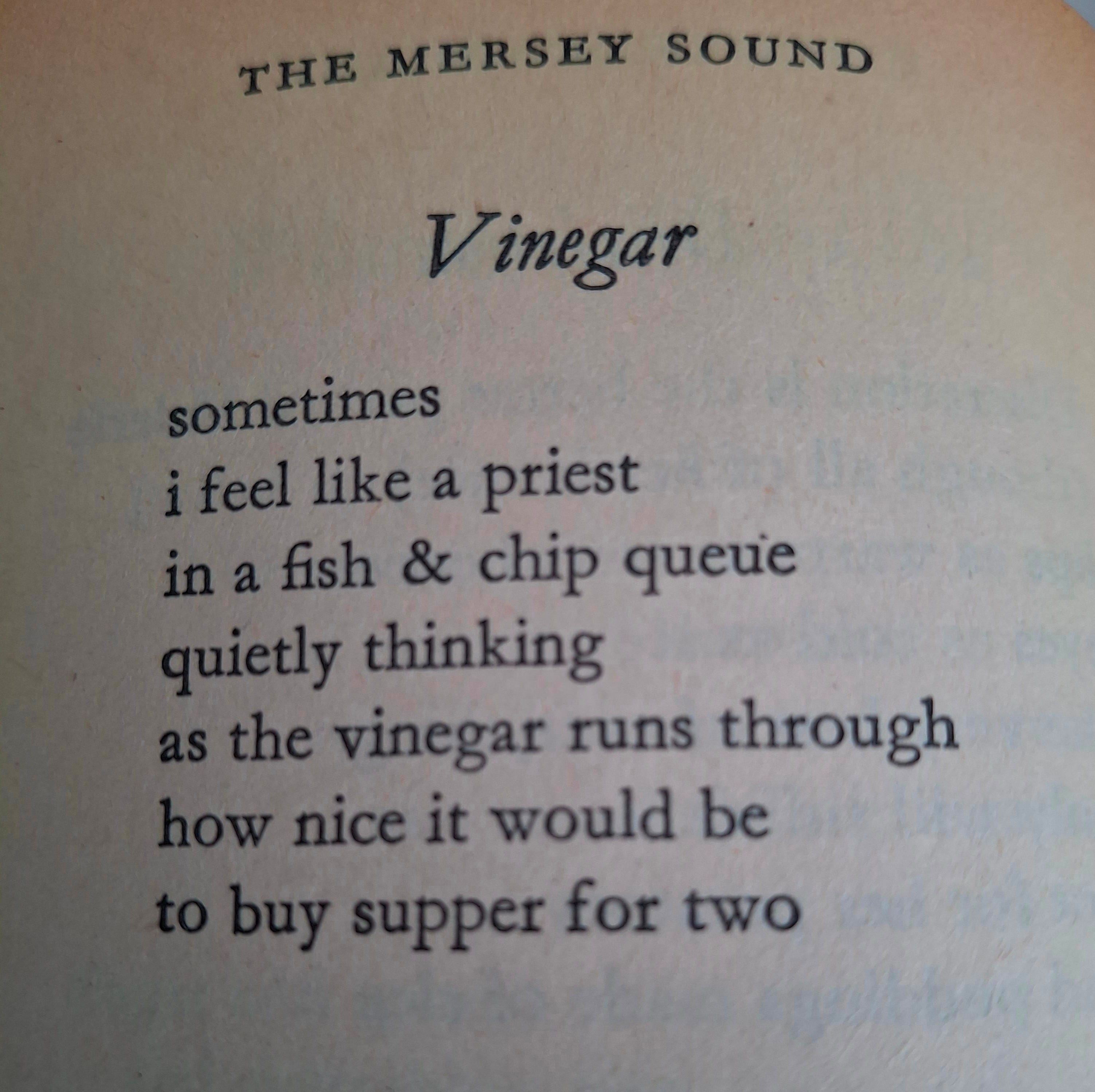
Some of the poems don't bear reading in this day and age. Some would render the poets cancelled. But my strongest memory is of the Roger McGough poem ‘Vinegar’, which I know by heart. I was writing poetry back then, at school, none of which survives, for which we might we all might be thankful. I stopped writing creatively once English Language O level was out of the way. English A level was literature only, as was the study of English and American literature in my first degree, Humanities.
I took every opportunity to write for newsletters wherever I worked, and on the council estate where I lived for a few years, I was also on the editorial group of the estate newsletter, Park Post. But I wrote no poetry until I turned 40, and had to give up work due to ill health. The poetry came back to me then, the reading of it, the writing of it. I can't say that I returned to Roger McGough and the Liverpool poets at that time, but I certainly channelled their influence when I started writing my own poems about ordinary things, ordinary people and situations. My stories, my prose pieces were packed with such things as shopping trolleys stuck in the mud of the River Medway when the tide was out, and tales of homeless people, that others might pass and not see.
I've read through a folder of early poems and stories this week. There was one that never quite got right, about a young girl I met in a chip shop, ordering chips for four on a day that she should have been at school. There is a letter I never sent to a dinner lady from primary school who forced me to sit in front of half a pilchard one dinner time until I ate it. I never did. We had to finish up everything on our plates at St. Joseph's, and there were posters of starving children on the wall of the wooden hut that served as a canteen. The pilchard incident, as I call it, caused me to go home for lunches thereafter. My piece has the rather pleasing phrase: ‘serving God and chips to frightened children’. Not that I ever remember having chips at school. It was either lumpy mashed or boiled potatoes, with black bits in them.
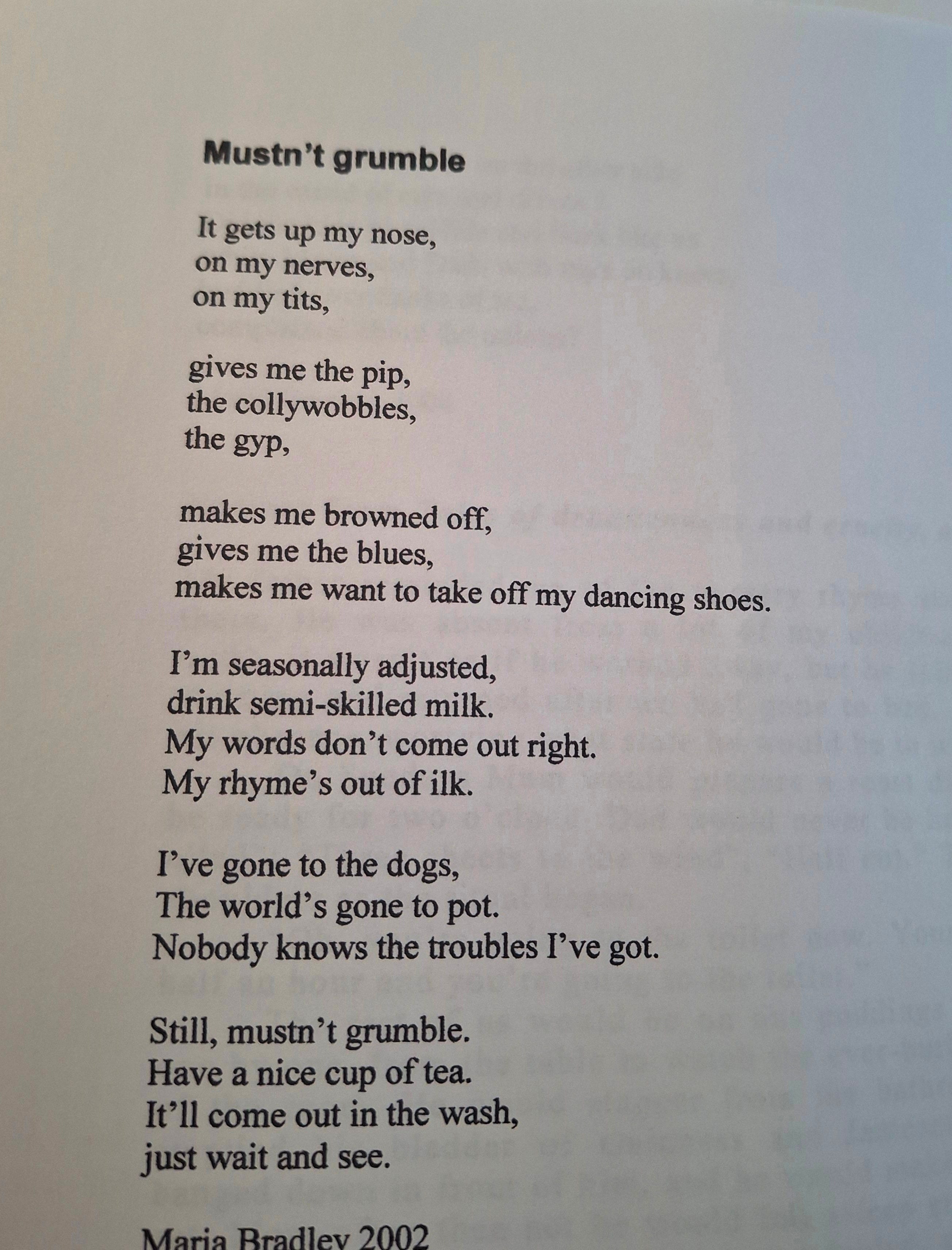
One poem that I'm happy to share from that time stemmed from an overheard phrase in a charity shop on a foggy day one November. ‘This weather gives me the collywobbles,’ the woman behind the till said. There was another phrase I collected for the poem, overheard at a bus stop, from a woman who said that she had SAD, ‘which stands for Seasonally Adjusted Disorder.’
Looking back at my file of early poems and stories is very satisfying, not least because I found a story I've no memory of writing, an entry to a story competition. It hasn't been published, but it's good enough, with a little bit of editing to submit somewhere.
I had a lot of success in competition in those early days, perhaps beginner's luck, or perhaps my writing was good, as raw as it was back then.
Roger McGough will be visiting Chatham Library as part of A Poet in Every Port, on 26 June 2026.
No posts
Comments
Nothing yet. Say the first thing.
Sign in to join the conversation.